
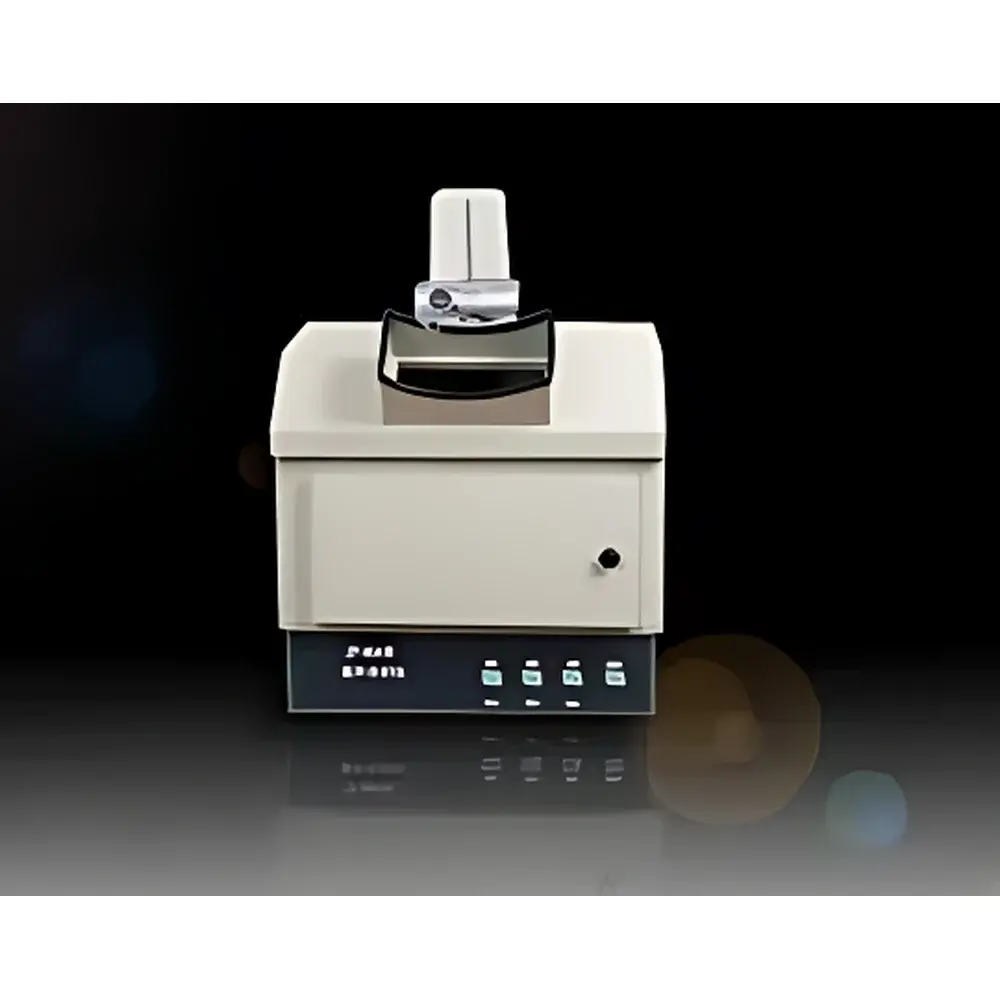
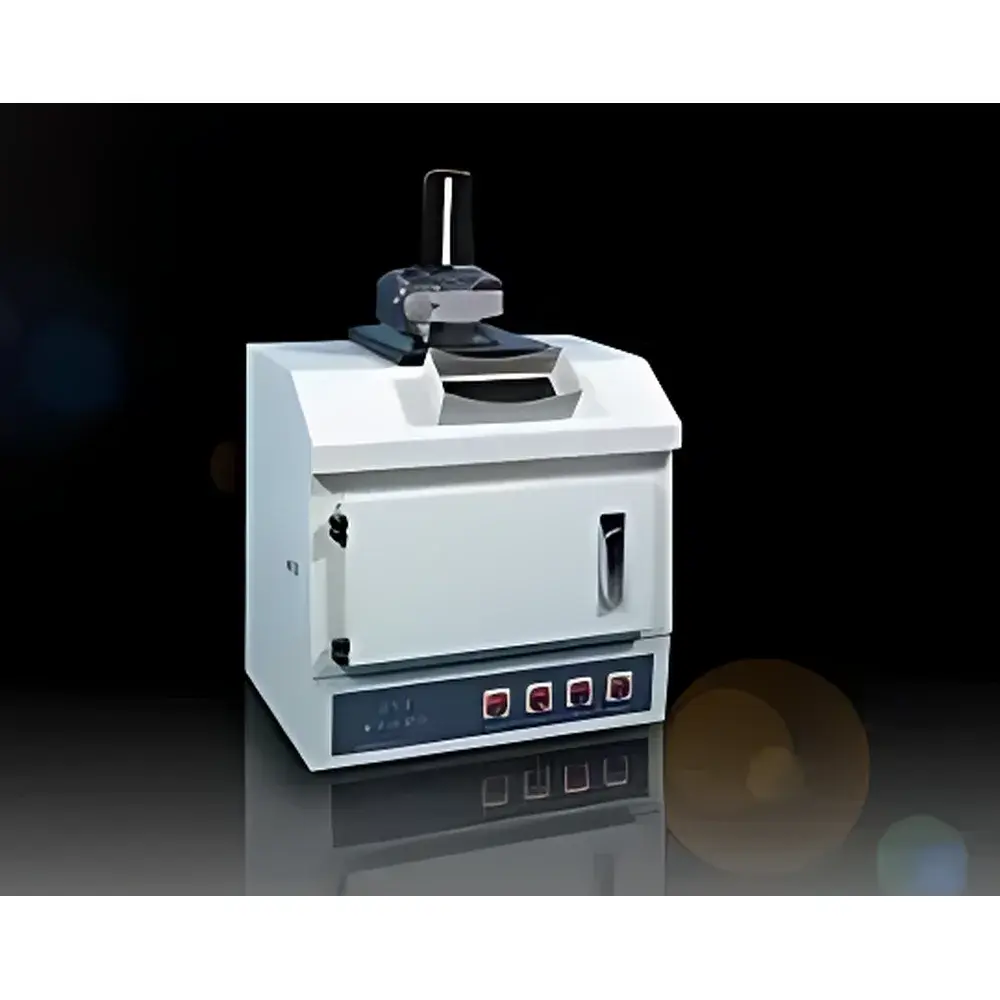
Hanuo ZF-8 Multi-Wavelength Darkroom UV Transilluminator and Gel Cutter
| Brand | Hanuo |
|---|---|
| Origin | Shanghai, China |
| Model | ZF-8 |
| Instrument Type | Darkroom-style |
| Wavelengths | 254 nm (UVC), 302 nm (UVB), 365 nm (UVA), and 400–700 nm (Visible) |
| UV Filter Glass Dimensions | 200 × 80 mm |
| UV Lamps | Four 6 W low-pressure mercury lamps |
| Visible Lamp | One 4 W white-light lamp |
| Power Supply | 220 V AC, 50 Hz |
| Weight | 6 kg |
| Compliance | CE-marked for laboratory use |
Overview
The Hanuo ZF-8 Multi-Wavelength Darkroom UV Transilluminator and Gel Cutter is a compact, benchtop instrument engineered for precise visualization, qualitative analysis, and targeted excision of nucleic acid and protein bands in electrophoretic gels. It operates on the principle of ultraviolet-induced fluorescence: biomolecules such as DNA, RNA, and certain proteins—when stained with intercalating dyes (e.g., ethidium bromide, SYBR Safe, or GelRed)—absorb UV photons and re-emit visible light at longer wavelengths. The ZF-8 integrates four discrete spectral outputs—254 nm (high-energy UVC), 302 nm (optimized for ethidium bromide excitation), 365 nm (lower-energy UVA, minimizing photodamage to samples), and broad-spectrum visible light—within a fully enclosed darkroom chamber. This configuration eliminates ambient light interference while providing operator protection: the front viewing window incorporates UV-blocking glass that attenuates >95% of incident UV radiation, meeting occupational safety requirements per ANSI Z87.1 and EN 170 for optical radiation protection.
Key Features
- Four independently switchable light sources: 254 nm, 302 nm, 365 nm, and white light—enabling flexible excitation across common fluorescent dyes and visual inspection without dye staining.
- Integrated darkroom enclosure with hinged lid and ergonomic cut-out side ports—designed for safe, hands-in operation during gel documentation and manual band excision using sterile scalpels or gel cutters.
- High-stability low-pressure mercury UV lamps (6 W × 4) and a dedicated 4 W white-light lamp ensure consistent irradiance over extended usage periods, minimizing thermal drift and intensity fluctuation.
- UV filter glass (200 × 80 mm) mounted beneath the transilluminating surface provides uniform illumination field and protects internal components from UV degradation.
- Compact footprint (approx. 280 × 220 × 120 mm) and lightweight design (6 kg) facilitate integration into crowded electrophoresis workstations, cold rooms, or mobile lab setups.
- No external cooling fans or moving parts—ensuring silent, maintenance-free operation suitable for laminar flow hoods and ISO Class 5 clean environments.
Sample Compatibility & Compliance
The ZF-8 supports standard agarose and polyacrylamide gels (up to 15 × 15 cm), as well as TLC plates, paper chromatograms, and thin-layer membranes used in Western or dot blotting. It is routinely employed in protocols aligned with ISO/IEC 17025-accredited laboratories for qualitative nucleic acid detection, pharmaceutical impurity screening (per USP ), and forensic sample triage. While not a quantitative imaging system, its consistent spectral output supports semi-quantitative comparative analysis when paired with calibrated reference ladders. The unit complies with IEC 61010-1 for electrical safety and meets EN 62471 photobiological safety classification for UV hazard group 2 (low risk under normal use conditions). No FDA 510(k) clearance or CE-IVD marking applies, as it functions as a general-purpose laboratory tool—not an in vitro diagnostic device.
Software & Data Management
The ZF-8 operates as a standalone hardware platform without embedded firmware or proprietary software. It requires no drivers, network connectivity, or calibration certificates. Users integrate it seamlessly with third-party digital imaging systems—including DSLR cameras, scientific CMOS sensors, or smartphone-based gel documentation rigs—using standard tripod mounts or custom acrylic adapters. For GLP/GMP environments, manual logbook entries documenting lamp usage hours, wavelength selection, and gel batch numbers satisfy audit trail requirements. No electronic data storage, user authentication, or 21 CFR Part 11 compliance features are included, consistent with its role as a non-regulated observation aid.
Applications
- Molecular Biology: Rapid visualization of ethidium bromide–stained DNA fragments post-electrophoresis; verification of PCR product size and purity; identification of plasmid isoforms.
- Clinical & Forensic Labs: Preliminary screening of STR or VNTR patterns in crime scene samples; detection of UV-fluorescent latent fingerprints treated with cyanoacrylate fuming.
- Pharmaceutical QC: Thin-layer chromatography (TLC) analysis of active pharmaceutical ingredients (APIs), excipients, and degradation products per Ph. Eur. 2.2.27 and USP .
- Food Safety Testing: Detection of aflatoxin B1 in grain extracts using immunoaffinity column cleanup followed by UV-induced fluorescence under 365 nm illumination.
- Materials Science: Identification of fluorescent additives in polymer matrices, evaluation of UV stabilizers in synthetic fibers, and authentication of natural vs. synthetic dyes in textile swatches.
FAQ
Is the ZF-8 compatible with SYBR Gold or other modern nucleic acid stains?
Yes—the 302 nm and 365 nm wavelengths efficiently excite SYBR Gold, SYBR Safe, GelGreen, and similar dyes. Avoid prolonged exposure at 254 nm with sensitive dyes to prevent photobleaching.
Can the unit be used for UV crosslinking of nucleic acids to membranes?
No—it lacks the high-intensity UVC irradiance (>100 mJ/cm²) and controlled dose metering required for covalent crosslinking. It is intended solely for visualization and cutting.
Does the instrument include a camera or image capture capability?
No—imaging must be performed externally using compatible digital devices. The darkroom design minimizes stray light to improve signal-to-noise ratio during photography.
What safety certifications does the ZF-8 hold?
It carries CE marking per Directive 2014/30/EU (EMC) and 2014/35/EU (LVD), and conforms to IEC 61010-1:2010 for laboratory electrical safety.
How often should the UV lamps be replaced?
Typical service life is 1,000–1,500 hours. Output intensity declines gradually; replacement is recommended when band visibility diminishes despite optimal dye concentration and exposure time.



