
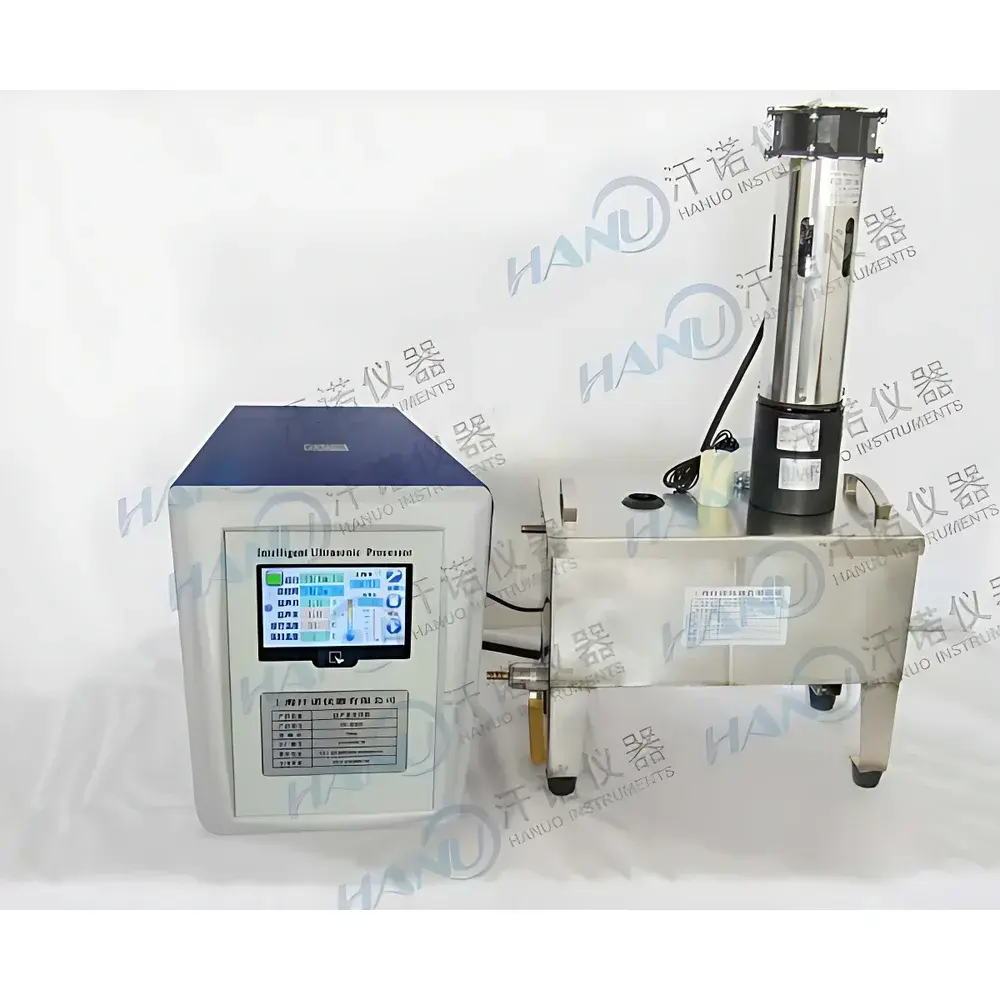
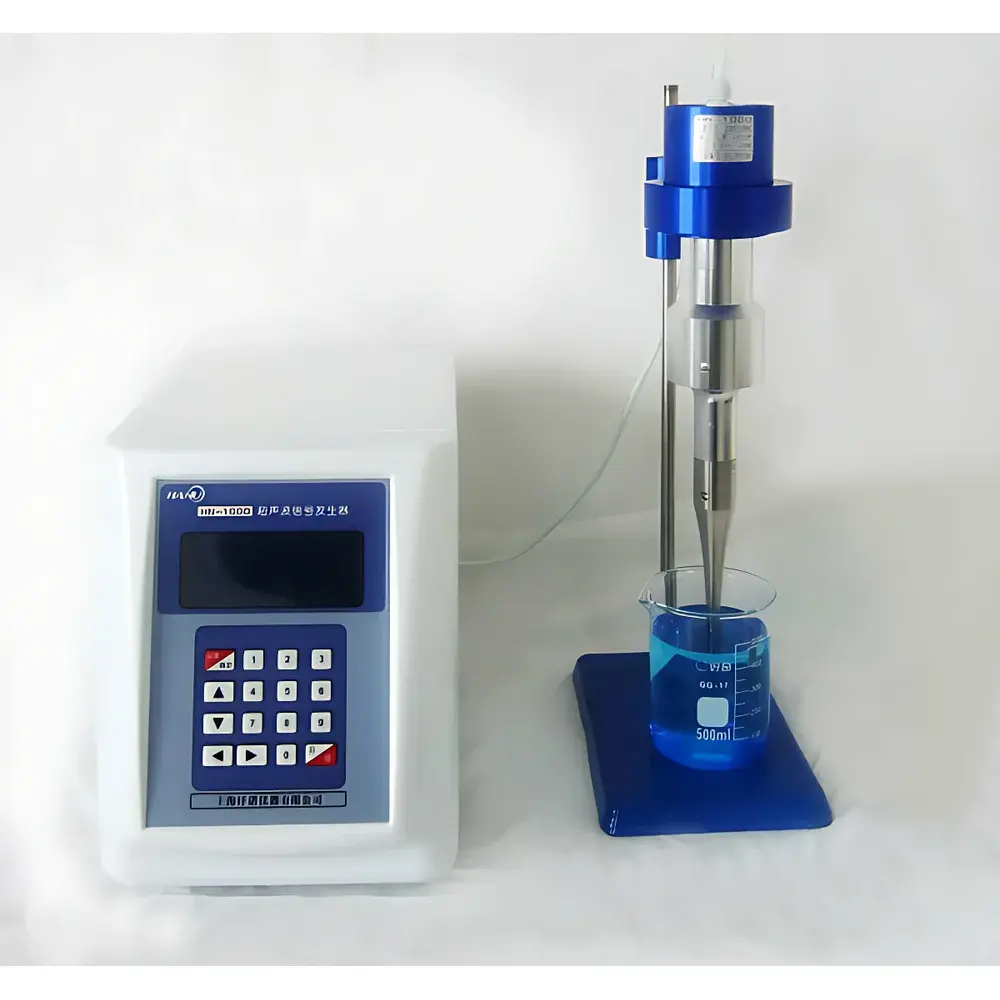
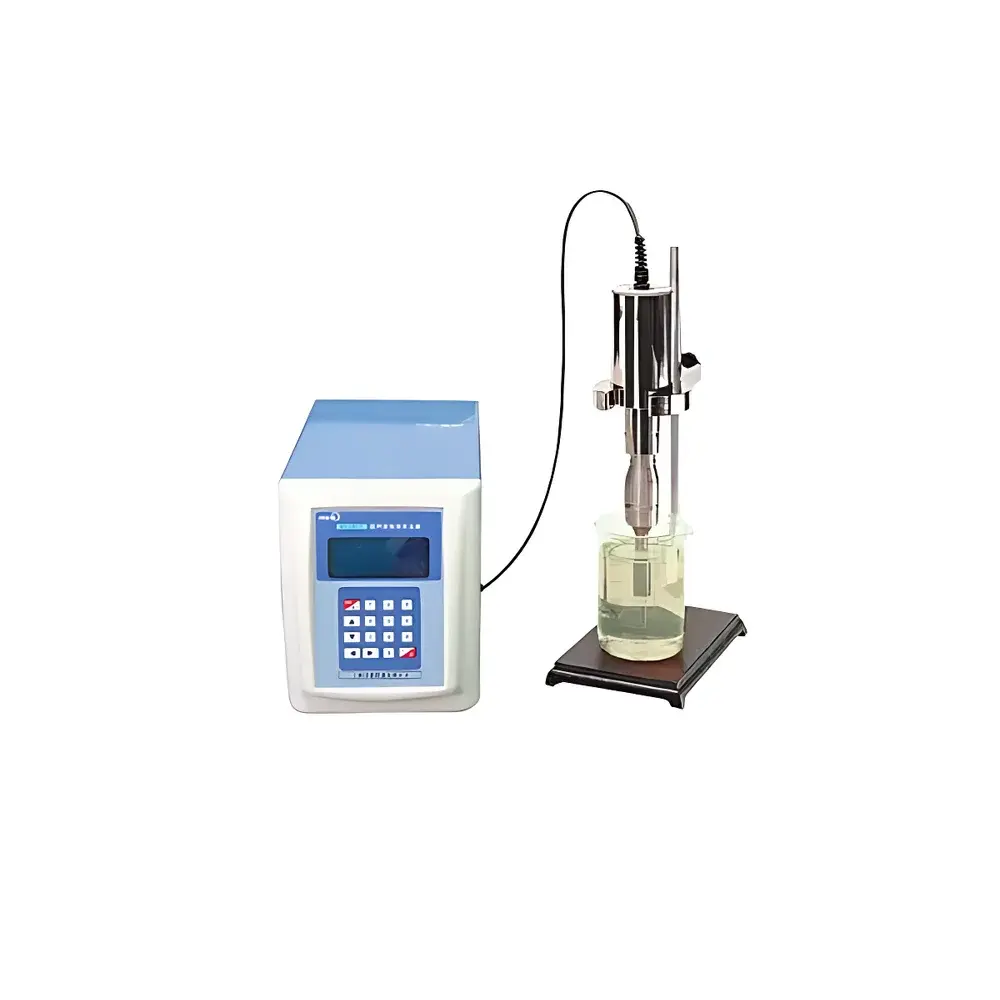
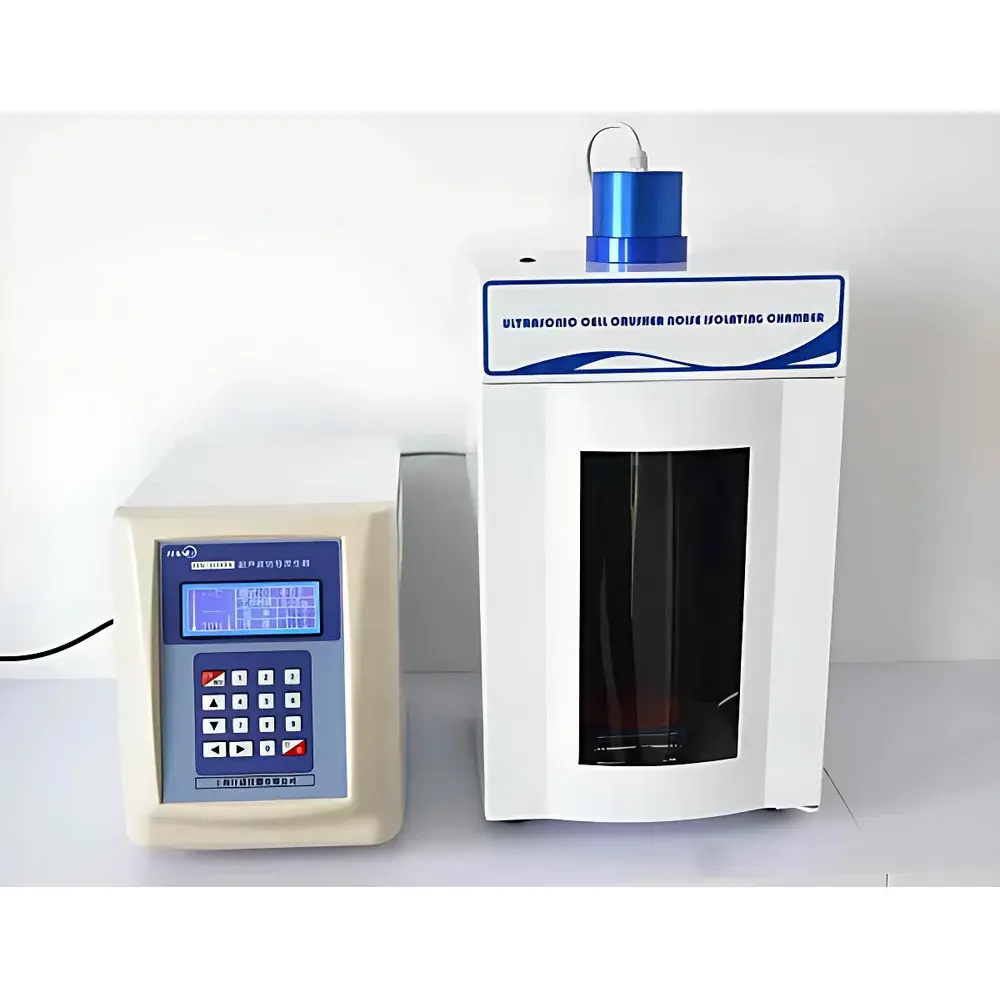
Hanuo HN-3000 High-Power Ultrasonic Cell Disruptor for Nanomaterial Processing
| Brand | Hanuo |
|---|---|
| Model | HN-3000 |
| Instrument Type | Ultrasonic Cell Disruptor |
| Ultrasonic Output Power | 3000 W |
| Operating Frequency | 20–25 kHz with Automatic Frequency Tracking |
| Sample Volume Capacity | 1000 mL |
| Temperature Control Range (Optional) | −5 °C to 100 °C |
| Programmable Storage | 20 Presets |
| Display | 4.3″ TFT Touchscreen |
| Pulse Mode Interval | 0.1–99.9 s Adjustable |
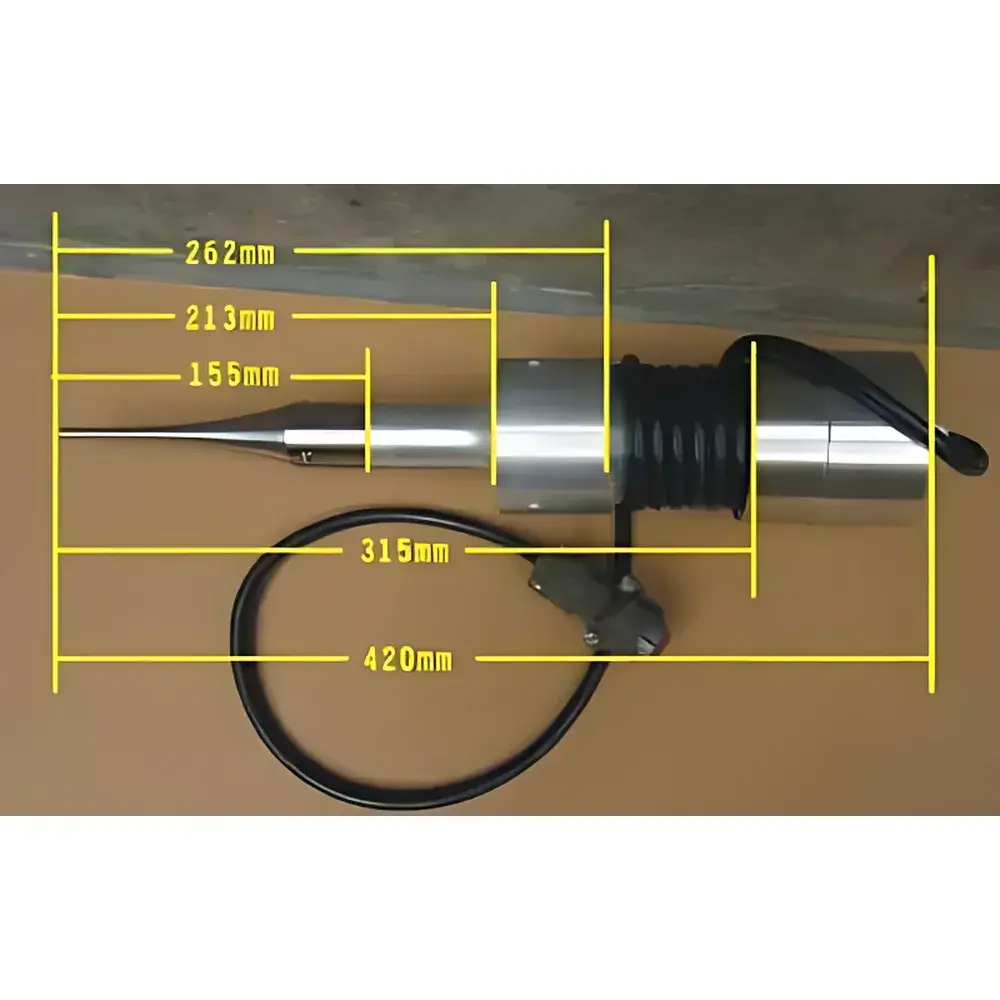
| Optional Accessories | Circulating Chiller, Magnetic Stirrer, Dual-Layer Thermostatic Reactor Vessels (50–2000 mL), Replaceable Horn Probes (Φ28 mm to Φ35 mm and Multi-Stage Extended Configurations) |
Overview
The Hanuo HN-3000 High-Power Ultrasonic Cell Disruptor is an engineered solution for controlled, high-intensity ultrasonic energy delivery in life science and nanomaterial processing applications. It operates on the principle of acoustic cavitation—where high-frequency mechanical vibrations (20–25 kHz) generate transient microbubbles in liquid media that collapse violently, producing localized shockwaves, shear forces, and extreme transient temperatures (>5000 K) and pressures (>1000 atm). This physical mechanism enables efficient disruption of cellular membranes, dispersion of nanoparticles, emulsification of immiscible phases, and acceleration of sonochemical reactions without introducing chemical contaminants or thermal degradation when properly temperature-regulated. Designed for reproducible benchtop use in academic labs, biopharmaceutical R&D, and nanomaterial formulation facilities, the HN-3000 delivers scalable, process-controlled sonication with real-time monitoring and full parameter logging.
Key Features
- 3000 W nominal ultrasonic output power—among the highest in the class of laboratory-scale ultrasonic processors—enabling rapid processing of viscous or highly resistant samples including bacterial cell walls, plant tissues, and aggregated nanomaterials.
- Automatic frequency tracking ensures stable resonance across variable load conditions, maintaining consistent cavitation intensity even as sample viscosity, temperature, or volume changes during operation.
- 4.3″ TFT touchscreen interface with intuitive navigation supports full programmability: total duration (0–99 h 59 min 59 s), pulse-on/pulse-off intervals (0.1–99.9 s), amplitude modulation, and power ratio adjustment (0–100%).
- Titanium alloy (Grade 5 Ti-6Al-4V) sonotrodes provide superior fatigue resistance, corrosion immunity, and acoustic transmission efficiency; standard probe diameter is Φ28 mm, with optional configurations up to Φ35 mm and multi-stage extended probes for deep-vessel or high-volume applications.
- Integrated temperature sensing with optional external Pt100 probe enables closed-loop feedback control when paired with a circulating chiller and dual-layer thermostatic reactor—supporting precise thermal management from −5 °C to 100 °C.
- Microprocessor-based architecture stores up to 20 user-defined protocols with password protection, time-stamped execution logs, and automatic fault detection (overtemperature, overcurrent, transducer impedance mismatch).
Sample Compatibility & Compliance
The HN-3000 accommodates diverse biological and synthetic sample types—including Gram-positive bacteria (e.g., Bacillus subtilis), yeast (Saccharomyces cerevisiae), mammalian cells (HEK293, CHO), plant leaf tissue, liposomes, carbon nanotubes, metal oxide nanoparticles (TiO₂, ZnO), and polymeric micelles. Its open architecture allows integration into ISO 17025-accredited workflows and supports GLP-compliant documentation when used with optional RS232/USB data export. While not inherently FDA 21 CFR Part 11 compliant, audit-trail-ready software extensions are available for regulated environments requiring electronic signature and change control functionality. All electrical components meet IEC 61010-1 safety standards for laboratory equipment.
Software & Data Management
The embedded firmware supports timestamped parameter recording per run, including actual delivered power (via impedance-matched current/voltage sampling), real-time temperature readings, cumulative sonication time, and error event flags. Optional PC connectivity via USB or RS232 enables automated batch reporting and CSV export for LIMS integration. Third-party LabVIEW and Python SDKs are available upon request for custom automation sequences—particularly useful in DOE-driven nanomaterial optimization studies where amplitude, pulse duty cycle, and cooling rate are systematically varied.
Applications
- Cell lysis and subcellular fractionation for proteomics and nucleic acid isolation
- Nanoparticle deagglomeration and stabilization in aqueous and organic dispersions
- Liposome formation and size reduction via probe-based sonication
- Extraction of intracellular metabolites, enzymes, or secondary plant compounds
- Sonochemical synthesis of metal-organic frameworks (MOFs) and quantum dots
- Surface functionalization of graphene oxide and nanocellulose
- Accelerated solvent extraction (ASE) in natural product chemistry
FAQ
What is the maximum recommended sample volume for continuous operation at full 3000 W power?
For optimal cavitation efficiency and thermal stability, continuous operation at rated power is validated for volumes between 500 mL and 1000 mL using the standard Φ28 mm horn and active cooling. Volumes >1000 mL require pulse-mode operation or larger-diameter probes.
Can the HN-3000 be integrated into a GMP manufacturing environment?
Yes—when equipped with optional audit-trail software, calibrated temperature probes, and documented IQ/OQ protocols, the system meets baseline requirements for equipment qualification under Annex 11 and USP <1058> guidelines.
Is remote monitoring or networked control supported out-of-the-box?
No native Ethernet or Wi-Fi module is included; however, serial-to-Ethernet converters and Modbus RTU gateways are field-deployable with configuration support from Hanuo’s technical team.
How does amplitude auto-regulation function under changing load conditions?
The system continuously monitors electrical phase angle and current draw at the transducer; firmware dynamically adjusts drive voltage to maintain constant mechanical displacement amplitude—critical for reproducible particle size distribution in nano-dispersion applications.
Are validation documents (e.g., calibration certificates, test reports) provided with shipment?
Factory calibration reports for power output, frequency response, and temperature sensor accuracy are supplied. Full 3Q documentation packages (DQ/IQ/OQ) are available as a service option prior to delivery.




