
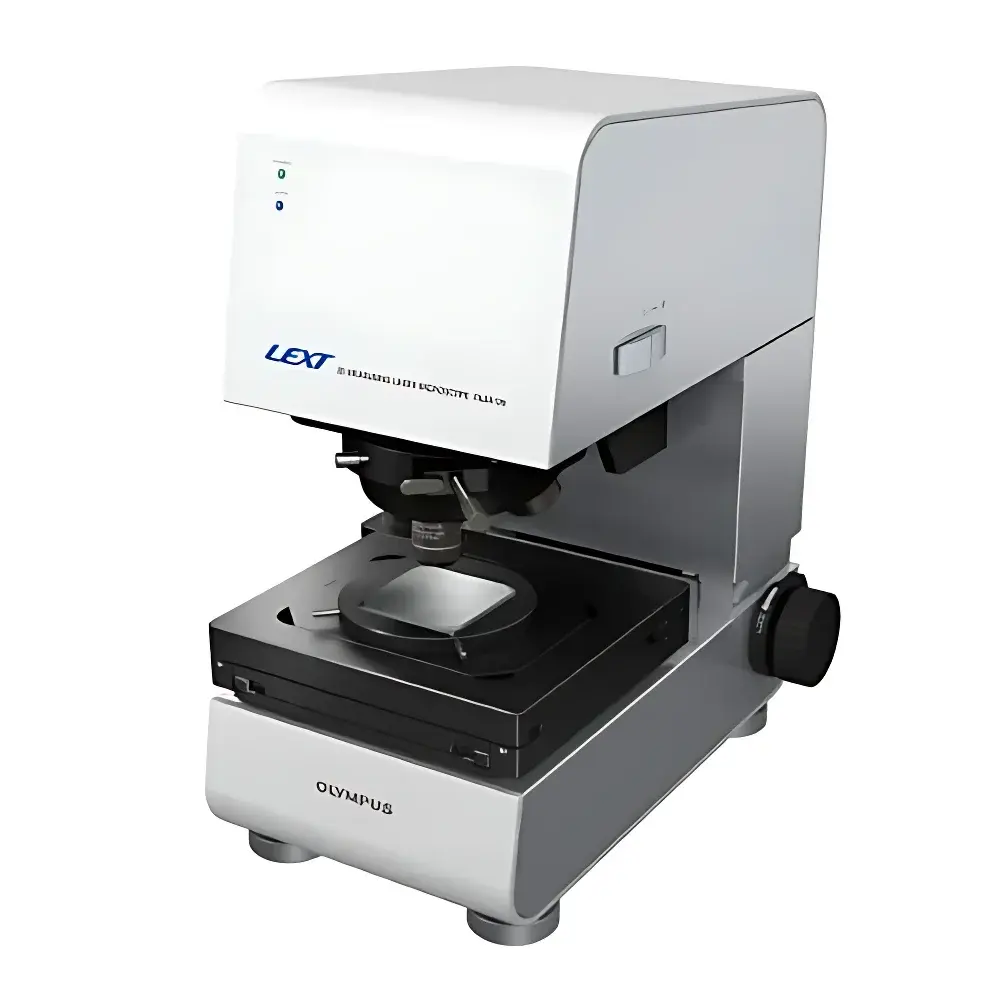
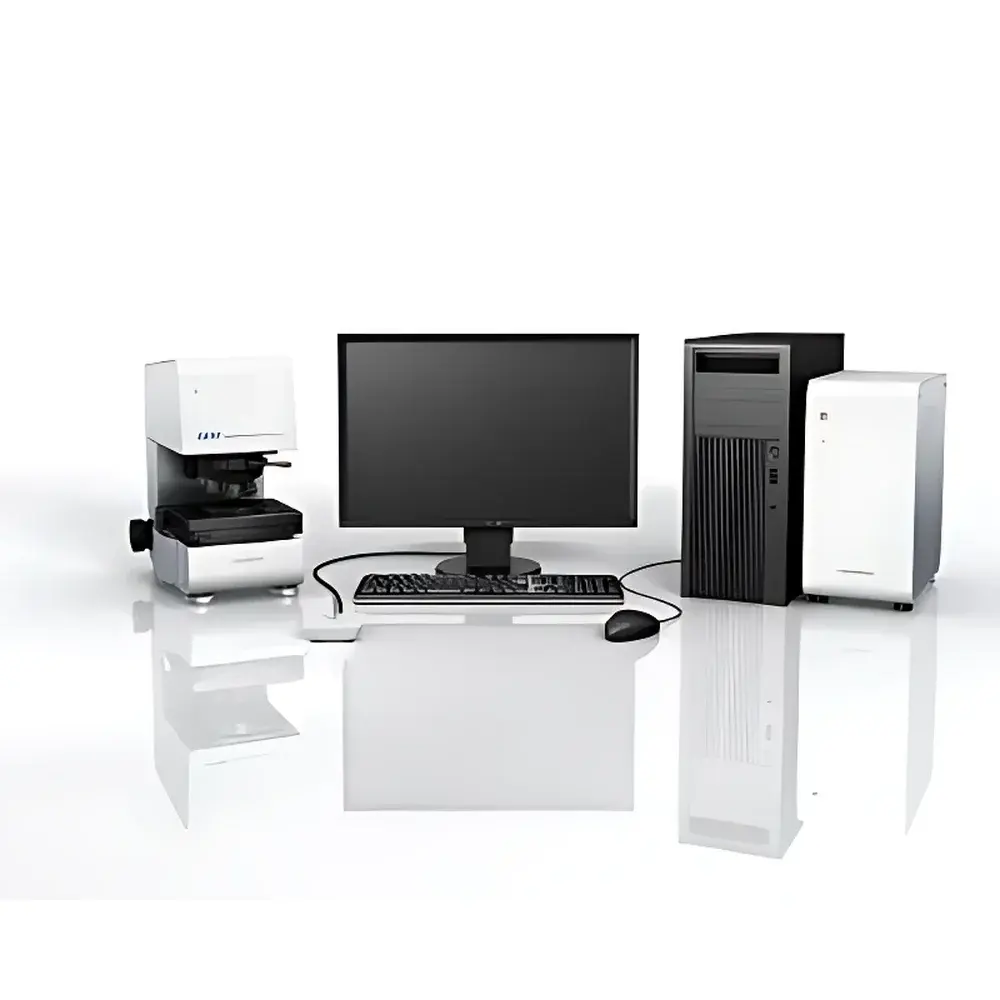
Olympus LEXT OLS4100 Industrial Laser Scanning Confocal Microscope
| Origin | Japan |
|---|---|
| Manufacturer Type | Authorized Distributor |
| Origin Category | Imported |
| Model | OLS4100 |
| Pricing | Upon Request |
Overview
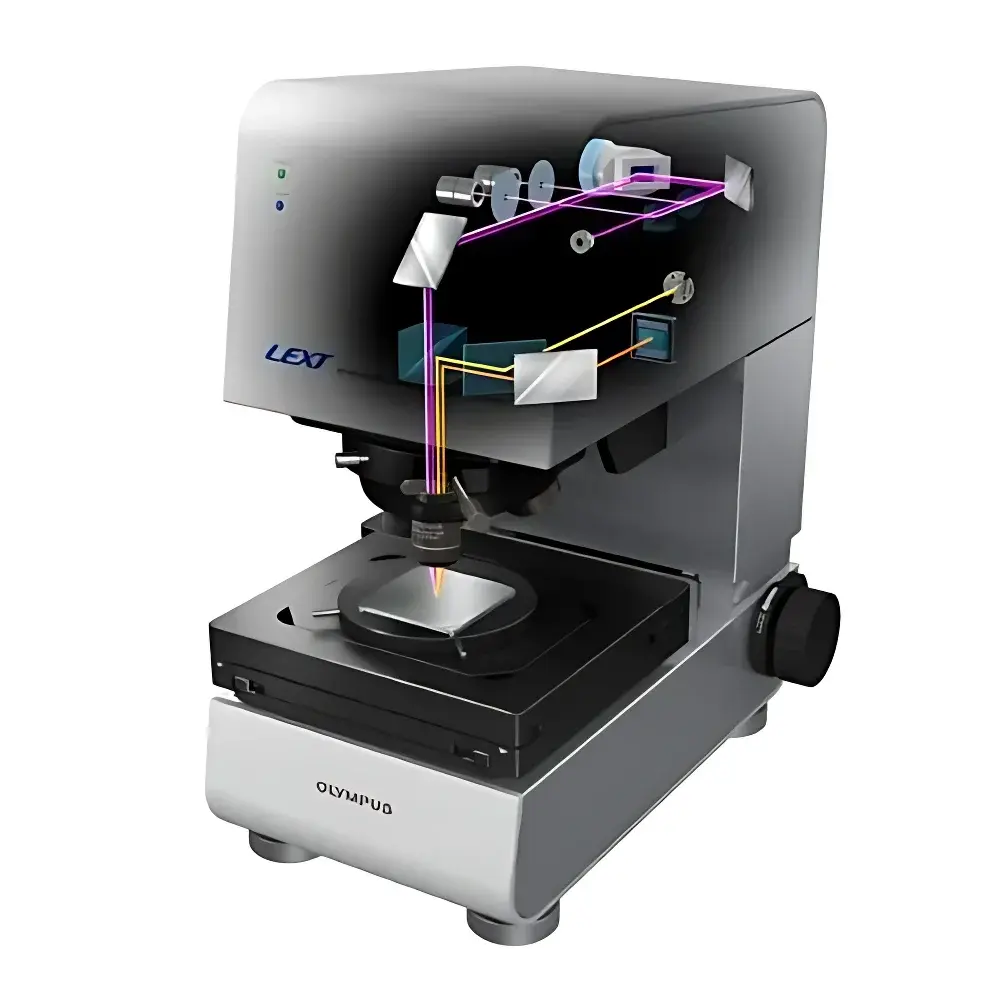
The Olympus LEXT OLS4100 is an industrial-grade laser scanning confocal microscope engineered for non-contact, high-resolution 3D surface topography and quantitative metrology. It employs a dual-confocal optical architecture with a 405 nm violet semiconductor laser and high-numerical-aperture (N.A.) dedicated objectives (e.g., MPLAPON50XLEXT) to achieve sub-micron lateral resolution (0.12 µm) and nanoscale vertical sensitivity. Unlike contact profilometers, the OLS4100 eliminates mechanical deformation, probe wear, or adhesion artifacts—making it suitable for soft polymers, adhesive films, brittle coatings, and micro-structured surfaces. Its measurement principle relies on axial optical sectioning via pinhole-confined detection, enabling precise Z-axis localization of surface reflectance peaks across multi-layer transparent samples. The system complies with ISO 25178-2:2012 for areal surface texture analysis and supports traceable calibration against PTB-5 reference standards (Institut für Mikroelektronik, Germany), ensuring metrological integrity in regulated environments.
Key Features
- Sub-10 nm height resolution validated per PTB-5 Type B standard, supported by 0.8 nm encoder feedback and Olympus’ proprietary I-Z curve algorithm.
- Dual-confocal detection system with high-sensitivity photomultiplier tubes, enabling consistent imaging across materials with widely varying reflectivity (e.g., diamond-coated tools, silicon wafers, anodized aluminum).
- Multi-layer mode for automatic identification and focal plane assignment to individual interfaces in transparent stacks (e.g., glass/resin bilayers), enabling thickness quantification and interfacial roughness mapping.
- Laser DIC (Differential Interference Contrast) module integrated into objective turret, delivering nanoscale surface gradient contrast at low magnifications—complementing conventional confocal imaging without electron microscopy infrastructure.
- HDR (High Dynamic Range) image synthesis combining multiple exposure frames with independent control over brightness, contrast, texture, and saturation—critical for low-contrast textiles, matte ceramics, or heterogeneous composites.
- Composite vibration-damping base incorporating helical springs and damping rubber, permitting stable operation on standard laboratory benches without external anti-vibration tables.
- Intuitive three-step workflow: Image → Measure → Report—with macro-view navigation, one-click 3D acquisition, and automated Z-range optimization.
Sample Compatibility & Compliance
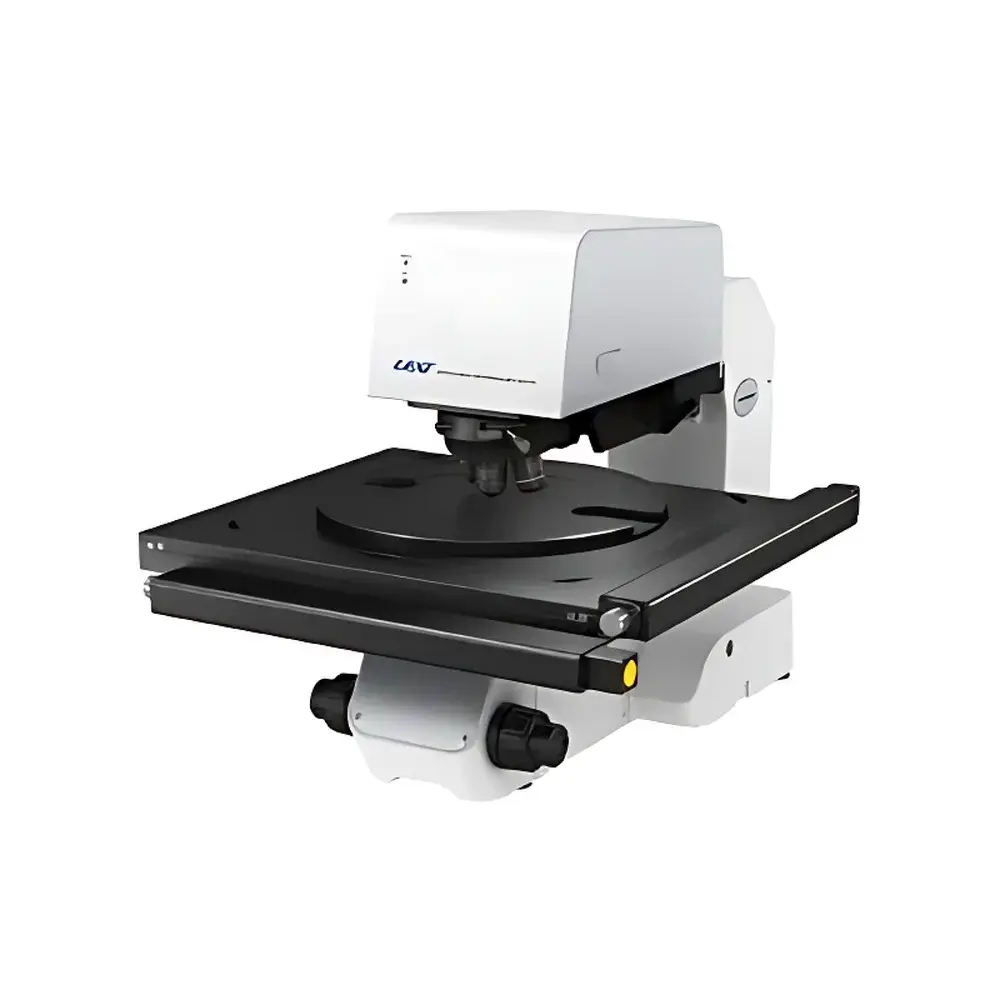
The OLS4100 accommodates samples up to 210 mm × 210 mm × 150 mm (W × D × H) with motorized XYZ stage and six-position objective turret. It supports direct measurement of steep sidewalls (up to 85°), micro-grooves, MEMS structures, cutting tool edges, and optically transparent multilayers. All optical components—including objectives—are manufactured and calibrated end-to-end within Olympus’ ISO 9001-certified facilities in Japan. Each unit undergoes full-system verification using NIST-traceable step-height standards prior to shipment. Final field calibration and focus alignment are performed by Olympus-certified engineers in the customer’s operational environment. The system meets requirements for GLP/GMP documentation workflows when paired with optional OLYMPUS Stream software supporting FDA 21 CFR Part 11-compliant audit trails, electronic signatures, and secure data archiving.
Software & Data Management
OLYMPUS Stream software (optional) provides a unified platform for image acquisition, geometric measurement, particle analysis, and statistical reporting. It natively imports raw OLS4100 datasets—including height maps, intensity volumes, and multi-layer focus stacks—and supports batch processing of ISO 25178–compliant 3D parameters (Sq, Sz, Ssk, Spk, Vmp, etc.) alongside legacy 2D roughness metrics (Ra, Rz, Rq, Rsk, Rku per JIS B 0601:1994 and ISO 4287). Automated stitching handles mosaics up to 21 × 21 tiles (441× field-of-view expansion), with manual ROI culling and region-of-interest prioritization. Measurement reports are exportable to PDF, CSV, or Microsoft Office formats; templates are fully customizable via drag-and-drop interface. Raw data remains unprocessed and accessible in vendor-neutral TIFF/HDF5 formats for third-party validation.
Applications
The OLS4100 serves critical roles in R&D and quality control across precision manufacturing sectors: characterization of additive-manufactured metal surfaces; quantification of coating uniformity and delamination risk in aerospace composites; evaluation of wafer-level packaging topography; validation of microfluidic channel geometry; metrology of medical device polymer textures; and failure analysis of solder joint morphology. Its non-destructive nature enables repeated measurement of the same site before/after environmental stress testing. In semiconductor packaging, it verifies bond wire profile and die attach voiding; in tribology labs, it tracks wear evolution on lubricated surfaces at sub-10 nm vertical increments. The multi-layer capability supports optical filter stack QC, while laser DIC mode facilitates nanoscale defect screening in display substrates.
FAQ
Does the OLS4100 require external anti-vibration isolation?
No—the integrated composite damping mechanism allows stable operation on standard lab furniture without auxiliary platforms.
Can the system measure transparent thin films on reflective substrates?
Yes—multi-layer mode identifies reflection maxima at each interface and computes film thickness based on calibrated optical path difference.
Is roughness data compatible with legacy contact profilometers?
Yes—OLS4100 implements identical ISO/JIS parameter definitions and filtering algorithms (Gaussian, S-filter, R-profile), ensuring cross-platform result equivalence.
What is the maximum measurable slope angle?
The system resolves features up to 85° via optimized confocal signal-to-noise ratio and high-N.A. optics—validated on razor-edge geometries.
How is measurement traceability ensured?
Each instrument ships with a factory calibration certificate referencing PTB-5 standards; final field verification includes certified step-height artifacts and documented adjustment logs.




