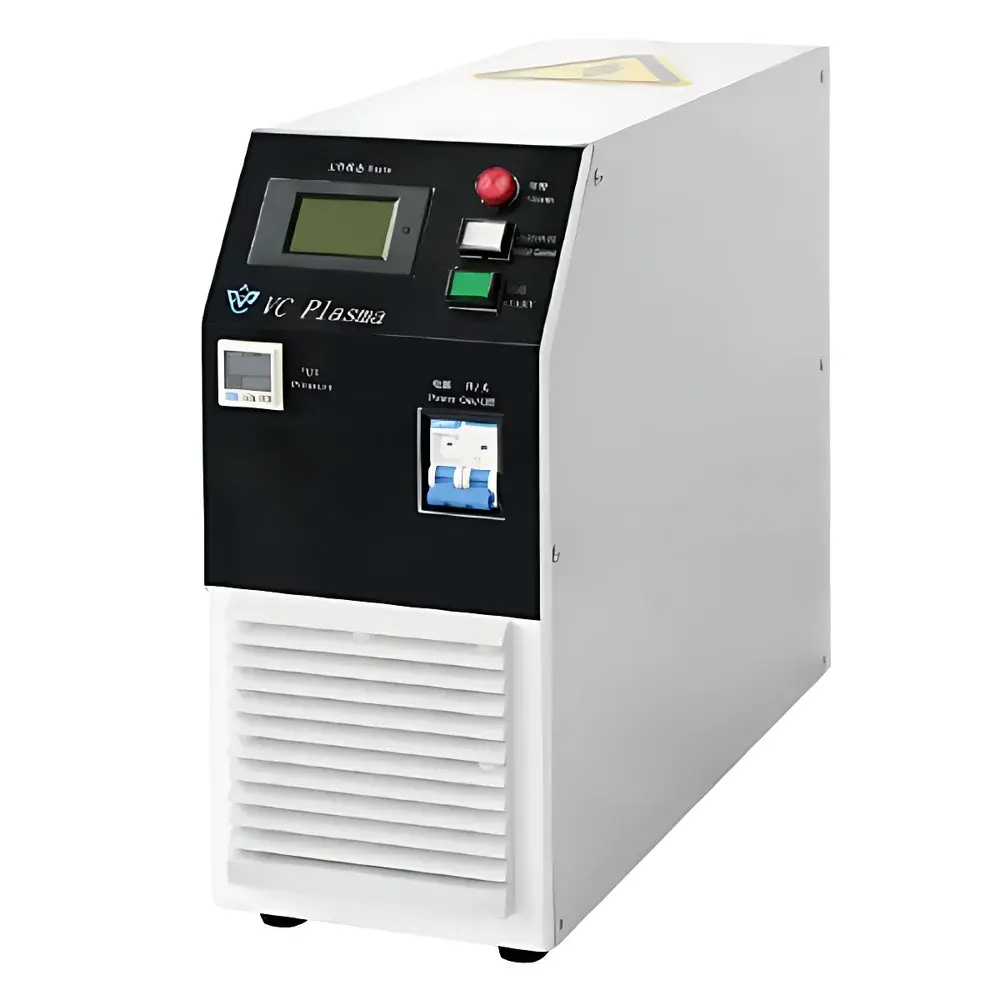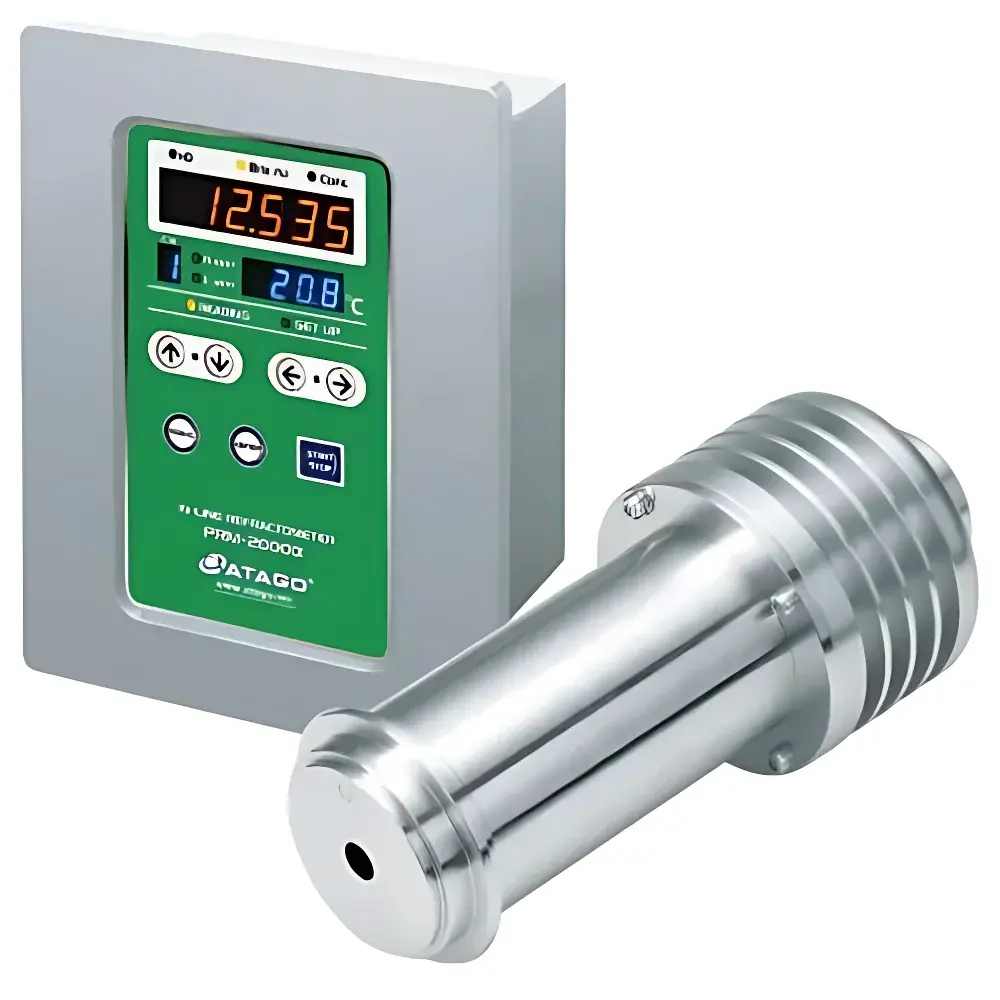
ATAGO PRM-2000α DX Online Refractometer for Low-Concentration Liquids
| Brand | ATAGO |
|---|---|
| Origin | Japan |
| Model | PRM-2000α DX (Low-Concentration, High-Accuracy) |
| Refractive Index Range | 1.32069–1.36500 |
| Brix Range | 0.000–20.000% |
| Refractive Index Resolution | 0.00001 |
| Brix Resolution | 0.001% (switchable) |
| Refractive Index Accuracy | ±0.00001 (1.32069–1.33681), ±0.00010 (1.33682–1.36500) |
| Brix Accuracy | ±0.007% (0.000–2.000%), ±0.050% (2.001–20.000%) |
| Temperature Range | −35.0–165.0°C |
| Temperature Compensation Range | 5–90°C |
| Output | DC 4–20 mA, RS-232C |
| Measurement Time | ~1 s |
| Prism Material | Sapphire |
| Process Connection Housing | SUS316L |
| Pressure Rating | 0.98 MPa |
| IP Rating | IP67 (both sensor and display unit) |
| Cable Length | Standard 15 m (up to 200 m optional) |
Overview
The ATAGO PRM-2000α DX Online Refractometer is a high-precision, process-integrated optical instrument engineered for continuous, real-time measurement of refractive index (nD) and Brix in low-concentration aqueous solutions. Based on the principle of total internal reflection at a sapphire–liquid interface, the system delivers stable, drift-free readings by precisely detecting the critical angle shift induced by changes in solution density and solute concentration. Unlike benchtop or handheld refractometers, the PRM-2000α DX is designed for permanent installation in industrial pipelines or tanks—enabling closed-loop process monitoring without sampling, flow interruption, or operator intervention. Its optimized optical path and temperature-compensated algorithm ensure metrological integrity across dynamic thermal environments, making it suitable for applications where conventional refractometers exhibit significant hysteresis or calibration drift.
Key Features
- Ultra-high resolution detection: 0.00001 refractive index units and 0.001% Brix (with selectable resolution modes: 0.001%, 0.005%, or 0.01%)
- Dual-parameter output: Simultaneous real-time reporting of nD, Brix (calibrated for sucrose, high-fructose corn syrup, and sugar-free beverages ≤2%), temperature, and derived concentration (% w/w)
- Robust process interface: Sapphire prism (Mohs hardness 9) paired with SUS316L wetted parts ensures long-term chemical resistance and mechanical durability under pressure up to 0.98 MPa
- True automatic temperature compensation (ATC): Compensates across 5–90°C using integrated Pt100 RTD; enables ±0.007% Brix accuracy for sub-2% solutions—critical for low-sugar beverage and pharmaceutical dilution control
- IP67-rated sensor and display unit: Fully sealed against dust and temporary immersion, suitable for washdown environments in food & beverage and pharma manufacturing
- Modular architecture: Sensor head and display unit connected via shielded cable (standard 15 m, extendable to 200 m), supporting flexible installation in confined or hazardous zones
- Seven-segment LED display with color-coded backlight: Optimized for legibility at distances >5 m and under ambient lighting variations typical in production floors
Sample Compatibility & Compliance
The PRM-2000α DX is validated for continuous measurement of low-viscosity, non-opaque aqueous solutions with suspended solids <5 µm and particle load <10 ppm. It maintains linearity and repeatability for sucrose, glucose, fructose, citric acid, sodium chloride, ethanol–water mixtures, and common surfactants used in cleaning formulations. The instrument complies with IEC 61326-1 (EMC for industrial environments), IEC 60529 (IP67 ingress protection), and meets mechanical safety requirements per ISO 13857. While not intrinsically safe certified, its low-power design (30 VA) and absence of spark-prone components allow deployment in Zone 2 classified areas when installed per local electrical codes. For regulated industries, the device supports audit-ready data logging when integrated with compliant SCADA or MES platforms—facilitating alignment with FDA 21 CFR Part 11 (electronic records/signatures) and EU Annex 11 (computerized systems) through external validation protocols.
Software & Data Management
The PRM-2000α DX operates as a standalone analog/digital transmitter without embedded firmware-based software. All configuration—including Brix calibration curve selection (sucrose / HFCS / sugar-free), resolution mode, alarm thresholds, and output scaling—is performed locally via front-panel buttons or remotely via RS-232C serial command set (ASCII protocol). The 4–20 mA analog output is linearly scaled to any user-defined parameter (e.g., Brix 0–20% = 4–20 mA), enabling direct integration into DCS, PLC, or PID controllers without intermediate gateways. Optional data acquisition modules (sold separately) provide timestamped CSV export, trend visualization, and deviation alerts. When deployed in GxP environments, users are responsible for IQ/OQ documentation and periodic verification per ASTM D1218 (refractive index) and USP (method validation) guidelines.
Applications
- Real-time concentration control in low-sugar beverage blending (tea, flavored water, sports drinks) and functional drink formulation
- In-line monitoring of dilution ratios during CIP (clean-in-place) cycles—quantifying rinse water purity and detergent carryover
- Continuous verification of cutting fluid concentration in metalworking operations to maintain lubricity and corrosion inhibition
- Process consistency assurance in starch hydrolysate production, coffee extract standardization, and juice concentrate reconstitution
- Batch-to-batch verification of alcohol content in low-alcohol beer and ready-to-drink spirits (<5% ABV)
- Concentration profiling in electroplating bath replenishment and anodizing line chemistry control
- Moisture content estimation in hygroscopic powder slurries where water activity correlates strongly with nD
FAQ
What sample types are incompatible with the PRM-2000α DX?
Highly viscous fluids (>500 cP), opaque suspensions (e.g., pulp-containing juices), emulsions with phase separation, and solutions containing crystalline precipitates or abrasive particles >5 µm will compromise optical signal integrity and accelerate prism wear.
Can the PRM-2000α DX be calibrated in-situ without removing the sensor from the pipe?
Yes—zero-point calibration is supported using deionized water or certified reference standards injected directly into the flow stream via a T-fitting; full-span calibration requires offline verification with NIST-traceable sucrose solutions.
Is temperature compensation active during rapid thermal transients?
The built-in Pt100 sensor updates every 500 ms, and the ATC algorithm applies dynamic correction based on real-time thermal gradient modeling—validated for ramp rates up to 5°C/min within the 5–90°C operating band.
How often does the sapphire prism require cleaning or maintenance?
Under typical food-grade conditions with clean-in-place compatibility, inspection is recommended every 6 months; cleaning frequency depends on fouling potential—autoclavable design allows steam sterilization at 121°C for biopharma use.
Does the device support Modbus RTU or Profibus DP communication?
No—the native digital interface is RS-232C only; Modbus or Profibus integration requires an external protocol converter configured as a transparent bridge.
Related Products