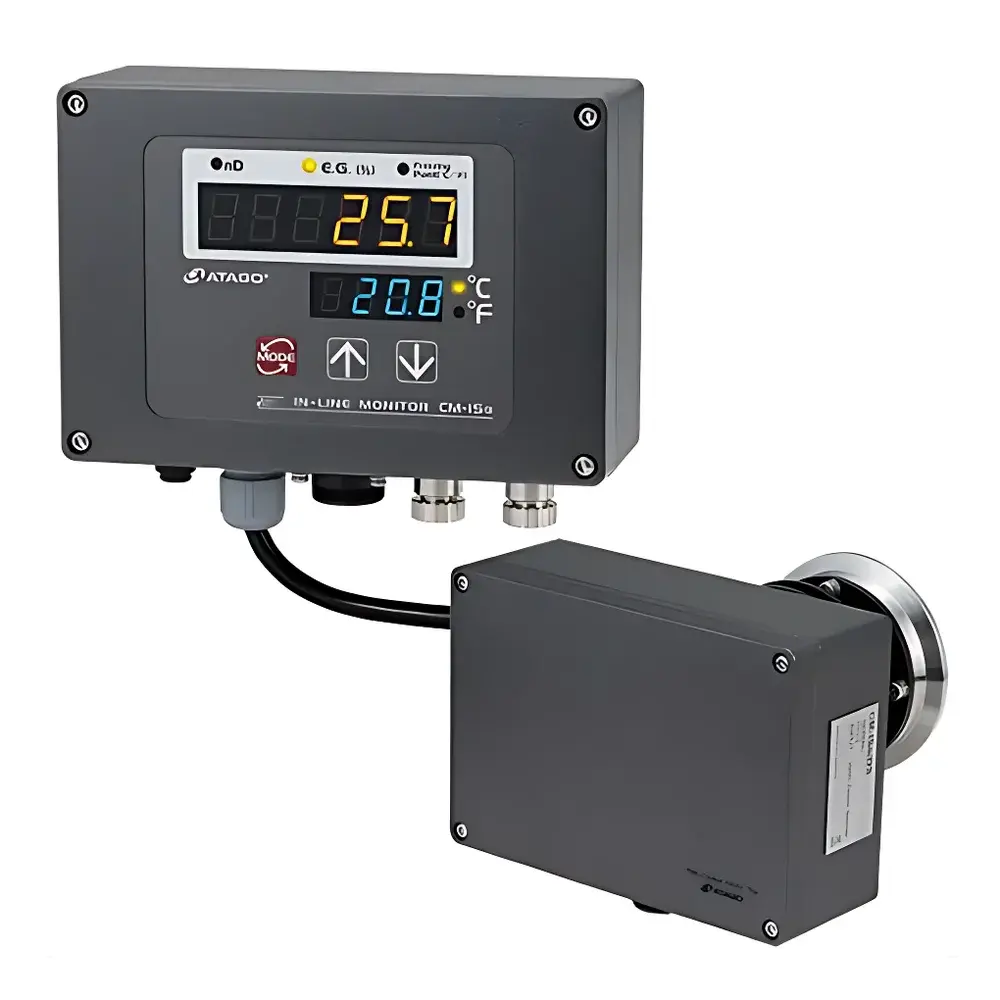
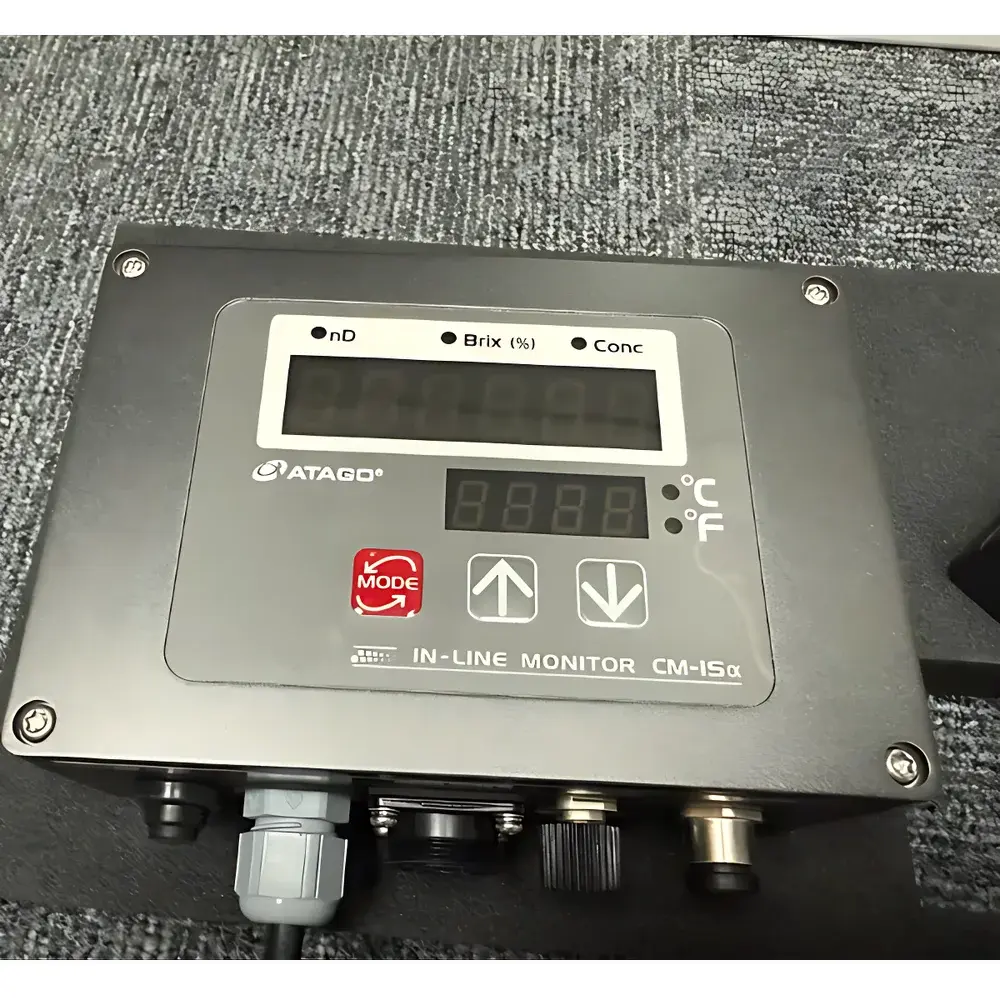
ATAGO CM-Isα-EG Intrinsically Safe Online Ethylene Glycol Refractometer
| Brand | ATAGO |
|---|---|
| Origin | Japan |
| Model | CM-Isα-EG |
| Explosion Protection Rating | Ex ia IIB T3 Ga TA |
| Measuring Principle | Refractive Index (RI) |
| RI Range | 1.32000–1.49100 |
| EG Concentration Range | 0.0–53.0% w/w |
| Freeze Point Range | −50 to 0 °C (−58 to 32 °F) |
| Process Temperature Range | −15 to 160 °C (5 to 320 °F) |
| RI Resolution | 0.00001 |
| EG Resolution | 0.1% |
| Freeze Point Resolution | 1 °C / 1 °F |
| Temperature Resolution | 0.1 °C / 0.1 °F |
| RI Accuracy | ±0.0002 |
| EG Concentration Accuracy | ±1.0% |
| Freeze Point Accuracy | ±1 °C / ±1 °F |
| Temperature Accuracy | ±1 °C / ±1 °F |
| Temp. Compensation Range | 5–100 °C |
| Power Supply | AC 100–240 V, 50/60 Hz |
Overview
The ATAGO CM-Isα-EG is an intrinsically safe, industrial-grade online refractometer engineered for continuous, real-time monitoring of ethylene glycol (EG) concentration in process streams. It operates on the fundamental optical principle of refractive index measurement: as the concentration of EG in aqueous solution changes, the speed of light propagation through the medium shifts predictably—enabling precise, non-invasive quantification without sample extraction or reagent consumption. Designed specifically for hazardous area deployment, the CM-Isα-EG complies with IEC 60079-0 and IEC 60079-11 standards, carrying the Ex ia IIB T3 Ga TA certification—indicating intrinsic safety for Group IIB explosive gas atmospheres, a maximum surface temperature of 85 °C (T3), and suitability for Zone 0 (Ga) classified locations. Its robust stainless steel (SUS316L) wetted parts ensure chemical compatibility with glycol-based coolants, heat transfer fluids, and antifreeze formulations across demanding thermal and mechanical operating conditions.
Key Features
- Intrinsically safe design certified to Ex ia IIB T3 Ga TA—enabling direct installation in Zone 0, Zone 1, and Zone 2 hazardous areas without explosion-proof enclosures.
- High-resolution digital refractometry with 0.00001 RI resolution and ±0.0002 RI accuracy, supporting trace-level concentration tracking in critical cooling and thermal management systems.
- Simultaneous real-time output of three interrelated parameters: ethylene glycol mass concentration (% w/w), calculated freeze point (°C/°F), and process temperature (°C/°F).
- Wide operational temperature range from −15 °C to +160 °C, with automatic temperature compensation (5–100 °C) ensuring metrological stability under dynamic thermal loads.
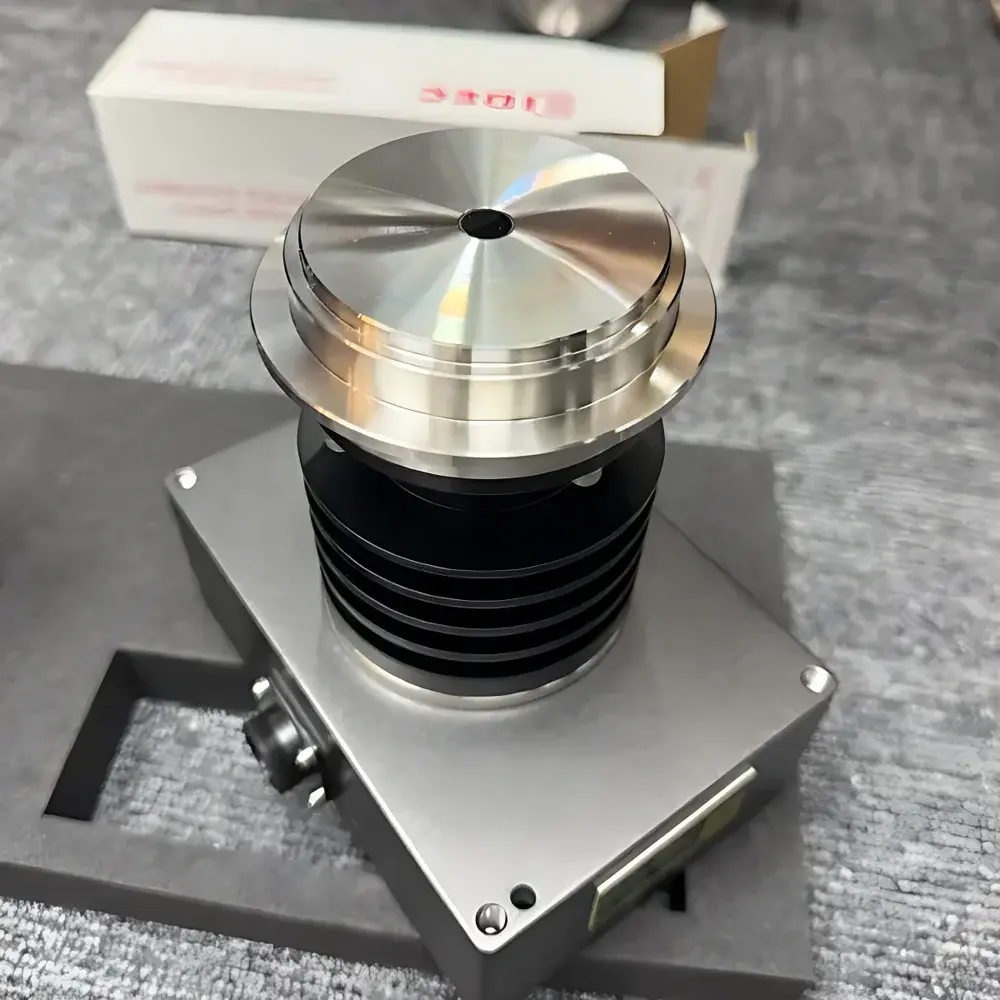
- Optical sensing head with sapphire prism interface—resistant to abrasion, corrosion, and high-pressure cleaning; compatible with CIP/SIP protocols in regulated manufacturing environments.
- Modular analog (4–20 mA) and digital (RS-485 Modbus RTU) outputs for seamless integration into DCS, PLC, or SCADA systems—supporting HART-compatible configuration via optional handheld communicator.
Sample Compatibility & Compliance
The CM-Isα-EG is validated for use with aqueous ethylene glycol solutions ranging from 0.0% to 53.0% w/w—covering standard automotive antifreeze blends, HVAC chiller fluids, and industrial heat transfer media. It is not intended for use with propylene glycol, methanol, or multi-component coolant additives containing surfactants, dyes, or inhibitors that may alter refractive behavior nonlinearly. The instrument conforms to ISO 21501-4 for optical particle characterization infrastructure (where applicable), and its electrical safety architecture aligns with IEC 61000-6-2 (immunity) and IEC 61000-6-4 (emissions). For pharmaceutical or biotech applications requiring audit readiness, optional firmware supports configurable data logging with timestamped event records—compatible with GLP/GMP-aligned validation protocols when deployed with qualified installation and periodic calibration per ISO/IEC 17025 requirements.
Software & Data Management
While the CM-Isα-EG operates as a stand-alone sensor, its RS-485 interface enables bidirectional communication with ATAGO’s optional PC-based configuration utility (RefractoLink™ v3.x), allowing users to define custom calibration curves, set alarm thresholds, configure linearization tables for non-ideal mixtures, and export time-stamped measurement logs in CSV format. All configuration changes are stored in non-volatile memory with write-protection options. When integrated into enterprise MES or LIMS platforms, the device supports deterministic polling intervals (1–30 sec) and fault reporting via discrete status bits—including prism fouling detection (via signal drift trend analysis) and temperature sensor integrity verification. No cloud connectivity or proprietary SaaS subscription is required; data sovereignty remains fully under end-user control.
Applications
- Real-time concentration control in ethylene glycol-based HVAC chiller plants to prevent freezing or overheating during seasonal load variations.
- Monitoring of antifreeze blending lines in automotive fluid manufacturing—ensuring batch consistency prior to packaging and regulatory release.
- Continuous verification of glycol concentration in closed-loop heat transfer systems used in semiconductor fab chillers and photovoltaic wafer processing equipment.
- Preventive maintenance support in power generation facilities using EG-cooled transformers—detecting dilution events caused by seal leakage or cross-contamination.
- Compliance-driven process monitoring in ATEX-regulated chemical processing units where manual sampling poses safety or throughput constraints.
FAQ
What is the difference between “Ex ia” and “Ex d” protection methods?
Ex ia denotes intrinsic safety—the circuit energy is limited below ignition thresholds for explosive atmospheres—even under fault conditions. Ex d relies on flameproof enclosure design. CM-Isα-EG uses Ex ia, permitting installation in Zone 0 without barriers.
Can this refractometer measure propylene glycol solutions?
No. The CM-Isα-EG is factory-calibrated exclusively for ethylene glycol–water systems. Propylene glycol exhibits different refractive index–concentration behavior and requires a dedicated model (e.g., CM-Isα-PG).
Is recalibration required after installation?
Yes. Initial field calibration using certified reference standards (traceable to NIST or JCSS) is mandatory per ISO 9001 and industry best practices. Recommended recalibration interval: every 6–12 months, depending on process fouling risk and audit requirements.
Does the device support FDA 21 CFR Part 11 compliance?
The base unit does not include electronic signature or audit trail functionality. However, when integrated with validated third-party SCADA or MES systems meeting Part 11 criteria, it contributes compliant raw measurement data—provided user-defined SOPs govern access control, change management, and record retention.
What maintenance is required for long-term reliability?
Routine inspection of prism cleanliness and gasket integrity every 3 months; annual verification of temperature sensor drift and optical alignment using factory service tools. No consumables or moving parts require replacement.
Related Products