SPL Photonics FPI 100 Fabry-Perot Interferometer
| Origin | USA |
|---|---|
| Supplier Type | Authorized Distributor |
| Import Status | Imported |
| Model | FPI 100 |
| Pricing | Upon Request |
Overview
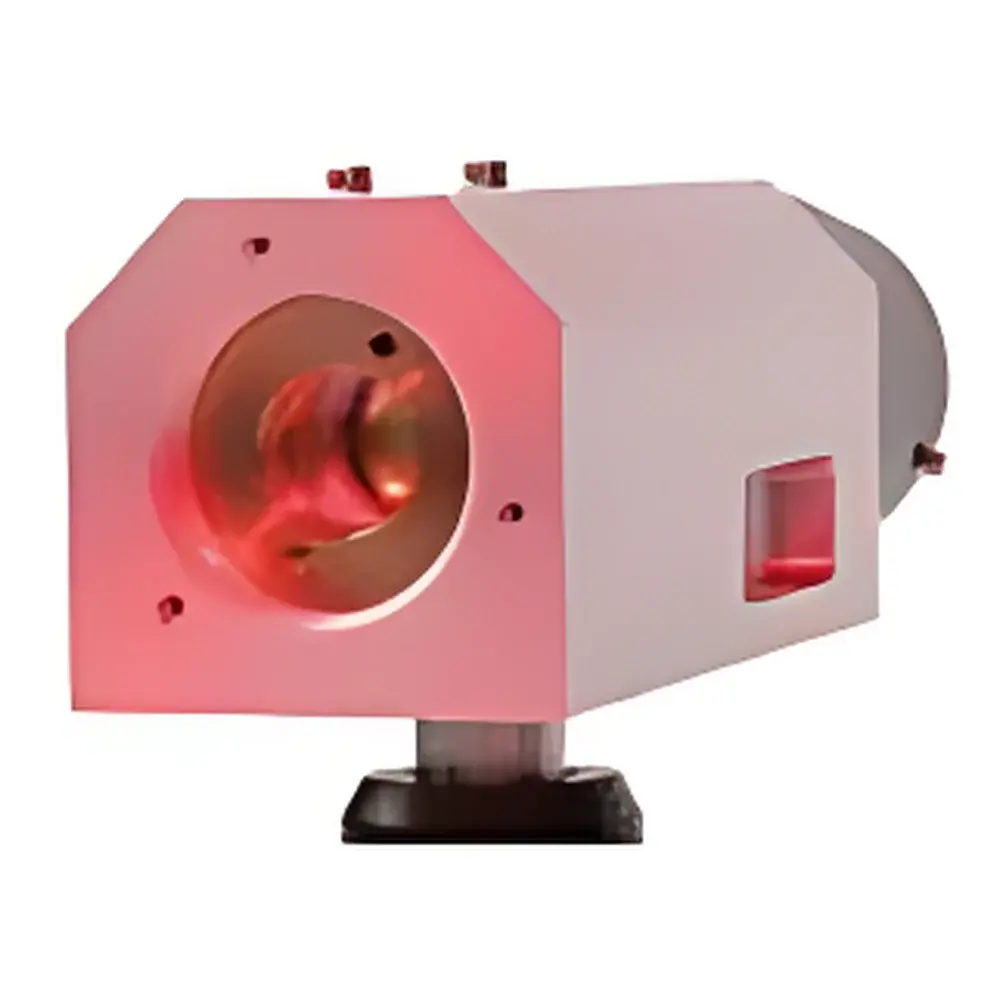
The SPL Photonics FPI 100 Fabry-Perot Interferometer is a confocal scanning interferometric system engineered for high-resolution longitudinal mode (longitudinal mode spacing, or free spectral range) and transverse mode (TEMnm) characterization of continuous-wave (CW) lasers. Operating on the principle of multiple-beam interference within a resonant cavity formed by two highly reflective, precisely aligned mirrors, the FPI 100 enables precise measurement of laser linewidth, mode structure, frequency stability, and cavity length variations. Its confocal geometry ensures optimal spatial filtering and axial resolution—critical for distinguishing closely spaced longitudinal modes in single-frequency and multi-mode CW lasers across UV–NIR–MIR spectral bands. Designed for integration into laser development labs, metrology facilities, and quantum optics research environments, the instrument delivers repeatable, traceable spectral analysis without requiring external alignment optics or auxiliary detection hardware.
Key Features
- Confocal scanning architecture with integrated photodetector unit for direct signal acquisition and real-time mode visualization
- Eight interchangeable mirror sets covering wavelength ranges from 300 nm to 3000 nm—enabling application flexibility across UV, visible, NIR, and short-wave infrared domains
- Standard mirror reflectivity ≥99.8%, yielding a finesse >400 at 1 GHz or 4 GHz free spectral range (FSR), supporting sub-MHz spectral resolution capability
- Optional fiber-coupling kit with FC/APC connectors for seamless integration into fiber-based laser systems
- Modular photodiode replacement kits (visible, NIR, and IR optimized) with built-in focusing lens alignment—ensuring consistent detector positioning and coupling efficiency
- User-defined finesse scanning mode, allowing configurable cavity tuning profiles for customized spectral interrogation protocols
- Standalone miniScan scanning generator with integrated photodiode amplifier—eliminating dependency on external lock-in amplifiers or DAQ systems
Sample Compatibility & Compliance
The FPI 100 is compatible with free-space and fiber-coupled CW laser sources emitting stable output power between 10 µW and 50 mW (dependent on wavelength and detector configuration). It supports alignment-free operation for collimated beams with diameters up to 3 mm and divergence <1 mrad. Mirror sets comply with ISO 10110 surface quality standards (scratch-dig ≤ 10-5), and cavity spacing is mechanically stabilized against thermal drift via low-expansion Invar spacers. The system meets general laboratory safety requirements per IEC 60825-1:2014 (Class 1 or Class 2M depending on configuration) and supports documentation traceability for GLP/GMP-aligned calibration workflows. While not certified to a specific ASTM or ISO standard for interferometry, its optical design adheres to fundamental principles defined in ISO/IEC 17025-compliant measurement uncertainty frameworks when used with NIST-traceable reference lasers.
Software & Data Management
The FPI 100 operates with vendor-provided Windows-based control software supporting real-time spectrum display, peak identification, FSR/finesse calculation, and mode spacing histogram generation. Data export is available in CSV, ASCII, and HDF5 formats for post-processing in MATLAB, Python (NumPy/SciPy), or LabVIEW. The software includes audit-trail logging of all parameter changes, scan configurations, and timestamped acquisitions—facilitating compliance with FDA 21 CFR Part 11 requirements when deployed in regulated R&D environments. No cloud connectivity or proprietary runtime dependencies are required; all drivers are WHQL-certified and compatible with Windows 10/11 (64-bit).
Applications
- Longitudinal mode analysis of diode lasers, fiber lasers, and solid-state CW lasers
- Measurement of laser cavity length stability and thermal drift under environmental stress testing
- Verification of single-longitudinal-mode (SLM) operation and side-mode suppression ratio (SMSR)
- Characterization of external cavity diode lasers (ECDLs) and tunable laser sources
- Calibration reference for wavemeters and optical spectrum analyzers (OSAs)
- Supporting research in cavity quantum electrodynamics (cavity QED), optical frequency combs, and precision spectroscopy
FAQ
What wavelength ranges does the FPI 100 support?
The instrument supports operation from 300 nm to 3000 nm using eight user-selectable mirror sets—each optimized for a specific spectral band.
Is fiber coupling possible without additional alignment tools?
Yes—the optional FC/APC fiber-coupling kit includes kinematic mounts and pre-aligned focusing optics, enabling rapid, repeatable coupling with minimal alignment effort.
Can the finesse be adjusted during operation?
Finesse is determined by mirror reflectivity and cavity geometry; however, the miniScan generator supports user-defined scan profiles—including variable-speed sweeps and dwell-time optimization—for adaptive spectral interrogation.
Does the system require external vibration isolation?
While not mandatory, operation on an active or passive optical table is recommended for measurements requiring sub-pm-level cavity stability, particularly at FSR = 1 GHz.
Are calibration certificates provided with the instrument?
A factory verification report—including mirror reflectivity data, measured FSR, and finesse validation using a HeNe reference laser—is supplied with each unit. NIST-traceable calibration services are available upon request.