
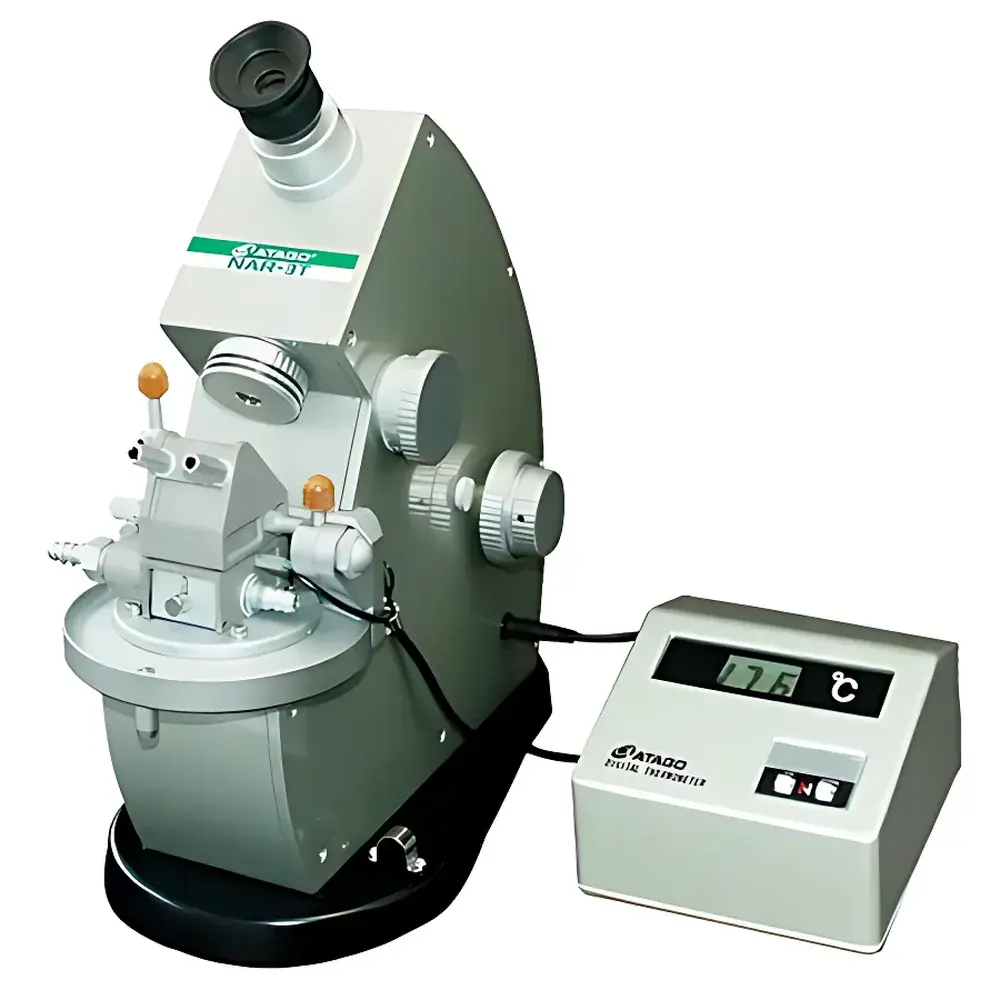
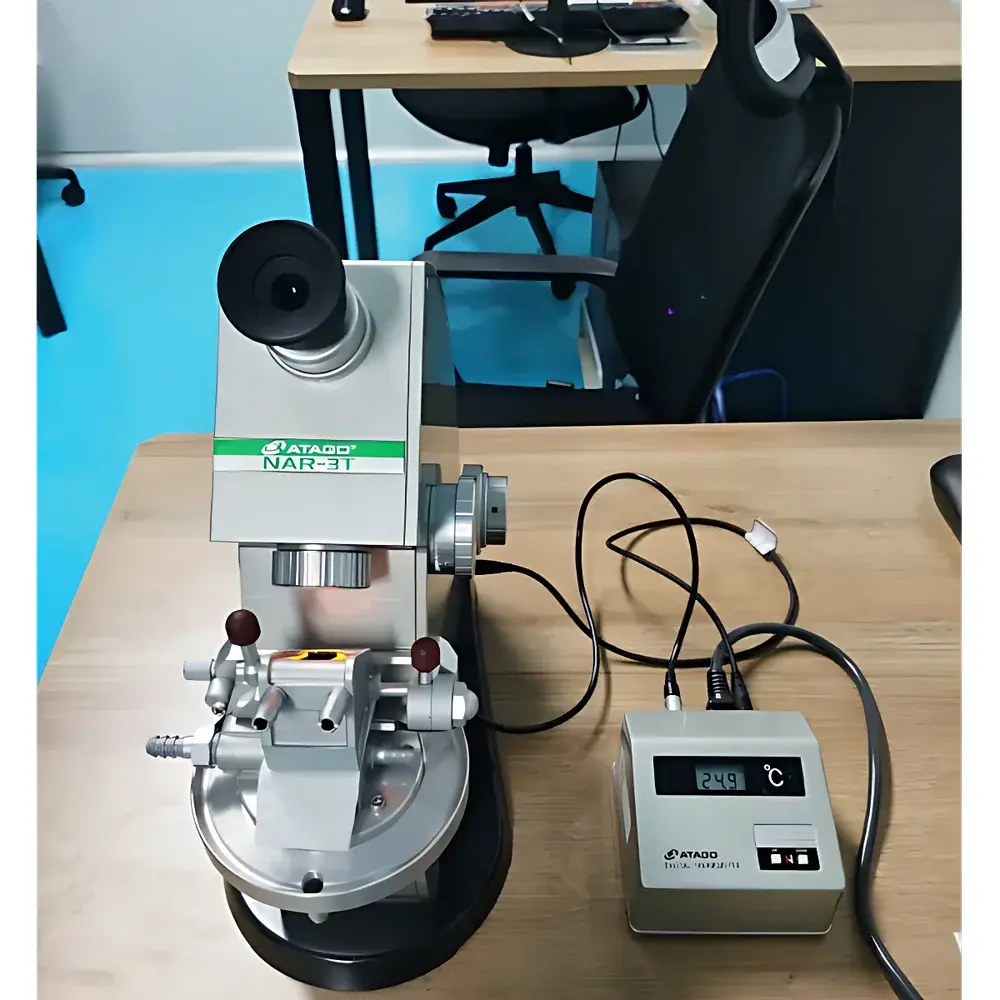
ATAGO NAR-3T High-Precision Abbe Refractometer
| Brand | ATAGO |
|---|---|
| Origin | Japan |
| Model | NAR-3T |
| Instrument Type | Benchtop Abbe Refractometer |
| Display | Digital LCD |
| Temperature Measurement Range | 5–50 °C (±0.2 °C accuracy, 0.1 °C resolution) |
| Refractive Index (nD) Range | 1.30000–1.71000 |
| Brix Range | 0.00–95.00% |
| nD Resolution | 0.0002 |
| nD Accuracy | ±0.0001 |
| Brix Resolution | 0.1% |
| Brix Accuracy | ±0.05% |
| Average Dispersion (nF−nC) | Calculated via standard conversion table |
| Power Supply | AC 100–240 V, 50/60 Hz |
| Power Consumption | 5 VA |
| Dimensions (Main Unit) | 12 × 31 × 34 cm |
| Weight (Main Unit) | 9.0 kg |
| Dimensions (Temperature Display Unit) | 10 × 11 × 7 cm |
| Weight (Temperature Display Unit) | 0.5 kg |
| Operating Ambient Temperature | 5–40 °C |
| Compliance | ISO 21748, ASTM D1218, JIS K0061 |
Overview
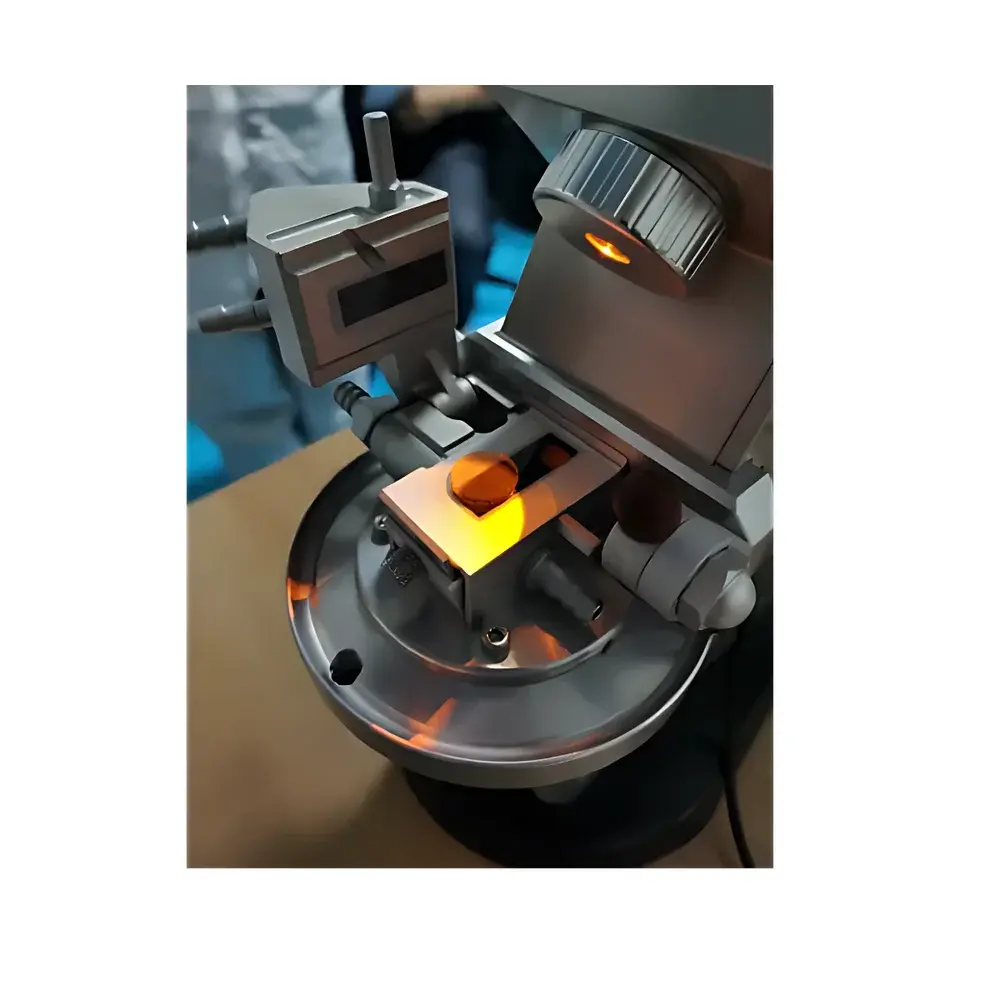
The ATAGO NAR-3T High-Precision Abbe Refractometer is a manually operated, optical benchtop instrument engineered for the accurate determination of refractive index (nD) and Brix concentration in transparent and semi-transparent liquid samples — including aqueous solutions, organic solvents, oils, polymers, and thin solid films such as plastics, resins, and optical glasses. Based on the classical Abbe principle, the instrument employs collimated sodium D-line illumination (589.3 nm) and total internal reflection at the sample-prism interface to determine nD with high angular resolution. Its dual-scale optical eyepiece — calibrated for both nD and %Brix — enables direct visual reading, while the integrated digital temperature sensor and LCD display provide real-time thermal monitoring essential for traceable, temperature-corrected measurements. Designed for metrological integrity in regulated environments, the NAR-3T meets the fundamental requirements of ISO 21748 (repeatability of measurement standards), ASTM D1218 (standard test method for refractive index of hydrocarbon liquids), and JIS K0061 (Japanese Industrial Standard for refractometers), making it suitable for QC laboratories operating under GLP or ISO/IEC 17025 frameworks.
Key Features
- High-precision optical system delivering ±0.0001 refractive index accuracy and ±0.05% Brix accuracy — validated per manufacturer’s calibration protocol using certified NIST-traceable reference fluids.
- Dual-range measurement capability: nD from 1.30000 to 1.71000 (0.0002 resolution) and Brix from 0.00 to 95.00% (0.1% resolution), supporting applications across low-index solvents and high-refractive-index polymers.
- Integrated digital temperature sensor with independent display unit (0.0–50.0 °C range, ±0.2 °C accuracy, 0.1 °C resolution), enabling manual temperature compensation during data recording.
- Benchtop mechanical architecture with precision-ground prisms, adjustable ocular focus, and anti-parallax reticle for consistent operator alignment and inter-user reproducibility.
- No active temperature control — optimized for ambient-stabilized operation between 5–40 °C; compatible with external water baths or Peltier stages for extended thermal control (optional).
- Low power consumption (5 VA) and universal AC input (100–240 V, 50/60 Hz), ensuring stable performance in multi-voltage laboratory environments without voltage regulation.
Sample Compatibility & Compliance
The NAR-3T accommodates a broad spectrum of sample types: homogeneous liquids (e.g., sucrose solutions, glycerol, ethylene glycol, essential oils), viscous media (e.g., syrups, resins, adhesives), and flat-surface solids (e.g., PMMA, polycarbonate, fused silica wafers, PET films) when coupled with the optional solid-sample stage. Sample volume requirement is ≤0.1 mL for liquids; solid samples require optically polished, parallel surfaces ≥10 mm × 10 mm. The instrument complies with international refractometry standards including ASTM D1218 (hydrocarbons), ISO 21748 (uncertainty evaluation), and JIS K0061 (performance verification). While not equipped with automated audit trails or electronic signatures, its analog-digital hybrid design supports manual documentation workflows compliant with FDA 21 CFR Part 11 Annex 11 when integrated into paper-based SOPs and logbook systems.
Software & Data Management
The NAR-3T operates as a standalone optical-electronic instrument with no embedded microprocessor or USB/RS-232 connectivity. All measurements are recorded manually by the operator, with temperature and nD/Brix values displayed simultaneously on separate LCD modules. For digital data capture, users may integrate the instrument with external imaging systems (e.g., CCD-equipped microscope cameras) or use ATAGO’s optional NAR-Link software suite (sold separately) — compatible with Windows-based PCs — to log readings, apply temperature correction algorithms (based on published literature coefficients), generate calibration reports, and export CSV files for LIMS integration. Calibration verification is performed using certified ATAGO standard reference fluids (e.g., distilled water, bromonaphthalene, and sucrose solutions traceable to NIST SRM 84d).
Applications
The NAR-3T serves as a primary reference tool in quality control and R&D laboratories across diverse sectors. In food and beverage production, it verifies sugar content in fruit juices, syrups, and dairy concentrates per AOAC 932.12. In pharmaceutical manufacturing, it monitors excipient purity (e.g., propylene glycol, glycerin) and confirms solvent identity in API synthesis per USP . Petrochemical labs employ it for hydrocarbon classification and distillate analysis per ASTM D1218. Polymer and coating manufacturers rely on it for resin batch consistency, monomer conversion tracking, and film refractive index validation. Academic institutions utilize the NAR-3T in physical chemistry labs to teach optical dispersion theory, Cauchy equation fitting, and temperature-dependent refractivity modeling.
FAQ
Does the NAR-3T include automatic temperature compensation (ATC)?
No — the NAR-3T features a digital temperature sensor for manual monitoring only; ATC requires external calibration tables or post-measurement correction using published temperature coefficients.
Can the NAR-3T measure opaque or turbid samples?
No — the Abbe principle requires optical transparency at the prism-sample interface; highly scattering or particulate-laden samples yield unreliable or non-repeatable readings.
Is the instrument supplied with calibration standards?
Standard delivery includes a cleaning cloth, pipette, and instruction manual; certified calibration fluids (e.g., ATAGO Standard Solution Set No. 1) are available as optional accessories.
What is the recommended recalibration interval?
ATAGO recommends annual verification against traceable standards; frequency may increase based on usage intensity, environmental conditions, and internal QA protocols.
Is the NAR-3T suitable for GMP-regulated environments?
Yes — when used within documented procedures, maintained with calibration records, and operated by trained personnel, it fulfills the instrumental qualification requirements for Category A equipment under EU GMP Annex 15.




