
ATAGO MASTER-VET Dual-Scale Veterinary Urine Specific Gravity Refractometer
| Brand | ATAGO |
|---|---|
| Origin | Japan |
| Model | MASTER-VET |
| Product Type | Handheld Analog Refractometer |
| Temperature Compensation | Yes |
| Digital Display | No |
| Measurement Range | Urine Specific Gravity (Dogs): 1.000–1.060 |
| Urine Specific Gravity (Cats) | 1.000–1.080 |
| Serum Protein | 0.0–14.0 g/100 mL |
| Accuracy | ±0.002 for Urine S.G. |
| Resolution | 0.001 (Urine S.G.), 0.2 g/100 mL (Serum Protein) |
| Operating Temperature | 5–40 °C |
| IP Rating | IP65 (excluding eyepiece) |
| Dimensions | 32(D) × 34(H) × 168(W) mm |
| Weight | 90 g |
Overview
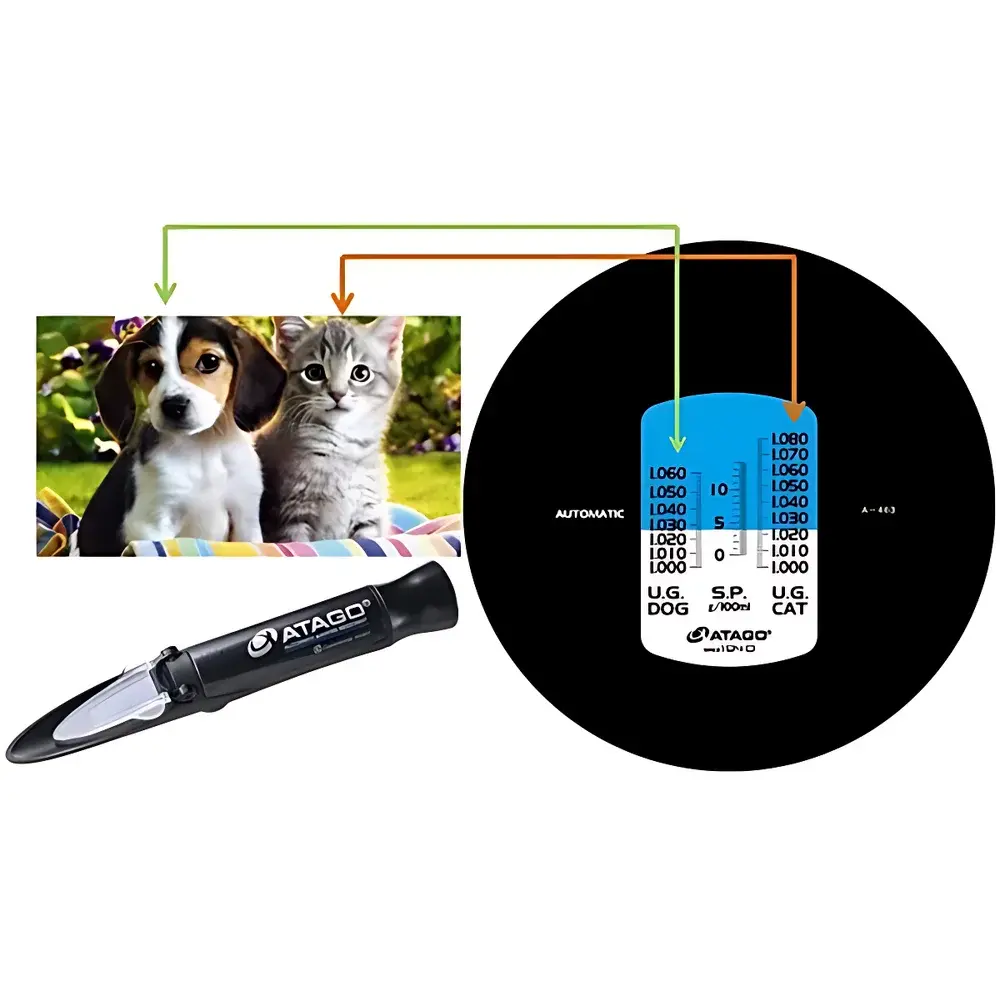
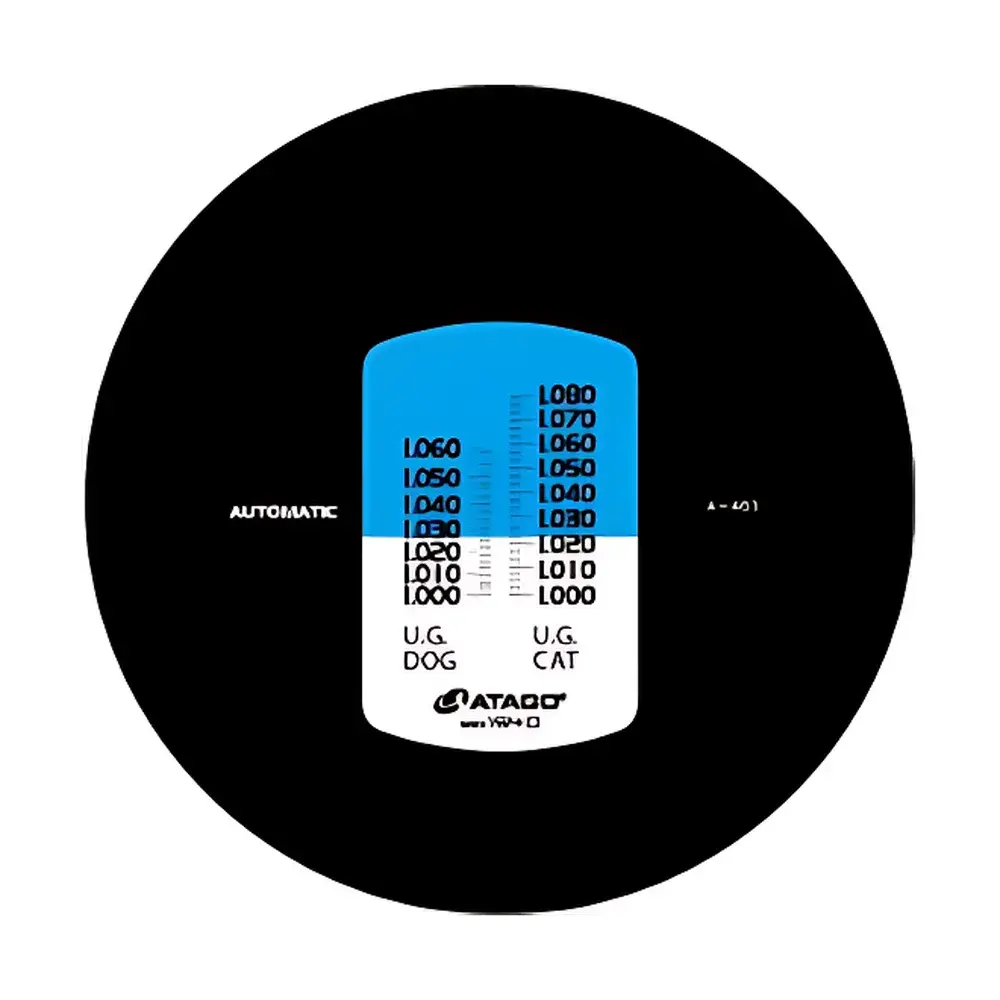
The ATAGO MASTER-VET Dual-Scale Veterinary Urine Specific Gravity Refractometer is a precision optical instrument engineered for rapid, reliable assessment of urine concentration and serum protein levels in canine and feline clinical practice. Based on the fundamental principle of refractometry—measuring the degree to which light bends (refracts) when passing through a liquid sample—the device correlates refractive index to solute concentration via calibrated optical scales. Unlike digital alternatives, the MASTER-VET employs an analog Abbe-type prism system with built-in automatic temperature compensation (ATC), ensuring consistent readings across ambient conditions from 5 to 40 °C without external calibration or power sources. Its dual-scale刻度 (dual-scale) design features two parallel optical graduations: one optimized for canine urine specific gravity (1.000–1.060), the other for feline urine (1.000–1.080), reflecting species-specific renal physiology and diagnostic reference intervals. A third scale enables direct readout of total serum protein (0.0–14.0 g/100 mL), supporting concurrent evaluation of hydration status and plasma oncotic pressure in outpatient or field settings.
Key Features
- Optically calibrated dual-scale reticle for species-specific urine specific gravity (canine and feline) and serum protein quantification
- Automatic temperature compensation (ATC) mechanism using bimetallic thermal expansion, eliminating manual correction within 10–30 °C operating range
- IP65-rated housing (excluding eyepiece) — dust-tight and resistant to low-pressure water jets, suitable for clinic countertops, mobile veterinary units, and field use
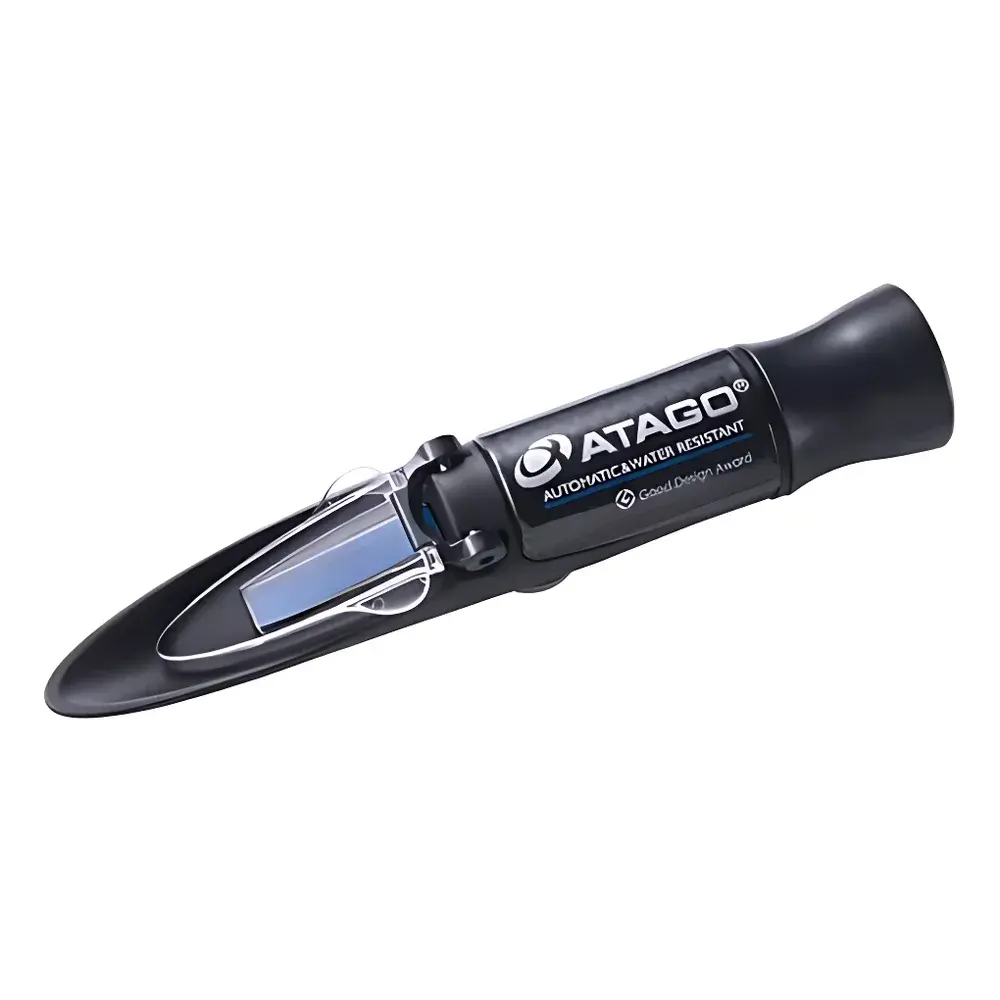
- Compact ergonomic design (168 × 34 × 32 mm; 90 g) with non-slip rubberized grip and integrated daylight illumination plate for consistent visual reading under ambient lighting
- No batteries or electronics required — fully mechanical operation ensures long-term reliability and zero downtime due to power failure or firmware issues
- High optical resolution: 0.001 units for urine specific gravity and 0.2 g/100 mL for serum protein, enabling detection of subtle physiological shifts during serial monitoring
Sample Compatibility & Compliance
The MASTER-VET is validated for use with native, uncentrifuged urine specimens (1–2 drops required) and whole blood serum or plasma samples. It does not require dilution, filtration, or pre-warming, making it compatible with point-of-care workflows in accordance with American Animal Hospital Association (AAHA) and World Small Animal Veterinary Association (WSAVA) guidelines for urinalysis. While the instrument itself is not FDA-cleared as a Class II medical device, its measurement methodology aligns with ISO 11290-2:2017 (microbiological methods) and CLSI EP15-A3 (user verification of precision and trueness) principles for qualitative and semi-quantitative clinical analyzers. Results are traceable to NIST-traceable refractive index standards via ATAGO’s factory calibration protocol (certified per JIS Z 8013). The device supports GLP-compliant documentation when paired with standardized SOPs for sample handling, instrument cleaning (using lens tissue and recommended ethanol/isopropanol solutions), and operator training records.
Software & Data Management
As a fully analog, non-digital instrument, the MASTER-VET does not incorporate embedded software, Bluetooth connectivity, or data logging capabilities. This design choice prioritizes operational robustness, regulatory simplicity, and immunity to cybersecurity vulnerabilities or software obsolescence. Clinical users record measurements manually in patient charts, electronic health records (EHR), or laboratory information systems (LIS) using standardized terminology (e.g., LOINC codes 2512-4 for urine specific gravity and 2347-6 for serum total protein). For institutions requiring audit trails under 21 CFR Part 11, manual entry must be accompanied by dual-signature verification and timestamped logbooks. ATAGO provides a printable calibration verification checklist (Form MV-CAL-01) and recommends biannual verification using certified reference fluids (e.g., 1.020 and 1.040 S.G. standards) traceable to NIST SRM 1829.
Applications
- Assessment of renal concentrating ability in dogs and cats presenting with polyuria/polydipsia (PU/PD), suspected chronic kidney disease (CKD), or post-acute tubular necrosis recovery
- Monitoring response to fluid therapy, diuretic administration, or corticosteroid treatment through serial urine specific gravity trends
- Differentiation between prerenal azotemia (elevated S.G.) and renal azotemia (isosthenuria or hyposthenuria) in emergency triage
- Rapid estimation of serum total protein in dehydrated patients where centrifugation is unavailable, supporting assessment of colloid osmotic pressure and hypoalbuminemia risk
- Supporting WSAVA Global Renal Task Force staging criteria (IRIS guidelines) through objective, repeatable urine concentration metrics
- Field diagnostics in shelter medicine, wildlife rehabilitation, and rural veterinary outreach programs where portability and battery independence are critical
FAQ
How does temperature compensation work in the MASTER-VET?
The instrument integrates a bimetallic strip adjacent to the prism block that physically adjusts the optical path length in response to ambient temperature changes, maintaining refractive index correlation accuracy across 10–30 °C without user intervention.
Can I measure urine from other species such as rabbits or ferrets?
While not calibrated for non-canine/feline species, readings may be obtained—but interpretation must rely on species-specific reference intervals established in peer-reviewed literature (e.g., Veterinary Clinical Pathology, Vol. 48, Issue 2). ATAGO does not validate cross-species performance.
What cleaning protocol is recommended between samples?
Wipe the prism surface with lint-free lens tissue moistened with distilled water or 70% isopropyl alcohol; avoid abrasive cloths or acetone. Allow to air-dry completely before next use to prevent residue-induced refractive error.
Is calibration required before each use?
No daily calibration is needed. However, verification with a certified 1.000 distilled water standard should be performed at the start of each shift or after instrument impact/dropping, per CLIA-waived testing best practices.
Why is there no digital display?
The analog optical design eliminates dependency on batteries, firmware updates, or electromagnetic interference—ensuring uninterrupted functionality in resource-limited environments while preserving measurement traceability through physical scale graduation.






