
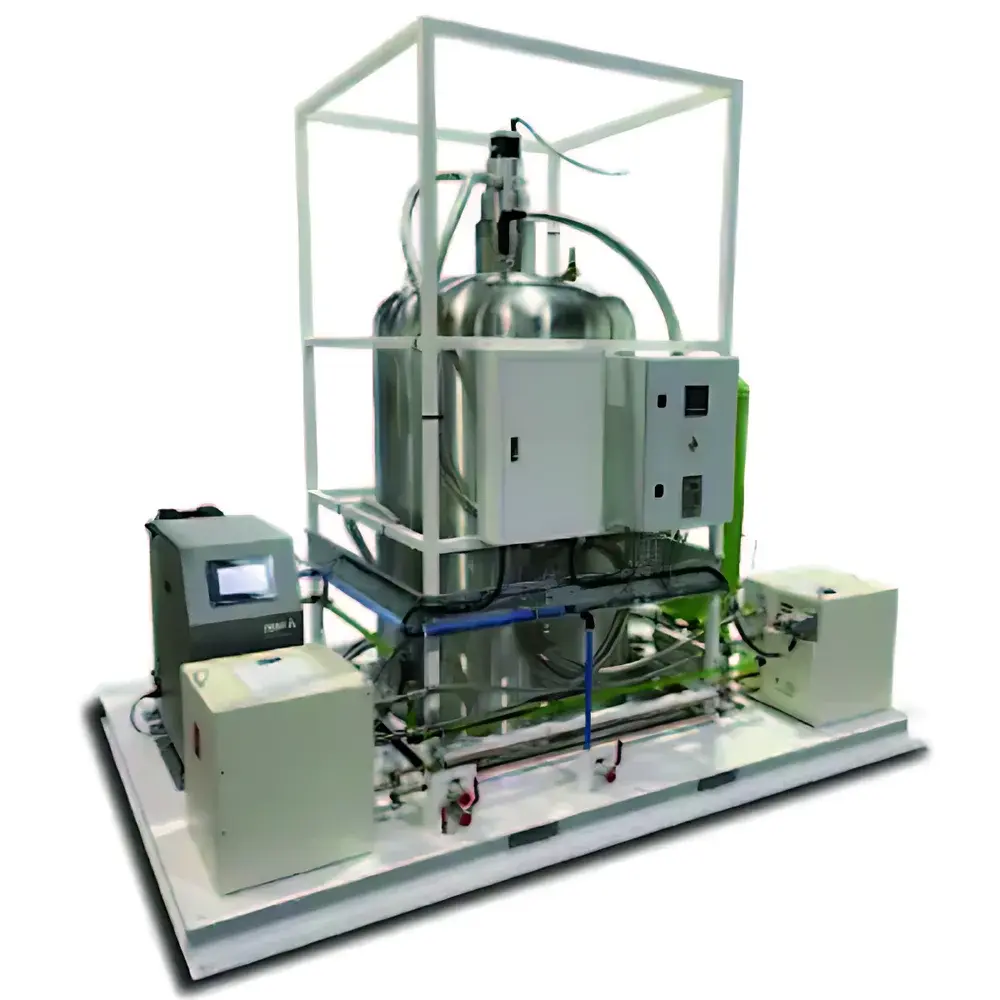
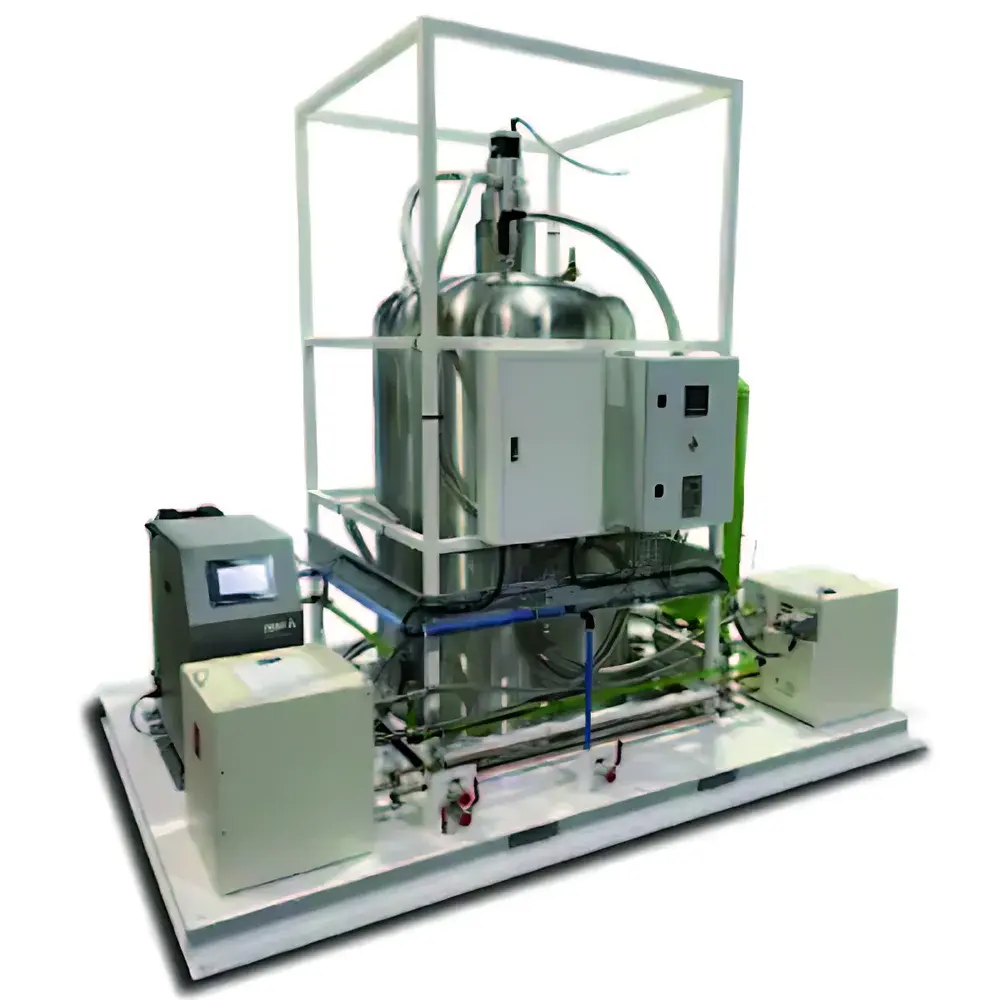
Noblegen Titan LN120 Liquid Nitrogen Generator
| Brand | PEAK |
|---|---|
| Origin | United Kingdom |
| Manufacturer Type | Original Equipment Manufacturer (OEM) |
| Product Category | Imported Equipment |
| Model | Titan LN120 |
| Pricing | Available Upon Request |
Overview
The Noblegen Titan LN120 Liquid Nitrogen Generator is an integrated, skid-mounted on-site nitrogen liquefaction system engineered for continuous, high-reliability liquid nitrogen (LN₂) production in demanding laboratory and industrial environments. Utilizing a closed-cycle, helium-refrigerated cryogenic compression process—combined with advanced pressure swing adsorption (PSA) pre-purification—the Titan LN120 converts compressed ambient air into high-purity gaseous nitrogen, then liquefies it via a proprietary multi-stage turbo-expander cascade. Unlike dewar-based delivery systems, this generator eliminates logistical dependencies on third-party LN₂ supply chains, reducing contamination risk, transport emissions, and operational downtime. Designed for 24/7 unattended operation, the system delivers stable output at up to 120 L/day of liquid nitrogen at –196 °C, with vaporization losses minimized through vacuum-jacketed internal storage and NPFS™ (Nitrogen Pulse Flow System) dynamic flow regulation.
Key Features
- Integrated 300 L double-walled, vacuum-insulated liquid nitrogen storage tank—enabling direct feed to downstream applications without intermediate transfer or phase-change loss
- NPFS™ Nitrogen Pulse Flow System—intelligently modulates liquefaction rate and delivery pressure based on real-time demand, avoiding over-pressurization and thermal cycling stress
- “Boost” mode—dynamically increases system head pressure and liquefaction throughput by optimizing expander speed and heat exchanger duty—without increasing electrical input or compromising long-term compressor life
- Onboard oxygen analyzer (0–25% O₂ range, ±0.1% accuracy) and integrated dew point sensor (<–70 °C) ensure continuous verification of nitrogen purity (≥99.9995% N₂, <5 ppm O₂, <1 ppm H₂O)
- Full-color capacitive touchscreen HMI with intuitive navigation, real-time graphical display of vacuum integrity, compressor status, tank level, and refrigerant temperature profiles
- Water-cooled condenser assembly—designed for stable thermal management in ambient temperatures up to 35 °C; compatible with standard facility cooling water (3–30 °C, 2–6 bar)
- Automated standby protocol—activated upon reaching 98% tank fill level; system enters low-power monitoring mode with periodic vacuum integrity checks and auto-restart capability
- Comprehensive safety architecture including redundant pressure relief valves, cryogenic-level shutoff solenoids, oxygen deficiency hazard (ODH) alarm interface, and Class I, Division 2 hazardous area compliance (per UL 61010-1 and ATEX Directive 2014/34/EU)
Sample Compatibility & Compliance
The Titan LN120 is validated for use with biological samples requiring ultra-low-temperature preservation—including oocytes, embryos, stem cell lines, primary tissues, and cryopreserved reagents—as defined under ISO 20387:2018 (Biobanking) and ASTM F1980-22 (Accelerated Aging of Sterile Barrier Systems). Its sterile-grade nitrogen generation path—featuring medical-grade stainless-steel wetted components (316L), electropolished internal surfaces, and zero oil contamination (ISO 8573-1 Class 0 certified)—meets USP analytical instrument qualification requirements for GxP-regulated environments. The system supports 21 CFR Part 11-compliant audit trails when integrated with PEAK’s optional TitanLink™ SCADA module, enabling electronic signature, user role-based access control, and immutable data logging for FDA, EMA, and MHRA inspections.
Software & Data Management
Titan LN120 operates on embedded Linux-based firmware with dual communication interfaces: Modbus TCP for integration into existing BMS/LIMS platforms and Ethernet/IP for factory automation compatibility. Remote diagnostics, firmware updates, and predictive maintenance alerts are accessible via secure TLS 1.2 web portal (TitanCloud™), which logs all critical parameters—including compressor runtime, vacuum decay rate, liquefaction efficiency (kWh/L), and cumulative LN₂ dispensed—with timestamped export to CSV or SQL databases. Optional TitanLink™ software provides automated calibration scheduling, alarm escalation workflows, and GLP-compliant electronic batch records aligned with Annex 11 and ALCOA+ principles.
Applications
- In vitro fertilization (IVF) laboratories requiring uninterrupted LN₂ supply for embryo cryostorage tanks and vitrification workstations
- Pharmaceutical R&D facilities performing cryo-EM sample preparation, lyophilization cycle development, and cold-chain stability testing
- Veterinary and agricultural biobanks preserving semen, embryos, and genetic material under controlled cryogenic conditions
- Semiconductor research labs utilizing LN₂ for low-temperature photoluminescence spectroscopy, superconducting device characterization, and cryo-probe station operation
- Academic and clinical research institutions conducting long-term biobanking, cryopreservation method validation, and hypothermic organ perfusion studies
FAQ
What is the typical lead time for installation and commissioning?
Standard factory acceptance testing (FAT) and site commissioning—including nitrogen purity validation, vacuum integrity verification, and integration with facility utilities—require 5–7 business days post-delivery.
Does the Titan LN120 require external liquid nitrogen for startup?
No. The system performs full autostart from ambient air and electrical power; no initial LN₂ charge or external cryogen is required.
Can the unit be relocated or reinstalled after initial deployment?
Yes. As a fully self-contained skid-mounted system, the Titan LN120 is designed for mobility; relocation requires only disconnection of utility interfaces and revalidation per ISO 13485 Annex A.
Is remote monitoring supported out-of-the-box?
Yes. TitanCloud™ cloud connectivity is enabled by default; local network configuration and TLS certificate provisioning are performed during commissioning.
How often does the system require preventive maintenance?
Scheduled maintenance intervals are every 2,000 operating hours or annually—whichever occurs first—with automated reminders triggered via HMI and TitanCloud™ dashboard.



