
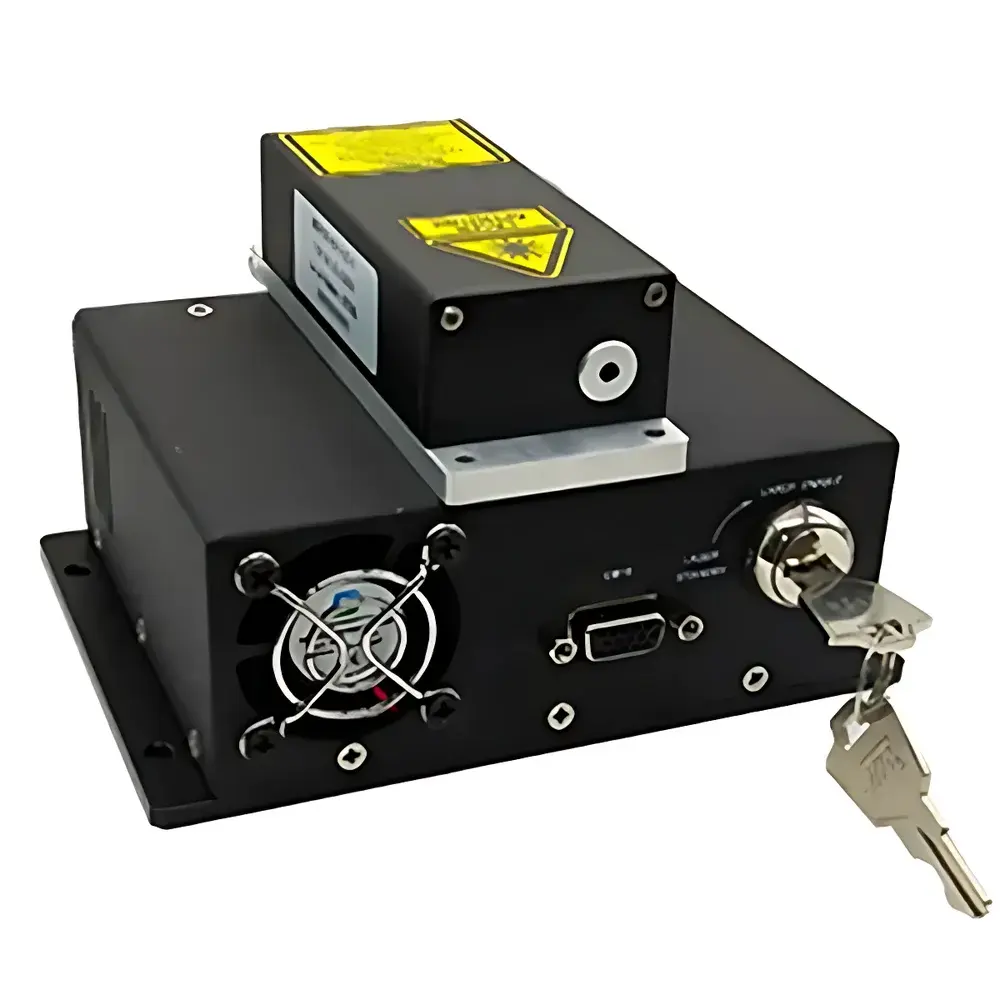
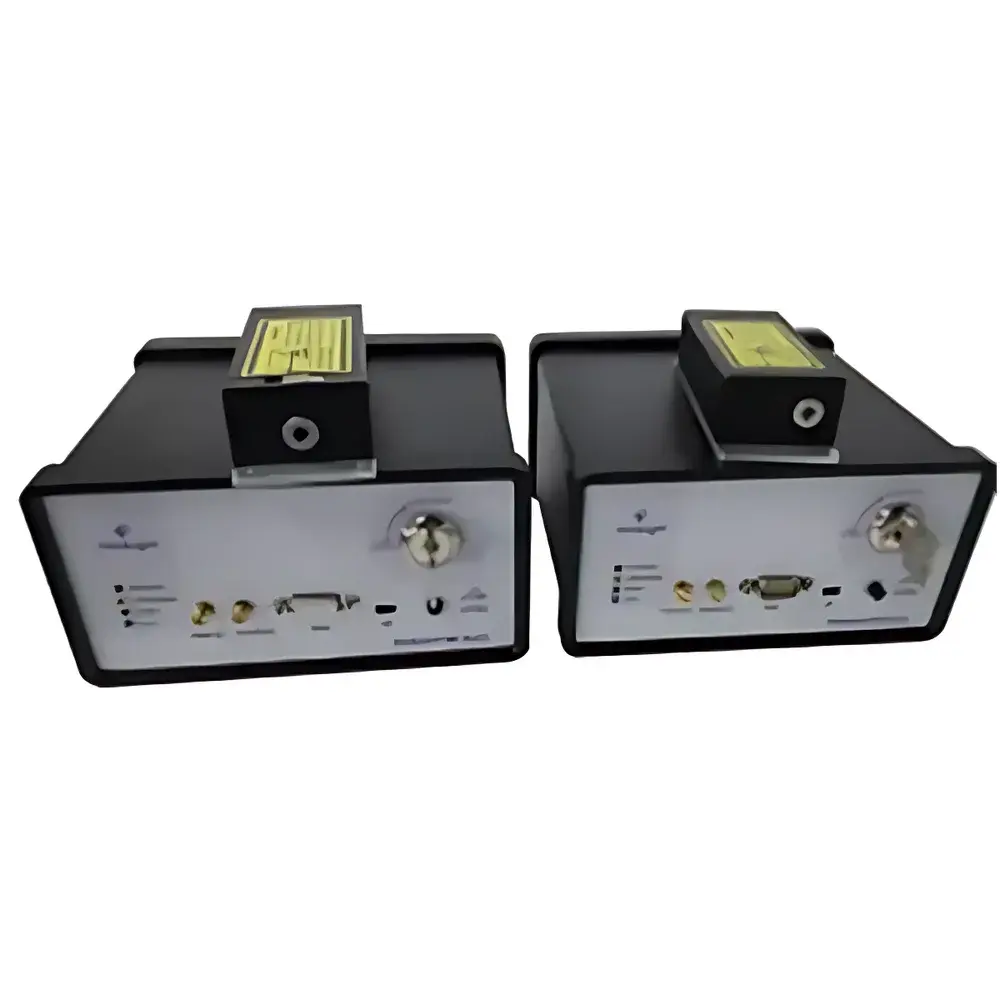
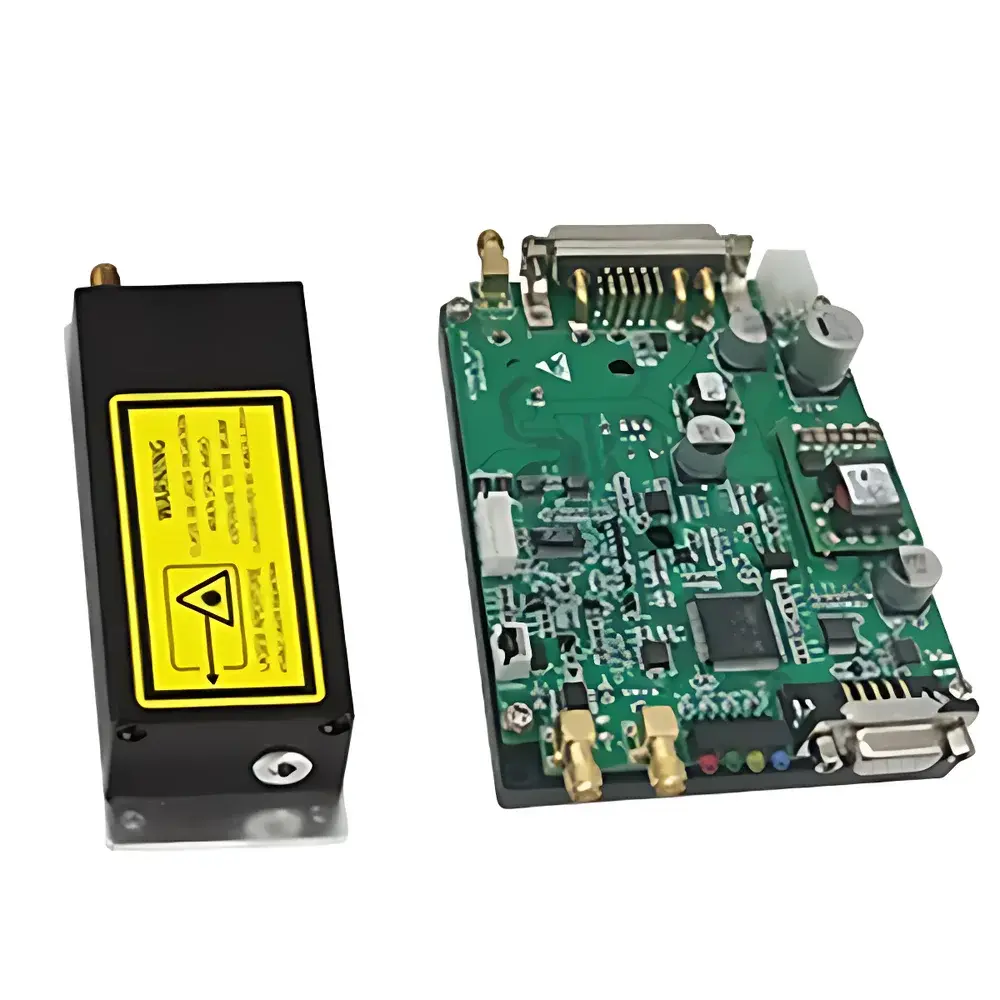
RealLight MCA-R / MCA / MCC / MCD / MCH / MCI / MCJ Series Single-Longitudinal-Mode Microchip Lasers
| Brand | RealLight |
|---|---|
| Origin | Beijing, China |
| Model Series | MCA-R, MCA, MCC, MCD, MCH, MCI, MCJ |
| Wavelength Range | 213–1064 nm |
| Pulse Width | 300 ps – 2.5 ns |
| Repetition Rate | 0.1–100 kHz |
| Average Power | 0.5–500 mW |
| Pulse Energy | 0.5–180 µJ |
| Output Type | Q-switched, TEM₀₀, single longitudinal mode (SLM) |
Overview
The RealLight MCA-R, MCA, MCC, MCD, MCH, MCI, and MCJ series are compact, diode-pumped, passively Q-switched microchip lasers engineered for high temporal coherence and exceptional beam quality. These lasers operate on the principle of monolithic resonator design—where the gain medium (Nd:YAG, Nd:YVO₄, or Ce:LiCAF), saturable absorber (e.g., Cr⁴⁺:YAG or semiconductor saturable absorber mirror), and cavity mirrors are integrated into a single solid-state chip. This architecture ensures intrinsic alignment stability, minimal thermal lensing, and robust single-longitudinal-mode (SLM) emission without external cavity feedback. The devices deliver transform-limited pulses with narrow spectral bandwidth (<0.1 pm typical), near-diffraction-limited M² < 1.1, and excellent pulse-to-pulse amplitude stability (RMS < 1.5%). Designed for integration into precision photonic systems, they serve as reliable seed sources for optical parametric oscillators (OPOs), pump lasers for ultrafast amplifiers, and primary emitters in time-resolved spectroscopy and metrology.
Key Features
- Monolithic microchip architecture enabling passive Q-switching and inherent SLM operation without active stabilization
- Wavelength versatility across deep UV (213 nm), visible (473 nm, 532 nm), and NIR (946 nm, 1030 nm, 1064 nm) via harmonic generation or direct lasing
- Pulse duration tunability from 300 ps (MCD, MCH) to 2.5 ns (MCA-R, MCI), optimized for time-of-flight resolution and nonlinear conversion efficiency
- Repetition rate flexibility: fixed-frequency (e.g., 2.5 kHz for MCA-R) or adjustable up to 100 kHz (MCC, MCD), supporting both burst-mode and CW-synchronized operation
- Hermetically sealed, conduction-cooled package compatible with OEM integration; no water cooling or external temperature controllers required
- Compliance with IEC 60825-1:2014 Class 4 laser safety standards; built-in interlock interface and TTL/CMOS-compatible trigger input
Sample Compatibility & Compliance
These microchip lasers are designed for use with standard optical mounts (e.g., kinematic bases, SM1-threaded lens tubes) and integrate seamlessly with commercial spectrometers, streak cameras, PMTs, and ICCD detectors. All models meet RoHS 2011/65/EU and REACH (EC 1907/2006) material restrictions. For regulated environments—including medical device development (ISO 13485-aligned workflows) and aerospace-grade LIDAR subsystem qualification—the lasers support traceable calibration documentation and can be supplied with factory-measured pulse energy stability reports (per ISO 11554). While not certified under FDA 21 CFR Part 11, their digital trigger interface and stable output enable straightforward integration into 21 CFR Part 11–compliant data acquisition platforms when paired with validated software.
Software & Data Management
No proprietary driver software is required for basic operation; all models accept industry-standard TTL or CMOS level trigger signals (rise time < 10 ns, pulse width ≥ 100 ns). For system-level synchronization, RealLight provides optional SDKs supporting Windows/Linux (C/C++, Python bindings) to query internal status registers—including diode temperature, capacitor charge voltage, and shot counter—via RS-232 or USB-CDC. Pulse energy monitoring is achievable using calibrated photodiodes (e.g., Thorlabs S120VC) interfaced to oscilloscopes or DAQ systems compliant with IEEE 1057 or ISO/IEC 17025 traceability chains. Audit trails for operational parameters (e.g., trigger count, runtime hours) can be logged externally in accordance with GLP/GMP Annex 11 principles.
Applications
- Laser-induced breakdown spectroscopy (LIBS) requiring high peak power (>100 kW) and SLM coherence for plasma plume characterization
- Time-of-flight LIDAR and rangefinding systems demanding sub-nanosecond jitter and pulse-to-pulse repeatability
- Pump source for intracavity OPOs and difference-frequency generation in atmospheric remote sensing (e.g., DIAL at 266 nm or 355 nm)
- Ultrafast laser ablation and micromachining of transparent dielectrics, where minimal thermal diffusion is critical
- Time-resolved fluorescence lifetime imaging (FLIM) and laser-induced fluorescence (LIF) in biological tissue phantoms
- Optical frequency comb seeding and carrier-envelope phase stabilization experiments
- Calibration of streak camera temporal response and photodetector impulse response functions
- Nonlinear optical parameter measurement (e.g., SHG, THG efficiency mapping) in anisotropic crystals
FAQ
What distinguishes RealLight microchip lasers from conventional DPSS lasers?
Their monolithic resonator eliminates air gaps and discrete optics, resulting in superior mechanical stability, reduced sensitivity to vibration and thermal drift, and guaranteed SLM operation without mode-hopping.
Can these lasers be synchronized to an external clock?
Yes—each model accepts TTL/CMOS trigger inputs with programmable delay (0–10 ms range via external controller); jitter is typically < 300 ps RMS relative to trigger edge.
Is wavelength tuning possible within a single model?
No—wavelength is determined by the gain medium and harmonic crystal set; however, multiple models cover overlapping bands (e.g., MCA and MCH both emit at 1064 nm but differ in pulse width and rep rate).
Do you provide beam profiling data or M² measurements?
Yes—standard delivery includes ISO 11146-compliant beam parameter product (BPP) reports measured with a calibrated CCD-based profiler (e.g., Ophir BeamWatch or DataRay WinCamD).
Are custom pulse repetition rates supported beyond the listed ranges?
For volume orders (>50 units), RealLight offers firmware-modified variants with user-defined rep rates (subject to thermal and Q-switch recovery constraints); engineering consultation is included.




