
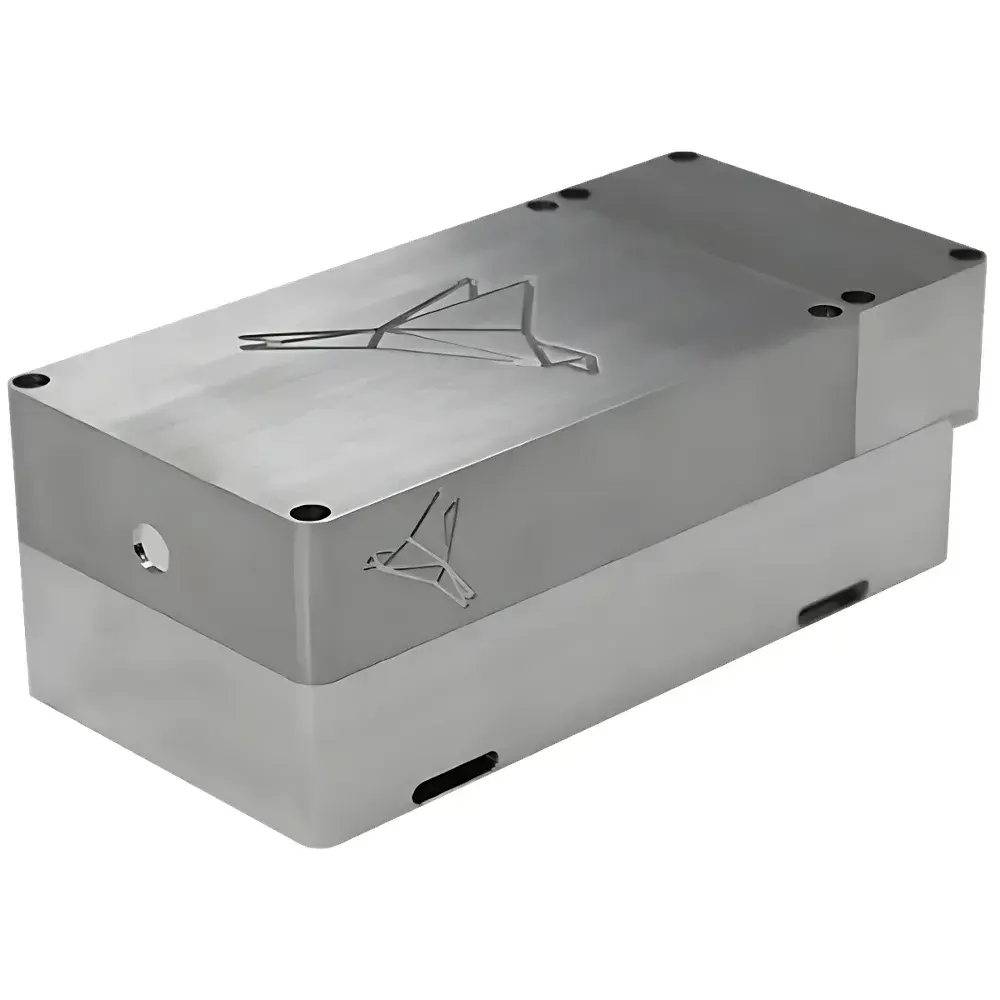
Skylark Lasers 780 NX Single-Frequency CW Compact Diode-Pumped Solid-State (C-DPSS) Near-Infrared Laser
| Brand | Skylark Lasers |
|---|---|
| Origin | United Kingdom |
| Model | 780 NX |
| Center Wavelength | 780 nm |
| Output Power | up to 200 mW |
| Spectral Linewidth | ≤ 0.3 MHz |
| Power Stability (8 h, P-P) | ≤ 2% |
| Spectral Stability (8 h) | ±0.2 pm |
| Beam Mode | TEM₀₀ |
| Coherence Length | > 100 m |
| Polarization Ratio | ≥ 100:1 (vertical) |
| Beam Diameter (exit) | 0.8–1.2 mm |
| Beam Divergence | 1.0 mrad (diffraction-limited) |
| Beam Pointing Stability | ≤ 5 µrad/°C |
| Warm-up Time | 5–30 min |
| Power Consumption | < 200 W |
| Operating Temperature | 18–30 °C |
| Storage Temperature | 0–50 °C |
| Humidity | 0–50% RH (non-condensing) |
| Laser Head Dimensions | 210 × 100 × 80 mm |
| Controller Dimensions | 238 × 170 × 54 mm |
| Beam Height | 65 mm |
| Interface | USB, analog 0–10 V input for power control |
| Optional | closed-loop chiller, fan-cooled heatsink, fiber coupling (multimode >95%, single-mode >70%), AOM-based intensity modulation up to 200 kHz |
Overview
The Skylark Lasers 780 NX is a high-performance, single-frequency continuous-wave (CW) compact diode-pumped solid-state (C-DPSS) laser engineered for demanding applications requiring exceptional spectral purity, long-term amplitude and frequency stability, and robust mechanical packaging. Operating at a precisely defined center wavelength of 780 nm—optimized for rubidium atomic transitions—the 780 NX leverages Skylark’s proprietary BRaMMS (Broadband Resonator with Monolithic Mode Selection) platform to deliver narrow-linewidth emission (< 0.3 MHz) with intracavity single-longitudinal-mode (SLM) operation. Its TEM₀₀ spatial profile, diffraction-limited divergence (1.0 mrad), and coherence length exceeding 100 meters enable high-fidelity interference, precise optical trapping, and ultra-stable heterodyne detection. Designed for integration into quantum optics laboratories, metrology setups, and industrial-grade spectroscopic systems, the 780 NX maintains strict thermal and mechanical isolation between the gain crystal, resonator cavity, and pump diode—ensuring minimal drift under ambient fluctuations.
Key Features
- Ultra-narrow spectral linewidth: ≤ 0.3 MHz (FWHM), enabling high-resolution spectroscopy and coherent light-matter interaction studies.
- Exceptional long-term spectral stability: ±0.2 pm over 8 hours—critical for Doppler-free saturated absorption spectroscopy and atomic fountain calibration.
- High amplitude stability: ≤ 2% peak-to-peak power variation over 8 hours, supporting quantitative intensity-based measurements in Raman or Brillouin scattering.
- Low-intensity noise: ≤ 0.1% RMS (10 Hz – 10 MHz bandwidth), minimizing signal degradation in photon-counting and lock-in detection schemes.
- Compact monolithic architecture: Laser head measures only 210 × 100 × 80 mm with integrated thermal management and rigid optomechanical mounting.
- Vertical linear polarization with extinction ratio ≥ 100:1, compatible with standard waveplates, polarizing beam splitters, and electro-optic modulators.
- USB-enabled controller with real-time monitoring, remote diagnostics, and firmware-upgradable functionality—supporting lab automation via SCPI-compliant commands.
Sample Compatibility & Compliance
The 780 NX is designed for use in environments adhering to ISO/IEC 17025-accredited calibration labs and GLP-compliant research facilities. Its stable output meets the spectral fidelity requirements of ASTM E275 for UV-Vis-NIR spectrophotometer validation and supports traceable wavelength referencing per NIST SRM protocols. The laser’s hermetically sealed laser head and controlled thermal interface ensure compatibility with cleanroom-class optical tables (Class 1000 or better) and vacuum-compatible enclosures when equipped with optional fiber feedthroughs. All electrical interfaces comply with IEC 61000-6-3 (EMC emission) and IEC 61000-6-2 (immunity) standards. While not certified for medical or aerospace deployment, its design follows best practices outlined in ISO 11146 for beam parameter measurement and ISO 13694 for laser-induced damage threshold estimation.
Software & Data Management
The included Skylark Control Suite provides native support for Windows and Linux platforms, offering real-time plotting of power, temperature, and lock status with timestamped logging in CSV and HDF5 formats. The software implements audit-trail functionality compliant with FDA 21 CFR Part 11 requirements—including user authentication, electronic signatures, and immutable event logs—for regulated QC/QA workflows. Remote operation is enabled via TCP/IP or USB virtual COM port, allowing integration into LabVIEW, Python (PyVISA), or MATLAB environments. Firmware updates preserve configuration integrity and include rollback capability. Optional OEM SDKs provide low-level register access for custom PID loop implementation or synchronization with external TTL triggers.
Applications
- Quantum technology: Optical pumping and repumping of 87Rb and 85Rb atoms in magneto-optical traps (MOTs), atom interferometry, and cold-atom clock development.
- High-resolution spectroscopy: Saturated absorption spectroscopy, Doppler-free two-photon excitation, and cavity ring-down measurements requiring sub-MHz linewidths.
- Optical metrology: Interferometric displacement sensing, gravitational wave detector alignment, and femtosecond comb stabilization seeding.
- Biophotonics: Confocal and multiphoton microscopy where 780 nm enables deeper tissue penetration with reduced phototoxicity compared to visible wavelengths.
- Industrial sensing: Fiber Bragg grating interrogation, distributed acoustic sensing (DAS), and coherent LIDAR systems requiring long coherence length and low phase noise.
FAQ
What is the typical warm-up time before achieving full spectral and power stability?
The 780 NX achieves specified spectral and amplitude stability within 15 minutes under nominal ambient conditions (22 ± 1 °C); full specification compliance is guaranteed after 30 minutes.
Is fiber coupling available as a factory-installed option?
Yes—both multimode (≥95% coupling efficiency) and single-mode (≥70%) fiber-coupled variants are available with FC/APC or SMA905 connectors, including integrated collimation and alignment verification reports.
Can the laser be operated in a temperature-controlled environment outside the specified 18–30 °C range?
Operation below 18 °C or above 30 °C is not recommended; extended exposure may compromise long-term reliability and void warranty coverage. Optional water cooling extends operational margin to 15–35 °C with active thermal regulation.
Does the system support external modulation of output intensity?
Yes—via analog 0–10 V input (standard) or optional acousto-optic modulator (AOM) integration enabling intensity modulation up to 200 kHz with <10 ns rise time.
How is wavelength calibration performed and traceable?
Each unit undergoes factory calibration using a wavemeter traceable to NIST standards, with certificate of conformance supplied. In-field recalibration is supported via built-in reference etalon mode and external high-finesse interferometer interface.





