
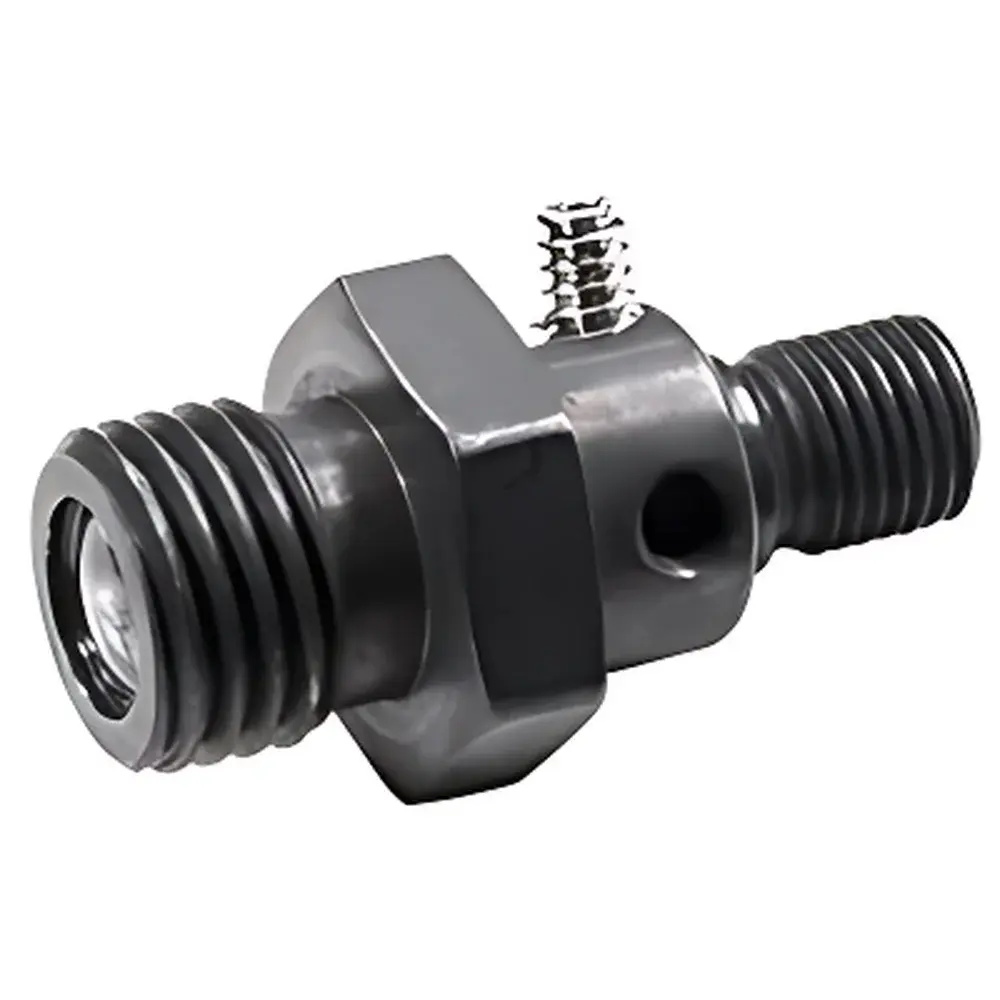
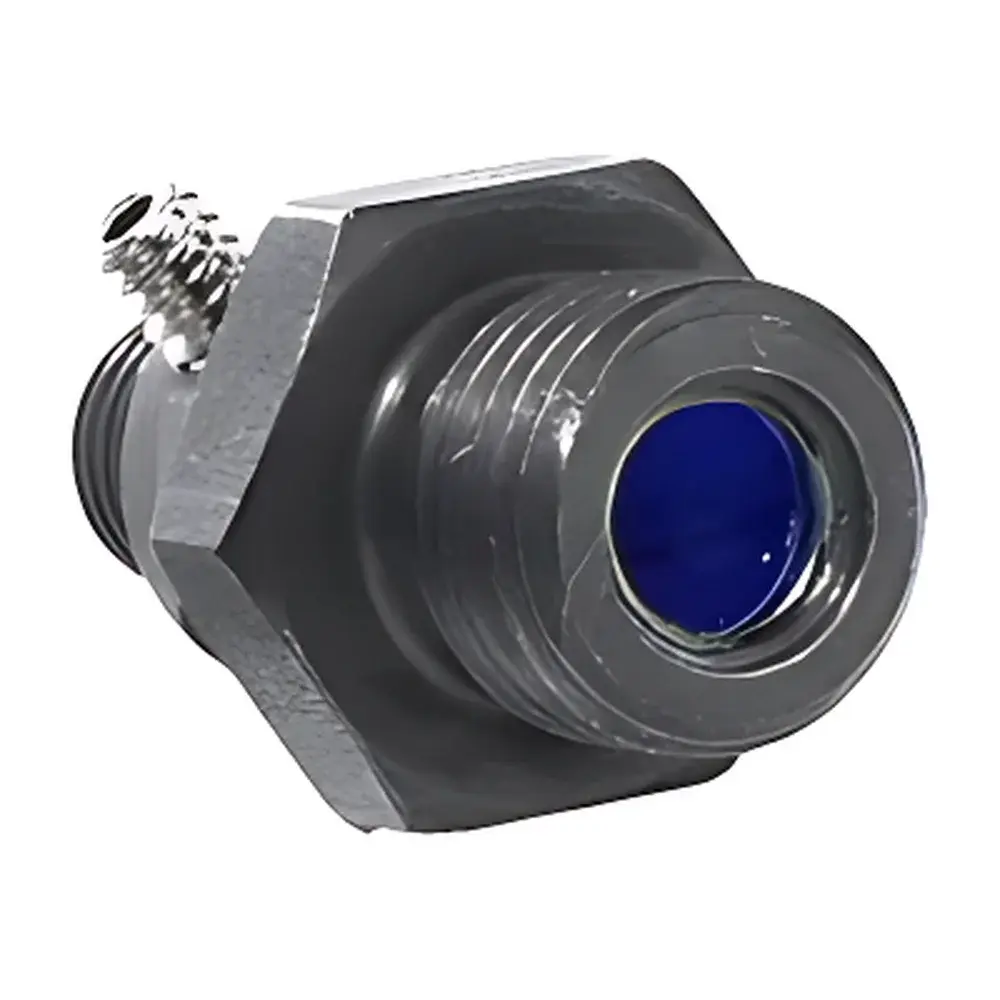
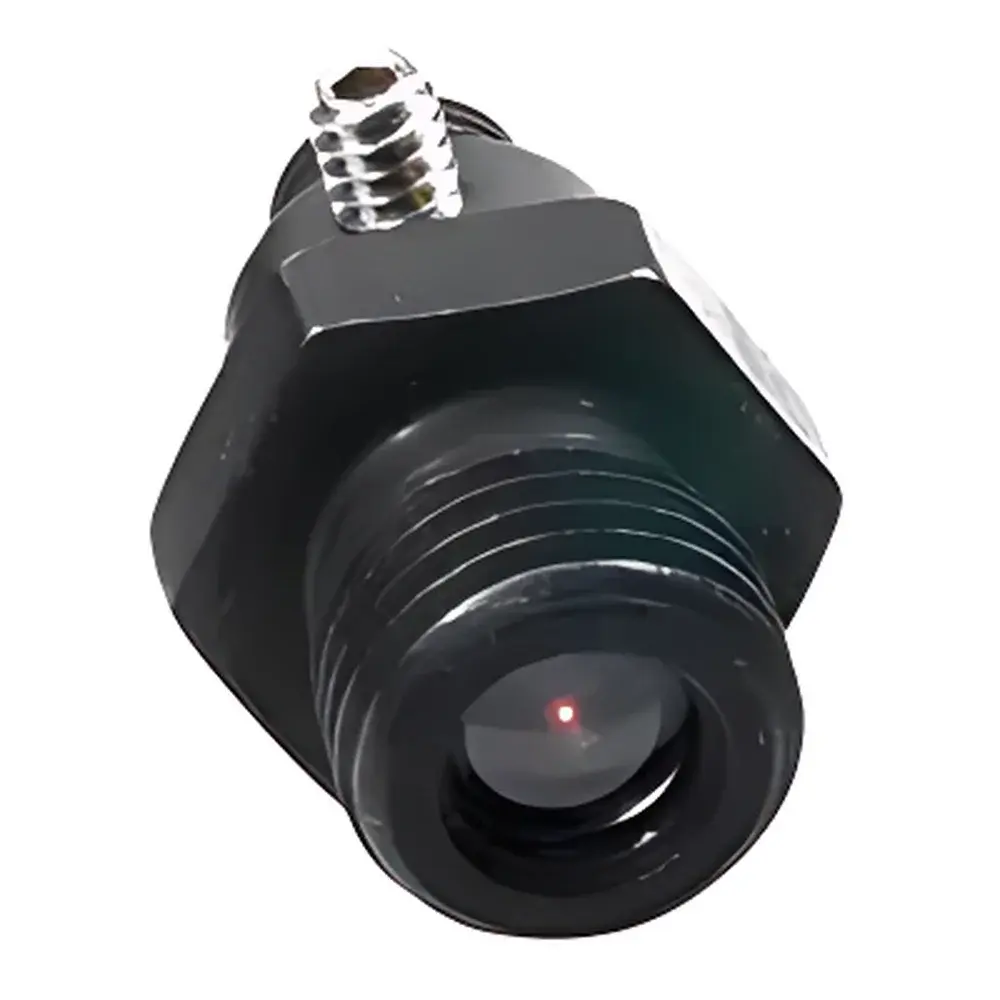
Ocean Optics 74-Series Fiber Collimating Lenses
| Brand | Ocean Optics |
|---|---|
| Origin | USA |
| Model | 74-Series |
| Component Type | Fiber Collimator |
| Lens Materials | Fused Silica (74-UV, 74-DA), BK-7 Glass (74-VIS), BaF10/FD10 Achromatic Doublet (74-ACR) |
| Wavelength Ranges | 200–2000 nm (74-UV, 74-DA), 350–2000 nm (74-VIS, 74-ACR) |
| Diameter | 5 mm |
| Focal Length | 10 mm (f/2) |
| Operating Temperature | Up to 150 °C |
| Connector | SMA 905 with 6.35-mm ferrule and 3/8-24 external thread (74-UV/VIS/ACR) |
| Beam Divergence | ≤2° (74-UV) |
| Housing | Black-oxidized stainless steel |
| Focus Adjustment | Manual, continuous from convergent to divergent (~45° total field-of-view range) |
Overview
The Ocean Optics 74-Series Fiber Collimating Lenses are precision-engineered optical components designed for high-fidelity beam conditioning in spectroscopic, sensing, and fiber-coupled laser systems. These collimators operate on the fundamental principle of transforming divergent light emitted from the end face of an optical fiber into a spatially uniform, low-divergence free-space beam—enabling accurate illumination of spectrometer slits, sample interfaces, or detector arrays. Each variant in the 74-Series employs a fixed focal length (10 mm, f/2) but differs critically in optical material composition and chromatic correction strategy to match specific spectral requirements and application constraints. The series is engineered for integration with standard SMA 905 fiber connectors and features black-oxidized stainless-steel housings for mechanical stability, thermal resilience (up to 150 °C), and compatibility with laboratory-grade optical mounts.
Key Features
- Modular design optimized for interchangeability across UV-VIS-NIR spectral domains, with distinct variants calibrated for defined wavelength bands.
- 74-UV: Ultra-broadband fused silica lens (Dynasil) transmitting 200–2000 nm; divergence ≤2°; white alignment dot for identification.
- 74-VIS: BK-7 glass lens optimized for 350–2000 nm; standard collimator for LS-1 broadband sources; yellow alignment dot.
- 74-ACR: Achromatic doublet (BaF10 + FD10 fused silica) correcting both spherical aberration and axial chromatic error; dual yellow dots for identification.
- 74-DA: Direct-threaded fused silica collimator with internal 1/4-36 thread, enabling direct coupling to SMA 905 connectors while maximizing throughput to spectrometer slits.
- Manual focus adjustment allows continuous tuning of beam convergence/divergence over ~45° total field-of-view range—critical for optimizing signal-to-noise ratio in variable-path-length configurations.
- Robust mechanical architecture: stainless-steel housing with precise internal threading ensures repeatable positioning and long-term alignment stability under thermal cycling.
Sample Compatibility & Compliance
The 74-Series collimators are compatible with multimode and single-mode silica fibers terminated with SMA 905 connectors (6.35-mm ferrule). Their performance is validated against industry-standard fiber geometries—including core/cladding diameters typical of Ocean Optics’ QP, P100, and HSC series fibers. While not certified to ISO/IEC 17025 or ASTM E275, the collimators are manufactured and tested per internal quality control protocols aligned with GLP-compliant optical assembly practices. All lenses undergo spectral transmittance verification across their rated wavelength ranges using NIST-traceable calibration sources. The fused silica variants (74-UV, 74-DA) comply with USP requirements for UV transparency in analytical instrumentation, and the achromatic design of 74-ACR meets the chromatic fidelity expectations outlined in ISO 10110-3 for precision collimation optics.
Software & Data Management
As passive optical components, the 74-Series collimators do not incorporate embedded firmware or digital interfaces. However, they are fully interoperable with Ocean Optics’ OceanView, OmniDriver, and SpectraSuite software ecosystems when integrated into spectrometer-based measurement chains. Users can document collimator configuration (e.g., “74-UV @ 254 nm”, “74-ACR @ 1064 nm”) within experiment metadata files, supporting audit-ready traceability under FDA 21 CFR Part 11–compliant workflows when deployed in regulated QC/QA environments. Calibration reports—including measured divergence, spectral throughput curves, and mechanical tolerance data—are supplied as PDF and CSV files, enabling integration into LIMS or ELN platforms via standardized import protocols.
Applications
- UV-VIS-NIR spectroscopy: Coupling light from deuterium/tungsten-halogen sources into fiber-fed spectrometers with minimal etendue loss.
- Laser-induced fluorescence (LIF) and Raman excitation: Delivering collimated pump beams to microfluidic cells or solid samples while maintaining spatial coherence.
- Fiber-optic sensor interrogation: Enabling stable free-space coupling between interrogating lasers and FBG or interferometric sensor arrays.
- Optical pathlength optimization: Adjusting collimator focus to match variable sample thicknesses in transmission or reflectance cells (e.g., cuvettes, gas cells, thin-film stacks).
- OEM instrument integration: Providing compact, field-serviceable collimation solutions for portable analyzers where thermal drift and mechanical shock resistance are critical.
FAQ
What is the maximum operating temperature for the 74-Series collimators?
All variants are rated for continuous operation up to 150 °C, limited by epoxy-free mechanical mounting and thermal expansion coefficients of fused silica/BK-7 substrates.
Can I use a 74-VIS collimator outside its nominal 350–2000 nm range?
Transmission drops significantly below 350 nm due to BK-7 absorption; UV applications require 74-UV or 74-DA for reliable performance.
Why does the 74-ACR use two different glass types?
BaF10 and FD10 glasses possess complementary dispersion profiles; bonding them into a doublet enables first-order correction of both longitudinal chromatic aberration and spherical aberration.
Is focus adjustment reversible and repeatable?
Yes—the threaded lens mount provides micron-level repeatability; after initial optimization, position can be locked using the provided set screws without hysteresis.
How does beam divergence relate to fiber core diameter and focal length?
For Gaussian-mode fibers, full-angle divergence θ ≈ 2 × arctan(d / 2f), where d is core or mode-field diameter and f is effective focal length—this relationship governs spot size at downstream optical elements.





