Wiley KnowItAll Predict IR Spectral Database
| Brand | Wiley |
|---|---|
| Origin | USA |
| Vendor Type | Authorized Distributor |
| Product Category | Imported |
| Model | KnowItAll Predict IR |
| Price Range | USD 39,000–65,000 |
Overview
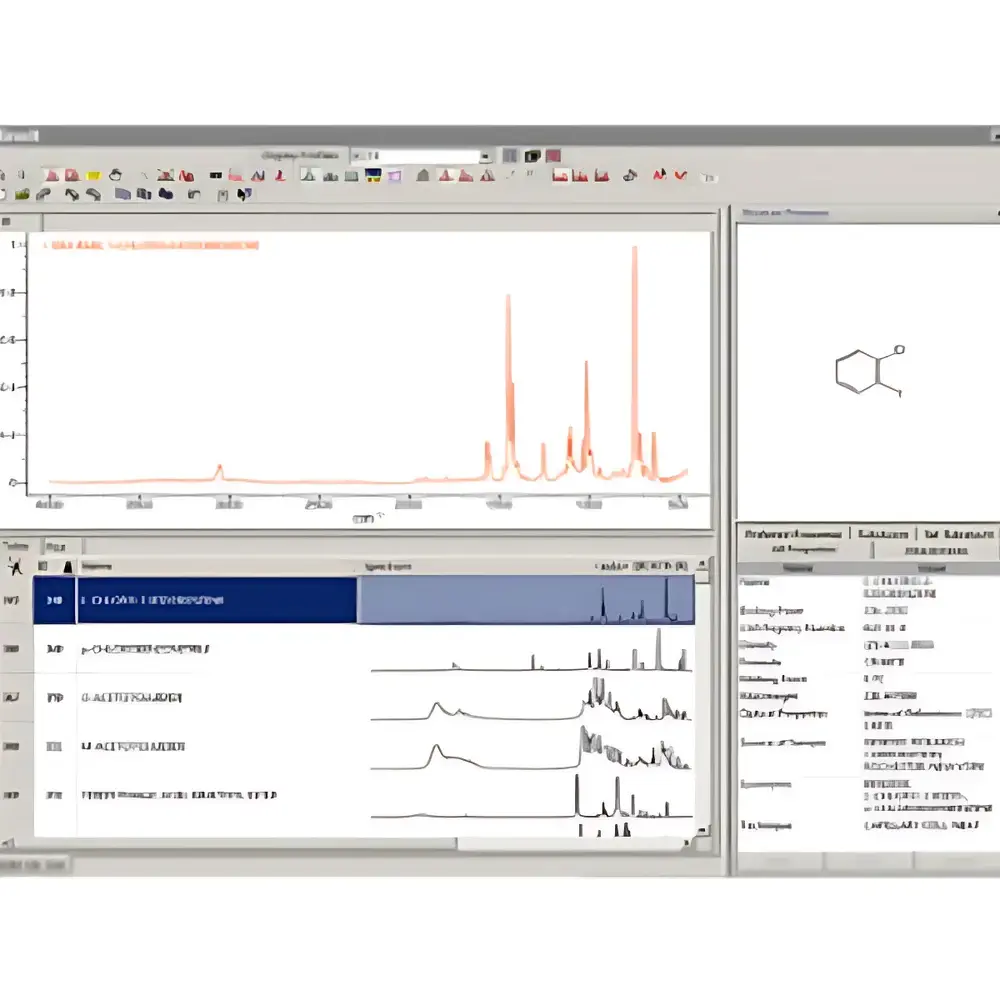
The Wiley KnowItAll Predict IR Spectral Database is a scientifically validated, machine learning–enhanced extension to the industry-standard Wiley infrared reference libraries. Engineered for analytical chemists, QC/QA laboratories, and R&D teams working with unknown compound identification, this database delivers 250,000 computationally predicted mid-infrared (4000–400 cm⁻¹) spectra—generated from first-principles quantum mechanical calculations and rigorously calibrated against experimental benchmarks. Unlike heuristic or rule-based prediction tools, Predict IR leverages density functional theory (DFT) with hybrid functionals and polarized triple-zeta basis sets, ensuring high-fidelity vibrational frequency assignments and intensity profiles. It operates natively within the Wiley KnowItAll software platform, enabling seamless integration with empirical spectral search (e.g., Sadtler IR, ATR-IR, FT-IR collections), spectral subtraction, library management, and automated structure–spectrum correlation workflows. The database does not replace experimental verification but augments it—particularly where reference spectra are unavailable for structurally novel, low-abundance, or proprietary compounds.
Key Features
- 250,000 DFT-predicted IR spectra spanning diverse chemical space—including heterocycles, organometallics, polymers, pharmaceuticals, and agrochemical intermediates
- Full spectral metadata: SMILES strings, InChIKeys, molecular weight, logP, boiling/melting points, and CAS Registry Numbers (where applicable)
- Integrated with KnowItAll’s advanced search engines: similarity search, substructure search, functional group filtering, and peak-based matching
- Validation traceability: Each prediction includes uncertainty estimates derived from benchmarking against >12,000 experimentally verified Sadtler spectra
- Compliance-ready architecture: Supports audit trails, user access logs, and electronic signature capabilities aligned with FDA 21 CFR Part 11 and GLP/GMP documentation requirements
- Export-ready outputs: Spectra exportable in JCAMP-DX, CSV, and PNG formats; metadata compatible with LIMS and ELN systems
Sample Compatibility & Compliance
The Predict IR database is method-agnostic and fully interoperable with all major FT-IR instrumentation platforms (Thermo Fisher Nicolet, PerkinElmer Spectrum, Bruker Tensor, Agilent Cary). It supports both transmission and ATR measurement modes and accommodates spectra acquired under variable resolution (0.5–4 cm⁻¹), apodization (Happ-Genzel, Blackman-Harris), and zero-filling settings. All predictions assume standard conditions (298 K, gas-phase or implicit solvent models), with optional solvation corrections available via KnowItAll’s computational interface. The database complies with ISO/IEC 17025:2017 for competence of testing and calibration laboratories, and its underlying DFT methodology adheres to IUPAC-recommended computational protocols for vibrational spectroscopy. External validation was performed by independent academic spectroscopists and industrial QC labs using ASTM E1421–22 (Standard Practice for Describing and Measuring Performance of Fourier Transform Infrared (FT-IR) Spectrometers).
Software & Data Management
Predict IR is licensed as a module within the Wiley KnowItAll Professional Suite (v10.8+). It requires no local HPC infrastructure—spectral generation and matching occur client-side via optimized C++ numerical libraries. The database resides on encrypted, version-controlled local storage or network-accessible NAS drives, supporting concurrent multi-user access with role-based permissions. All spectral matches include confidence scoring (0–100%), spectral residual analysis, and ranked candidate lists with structural overlays. Audit logs record every search, modification, and export event—including timestamp, operator ID, and IP address—enabling full traceability for regulatory submissions. Data integrity is maintained through SHA-256 checksum validation at installation and periodic integrity checks.
Applications
- Unknown identification in forensic chemistry and environmental monitoring when empirical matches fall below 85% similarity threshold
- Functional group mapping for de novo synthesis validation and reaction monitoring
- Supporting USP <731> and EP 2.2.24 monograph compliance for excipient identity testing in pharmaceutical manufacturing
- Accelerating impurity profiling in API development by predicting IR signatures of potential degradation products
- Training AI models for spectral interpretation—used as ground-truth synthetic data in academic and industrial ML pipelines
- Teaching tool for vibrational spectroscopy courses, illustrating structure–property–spectrum relationships
FAQ
Is Predict IR suitable for regulatory submissions (e.g., FDA, EMA)?
Yes—when used in conjunction with empirical confirmation and documented within a validated KnowItAll workflow, Predict IR output meets ALCOA+ data integrity principles and supports ICH M7 and Q5A guidelines for structural characterization.
How frequently is the database updated?
Wiley releases biannual updates (Q2 and Q4), incorporating new DFT-validated compounds, expanded stereochemical coverage, and improved intensity modeling based on ongoing collaboration with NIST and academic quantum chemistry consortia.
Can Predict IR spectra be used for quantitative analysis?
No—this database is strictly qualitative. Predicted intensities reflect relative band strength under idealized conditions and are not calibrated for Beer–Lambert law applications. Quantitative IR must rely on empirical calibration standards.
Does it support custom molecule input?
Yes—users may import MDL Molfiles or SMILES strings into KnowItAll’s Structure Editor and generate on-the-fly IR predictions for proprietary or unpublished structures.
What hardware requirements are needed?
Minimum: Windows 10/11 64-bit, Intel Core i5-8400 or AMD Ryzen 5 2600, 16 GB RAM, 20 GB free SSD space. Recommended for large-scale batch prediction: 32 GB RAM and NVIDIA GPU acceleration (CUDA-enabled).