
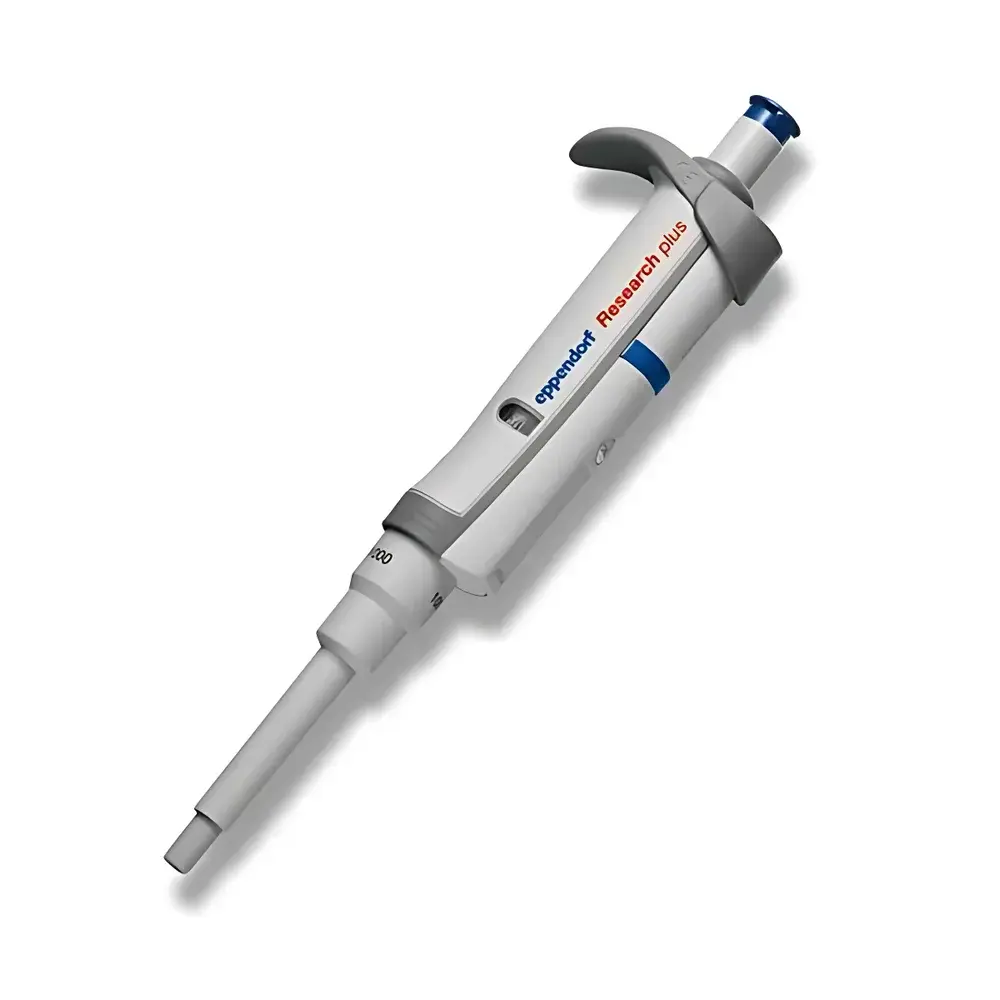
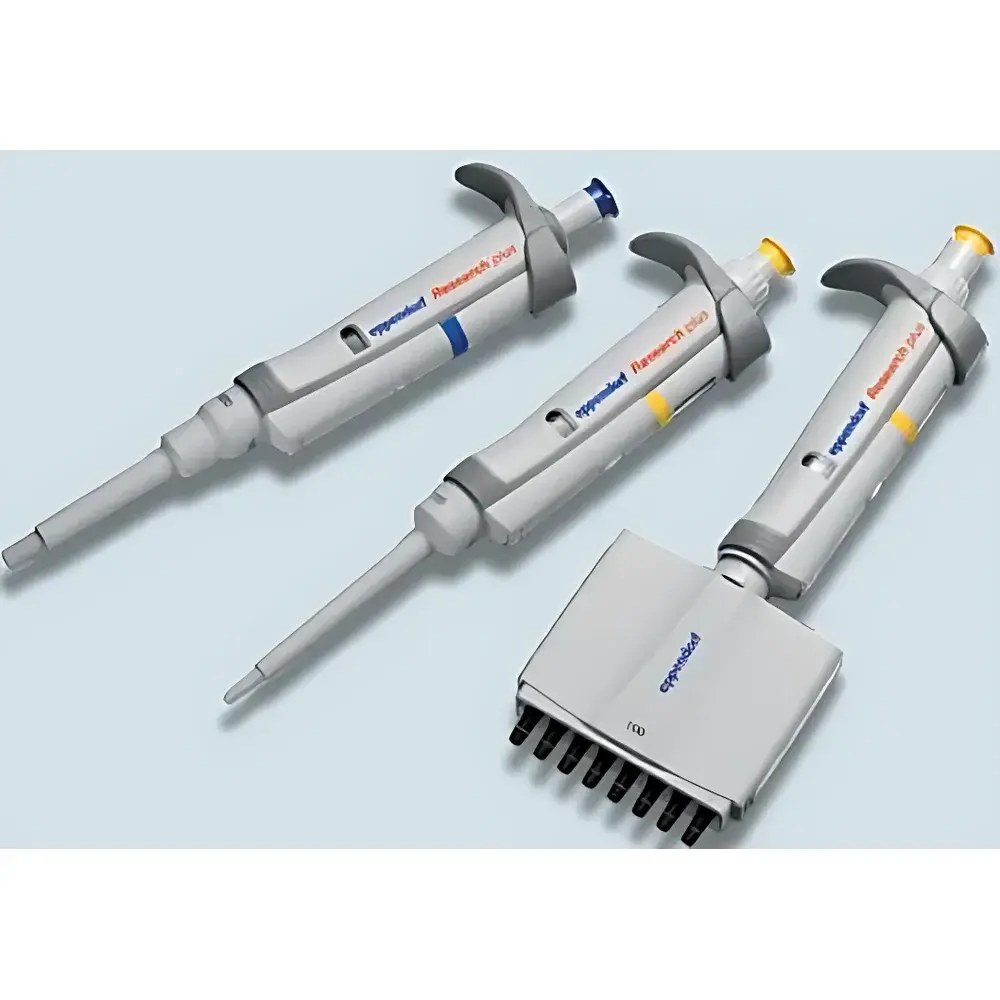
Eppendorf Research Plus Single-Channel Manual Pipette, 1–10 mL
| Brand | Eppendorf |
|---|---|
| Origin | Germany |
| Instrument Type | Single-Channel Manual Pipette |
| Volume Range | 1–10 mL |
| Maximum Capacity | 10 mL |
| Accuracy | ±0.03 mL |
| Automation Level | Manual |
| Regulatory Compliance | ISO 8655–2 (2022), GLP/GMP-ready design |
Overview
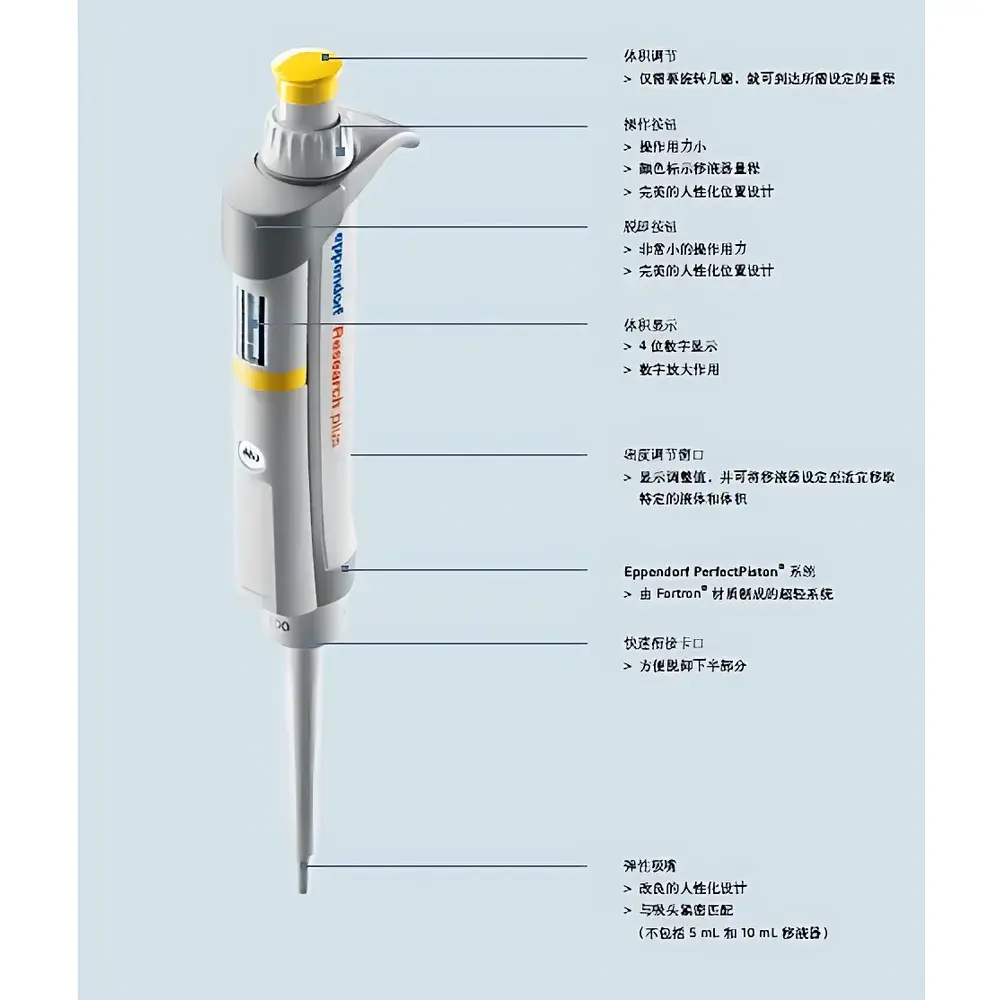
The Eppendorf Research Plus Single-Channel Manual Pipette (1–10 mL) is a precision-engineered liquid handling instrument designed for high-reproducibility volumetric transfer in research, clinical diagnostics, and quality control laboratories. Built upon Eppendorf’s decades-long heritage in pipette ergonomics and metrological rigor, this model employs an air-displacement principle with a low-force piston mechanism and a fully sealed, corrosion-resistant internal system to ensure long-term accuracy stability across repeated use cycles. Its robust polypropylene housing, integrated tip ejection force optimization, and adjustable volume lock provide consistent performance under variable environmental conditions—including temperature fluctuations between 15–30 °C and relative humidity up to 80 %. The pipette conforms to ISO 8655–2:2022 for gravimetric testing of manual pipettes and supports traceable calibration protocols required for ISO/IEC 17025-accredited labs.
Key Features
- Ergonomic, lightweight design (approx. 115 g) with forward-balanced center of gravity to reduce hand fatigue during extended pipetting sessions.
- Volume adjustment dial with tactile feedback and dual-scale display (primary scale in µL, secondary in % deviation) for intuitive setting verification.
- Low-volume activation force (≤1.5 N for aspiration, ≤2.0 N for dispensing at 10 mL) compliant with ISO 8655–5 ergonomic guidelines.
- Chemical-resistant piston and O-ring seals compatible with aqueous solutions, alcohols, and diluted acids/bases; not recommended for strong oxidizers or chlorinated solvents without validation.
- Autoclavable upper body (121 °C, 20 min, 1 bar) and removable lower sleeve for routine sterilization—no disassembly required beyond standard tip cone removal.
- Integrated volume lock prevents accidental setting changes during transport or storage.
Sample Compatibility & Compliance
This pipette is validated for use with Eppendorf epT.I.P.S. sterile, filter, and low-retention tips (e.g., 10 mL universal-fit tips, catalog #0030089140), ensuring minimal carryover and maximal sealing integrity across the full 1–10 mL range. It meets the dimensional and functional requirements of ISO 8655–3 for tip compatibility and demonstrates ≤0.5% coefficient of variation (CV) in repeatability testing per ISO 8655–6 when operated by trained personnel. For regulated environments, the device supports audit-ready documentation workflows: calibration certificates include uncertainty budgets traceable to national standards (e.g., PTB, NIST), and maintenance logs align with GLP Annex 11 and FDA 21 CFR Part 11 data integrity expectations when paired with Eppendorf’s optional calibration management software.
Software & Data Management
While the Research Plus 1–10 mL is a manually operated instrument, it integrates seamlessly into digital lab ecosystems via Eppendorf’s free Pipette Calibration Manager desktop application (Windows/macOS). This tool enables users to record, store, and export calibration reports—including date, operator ID, ambient conditions, gravimetric test results, and pass/fail status—into PDF or CSV formats with embedded digital signatures. All calibration entries are timestamped and tamper-evident, satisfying ALCOA+ principles (Attributable, Legible, Contemporaneous, Original, Accurate). Optional QR-coded calibration labels can be generated for physical attachment to each pipette, linking directly to its electronic calibration history.
Applications
The 1–10 mL Research Plus pipette is routinely deployed in applications demanding high-volume precision without compromising reproducibility: preparation of cell culture media dilutions, buffer stock formulation, serial dilution of standards in ELISA and qPCR workflows, reagent aliquoting for high-throughput screening plates, and sample transfer in pharmaceutical stability studies. Its low dead volume (<10 µL above set point) and rapid tip seal response minimize residual liquid retention—critical for viscous or protein-rich solutions. Laboratories performing method validation per ICH Q2(R2) or USP rely on this model for its documented linearity (R² ≥ 0.9998 over full range) and inter-unit consistency across multi-pipette setups.
FAQ
Is this pipette suitable for handling volatile organic solvents?
No—this model is not recommended for chloroform, acetone, or other aggressive organics without prior compatibility testing and seal replacement. Consult Eppendorf’s Chemical Resistance Guide (Doc. No. 5249 023.001) for validated solvent lists.
Can it be calibrated in-house using standard gravimetric procedures?
Yes—the pipette complies fully with ISO 8655–6 and includes a factory-provided calibration certificate. In-house recalibration requires Class A analytical balances (±0.1 mg readability), certified distilled water (ISO 3696 Grade 2), and environmental controls per ISO 8655–7.
Does it support third-party tip brands?
Eppendorf does not guarantee performance or accuracy with non-epT.I.P.S. tips. Tip fit, seal integrity, and ejection force may vary, potentially increasing measurement uncertainty beyond ±0.03 mL.
What is the recommended recalibration interval?
Annual calibration is standard for routine use; however, frequency must be risk-assessed per ISO/IEC 17025 Clause 6.6 and adjusted based on usage intensity, criticality of application, and historical performance trends.
Is service documentation available in English for global regulatory submissions?
Yes—full technical files, Declaration of Conformity (CE/UKCA), and ISO 13485-certified manufacturing records are provided upon request for inclusion in FDA 510(k), CE-IVDR, or PMDA submissions.



