
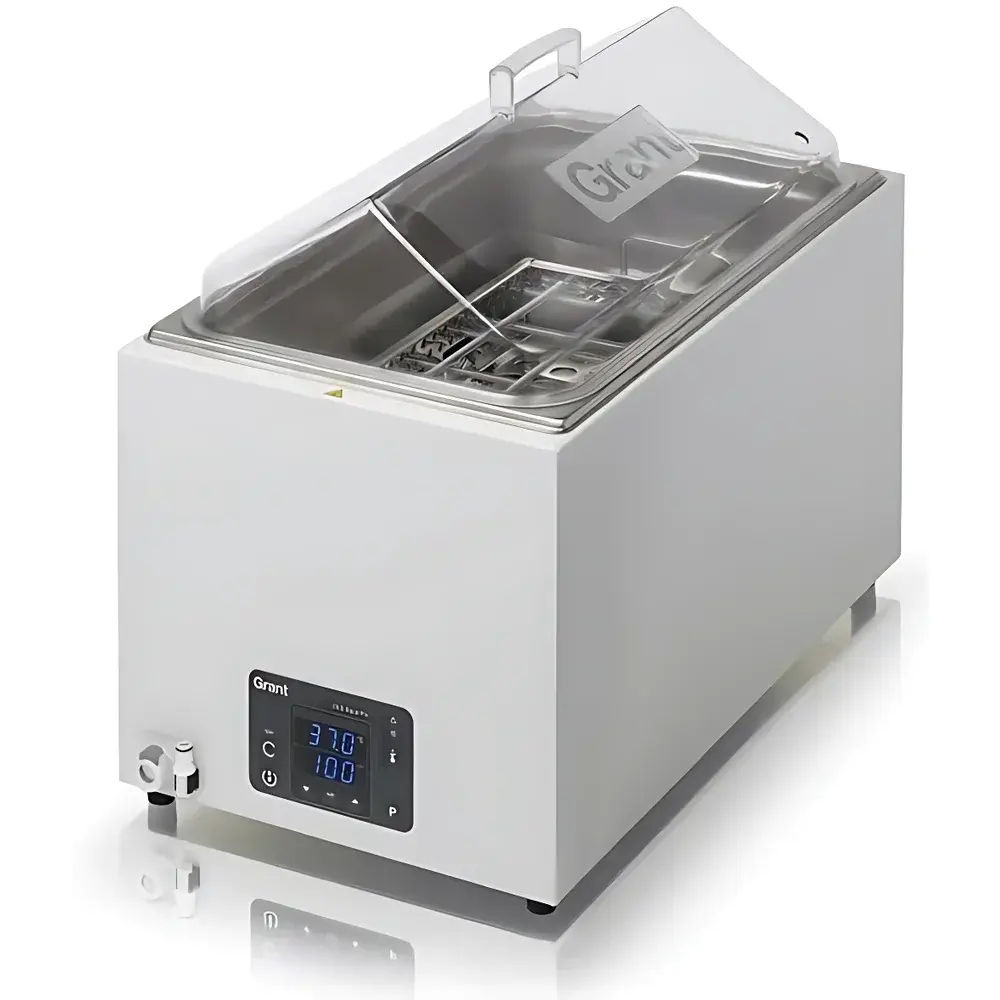

Grant OLS26 Orbital-Reciprocating Water Bath Shaker
| Brand | Grant |
|---|---|
| Origin | United Kingdom |
| Model | OLS26 |
| Temperature Range | 0–99 °C (with optional refrigeration to 0 °C) |
| Timing Range | 1–999 min |
| Oscillation Speed | 20–200 rpm |
| Orbital Amplitude | 9 mm |
| Reciprocating Stroke | 18/28/36 mm |
| Bath Capacity | 26 L |
| Temperature Uniformity & Stability | ±0.1 °C @ 37 °C |
| Display Resolution | 0.1 °C |
| Heating Method | HeatMat™ polymer heating film |
| Control System | Digital PID with Set-and-Forget™ algorithm |
| Safety Features | Over-temperature protection, dry-run detection, low-level fluid alarm, programmable safety cutoff |
| Power Supply | 230 V, 1.15–1.5 kW |
| Construction | Electropolished stainless steel bath chamber with quick-connect drain valve |
Overview
The Grant OLS26 Orbital-Reciprocating Water Bath Shaker is a fifth-generation digital incubation shaker engineered for high-fidelity temperature-controlled agitation in life science laboratories. Unlike conventional single-mode shakers, the OLS26 integrates two orthogonal motion profiles—orbital rotation and linear reciprocation—within a single, compact water-jacketed platform. This dual-motion architecture enables precise control over mixing dynamics across diverse sample viscosities and container geometries, from low-volume microcentrifuge tubes to high-capacity flasks. The system operates on Couette-flow principles for orbital motion and inertial displacement for reciprocation, ensuring reproducible shear delivery without mechanical backlash. Temperature regulation leverages HeatMat™ polymer-based resistive heating—embedded beneath the stainless-steel bath floor—to eliminate exposed heating elements, minimize thermal gradients, and prevent corrosion or electrical hazards. With a 26 L electropolished 316-grade stainless steel bath and PID-driven digital control, the OLS26 delivers ±0.1 °C uniformity and stability at 37 °C, meeting stringent requirements for enzyme kinetics, cell culture pre-incubation, solubility studies, and immunoassay plate conditioning.
Key Features
- Dual-mode agitation: Independent selection of orbital (20–200 rpm, 9 mm amplitude) or reciprocating (18/28/36 mm stroke) motion—enabling optimization for suspension homogeneity, particle resuspension, or viscous media mixing.
- HeatMat™ heating technology: Uniform, low-profile polymer heating film provides rapid thermal response and eliminates hot spots; no exposed wires or immersion heaters.
- Set-and-Forget™ digital PID control: Pre-programmable ramp-and-hold profiles with 0.1 °C resolution; automatic stabilization verification and drift compensation.
- Integrated safety architecture: Triple-layer protection including electronic over-temperature cutoff, dry-run sensor (detects absence of water), and real-time liquid level monitoring with audible/visual alert.
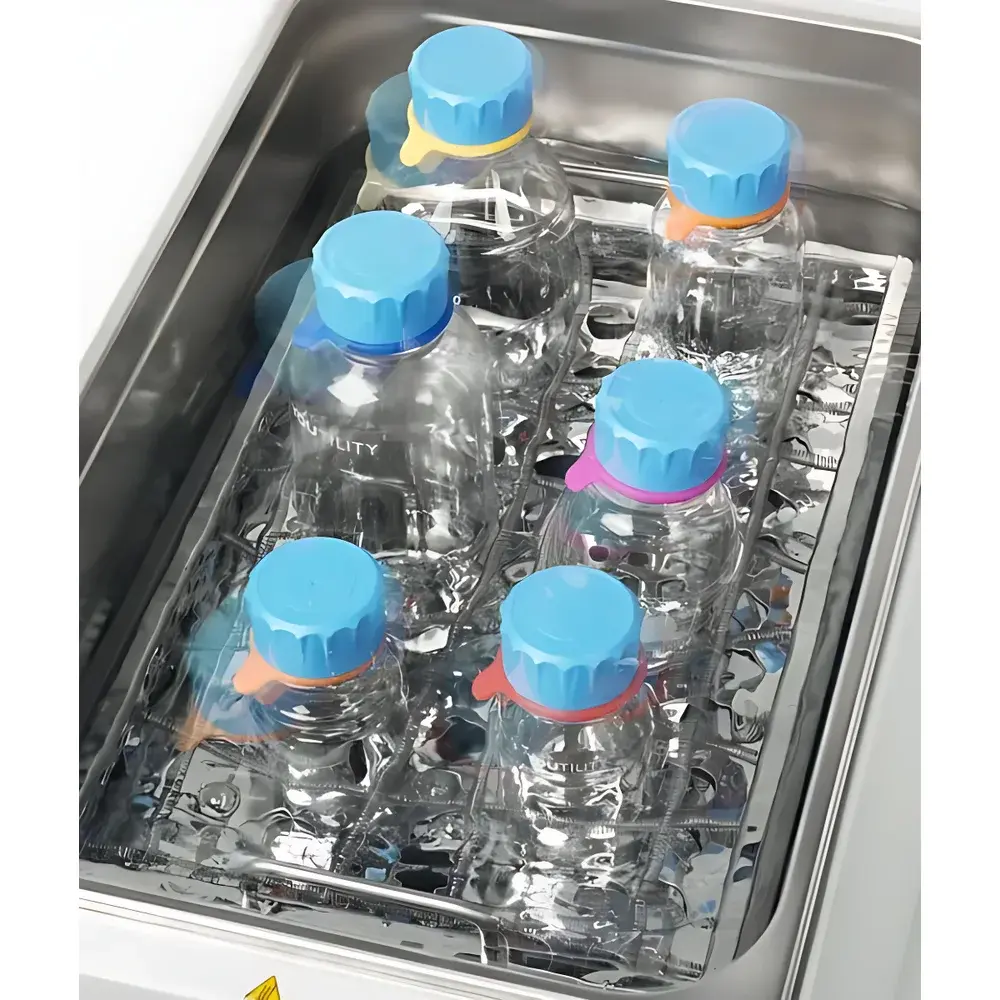
- Modular tray ecosystem: Interchangeable platforms—including universal trays (TU26), tube racks (SR-series), deep-well plate clamps (SH-DWP), flask carriers (TF26), and spring clamps (SC-25 to SC-1000)—support ISO-standard labware from 0.5 mL microtubes to 1 L Erlenmeyer flasks.
- Quick-drain design: Push-to-connect brass drain valve enables rapid, spill-free bath emptying without tools—critical for cross-contamination prevention between experiments.
Sample Compatibility & Compliance
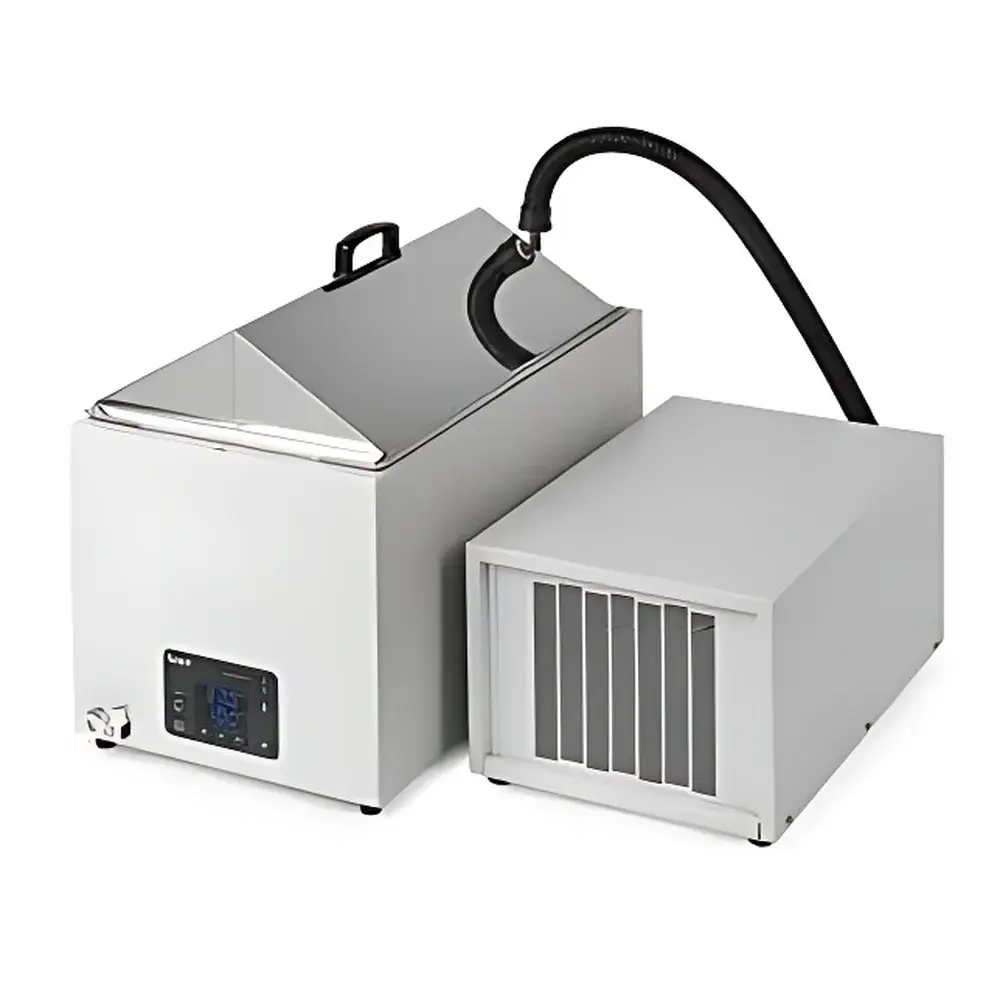
The OLS26 accommodates standard ANSI/SLAS-compliant microplates (96-/384-well), conical tubes (15–50 mL), centrifuge tubes (0.5–50 mL), culture flasks (T25–T225), and glass vials (10–100 mL). Its sealed bath chamber and non-corrosive construction comply with IEC 61010-1:2010 for laboratory electrical equipment safety. When operated with optional CC26 immersion chiller (capable of sustaining 0 °C), the unit meets ASTM D1500 and USP environmental control criteria for sterile compounding preparation zones. All firmware operations log timestamped parameter changes with audit-trail capability, supporting GLP/GMP documentation workflows under FDA 21 CFR Part 11 when paired with validated LIMS integration.
Software & Data Management
While the OLS26 operates as a standalone instrument via its front-panel interface, it supports RS-232 serial output for external data logging. Two factory-preset protocols (P1 and P2) store complete configurations—temperature setpoint, motion mode, speed, stroke, and duration—for repeatable method execution. Multi-point calibration routines (up to five reference points across 20–99 °C) allow traceable adjustment against NIST-traceable thermistors. Optional PC connectivity enables export of time-stamped temperature and RPM logs in CSV format, facilitating QC record retention and statistical process control (SPC) charting per ISO 9001:2015 Annex A.3.
Applications
- Cell culture pre-incubation and passaging: Gentle orbital agitation maintains monolayer integrity during warm-up phases prior to trypsinization.
- Antibody-antigen binding enhancement: Reciprocating motion improves diffusion-limited interaction kinetics in ELISA and lateral flow assay development.
- Pharmaceutical solubility profiling: Controlled temperature ramping combined with variable stroke length enables standardized dissolution testing per USP .
- Nucleic acid hybridization: Precise 42–65 °C thermal control with low-shear orbital motion minimizes shearing of long DNA fragments during probe annealing.
- Environmental microbiology: Simultaneous temperature maintenance and agitation support BOD bottle mixing per EPA Method 5210B.
FAQ
Can the OLS26 operate continuously beyond 999 minutes?
Yes—by configuring the timer to “INFINITE” mode, the unit will maintain set parameters until manually stopped or interrupted by a safety event.
Is refrigeration integrated or optional?
Refrigeration is optional and requires the CC26 immersion chiller module; the base unit provides heating only (ambient +5 °C to 99 °C).
What is the maximum load capacity for the reciprocating mode?
The platform supports up to 5 kg distributed evenly across the 380 × 235 mm tray surface while maintaining ±1 rpm speed accuracy.
Does the HeatMat™ system require periodic replacement?
No—the embedded polymer heating film is rated for >10,000 operational hours and carries a 3-year limited warranty against delamination or resistance drift.
Are calibration certificates provided with shipment?
Each unit ships with a factory-issued Certificate of Conformance; NIST-traceable calibration certificates are available upon request (additional lead time and fee apply).
Related Products




