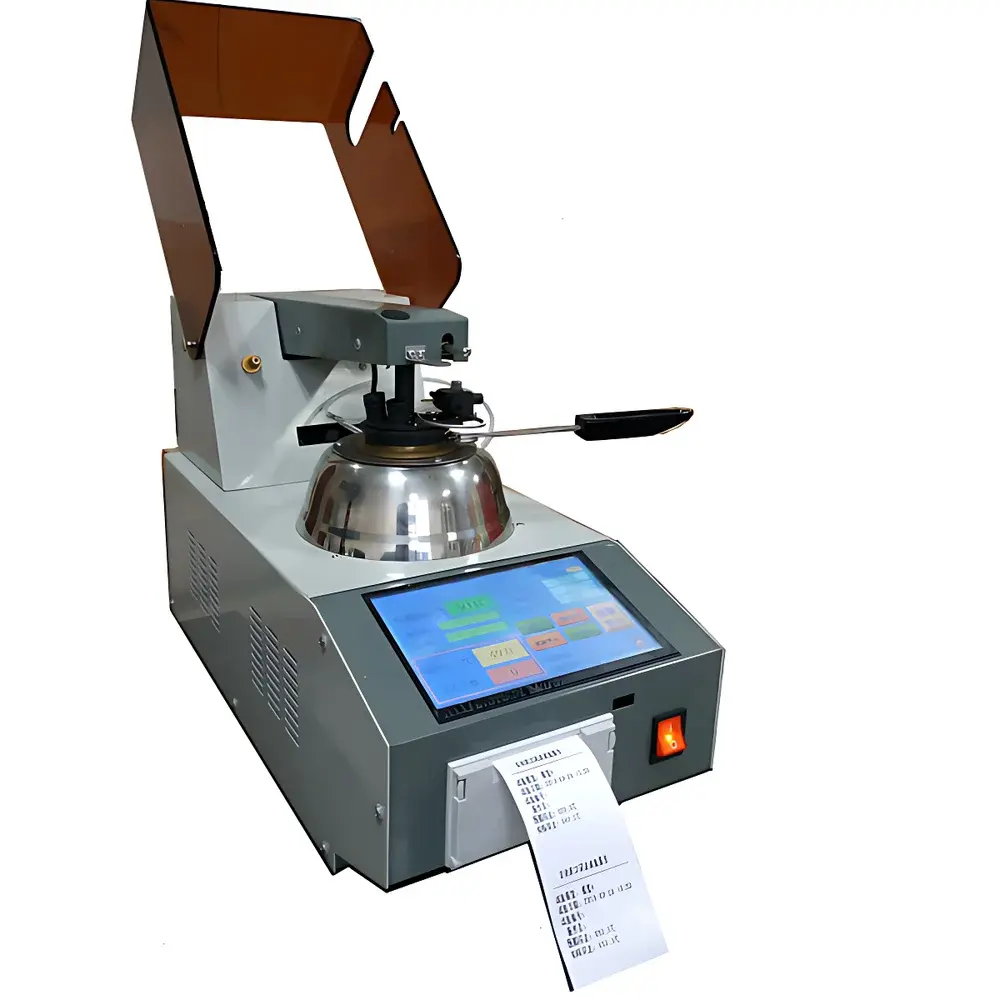
Xufeng XF-93SE Pensky-Martens Closed-Cup Automatic Flash Point Tester
| Brand | Xufeng |
|---|---|
| Origin | Shanghai, China |
| Model | XF-93SE |
| Detection Method | Closed-Cup (Pensky-Martens) |
| Operation Mode | Fully Automatic |
| Temperature Range | 40 °C to 360 °C |
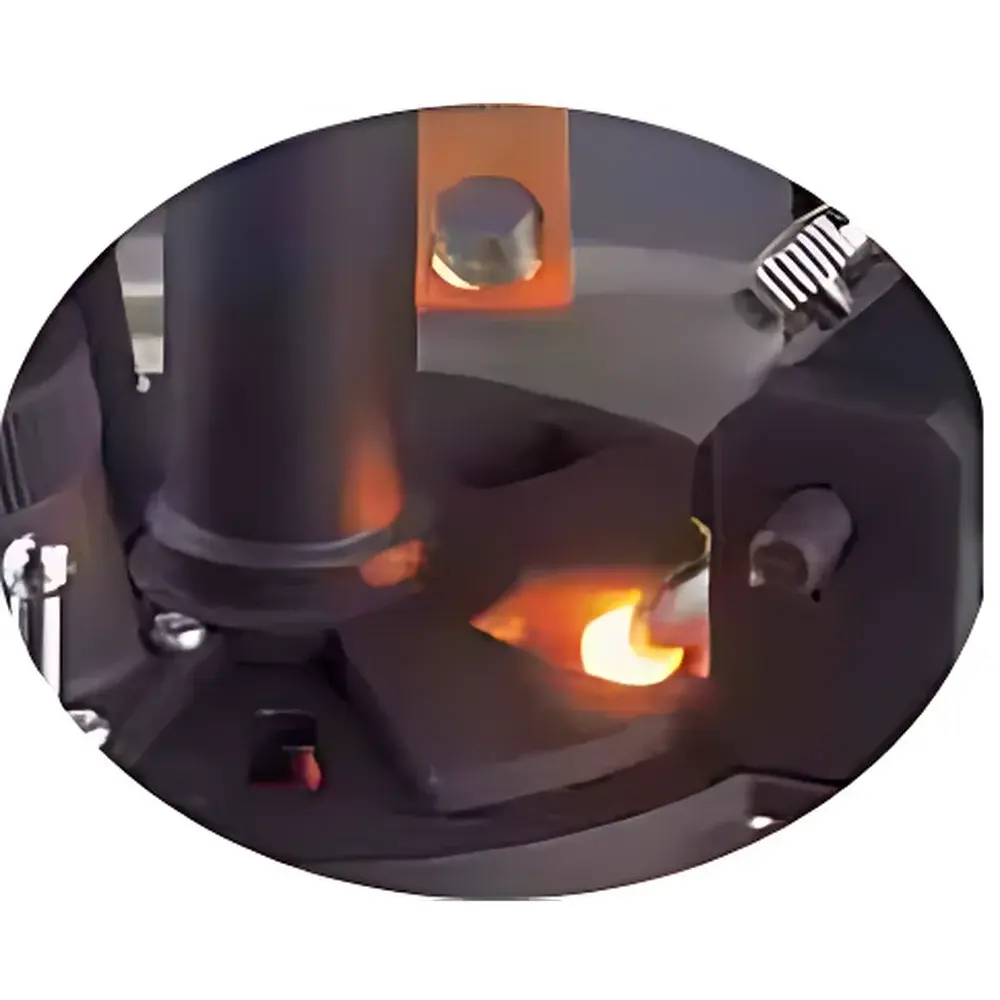
| Ignition Methods | Electric Spark Ignition (standard) and Optional Gas-Fueled Ignition |
| Repeatability | Compliant with ASTM D93, GB/T 261, and JIS K 2265-3 |
| Applicable Standards | GB/T 261–2008, ASTM D93–22, JIS K 2265-3 |
| Display | Touchscreen LCD (Chinese interface) |
| Power Consumption | 800 W |
| Dimensions (W×D×H) | 400 × 380 × 350 mm |
| Weight | ~20 kg |
| Enclosure | Desktop, Stainless Steel Housing |
| Communication Interface | RS-232C |
| Data Output | Integrated Thermal Printer |
| Control Architecture | Microprocessor-Based with Self-Diagnostic Functionality |
Overview
The Xufeng XF-93SE Pensky-Martens Closed-Cup Automatic Flash Point Tester is an engineered solution for precise, repeatable flash point determination of petroleum products, solvents, lubricants, and other flammable liquids according to internationally recognized closed-cup methodologies. Based on the fundamental principle of the Pensky-Martens test—where a sample is heated in a sealed cup under controlled conditions and periodically exposed to an ignition source—the instrument detects the lowest temperature at which vapors above the liquid surface ignite momentarily when exposed to a flame or electric spark. This thermally constrained measurement directly reflects safe handling, storage, and transportation thresholds per regulatory frameworks including OSHA, NFPA 30, and CLP/GHS classification requirements. The XF-93SE implements the ASTM D93–22 standard procedure with strict adherence to ramp rate, stir speed, and ignition timing protocols, while also supporting GB/T 261–2008 and JIS K 2265-3 through programmable mode selection. Its fully automated architecture eliminates manual intervention during heating, stirring, ignition, and endpoint detection—ensuring operator safety and analytical consistency across laboratories operating under GLP or ISO/IEC 17025 quality systems.
Key Features
- Fully automatic operation from sample loading to final report generation—no manual ignition or temperature adjustment required.
- Dual ignition compatibility: Standard electric spark ignition (no external gas supply needed); optional gas-fueled ignition available upon configuration request.
- Precision temperature control with ±0.1 °C stability across the full operational range (40 °C to 360 °C), achieved via PID-regulated heating and calibrated Pt100 sensor feedback.
- Intuitive Chinese-language touchscreen interface enabling direct selection of test modes—ASTM D93, GB/T 261, or custom-defined ramp-and-ignition profiles.
- Self-diagnostic system with real-time fault logging and on-screen error codes for rapid troubleshooting and minimal downtime.
- RS-232C serial port for integration into centralized LIMS or QA/QC data management platforms; supports ASCII-based data export for traceability.
- Integrated thermal printer provides immediate hardcopy output of test parameters, observed flash point, ambient pressure correction, and pass/fail status per selected standard.
- Compact desktop design (400 × 380 × 350 mm) with corrosion-resistant stainless steel housing suitable for fume hood or benchtop deployment in refinery QC labs, petrochemical R&D centers, and third-party testing facilities.
Sample Compatibility & Compliance
The XF-93SE accommodates standard Pensky-Martens closed cups (as specified in ASTM D93 Annex A1 and GB/T 261 Clause 6), ensuring mechanical and thermal compatibility with viscous fuels, distillates, biodiesel blends, and industrial solvents. Sample volume requirement is 70 mL, consistent with method-defined cup fill level specifications. Instrument validation includes documented conformance to repeatability limits stipulated in ASTM D93 (≤2 °C for samples ≥110 °C; ≤1 °C for samples <110 °C) and GB/T 261 (±2 °C). It meets essential electrical safety requirements per IEC 61010-1 for laboratory equipment and operates within Class II pollution degree environments. While not certified to UL/CSA standards out-of-box, its architecture permits third-party certification upon customer-requested modifications and documentation review.
Software & Data Management
The embedded firmware supports audit-ready data integrity: all user actions—including method selection, parameter entry, calibration events, and test initiation—are timestamped and stored locally in non-volatile memory. Test records include raw temperature readings at each ignition cycle, detected flash point, atmospheric pressure input (manually entered or optionally interfaced via external barometer), and final classification per GHS Category 2 or 3 flammability criteria. Exported ASCII logs contain ISO 8601 timestamps and are compatible with FDA 21 CFR Part 11-compliant software when paired with validated PC-based data acquisition modules. No cloud connectivity or proprietary software installation is required—data exchange occurs exclusively via standardized serial protocol, preserving network security in regulated environments.
Applications
- Quality assurance of crude oil fractions, gasoline, diesel, jet fuel (Jet A-1), and marine distillates in refinery process control labs.
- Regulatory compliance testing for UN TDG, IMDG Code, and ADR/RID transport classification of hazardous materials.
- R&D screening of biofuel blends (e.g., FAME, HVO) where oxidation stability and volatility interplay affects flash behavior.
- Contract testing laboratories performing accredited flash point analysis under ISO/IEC 17025 scope (e.g., CNAS, UKAS, DAkkS).
- Manufacturing QC of industrial cleaning agents, paint thinners, and adhesive solvents requiring batch release verification.
FAQ
Does the XF-93SE require external gas supply for ignition?
No—the XF-93SE model features built-in electric spark ignition and operates independently of propane, butane, or other combustible gases.
Can the instrument correct for atmospheric pressure deviations?
Yes—users manually input local barometric pressure before test initiation; the firmware applies standard vapor pressure correction algorithms per ASTM D93 Section 8.2.
Is the instrument suitable for testing highly viscous or waxy samples?
It is recommended to preheat viscous samples to ensure homogeneity prior to loading; the instrument does not include sample preheating functionality, but the 40–360 °C range accommodates post-loading conditioning.
What maintenance is required for long-term reliability?
Routine cleaning of the test cup, lid, and ignition electrode is advised after every 10–15 tests; annual calibration verification using NIST-traceable reference standards is recommended for ISO/IEC 17025 compliance.
Can multiple test methods be run consecutively without rebooting?
Yes—the system retains method configurations and allows sequential execution of ASTM D93, GB/T 261, and custom protocols without power cycling or firmware reset.