
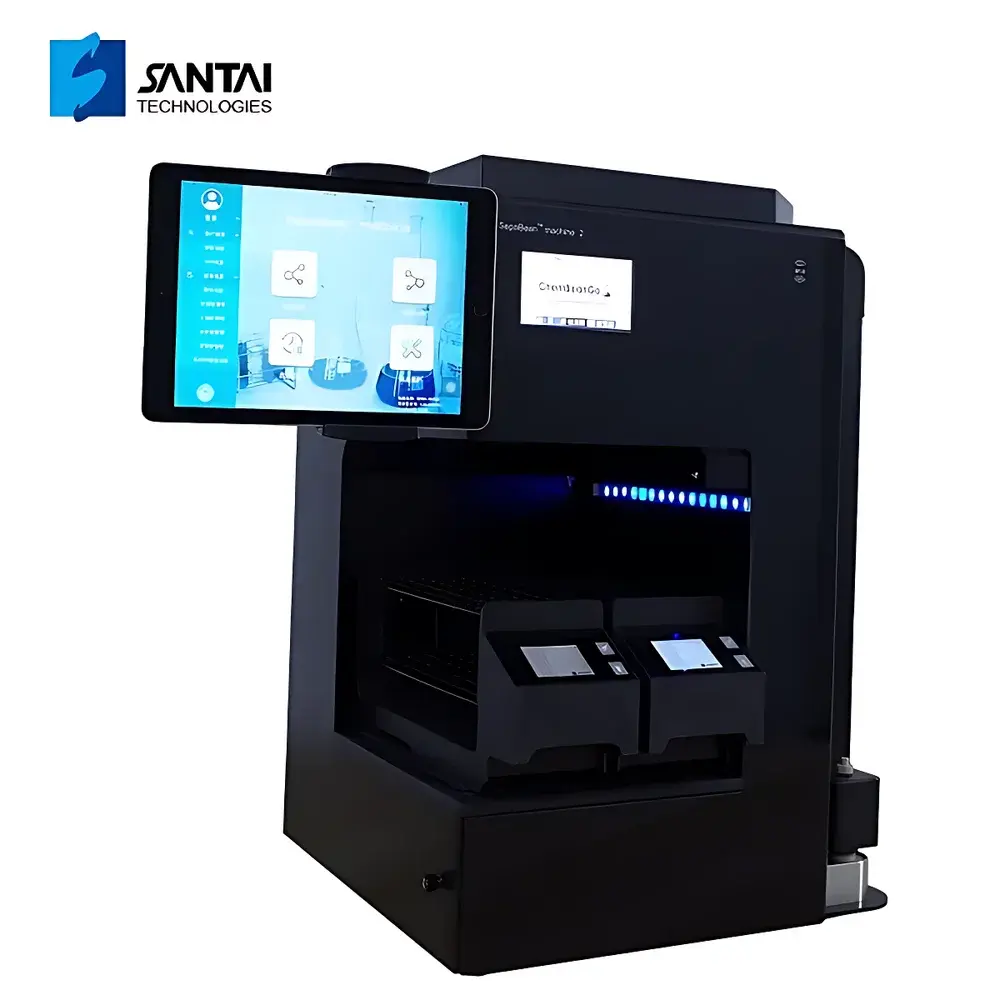
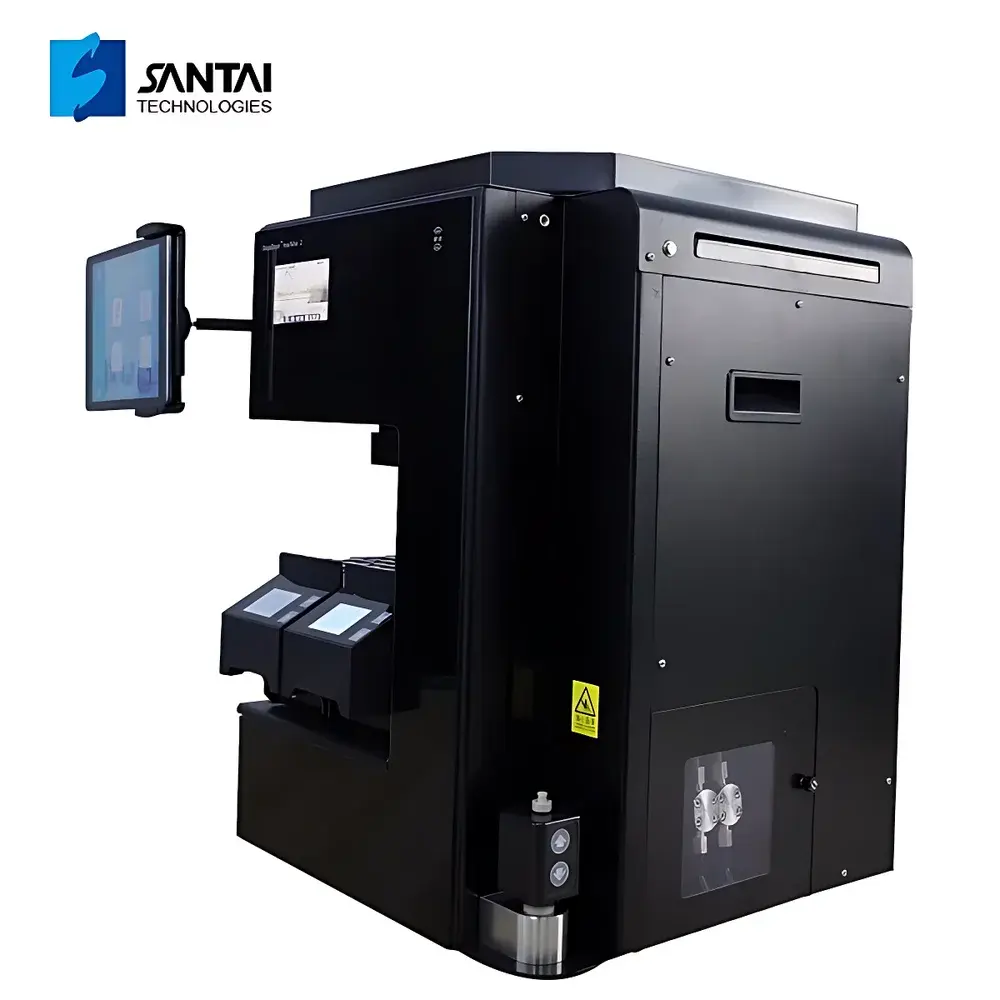
SepaBean Machine 2 Expert-Grade Preparative Liquid Chromatography System
| Brand | Santai |
|---|---|
| Origin | Jiangsu, China |
| Manufacturer Type | OEM Manufacturer |
| Origin Category | Domestic (China) |
| Model | SepaBean Machine 2 – Expert Edition |
| Price Range | USD $27,000–$40,000 |
| Application Level | Laboratory-Scale |
| Instrument Type | Medium-to-Low Pressure Preparative LC |
| Flow Rate Range | 1–200 mL/min |
| Flow Accuracy | ≤1% |
| Flow Precision (RSD) | ≤2% |
| Maximum Operating Pressure | 500 psi (34.5 bar) |
| Wavelength Range | 200–400 nm / 200–800 nm (DAD) |
| Wavelength Accuracy | ±1 nm |
| Wavelength Reproducibility | ±0.5 nm |
| Baseline Noise | 50 mAU |
| Data Acquisition Rate | 5 Hz |
| Gradient System | Quaternary Solvent Delivery with Optional Tertiary Solvent Path |
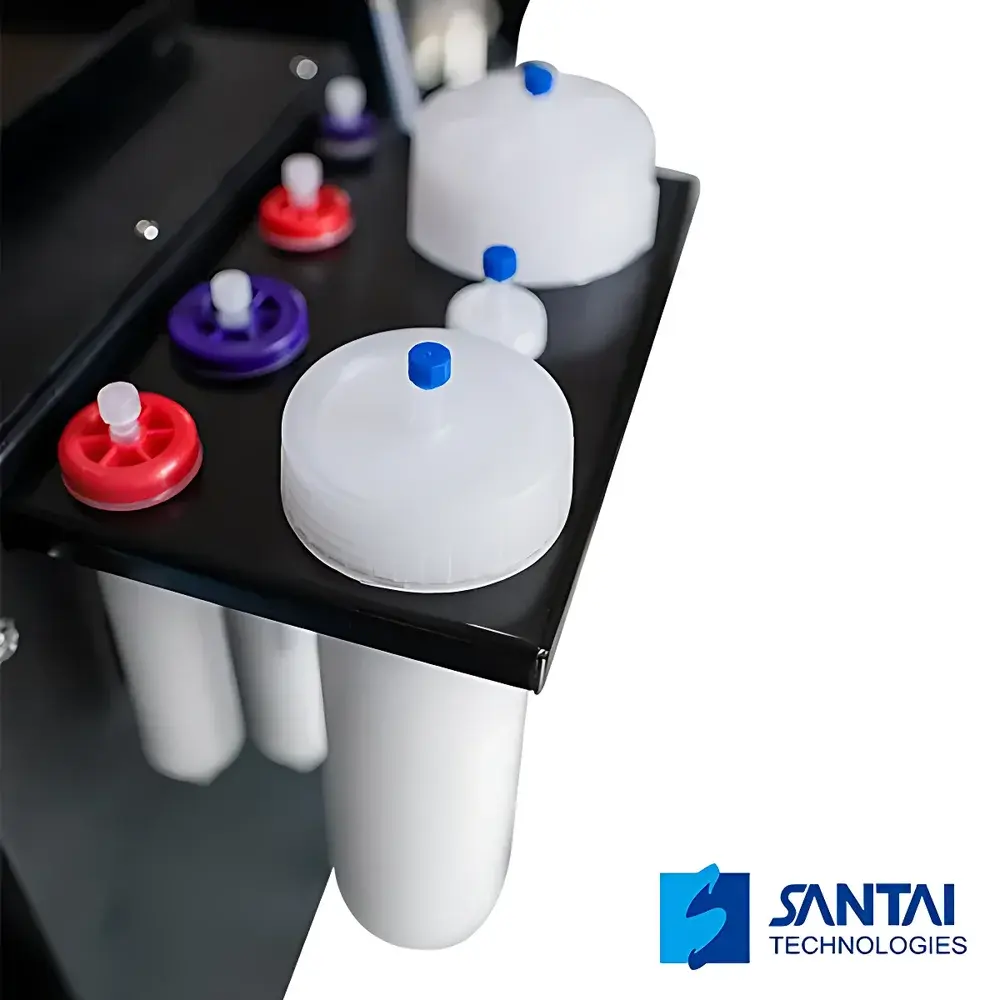
| Column Compatibility | SepaFlash® Fused-Bed Columns |
| Detection | Dual-Wavelength & Full-Spectrum DAD |
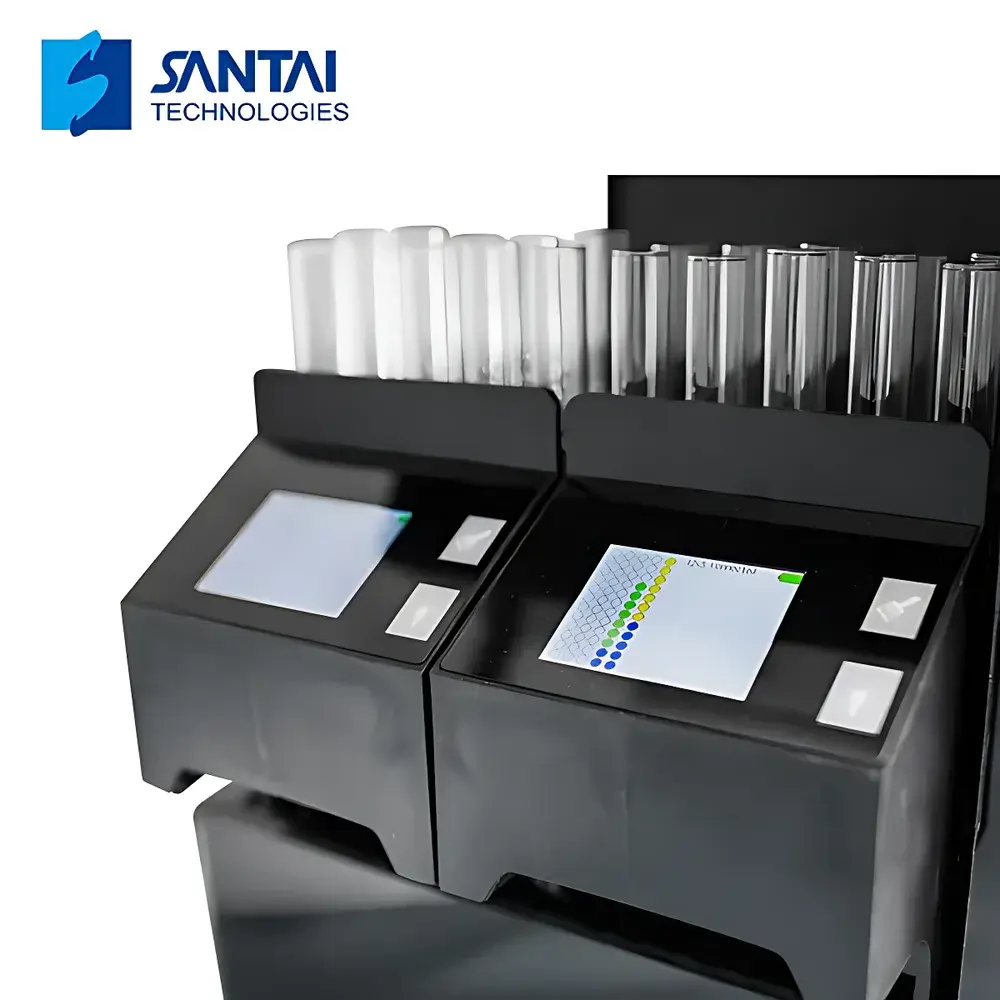
| Auto-Collector | Integrated with Tube Rack Recognition (13/15/18/25 mm tubes |
| Intelligent Column Mount | Motorized, Self-Aligning, Pressure-Compensated |
| Safety Features | Solvent Level Monitoring, Leak Detection, Overpressure Protection, Emergency Stop, Power-Fail Recovery |
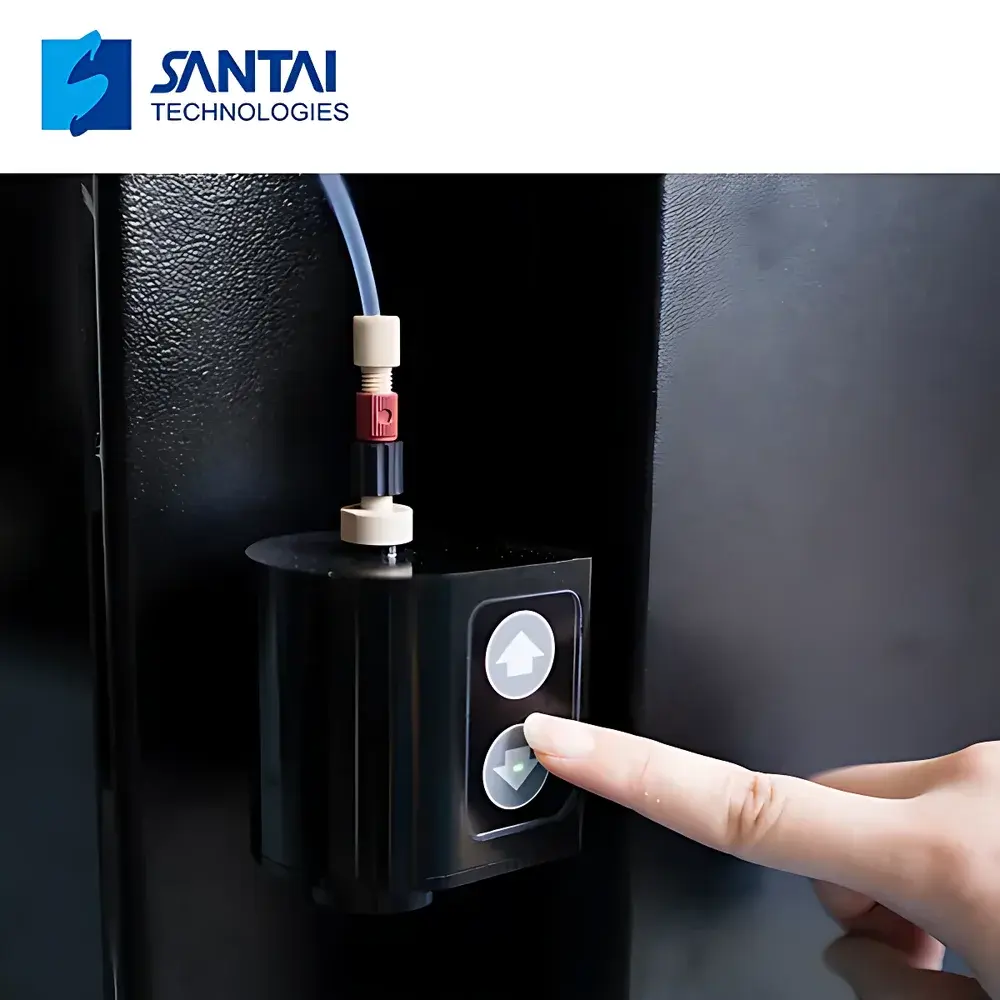
| Integrated Air Pump Module | For Post-Run Line & Column Purge |
| Gradient Accuracy at Low % (0–9%) | Maintained via High-Resolution Proportional Valves |
| Wireless Control | iOS/Android via Wi-Fi (No Local PC Required) |
| User Management | Multi-User Accounts with Role-Based Permissions |
| Data Security | AES-128/AES-256 Encryption for Storage & Transmission |
| Compliance | CE Certified |
| Software | Proprietary TLC Image Recognition, Gradient Method Translation, Column/Flow Recommendation Engine, GLP-Compliant Audit Trail (Optional), FDA 21 CFR Part 11 Ready Configuration |
Overview
The SepaBean Machine 2 Expert-Grade Preparative Liquid Chromatography System is a medium-pressure, laboratory-scale purification platform engineered for reproducible, scalable separation of organic compounds across synthetic chemistry, natural product isolation, pharmaceutical process development, and petrochemical research. Built upon a dual-piston reciprocating pump architecture, it delivers stable flow profiles with minimal pulsation—critical for baseline stability in preparative DAD detection. Its operational pressure ceiling of 500 psi (34.5 bar) enables compatibility with high-efficiency fused-silica-packed SepaFlash® columns while maintaining safety margins well within ISO 13849-1 functional safety guidelines. Unlike analytical HPLC systems optimized for sensitivity, the SepaBean Machine 2 prioritizes robustness, method transferability, and intuitive workflow integration—particularly for non-chromatography specialists conducting routine purifications in discovery labs.
Key Features
- Quaternary solvent delivery system with independent proportional valves, supporting up to four mobile phases and configurable tertiary solvent addition for complex gradient elution (e.g., DCM/MeOH/H₂O or EtOAc/hexane/acid modifiers)
- Diode Array Detector (DAD) with dual-wavelength monitoring (200–400 nm standard; 200–800 nm optional) and full-spectrum scanning capability (1 nm resolution), enabling real-time peak purity assessment and optimal wavelength selection
- Intelligent motorized column mount with auto-alignment and dynamic pressure compensation—eliminates manual column tightening and reduces seal wear during repeated column changes
- RFID-enabled column tracking: Each SepaFlash® column carries a unique electronic identifier storing usage history, packing date, and method parameters—integrated into audit trails for GLP/GMP environments
- Integrated air purge module automatically flushes residual solvents from tubing, detector flow cell, and column post-run—reducing carryover and extending component lifetime
- Wireless operation via encrypted Wi-Fi connection: Full instrument control, method editing, fraction collection logic, and real-time chromatogram viewing accessible from tablets or smartphones without local PC dependency
- TLC image recognition software: Captures and digitizes thin-layer chromatograms; algorithmically correlates Rf values and spot intensities to recommend initial gradient slopes, column dimensions, and loading capacity
Sample Compatibility & Compliance
The SepaBean Machine 2 accommodates a broad range of sample types—from crude reaction mixtures and plant extracts to peptide intermediates and metal-organic frameworks—provided solubility and stability under selected mobile phase conditions are verified. It supports both liquid and solid-phase loading (via dedicated auxiliary column mount), with compatible column diameters spanning 10–100 mm ID and bed lengths up to 300 mm. All fluidic pathways employ chemically resistant PEEK and stainless-steel components rated for common organic solvents (acetonitrile, THF, ethyl acetate, dichloromethane, methanol, isopropanol) and aqueous buffers (pH 2–9). The system complies with CE marking requirements per Directive 2014/30/EU (EMC) and 2014/35/EU (LVD). Optional firmware configurations support 21 CFR Part 11 compliance—including electronic signatures, immutable audit logs, and role-based access control—for regulated environments requiring FDA submission readiness.
Software & Data Management
The proprietary SepaControl™ software provides a unified interface for method development, execution, and data review. It features embedded gradient translation algorithms that convert TLC-based separation schemes into executable LC gradients—accounting for solvent strength, polarity index, and column geometry. Fraction collection logic includes threshold-based triggering (absorbance, slope, or time window), full-spectrum decision rules (e.g., “collect only peaks exhibiting >90% spectral similarity to reference standard”), and waste diversion protocols. All raw chromatographic data (UV spectra, analog detector outputs, pump pressure logs) are stored in vendor-neutral HDF5 format with embedded metadata (user ID, timestamp, method version, column RFID hash). Data encryption uses AES-256 at rest and TLS 1.2+ in transit. Audit trail functionality records every parameter change, user login/logout event, and fraction collection action—with tamper-evident hashing applied per session.
Applications
- Organic synthesis: Rapid purification of Suzuki, Heck, and Buchwald–Hartwig coupling products; chiral intermediate isolation using polysaccharide-based preparative columns
- Natural products: Sequential fractionation of crude plant extracts followed by sub-fractionation under reversed-phase or normal-phase conditions
- Pharmaceutical R&D: Desalting of oligonucleotides, removal of protecting groups from peptide fragments, and early-stage impurity isolation for structural elucidation (NMR, HRMS)
- Polymer chemistry: Separation of oligomer distributions from ring-opening metathesis polymerization (ROMP) or controlled radical polymerizations
- Material science: Purification of ligand-functionalized nanoparticles and metal–organic framework (MOF) precursors prior to crystallization
FAQ
What column formats are natively supported?
The system is validated for SepaFlash® fused-bed columns (10–100 mm ID) and accepts standard 1/4″ or 1/8″ stainless-steel or PEEK fittings. Custom column adapters are available for third-party hardware.
Is method transfer from analytical HPLC possible?
Yes—scaling rules (constant linear velocity, constant mass load, or constant resolution) are programmable within SepaControl™. Gradient dwell volume compensation ensures retention time fidelity across flow rate changes.
How is data integrity ensured during multi-user operation?
Each session requires individual credentials. Permissions govern method editing, data export, and system configuration changes. Exported reports include digital signatures and cryptographic hashes verifiable against the master audit log.
Can the system operate unattended overnight?
Fully—equipped with leak detection, solvent level sensors, overpressure cutoff, and automatic shutdown upon completion. Optional UPS integration maintains safe termination during power failure.
What maintenance intervals are recommended?
Pump seals: every 6 months or 1,000 hours; DAD lamp: 2,000 hours; air filter: quarterly; system leak test: before each high-pressure run (>300 psi). Service logs are auto-recorded and exportable.
Related Products




