
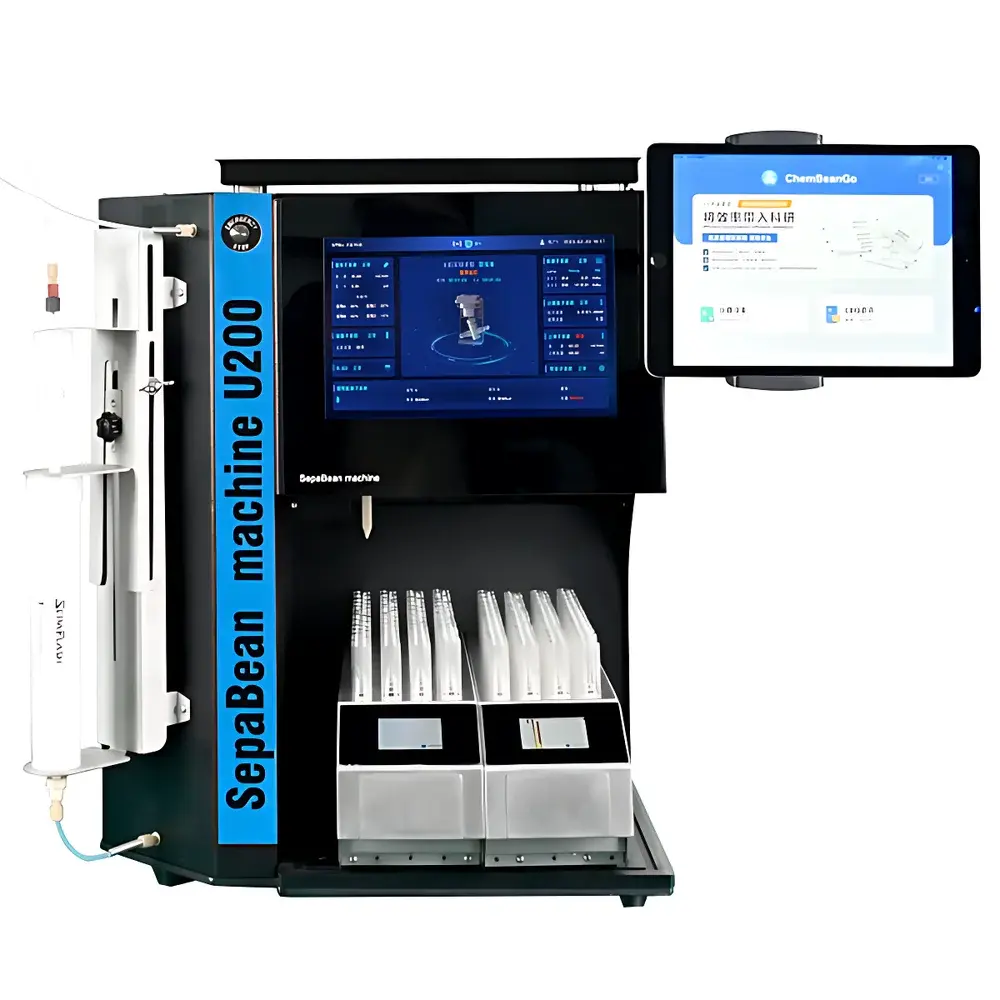
SepaBean U200 V2.0 Medium-Pressure Preparative Liquid Chromatography System
| Brand | Santai |
|---|---|
| Origin | Jiangsu, China |
| Manufacturer Type | Direct Manufacturer |
| Regional Classification | Domestic (China) |
| Model | U200 — Entry-Level |
| Application Level | Laboratory-Scale |
| Instrument Type | Medium-to-Low Pressure Preparative HPLC |
| Flow Rate Range | 0–200 mL/min |
| Flow Accuracy | ≤2% |
| Flow Precision (RSD) | ≤2% |
| Maximum Operating Pressure | 1.38 MPa (200 psi) |
| Wavelength Range | 200–800 nm |
| Wavelength Repeatability | ±1 nm |
| Baseline Noise | ±5 × 10⁻⁵ AU |
| Data Acquisition Frequency | 10 Hz |
Overview
The SepaBean U200 V2.0 is a purpose-engineered medium-pressure preparative liquid chromatography system designed for robust, reproducible compound isolation and purification in academic research laboratories, pharmaceutical development units, and natural product labs. Operating on standard reversed-phase or normal-phase separation principles, the U200 delivers precise gradient elution control via dual-solvent delivery—enabling reliable method transfer from analytical to preparative scale. With a maximum pressure rating of 1.38 MPa (200 psi) and flow capability up to 200 mL/min, it bridges the performance gap between low-pressure flash systems and high-pressure preparative HPLC—offering enhanced resolution over gravity-based methods while maintaining operational simplicity and cost efficiency. Its architecture supports routine purification of milligram-to-gram quantities using commercially available silica or C18 columns (4–330 g), making it ideal for lead compound isolation, synthetic intermediate purification, and botanical extract fractionation.
Key Features
- Integrated dual-pump binary gradient system with real-time solvent proportioning and pressure monitoring
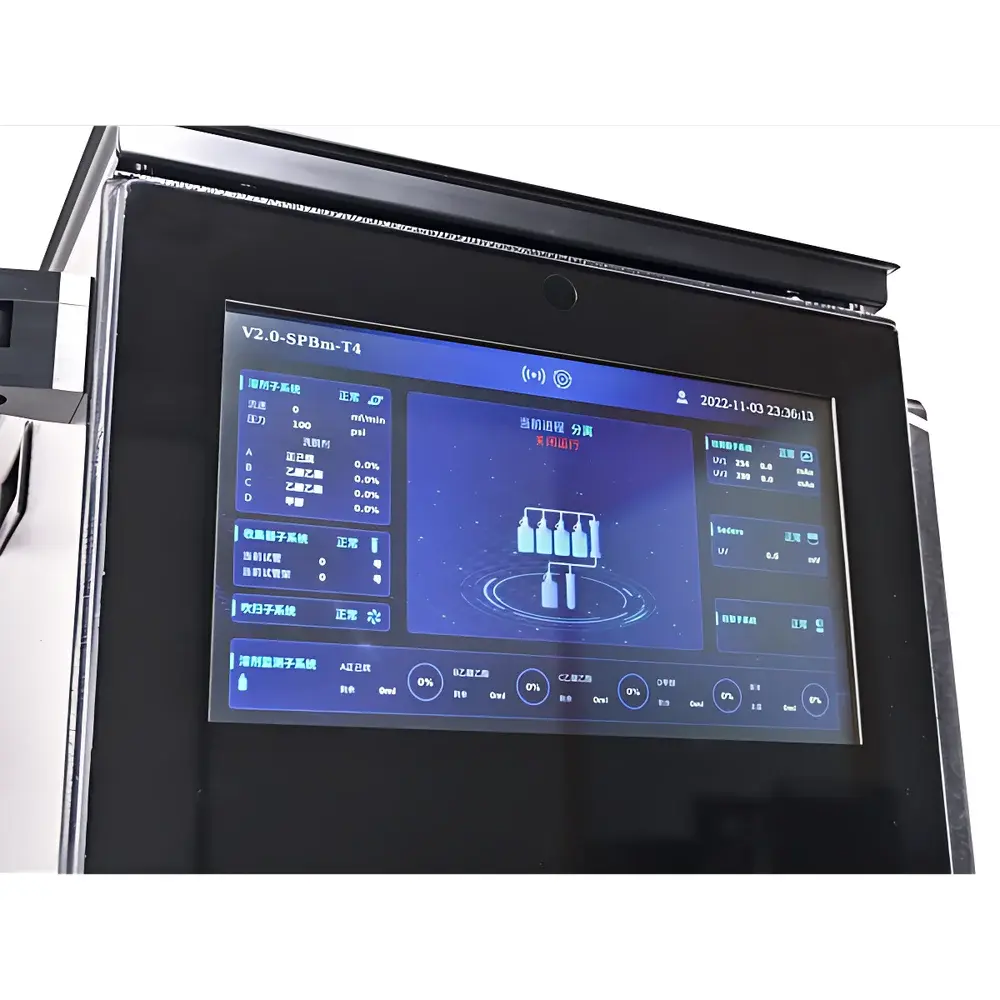
- 10.1-inch high-resolution capacitive touchscreen interface with intuitive graphical workflow navigation
- DAD (Diode Array Detector) with full-spectrum acquisition (200–800 nm), 1 nm wavelength repeatability, and baseline noise < ±5 × 10⁻⁵ AU at 1 s response time
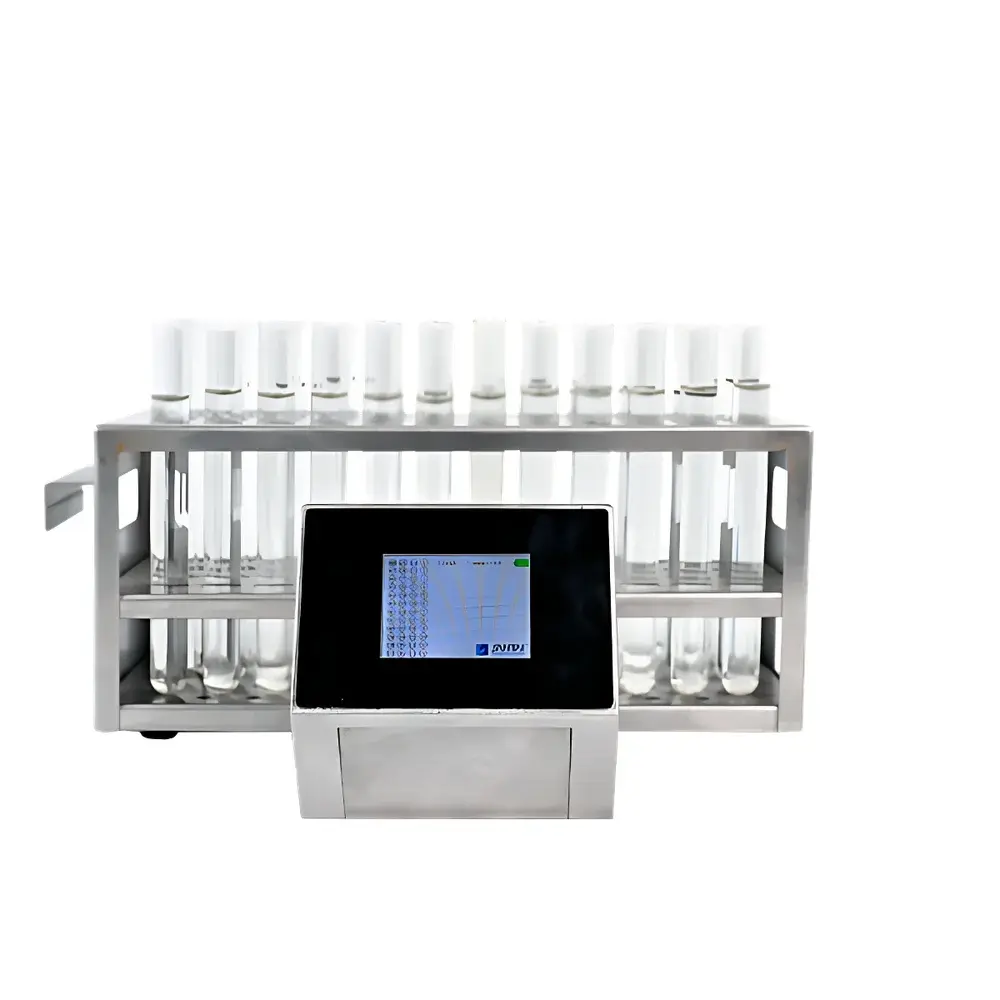
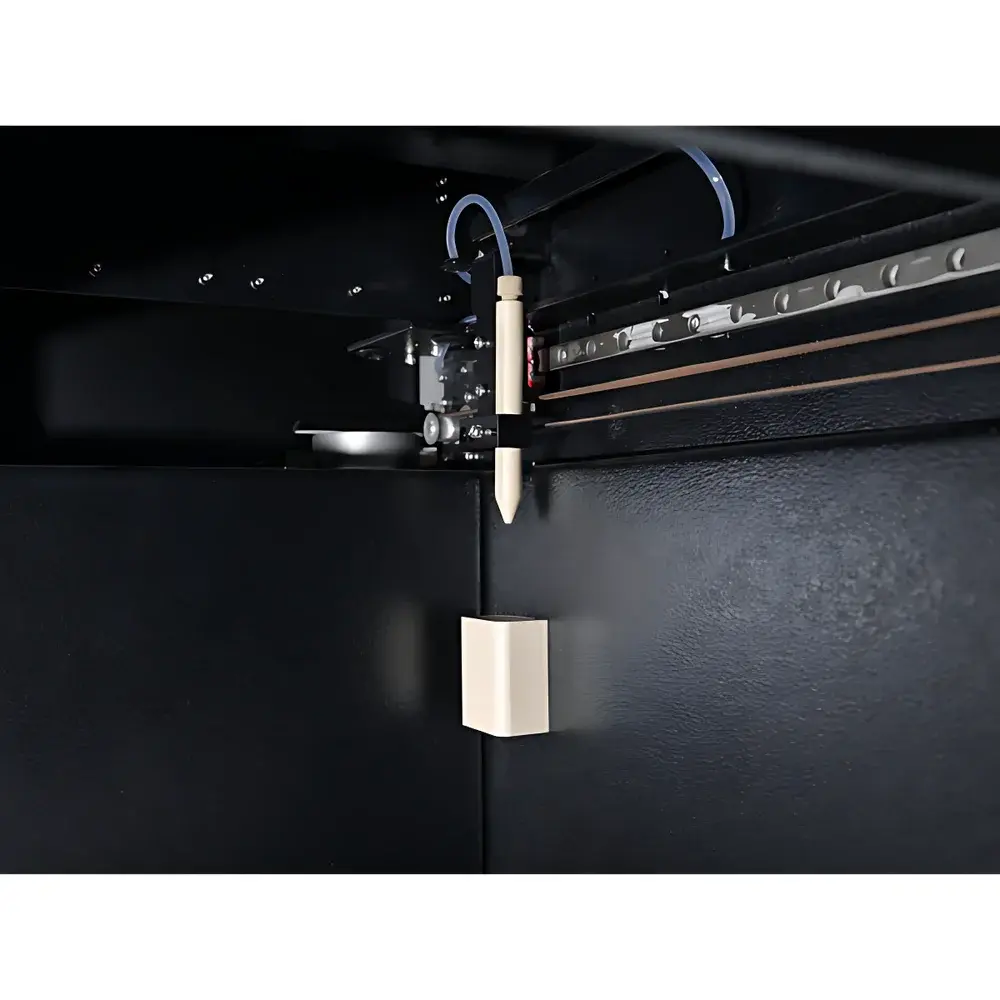
- Intelligent fraction collector with auto-detection of standard 2 × 18-position 180 mm test tube racks; optional compatibility with custom rack formats
- Embedded pressure safety interlock with real-time overpressure alarm and automatic pump shutdown at preset thresholds
- Modular design supporting optional ELSD (Evaporative Light Scattering Detection) integration for non-UV-absorbing analytes
- Onboard method storage and execution—no external PC required for routine operation
Sample Compatibility & Compliance
The U200 accommodates a broad range of sample types—including polar/nonpolar small molecules, peptides, natural product extracts, and synthetic intermediates—across both liquid and solid loading modes. Column compatibility spans standard preparative cartridges (4 g, 12 g, 24 g, 80 g, 120 g, 330 g) and custom-packed glass or stainless-steel columns (ID 10–50 mm). The system complies with core laboratory quality requirements: data integrity is maintained through timestamped audit trails, user-authenticated method execution, and immutable run logs. While not certified for GMP manufacturing environments, its software architecture aligns with ALCOA+ principles (Attributable, Legible, Contemporaneous, Original, Accurate, Complete, Consistent, Enduring, Available) and supports 21 CFR Part 11–compliant configurations when deployed with validated network authentication and electronic signature modules.
Software & Data Management
The U200 V2.0 runs on an embedded Linux-based control platform featuring native instrument networking capabilities. All methods, chromatograms, and collection triggers are stored locally and synchronized across instruments within the same LAN via encrypted peer-to-peer protocol—eliminating manual file export/import. Users can remotely schedule runs, retrieve historical data, and resume interrupted purifications on alternate U200 units without method reconfiguration. A centralized method database is hosted on Santai’s secure cloud infrastructure and updated quarterly at no cost—providing access to validated protocols for common compound classes (e.g., flavonoids, alkaloids, cannabinoids, amino acid derivatives). Role-based account management enforces granular permissions: administrators configure instrument settings and user roles; analysts execute methods and view results; supervisors approve method changes and audit logs.
Applications
- Purification of reaction mixtures post-Suzuki coupling, amidation, or esterification
- Isolation of bioactive constituents from plant extracts (e.g., curcuminoids, ginsenosides, polyphenols)
- Desalting and buffer exchange of peptide fractions prior to MS analysis
- Removal of catalyst residues (Pd, Ru) from transition-metal-catalyzed synthesis products
- Preparative-scale chiral separations using polysaccharide-based columns (with compatible mobile phases)
- Method scouting and scalability assessment for downstream process development
FAQ
Does the U200 support method validation per ICH Q2(R2) guidelines?
Yes—when operated with documented SOPs, calibrated DAD verification, and full audit trail enabled, the U200 provides the foundational data integrity framework required for analytical method validation in research and early-development contexts.
Can third-party column hardware be used with the U200?
Yes—the system uses standard 1/4″-28 UNF inlet/outlet fittings and accepts any preparative column rated ≤1.38 MPa and compatible with the selected solvents and flow rates.
Is remote desktop access supported for troubleshooting?
No—remote desktop is disabled by default for security. Technical support is delivered via encrypted screen-sharing sessions initiated only upon authenticated user request and session key exchange.
What is the warranty coverage and service response time?
The U200 carries a 24-month parts-and-labor warranty. Priority on-site service response is guaranteed within 3 business days for customers enrolled in the Platinum Support Program.
How is data backup handled during instrument firmware upgrades?
All user data—including methods, sequences, and chromatographic records—is automatically backed up to internal redundant NAND storage prior to any firmware update and restored post-installation without user intervention.





