
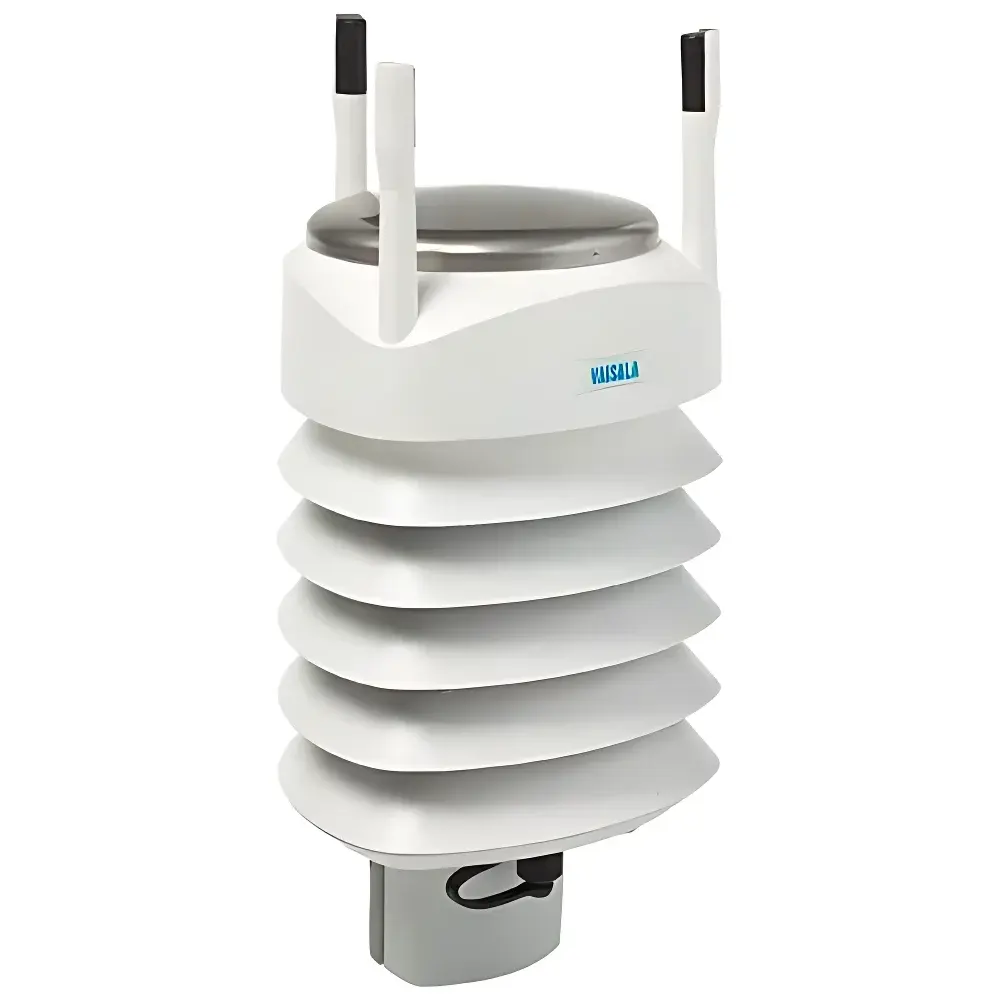
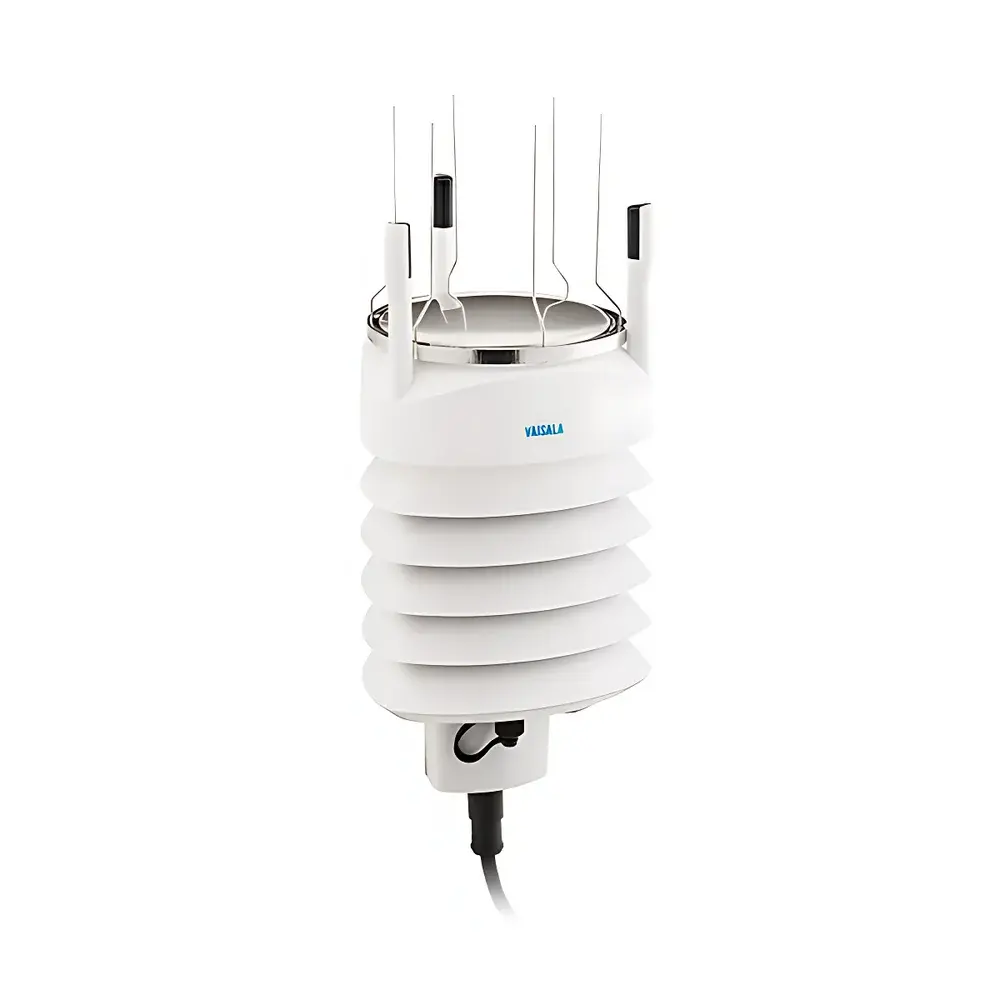
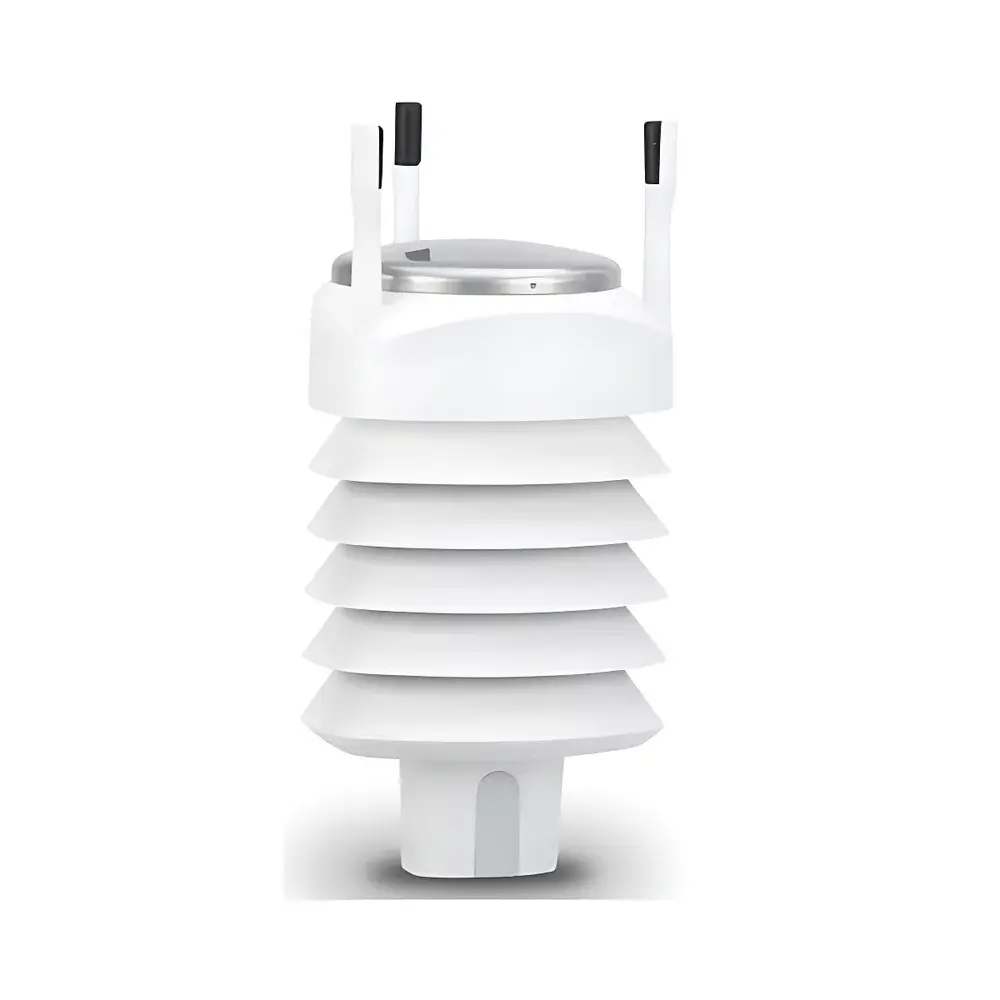
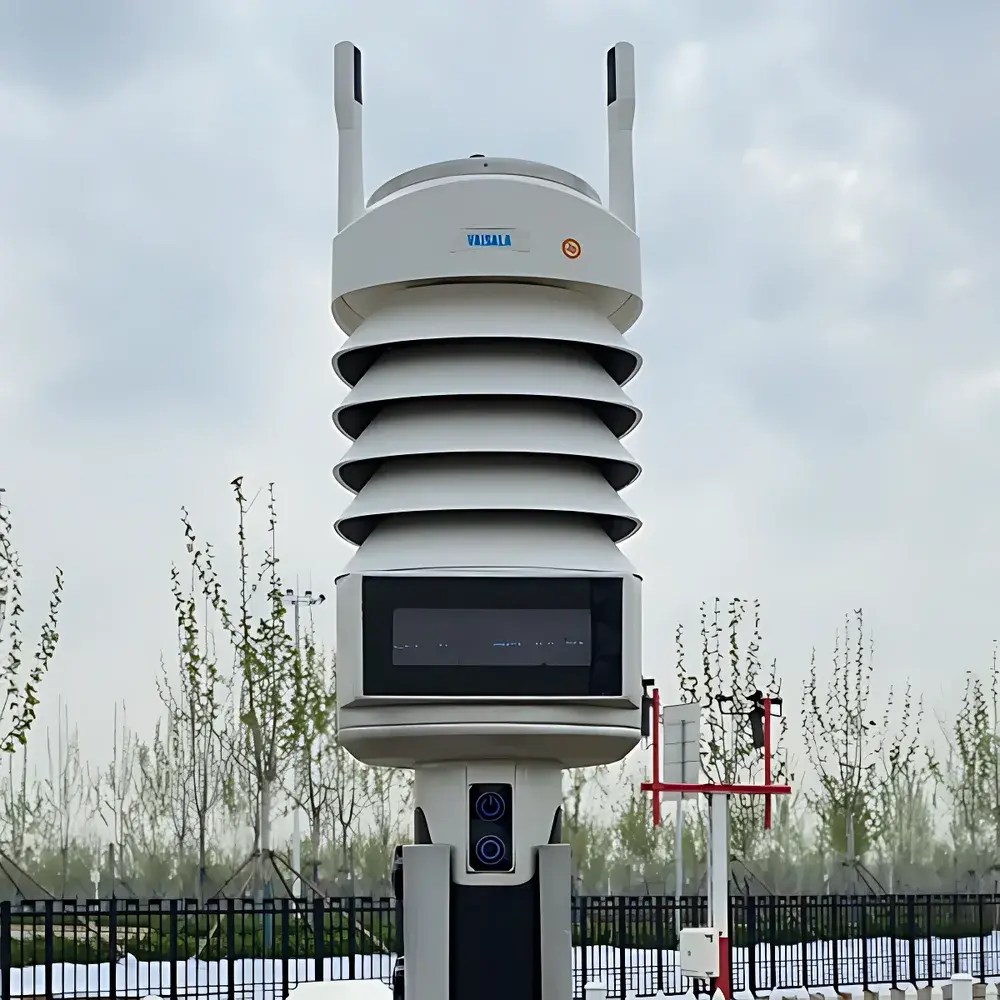
Vaisala WXT536 Ultrasonic Weather Transmitter
| Brand | Vaisala |
|---|---|
| Origin | Finland |
| Model | WXT536 |
| Instrument Type | Portable Weather Station |
| Enclosure Rating | IP65 (without mounting adapter), IP66 (with mounting adapter) |
| Operating Temperature | -52 °C to +60 °C |
| Power Supply | 6–24 VDC |
| Communication Interfaces | SDI-12 v1.3, RS-232, RS-485, RS-422 |
| Wind Speed Range | 0–60 m/s |
| Wind Direction Range | 0–360° |
| Air Temperature Range | -52 °C to +60 °C |
| Relative Humidity Range | 0–100 % RH |
| Atmospheric Pressure Range | 600–1100 hPa |
| Rainfall Measurement | Acoustic RAINCAP® sensor, cumulative output, 0–200 mm/h |
| Analog Inputs | PT1000 (2-/4-wire), Kipp & Zonen CMP3 pyranometer (0–25 mV), voltage (0–10 V), tipping bucket (0–100 Hz) |
| Optional Analog Current Outputs | 0–20 mA or 4–20 mA for wind speed and wind direction |
Overview
The Vaisala WXT536 Ultrasonic Weather Transmitter is a compact, all-in-one environmental sensing platform engineered for high-reliability meteorological monitoring in demanding field applications. Unlike traditional mechanical anemometers and cup-based precipitation gauges, the WXT536 employs solid-state ultrasonic wind measurement (WINDCAP®) and acoustic rainfall detection (RAINCAP®) — eliminating moving parts, mechanical wear, icing sensitivity, and common artifacts such as evaporation loss, overflow, or clogging. Its integrated PTU (Pressure–Temperature–Humidity) module utilizes Vaisala’s proprietary capacitive thin-film sensor technology for long-term stability and minimal drift. Designed for continuous unattended operation across extreme climatic zones—from Arctic tundra to tropical coastal sites—the WXT536 delivers traceable, metrologically robust measurements aligned with IEC 60945 maritime compliance requirements and widely referenced in ISO/IEC 17025-accredited environmental monitoring workflows.
Key Features
- Ultrasonic wind sensing: Simultaneous 2D horizontal wind speed (0–60 m/s) and direction (0–360°) measurement with ±3% accuracy at 10 m/s and 0.25 s response time—no moving parts, no inertia lag, no bearing maintenance.
- Acoustic rainfall detection: RAINCAP® technology measures drop impact energy acoustically, enabling true volumetric accumulation without mechanical tipping mechanisms—immune to undercatch in high winds, freezing rain, or low-intensity drizzle.
- Integrated PTU module: Single-sensor housing for barometric pressure (600–1100 hPa, ±0.5 hPa), air temperature (−52 °C to +60 °C, ±0.3 °C @ 20 °C), and relative humidity (0–100% RH, ±3% RH in 0–90% range) with field-replaceable design—no recalibration tools required.
- Low-power architecture: Typical current draw of 3 mA @ 12 VDC during standard 1-minute sampling; compatible with solar-powered remote deployments via optional heater control and SDI-12 sleep modes.
- Modular analog expansion: Four configurable analog input channels support external sensors—including PT1000 resistance thermometers, Kipp & Zonen CMP3 pyranometers (0–25 mV), and industrial voltage/frequency signals—enabling hybrid station configurations without external data loggers.
- Industrial-grade interfacing: Dual-mode analog current outputs (0–20 mA or 4–20 mA) for wind speed and direction, compliant with PLC and SCADA integration standards; digital interfaces include SDI-12 v1.3, ASCII/NMEA 0183 v3.0 over RS-232/485/422.
Sample Compatibility & Compliance
The WXT536 is validated for continuous outdoor exposure per IP65 (standard mounting) and IP66 (with sealed adapter kit), ensuring ingress protection against dust and high-pressure water jets. Its operating envelope spans −52 °C to +60 °C ambient, making it suitable for polar research stations, alpine observatories, offshore platforms, and desert solar farms. All core measurements meet traceability requirements for environmental reporting under EU Directive 2008/50/EC (ambient air quality), ASTM D5098 (precipitation gauge performance), and ISO 16484-5 (building automation interoperability). The device supports audit-ready data logging when paired with compliant dataloggers—supporting timestamped metadata, firmware version tracking, and sensor health diagnostics required under GLP and ISO/IEC 17025 quality management systems.
Software & Data Management
Vaisala provides open-protocol documentation (ASCII command set, NMEA 0183 sentence structure, SDI-12 polling syntax) enabling seamless integration into custom SCADA, IoT edge gateways, or cloud telemetry platforms (e.g., AWS IoT Core, Azure IoT Hub). No proprietary drivers or closed firmware are required. The transmitter supports user-defined output intervals (1 s to 1 hr), statistical aggregation (min/max/avg), and event-triggered burst sampling. Optional analog current outputs facilitate direct connection to legacy PLCs without protocol translation. Firmware updates are performed via serial interface using documented binary image format—fully compatible with automated OTA update pipelines in regulated infrastructure environments.
Applications
- Automated weather observation networks (AWOS) for aviation and airport safety systems
- Environmental impact assessments (EIA) and regulatory compliance monitoring for construction, mining, and renewable energy projects
- Microclimate profiling in precision agriculture, viticulture, and forest ecology studies
- Coastal and marine meteorology—validated to exceed IEC 60945 maritime environmental stress testing
- Urban heat island (UHI) mapping and smart city infrastructure with solar-powered, low-maintenance node deployment
- Calibration reference stations supporting secondary sensor validation in national meteorological services
FAQ
Does the WXT536 require periodic recalibration?
No scheduled recalibration is required under normal operating conditions. The WINDCAP® and RAINCAP® sensors are factory-calibrated with NIST-traceable references; the PTU module exhibits <0.1 °C/year drift in temperature and <0.5% RH/year in humidity under typical field exposure. Field verification is recommended annually using portable reference standards per ISO 9001 Clause 7.1.5.
Can the WXT536 operate without external power during extended darkness?
Yes—its minimum standby current is 0.1 mA @ 12 VDC (SDI-12 sleep mode), enabling multi-week autonomy on standard 12 Ah LiFePO₄ batteries. Solar charging is supported with appropriate charge controllers meeting EN 50124-1 for railway-grade reliability.
Is NMEA 0183 output compatible with marine chartplotters?
Yes—the WXT536 transmits standardized $WIMWV (wind speed/direction), $WIMWD (meteorological data), and $GPGGA (GPS-assisted time sync) sentences. Output formatting adheres strictly to NMEA 0183 v3.0 timing and checksum conventions.
How is rainfall accumulation reset?
Cumulative rainfall is stored in non-volatile memory and can be reset remotely via ASCII command (e.g., “RST RAIN”) or manually through hardware jumper configuration—no physical access to internal components is needed.
Related Products







