
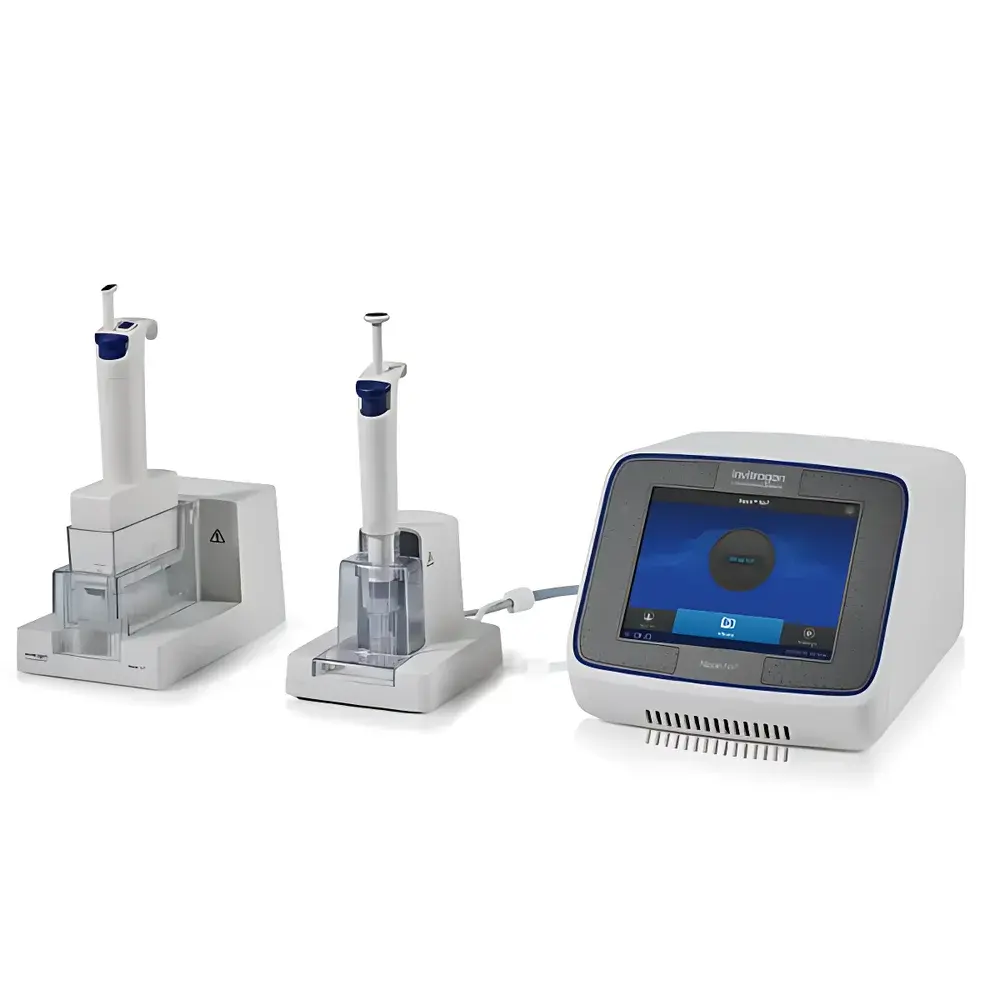
Invitrogen Neon NxT Electroporation System
| Brand | Invitrogen |
|---|---|
| Origin | Singapore |
| Manufacturer Type | Original Equipment Manufacturer (OEM) |
| Product Origin | Imported |
| Model | Neon NxT |
| High-Voltage Range | 2,500 V |
| Low-Voltage Range | 500 V |
| Pulse Duration | 1–100 ms |
| Number of Pulses | 1–10 |
Overview
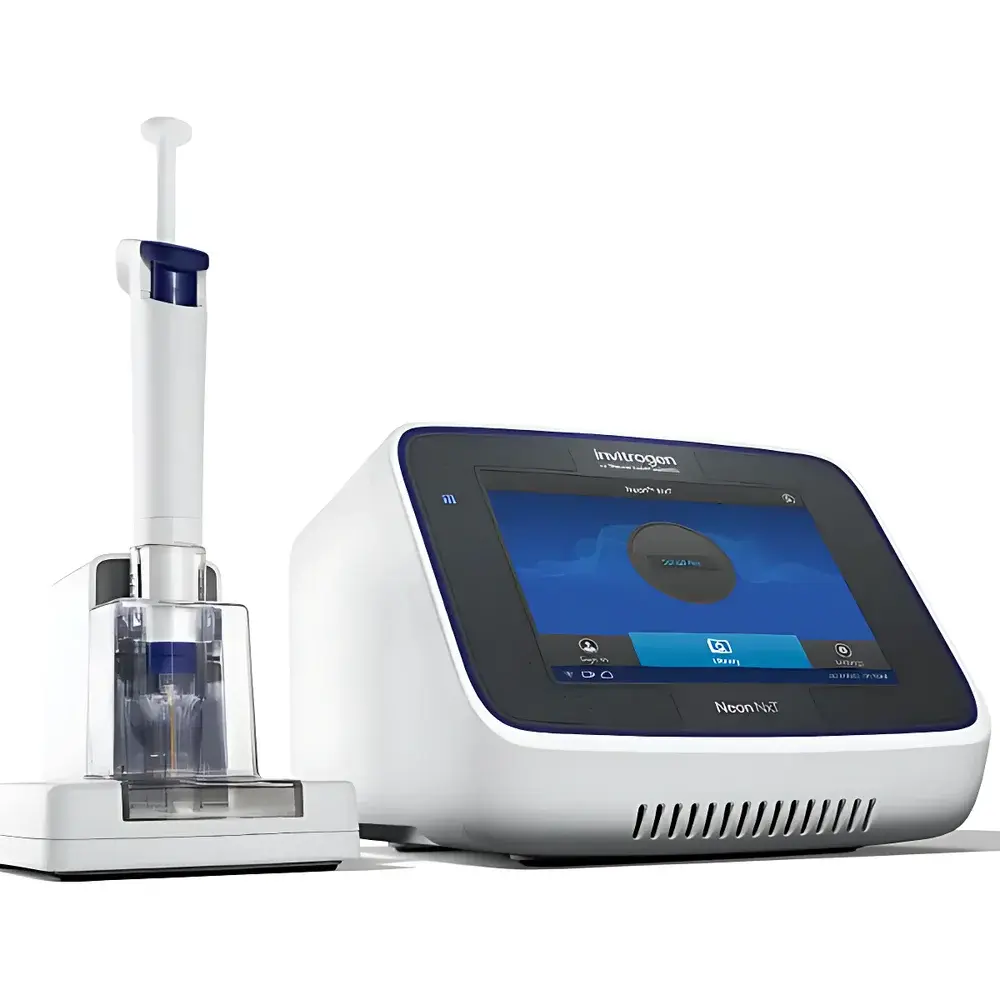
The Invitrogen Neon NxT Electroporation System is a benchtop, microscale electroporator engineered for high-efficiency nucleic acid and protein delivery into challenging mammalian cell types—including primary cells, immune cells (e.g., T cells, NK cells), hematopoietic stem cells (HSCs), and pluripotent stem cells. It operates on the principle of controlled, transient membrane permeabilization via precisely delivered electrical pulses across a conductive, biocompatible capillary-based pipette tip chamber. Unlike conventional cuvette-based electroporation systems, the Neon NxT employs a proprietary electrode-integrated pipette tip architecture that generates a highly uniform electric field distribution across the entire sample volume—minimizing localized joule heating, pH shifts, ion accumulation, and hydrodynamic shear stress. This physical design enables reproducible pore formation with superior post-electroporation viability and transfection efficiency, routinely achieving >90% transfection efficiency and >70% cell viability in validated hard-to-transfect populations under optimized conditions.
Key Features
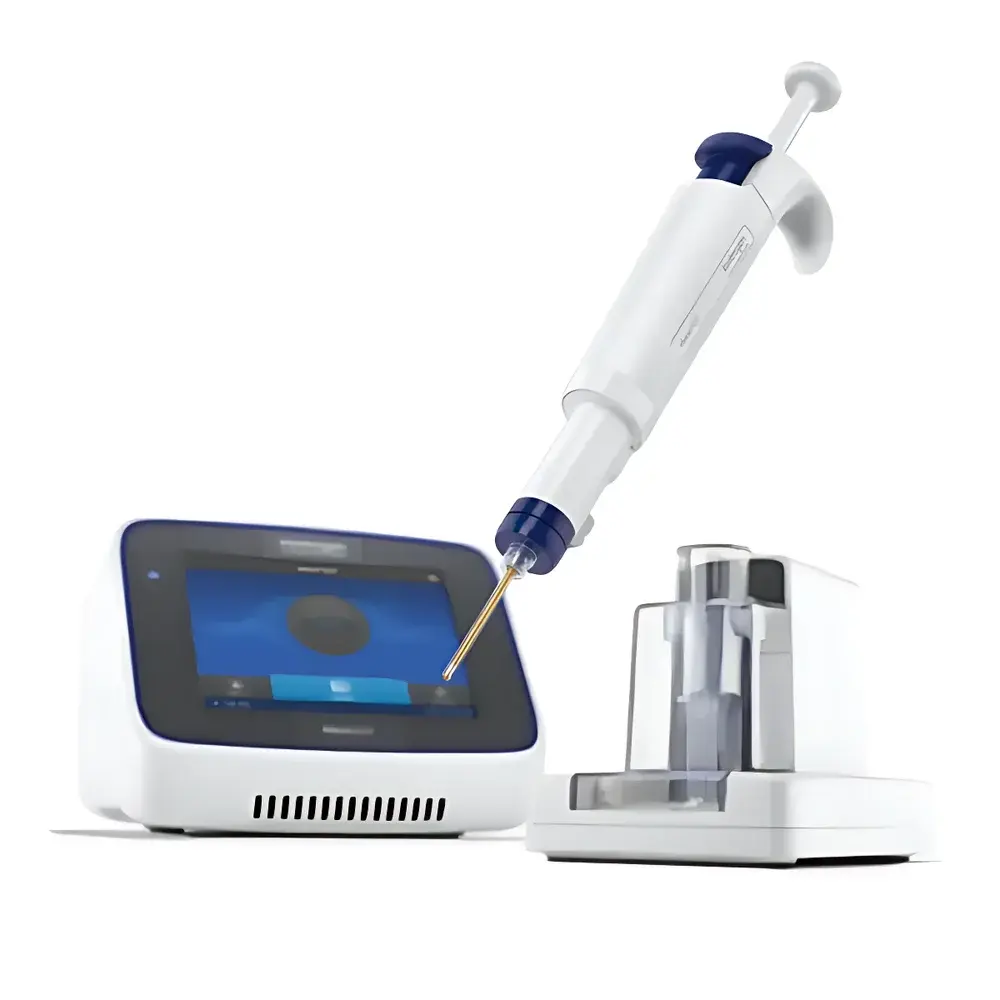
- Capillary-based electroporation chamber: Eliminates cuvette handling, reduces sample loss, and maintains sterility within biosafety cabinets.
- Programmable pulse parameters: Independent control over voltage (500–2,500 V), pulse width (1–100 ms), and pulse number (1–10) for empirical optimization per cell type and payload.
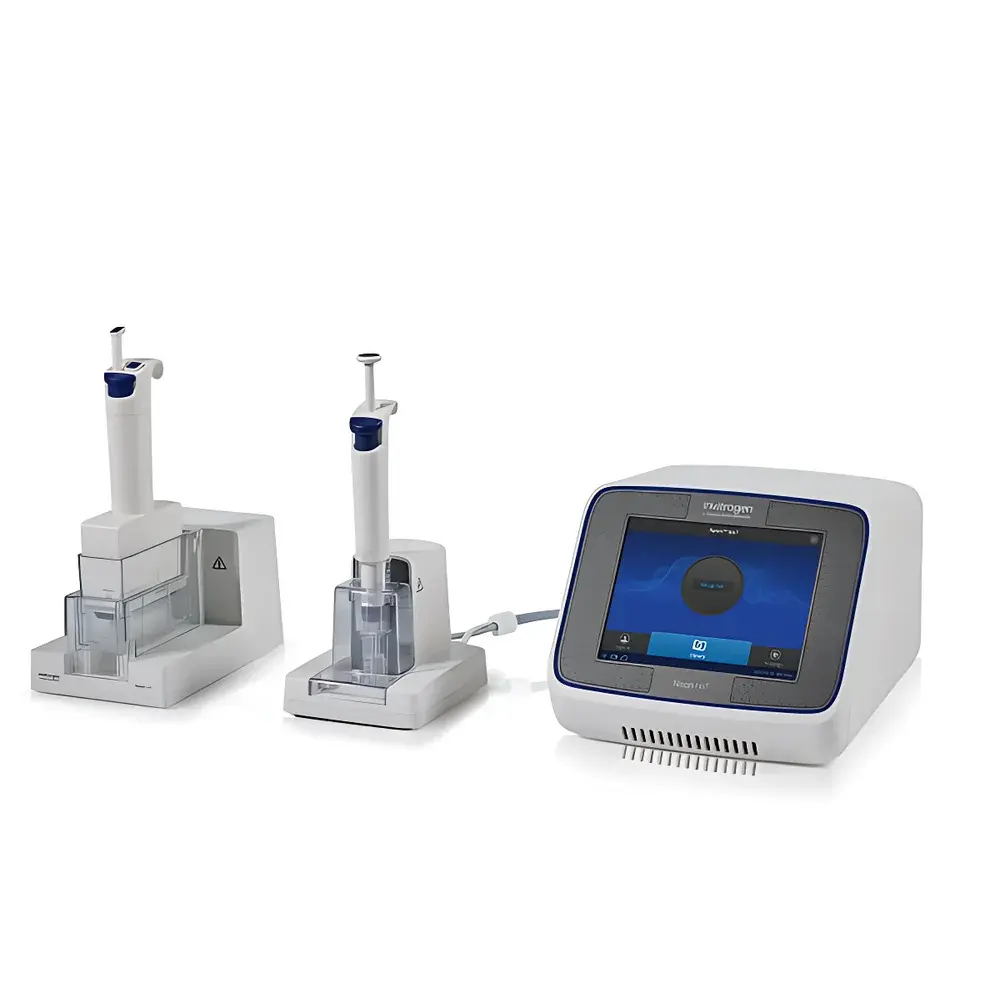
- Two pipettor configurations: Single-channel and 8-channel pipettors—each tip operates independently with customizable parameters, buffer, and payload, enabling parallel multi-condition screening.
- Integrated plate-mode workflow: Intuitive touchscreen interface supports pre-programmed 96-well plate protocols; full plate processing completed in ≤15 minutes.
- Universal buffer compatibility: Neon NxT Resuspension Buffer R (for voltages 150 mammalian cell lines, eliminating need for cell-specific buffer development.
- CRISPR-optimized delivery: Designed for efficient RNP, plasmid DNA, mRNA, and siRNA delivery—validated for knockout (KO) and knock-in (KI) applications in primary T cells, K562, Jurkat, HSCs, and NK cells using endogenous genomic loci (e.g., TRAC, B2M, AAVS1).
Sample Compatibility & Compliance
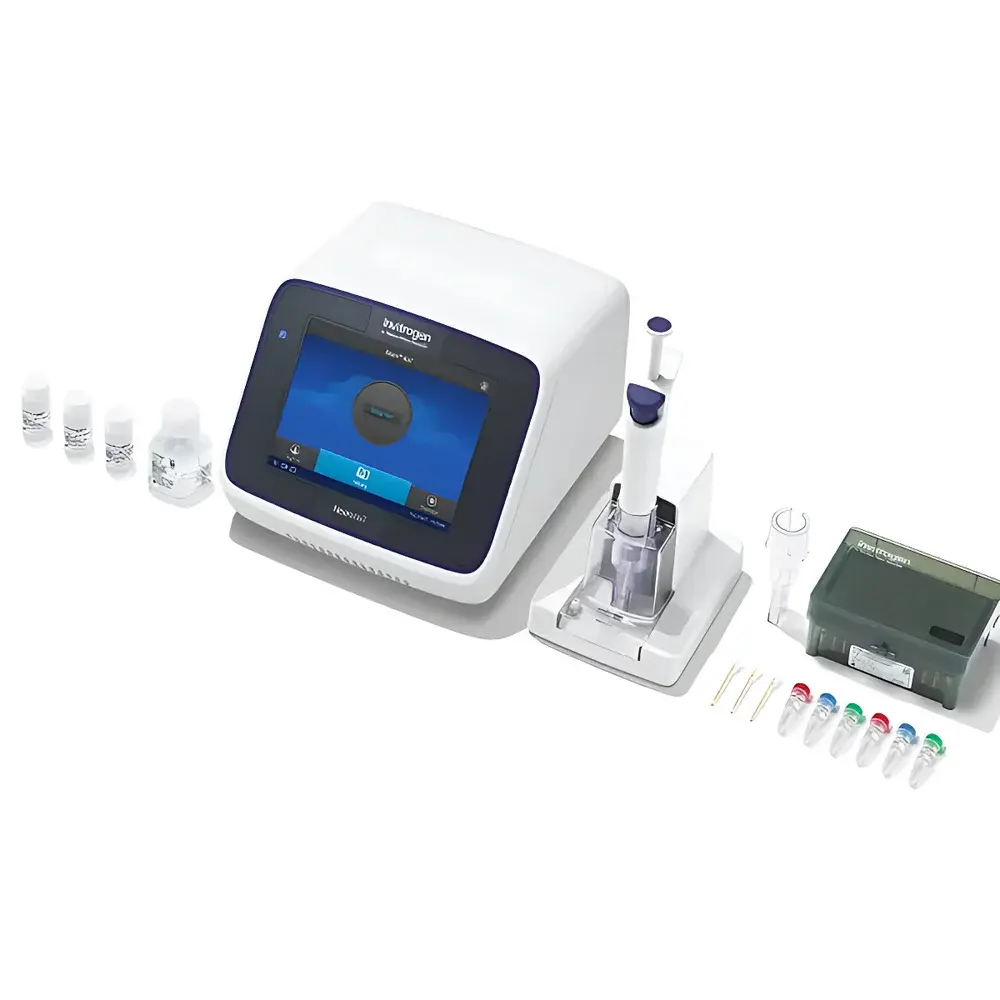
The Neon NxT system supports electroporation of 1×10⁴ to 1×10⁶ cells per 10 µL or 100 µL reaction volume. Its modular tip format ensures compatibility with standard sterile tissue culture practices and biosafety level 2 (BSL-2) workflows. The instrument’s compact footprint (≤30 cm × 25 cm) allows seamless integration into laminar flow hoods and biosafety cabinets without compromising workspace ergonomics. All consumables—including pipette tips and resuspension buffers—are manufactured under ISO 13485-certified quality management systems. While not a medical device, the system supports GLP-compliant experimental documentation when used with audit-trail-enabled laboratory information management systems (LIMS); raw parameter logs and user session timestamps are exportable via USB for traceability.
Software & Data Management
The Neon NxT features an embedded Linux-based operating system with a 7-inch capacitive touchscreen interface. Protocols are stored locally with versioned naming, user access controls (admin/operator roles), and timestamped execution logs. Each run records applied voltage, pulse duration, pulse count, tip ID, buffer selection, and operator ID. Export formats include CSV and PDF summary reports compatible with electronic lab notebooks (ELNs). No cloud connectivity or remote telemetry is implemented—ensuring full data sovereignty. Software updates are delivered via encrypted USB firmware packages, maintaining compliance with institutional IT security policies and FDA 21 CFR Part 11 requirements when paired with appropriate procedural controls (e.g., electronic signatures, change management logs).
Applications
- CRISPR-Cas9/RNP-mediated genome editing in primary human T cells, NK cells, and CD34+ HSCs—enabling clinical-grade ex vivo editing workflows.
- High-efficiency delivery of base editors (BE), prime editors (PE), and epigenetic modulators into non-dividing cells.
- Transient expression of difficult-to-express membrane proteins and large gene constructs (>10 kb) in suspension and adherent lines.
- Functional genomics screens using pooled or arrayed siRNA/miRNA libraries in low-input primary models.
- Stem cell reprogramming and differentiation studies requiring minimal perturbation and high viability retention post-electroporation.
- Preclinical immunotherapy development—including CAR-T and TCR-T engineering—with consistent batch-to-batch reproducibility.
FAQ
What cell types are validated for use with the Neon NxT system?
Over 150 mammalian cell lines—including Jurkat, K562, HEK293, iPSCs, primary CD4+/CD8+ T cells, monocyte-derived dendritic cells, and cord blood-derived HSCs—have been experimentally validated using manufacturer-provided protocols and buffers.
Can the Neon NxT deliver CRISPR ribonucleoprotein (RNP) complexes?
Yes. The system is specifically optimized for RNP delivery, with published data demonstrating >80% editing efficiency at TRAC in activated primary T cells and >75% indel frequency at B2M in HSCs using Neon NxT Genomic Editing Buffer.
Is the 8-channel pipettor capable of running different protocols simultaneously?
Yes. Each of the eight tips functions as an independent electroporation chamber, supporting distinct voltage, pulse width, pulse count, buffer, and payload combinations in a single run.
How does the capillary tip design improve cell viability compared to cuvettes?
The uniform electric field geometry minimizes localized current density hotspots, reducing thermal denaturation, electrolytic byproduct generation, and mechanical shear—key contributors to post-electroporation apoptosis.
Are Neon NxT tips and buffers compatible with older Neon 100 systems?
No. Neon NxT uses proprietary tip geometry and buffer formulations; it is not backward-compatible with Neon 100 hardware or consumables.
Related Products




