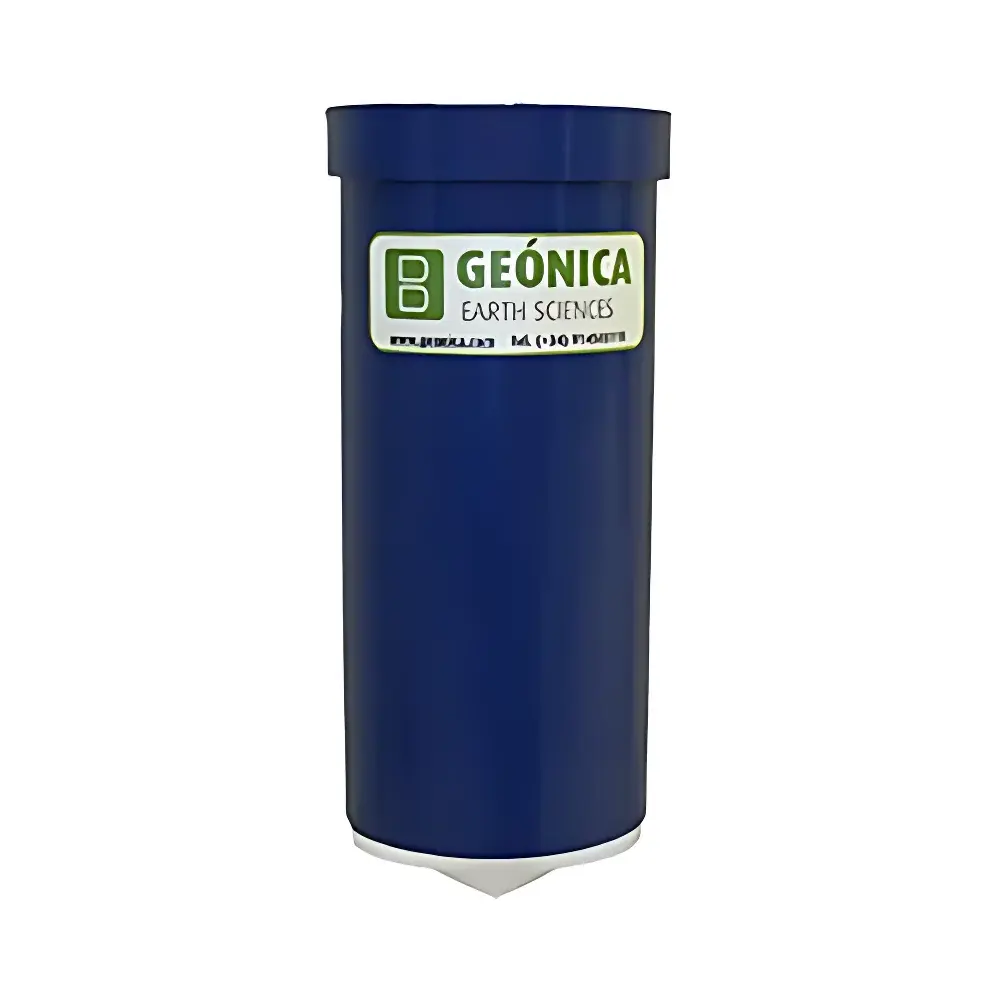
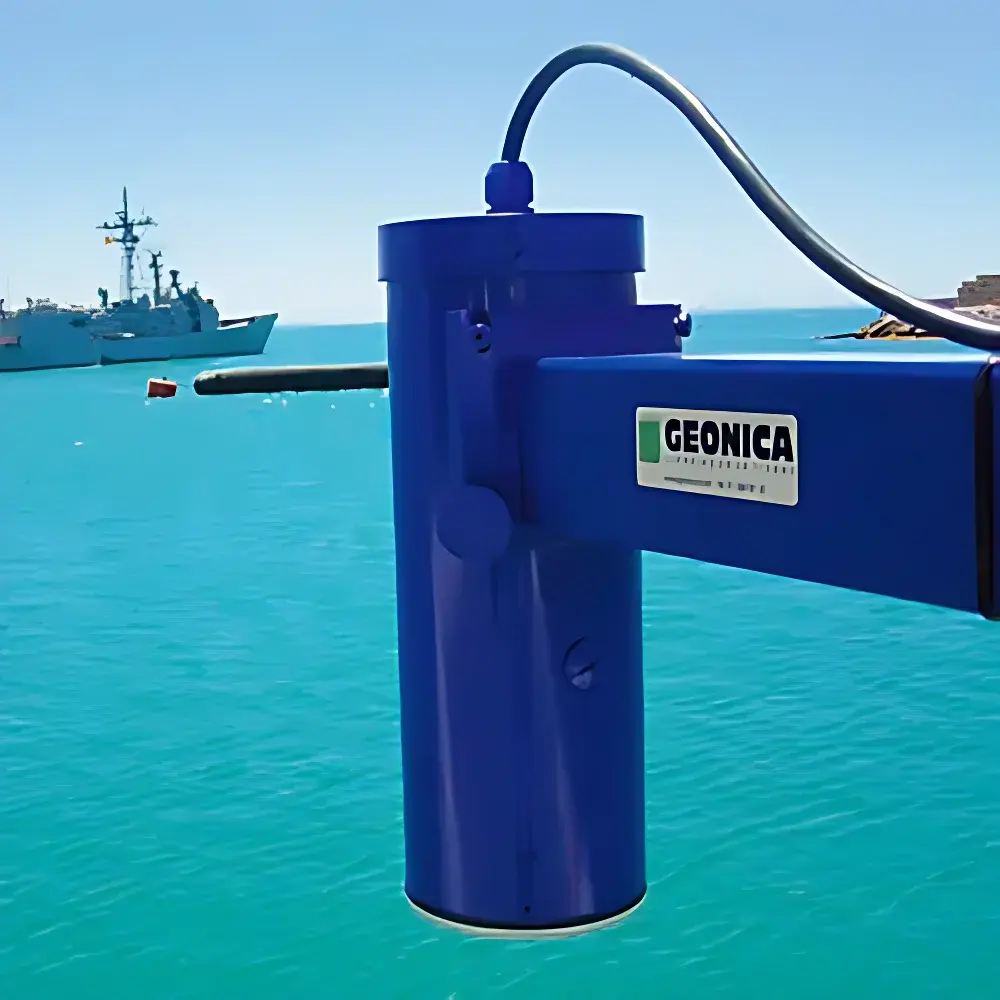
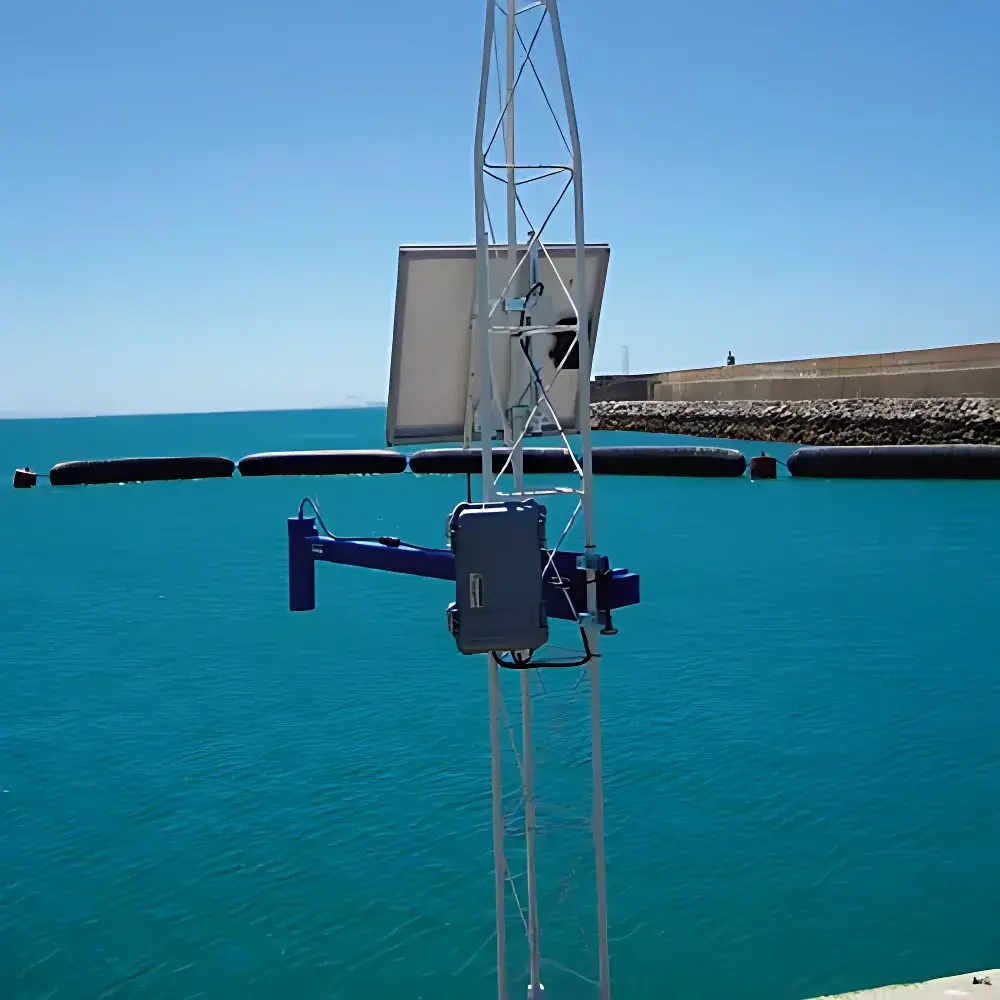
Geonica RADAR 6115 Radar Water Level Sensor
| Brand | Geonica |
|---|---|
| Origin | Spain |
| Model | 6115 |
| Type | Pulsed Radar Water Level Sensor |
| Frequency | 26 GHz |
| Measurement Range | 0–15 m (programmable) |
| Resolution | 1 mm |
| Accuracy | ±2 mm (full scale), ±1 mm (averaged with METEODATA/HYDRODATA-2000C/3000C loggers) |
| Output | 4–20 mA, SDI-12 |
| IP Rating | IP68 |
| Supply Voltage | 9.6–36 VDC |
| Current Consumption | <15 mA |
| Operating Temperature | −40 to +80 °C |
| Storage Temperature | −40 to +80 °C |
| Humidity | 0–100 % RH |
| EMC Compliance | EN 61326-1:2013 (Class B emission, Industrial immunity) |
| LVD Compliance | EN 61010-1:2010 |
| R&TTE Compliance | EN 302 729-1/2 V1.1.2 (2011-05) |
Overview
The Geonica RADAR 6115 is a high-precision, non-contact pulsed radar water level sensor engineered for continuous, long-term monitoring of liquid and solid surface levels—including water, snowpack, slurry, and sediment interfaces—in hydrological, meteorological, and environmental applications. Unlike ultrasonic or pressure-based alternatives, the RADAR 6115 operates on time-of-flight (ToF) principle using 26 GHz microwave pulses in the time domain—eliminating reliance on frequency modulation (FM) or continuous-wave (CW) signal processing and avoiding the computational overhead of FFT analysis. This architecture delivers inherent immunity to atmospheric variables: sound velocity variations (temperature, humidity, barometric pressure), wind-induced surface turbulence, precipitation interference, and acoustic absorption—all of which degrade ultrasonic performance. The sensor’s fixed-frequency, high-pulse-repetition-rate design ensures stable echo detection even under low-SNR conditions typical of highly reflective or absorptive surfaces. Its fully sealed, marine-grade housing (IP68) supports deployment in coastal, alpine, and industrial environments where salt mist, freezing cycles, and extreme thermal gradients are routine.
Key Features
- Pulsed radar operation at 26 GHz—no calibration, no zero-point drift, no periodic field adjustment required
- Programmable measurement range up to 15 meters, optimized via GEO-CONNECT configuration software
- Sub-millimeter resolution (1 mm) and full-scale accuracy of ±2 mm; achieves ±1 mm averaged precision when integrated with METEODATA or HYDRODATA-2000C/3000C data loggers
- True all-weather reliability: unaffected by temperature extremes (−40 to +80 °C), ambient pressure fluctuations, wind loading, rain, fog, or 0–100 % RH
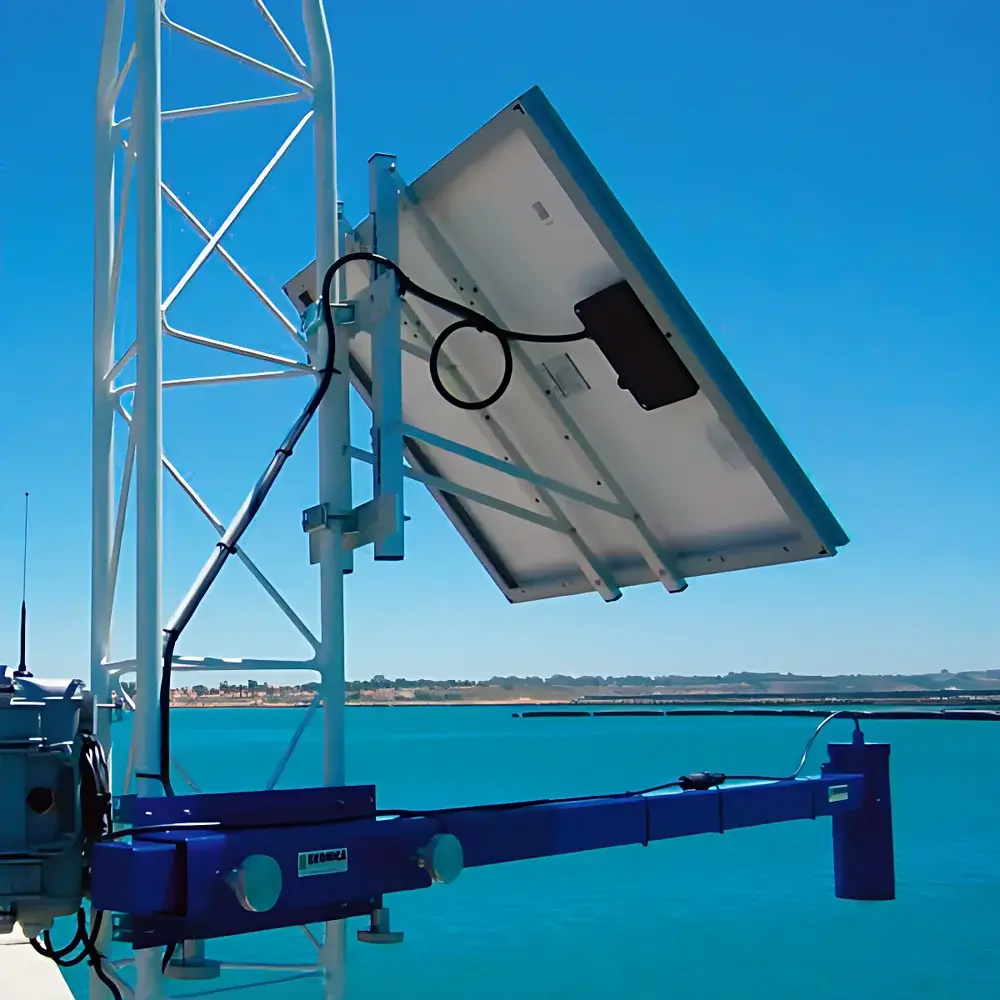
- Low-power operation (<15 mA @ 12 VDC), compatible with solar-powered remote stations
- Dual-output interface: analog 4–20 mA (2-wire loop powered) and digital SDI-12 protocol for direct integration into standard environmental data acquisition systems
- Robust mechanical construction: stainless steel antenna housing, UV-stabilized polymer body, corrosion-resistant fasteners suitable for saline and aggressive chemical exposure
Sample Compatibility & Compliance
The RADAR 6115 is validated for use across diverse media interfaces: open-channel water surfaces, reservoirs, rivers, drainage culverts, snow depth profiling, and industrial tank level monitoring. It performs reliably over low-dielectric materials (e.g., dry snow, granular solids) and high-reflectivity targets (e.g., still water, metal plates). The device conforms to key international standards for environmental instrumentation: EN 61326-1:2013 for electromagnetic compatibility (EMC) in industrial environments, EN 61010-1:2010 for electrical safety in measurement equipment, and EN 302 729-1/2 V1.1.2 for radio equipment compliance. While not certified for SIL or ATEX zones, its design meets functional safety expectations for Class I, Division 2 hazardous locations per IEC 60079-0 general requirements. No factory recalibration is required post-installation—performance stability is verified over 5-year operational life under accelerated aging tests.
Software & Data Management
Configuration, firmware updates, and diagnostic diagnostics are performed exclusively via the Windows-based GEO-CONNECT software, which communicates over RS-232 or USB-to-serial adapters. The interface enables real-time echo waveform visualization, distance threshold setting, averaging window selection (1–128 samples), and output scaling for custom engineering units (e.g., m, cm, ft, %FS). When connected to METEODATA or HYDRODATA-2000C/3000C loggers, the RADAR 6115 supports automatic timestamped storage, linear interpolation between readings, and configurable alarm thresholds. All logged data comply with ISO/IEC 17025 traceability frameworks when used within GLP/GMP-aligned hydrological monitoring programs. Raw echo data export (CSV) facilitates third-party spectral analysis or AI-driven anomaly detection workflows.
Applications
- River stage and flood warning systems requiring sub-centimeter repeatability across seasonal flow regimes
- Glacier and snowpack ablation monitoring in alpine research stations
- Urban stormwater network level control with integrated SCADA telemetry
- Coastal tide gauge networks operating in high-salinity, high-wind exposure zones
- Industrial wastewater lagoon level management under variable vapor and foam conditions
- Calibration reference for pressure transducers and ultrasonic sensors in metrology laboratories
FAQ
Does the RADAR 6115 require periodic recalibration?
No. The sensor employs a fixed-frequency pulsed architecture with no moving parts or drift-prone analog components. Factory calibration remains valid throughout its service life under specified operating conditions.
Can it measure through ice or snow cover?
Yes—when installed above frozen surfaces, it accurately measures total snow depth or ice thickness if the dielectric contrast between layers permits sufficient backscatter. Performance depends on snow density and crystal structure; field validation is recommended for critical applications.
Is it compatible with Campbell Scientific or Onset HOBO data loggers?
Yes, via SDI-12 protocol. Full command set documentation and example scripts are provided in the GEO-CONNECT user manual.
What mounting options are supported?
Standard M30×1.5 threaded flange mount; optional stainless steel pole brackets and adjustable tilt mounts are available from Geonica’s authorized distributors.
How does it handle multipath reflections in narrow channels or confined tanks?
The narrow 6° beam divergence (typical) and advanced pulse discrimination algorithms suppress side-lobe echoes. For optimal performance in constrained geometries, minimum clearance of 0.5 m from sidewalls is recommended.