
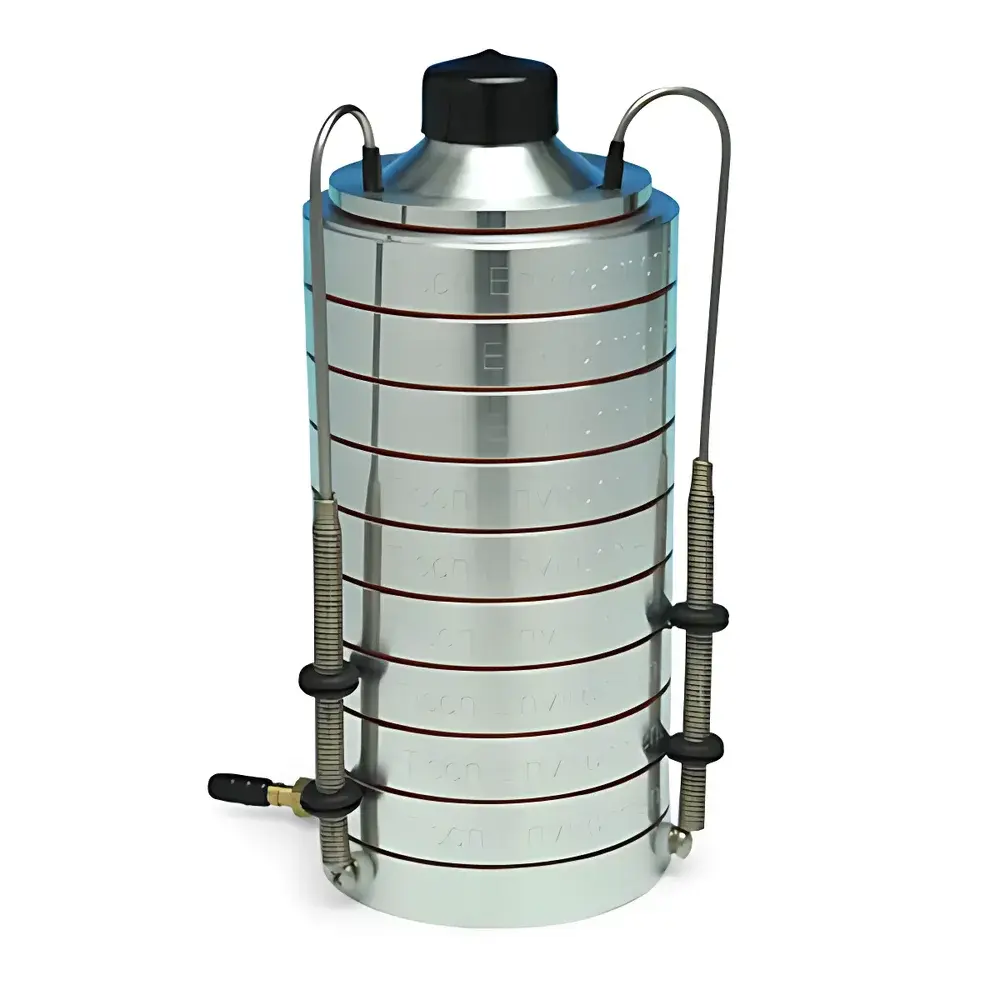
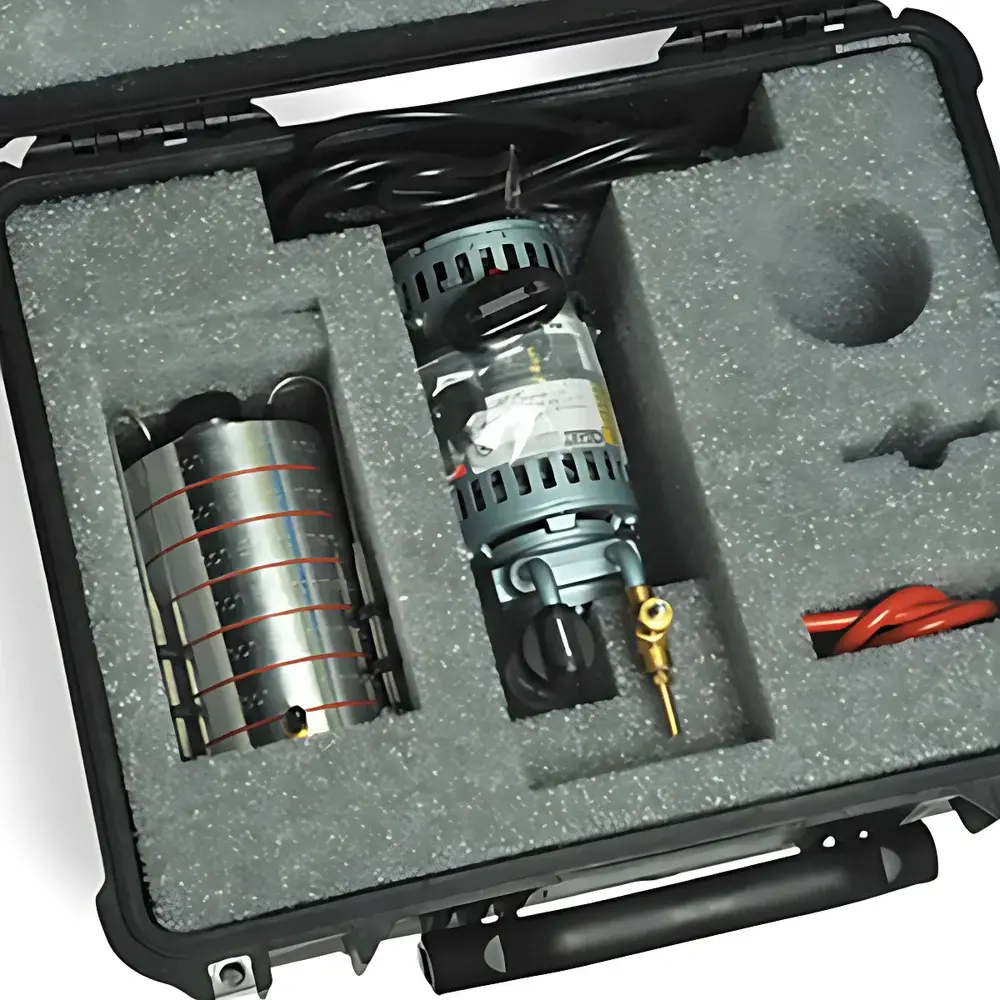
Tisch Anderson 8-Stage Aerosol Sampler TE-20-800
| Brand | TISCH |
|---|---|
| Origin | USA |
| Model | TE-20-800 |
| Sampling Flow Rate | 28.3 L/min |
| Aerodynamic Diameter Range | >9.0 µm to <0.3 µm |
| Stage Count | 8 impactor stages + pre-separator |
| Filter Diameter | 81 mm |
| Material | Anodized aluminum alloy body with silicone O-rings |
| Compliance | Meets US EPA, OSHA, ACGIH, and ISO 21501-4 referenced cascade impactor performance criteria |
| Collection Efficiency | High-fidelity inertial impaction with minimized particle bounce and re-entrainment |
Overview
The Tisch Anderson 8-Stage Aerosol Sampler TE-20-800 is a precision-engineered, multi-stage inertial cascade impactor designed for quantitative size-resolved aerosol sampling in ambient, occupational, and laboratory environments. Based on the fundamental principles of aerodynamic separation—where particles are differentiated by their Stokes number and selectively deposited onto collection substrates according to their aerodynamic equivalent diameter—the TE-20-800 enables high-resolution characterization of particulate mass distribution across nine discrete aerodynamic size fractions (including the pre-separator stage). Its design closely emulates human respiratory tract deposition dynamics, making it especially valuable for health-related aerosol exposure assessment, inhalable and respirable fraction determination (per EPA Method IO-3.2, OSHA ID-202, and ACGIH TLV® documentation), and regulatory compliance monitoring. The instrument operates at a calibrated volumetric flow rate of 28.3 L/min (1 ft³/min), ensuring compatibility with standard gravimetric and analytical protocols used in environmental laboratories worldwide.
Key Features
- Eight-stage anodized aluminum impactor assembly with precisely machined nozzle arrays, engineered for long-term dimensional stability and minimal thermal drift
- Integrated pre-separator stage capable of removing particles >10.0 µm with >99% efficiency, protecting downstream stages from overload and enhancing measurement fidelity for fine and ultrafine fractions
- High-efficiency inertial impaction geometry minimizing particle bounce and re-entrainment—critical for accurate mass recovery in gravimetric analysis
- Standard 81 mm circular collection substrates (filter membranes or metal foils) compatible with standard analytical balances, SEM/EDS, ICP-MS, and ion chromatography workflows
- Silicone O-ring sealing system ensuring leak-tight operation under sustained vacuum conditions; corrosion-resistant alloy construction suitable for field deployment in humid or saline environments
- Modular configuration supports optional integration with volumetric flow controllers (e.g., critical orifice or mass flow meter-based systems) to maintain constant sampling velocity across variable backpressure conditions
- Compliant with international cascade impactor performance benchmarks per ISO 21501-4 (Determination of particle size distribution — Single particle light interaction methods) and referenced in US EPA Compendium Method IO-3.2 for respirable particulate matter
Sample Compatibility & Compliance
The TE-20-800 accommodates a wide range of collection media—including quartz fiber, PTFE, polycarbonate, and mixed-cellulose ester filters—as well as conductive substrates for electron microscopy. Each stage collects particles within a defined aerodynamic cut-point range: Stage 0 (>10.0 µm), Stage 1 (9.0 µm), Stage 2 (5.8 µm), Stage 3 (4.7 µm), Stage 4 (3.3 µm), Stage 5 (2.1 µm), Stage 6 (1.1 µm), Stage 7 (0.7 µm), and Stage 8 (0.4 µm), with the final stage capturing submicron material down to <0.3 µm. This staging aligns directly with inhalable (ISO 7708:1995), thoracic, and respirable (ACGIH/CEN/OSHA definitions) aerosol fractions. Data generated using this sampler are accepted in GLP-compliant laboratories and support submissions to regulatory agencies including the U.S. Environmental Protection Agency (EPA), Occupational Safety and Health Administration (OSHA), and European Union reference laboratories under EN 481 and EN 13205 standards.
Software & Data Management
While the TE-20-800 is a passive mechanical sampling device requiring no embedded electronics or firmware, its output integrates seamlessly into digital laboratory data management ecosystems. Gravimetric results obtained from stage-specific filter weights are typically imported into LIMS platforms supporting ASTM D1357, ISO 11711, or EPA 40 CFR Part 50 compliant reporting templates. When paired with optional flow calibration records (traceable to NIST SRM 1660 or equivalent), full audit trails—including operator ID, sampling duration, ambient temperature/pressure, and filter lot numbers—can be maintained in accordance with FDA 21 CFR Part 11 requirements for electronic records. Tisch Environmental provides comprehensive SOP templates and calibration verification protocols aligned with ISO/IEC 17025 accreditation criteria for testing laboratories.
Applications
- Ambient air quality monitoring for PM10, PM2.5, and ultrafine particle source apportionment
- Occupational hygiene assessments in mining, pharmaceutical manufacturing, nanomaterial handling, and spray coating facilities
- Validation of HEPA filtration efficiency and cleanroom classification (ISO 14644-1)
- Respiratory deposition modeling and toxicological dose reconstruction studies
- Method development and inter-laboratory comparison exercises under ILI (International Laboratory Intercomparison) frameworks
- Field-deployable characterization of wildfire smoke, volcanic ash, and industrial process emissions
FAQ
What is the recommended maintenance interval for the TE-20-800 impactor stages?
Routine visual inspection and cleaning with isopropyl alcohol should be performed after every 5–10 sampling events; nozzle alignment verification is advised annually using certified gauge pins.
Can the TE-20-800 be used for bioaerosol collection?
Yes—when coupled with appropriate sterile collection substrates (e.g., gelatin or polycarbonate filters) and low-flow vacuum sources to preserve viability, it supports viable and non-viable bioaerosol size fractionation per ISO 14698-1 guidelines.
Is calibration traceable to national standards?
Flow calibration must be conducted using NIST-traceable primary standards; Tisch provides documented calibration certificates upon request, valid for 12 months under controlled storage conditions.
Does the sampler meet ISO 21501-4 requirements for cascade impactors?
It conforms to the physical design and performance validation criteria specified in Annex B of ISO 21501-4 for multi-stage inertial impactors used in aerosol size distribution analysis.
What vacuum pump specifications are required for stable 28.3 L/min operation?
A minimum 50 L/min free-air displacement pump with ≥−60 kPa ultimate vacuum and integrated pressure regulation is recommended to sustain nominal flow across all eight stages under typical filter loading conditions.
Related Products







