
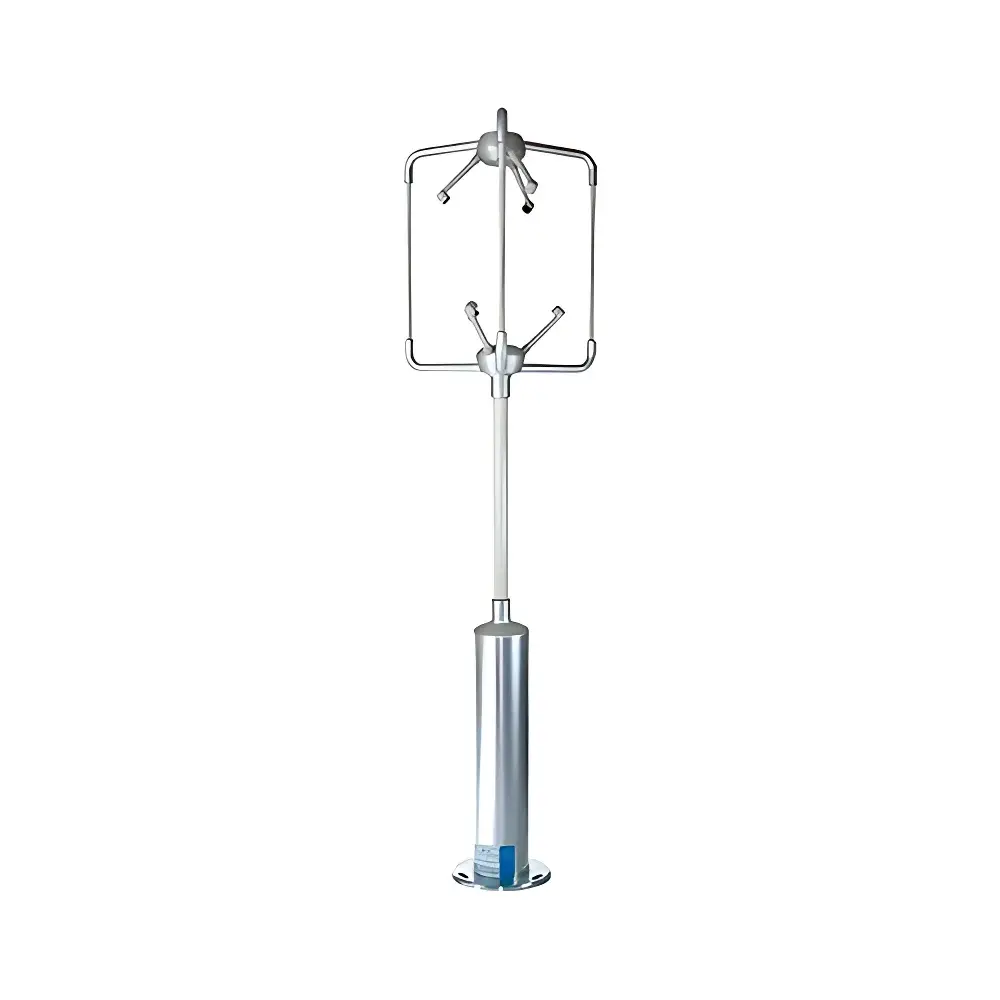
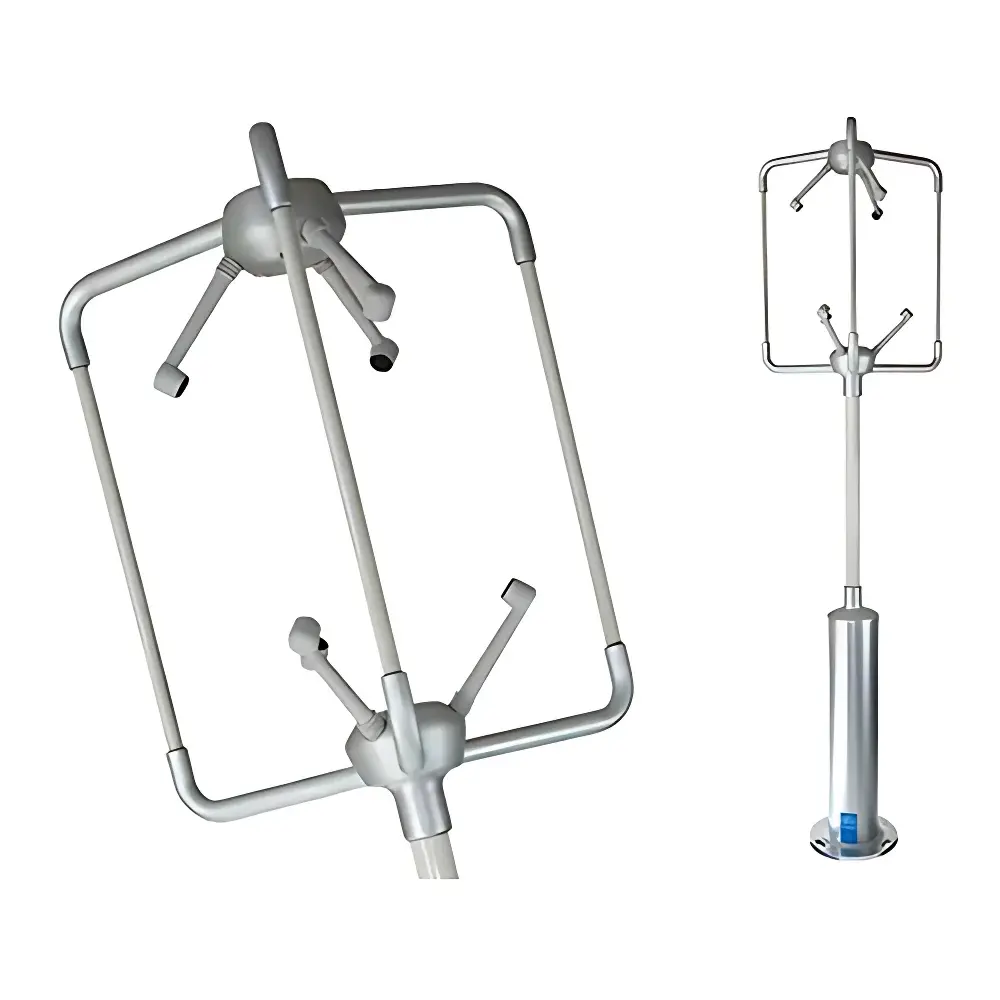
Gill R3-100 Research-Grade 3D Ultrasonic Anemometer
| Brand | Gill |
|---|---|
| Origin | United Kingdom |
| Model | R3-100 |
| Instrument Type | Ultrasonic Anemometer |
| Resolution | 0.01 m/s |
| Measurement Range | 0–45 m/s |
| Accuracy | ±1% of reading |
| Operating Temperature | −40 °C to +60 °C |
| Relative Humidity Range | 0–100% RH |
| Sampling Frequency | 100 Hz |
| Output | Analog (U/V/W, sonic temperature, speed of sound), optional analog/PRT inputs |
| Construction | Aluminum alloy and carbon fiber housing |
Overview
The Gill R3-100 is a research-grade, three-dimensional ultrasonic anemometer engineered for high-fidelity atmospheric turbulence measurement in demanding scientific applications. Based on time-of-flight ultrasonic transit-time principle, the R3-100 measures orthogonal wind velocity components (U, V, W) and sonic temperature simultaneously at 100 Hz—enabling direct computation of turbulent fluxes via eddy covariance methodology. Its robust transducer array geometry minimizes flow distortion and shadowing effects, while the precisely calibrated acoustic path lengths ensure traceable velocity resolution down to 0.01 m/s across the full 0–45 m/s dynamic range. Designed for long-term unattended deployment in extreme climatic conditions—from polar field stations to desert boundary-layer observatories—the R3-100 maintains metrological integrity over its specified operating envelope of −40 °C to +60 °C and 0–100% relative humidity.
Key Features
- 100 Hz synchronized sampling of U, V, W wind vectors and sonic temperature—optimized for eddy covariance flux calculations (e.g., CO₂, H₂O, CH₄, heat)
- High-resolution velocity measurement with ±1% accuracy referenced to NIST-traceable calibration protocols
- Low-noise analog outputs for real-time integration with data loggers (e.g., Campbell Scientific CR6, LI-COR LI-7550)
- Integrated sonic temperature output derived from speed-of-sound measurements—eliminates need for separate thermistor-based air temperature sensors
- Lightweight yet mechanically stable housing combining aerospace-grade aluminum alloy and carbon fiber composite—minimizing thermal inertia and vibration sensitivity
- Configurable digital interface options including RS-232/RS-485 for remote diagnostics and firmware updates
- Optional analog input channels for co-located sensor integration (e.g., PRTs, pyranometers, gas analyzers)
Sample Compatibility & Compliance
The R3-100 is compatible with standard meteorological mounting hardware (e.g., 2-inch NPS mast adapters) and integrates seamlessly into established environmental monitoring networks compliant with WMO Guide to Instruments and Observing Methods (WMO-No. 8) and ISO 16925:2017 (air quality—performance criteria for instruments measuring wind speed and direction). Its design adheres to IEC 60529 IP66 ingress protection standards for dust and water resistance. Calibration documentation follows ISO/IEC 17025 requirements, and factory calibrations are performed under controlled laminar flow conditions using NPL-certified reference wind tunnels. The instrument supports GLP-compliant data traceability when paired with compliant data acquisition systems featuring audit trails and electronic signatures.
Software & Data Management
Gill provides the R3-100 Configuration Utility—a Windows-based application enabling parameter configuration (sampling rate, output format, averaging intervals), real-time diagnostics, and firmware version management. Raw output streams (U/V/W, sonic temperature, speed of sound) are delivered in ASCII or binary formats compatible with industry-standard post-processing tools including EddyPro®, TK3, and MATLAB-based turbulence analysis toolboxes. When deployed in regulated environments (e.g., EC-funded flux networks, USDA ARS long-term ecological research sites), the R3-100’s deterministic timing architecture supports time-synchronized sampling aligned with GPS PPS signals—ensuring temporal coherence required for cross-instrument flux partitioning. Optional data logger integration kits include pre-validated signal conditioning modules compliant with IEEE 1003.1 (POSIX) timestamping standards.
Applications
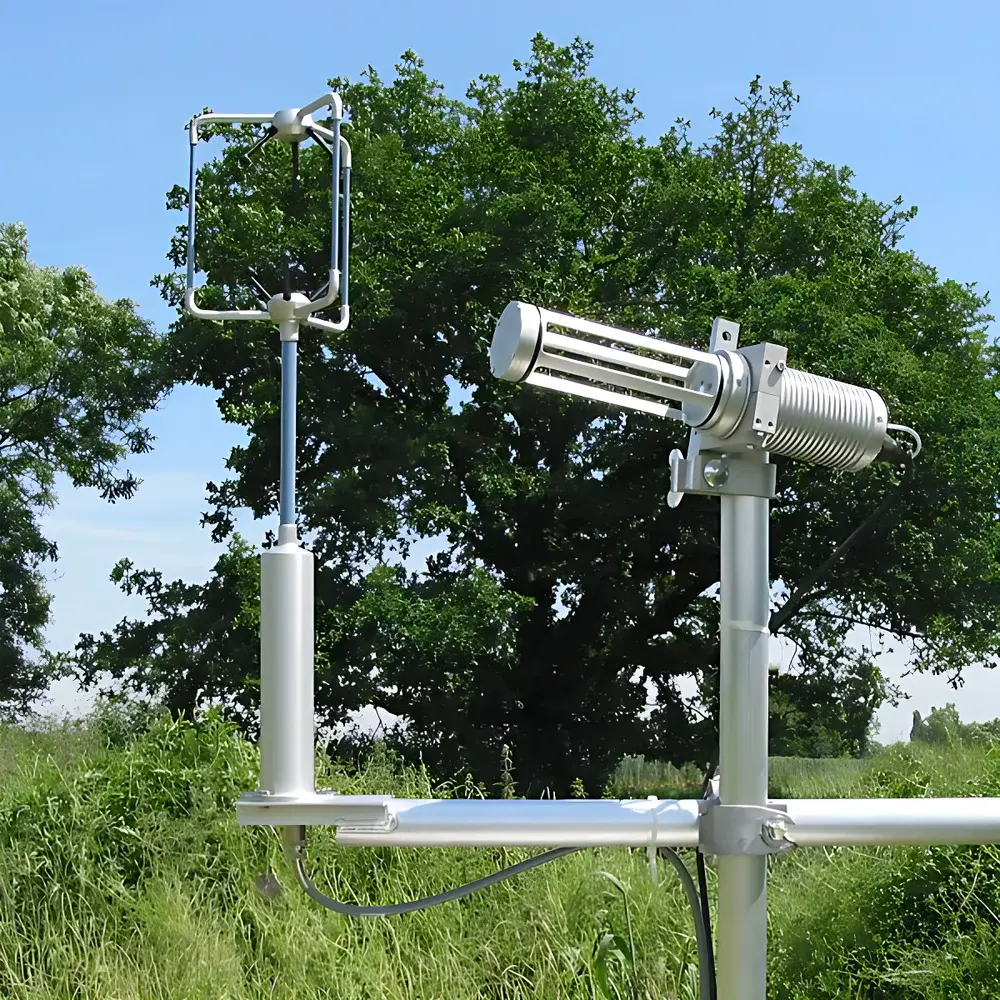
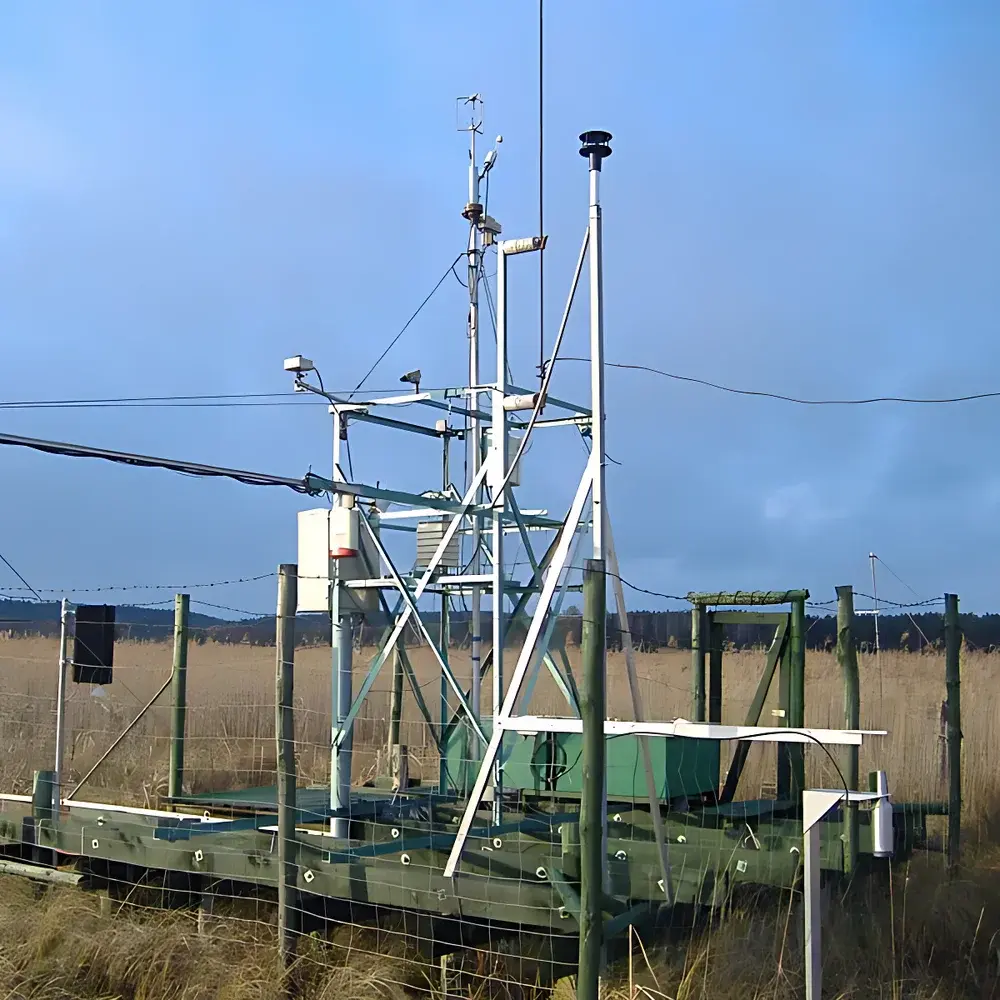
- Eddy covariance flux towers for ecosystem-scale greenhouse gas and energy exchange studies
- Boundary-layer meteorology campaigns—including urban canopy layer profiling and mountain venting investigations
- Wind resource assessment for micro-siting of small-scale renewable installations
- Atmospheric dispersion modeling validation using high-temporal-resolution 3D wind fields
- Validation of Doppler lidar and sodar systems through ground-truth point measurements
- Controlled-environment wind tunnel calibration reference instrumentation
- Long-term climate observatories requiring low-maintenance, drift-resistant velocity sensing
FAQ
What is the recommended calibration interval for research-grade operation?
Gill recommends annual recalibration against traceable standards for applications requiring ISO/IEC 17025 compliance; biennial verification is acceptable for routine monitoring where documented stability checks are performed quarterly.
Can the R3-100 be used in marine or coastal environments?
Yes—the housing meets IP66 specifications and features corrosion-resistant anodized aluminum and marine-grade carbon fiber; however, extended salt-laden exposure requires periodic inspection of transducer faces and optional hydrophobic coating renewal.
Does the R3-100 support synchronization with external GPS timing sources?
Yes—via optional TTL-level PPS input, enabling sub-millisecond timestamp alignment with GNSS-referenced data loggers for multi-sensor eddy covariance systems.
Is sonic temperature output suitable for thermodynamic flux calculations?
Yes—sonic temperature is directly proportional to virtual temperature and is routinely used in sensible heat flux computations per ASCE-EWRI standardized methods.
What power supply options are supported?
The R3-100 operates from 10–30 VDC; integrated DC-DC regulation ensures stable performance across battery, solar, or mains-powered configurations typical in remote deployments.
Related Products







