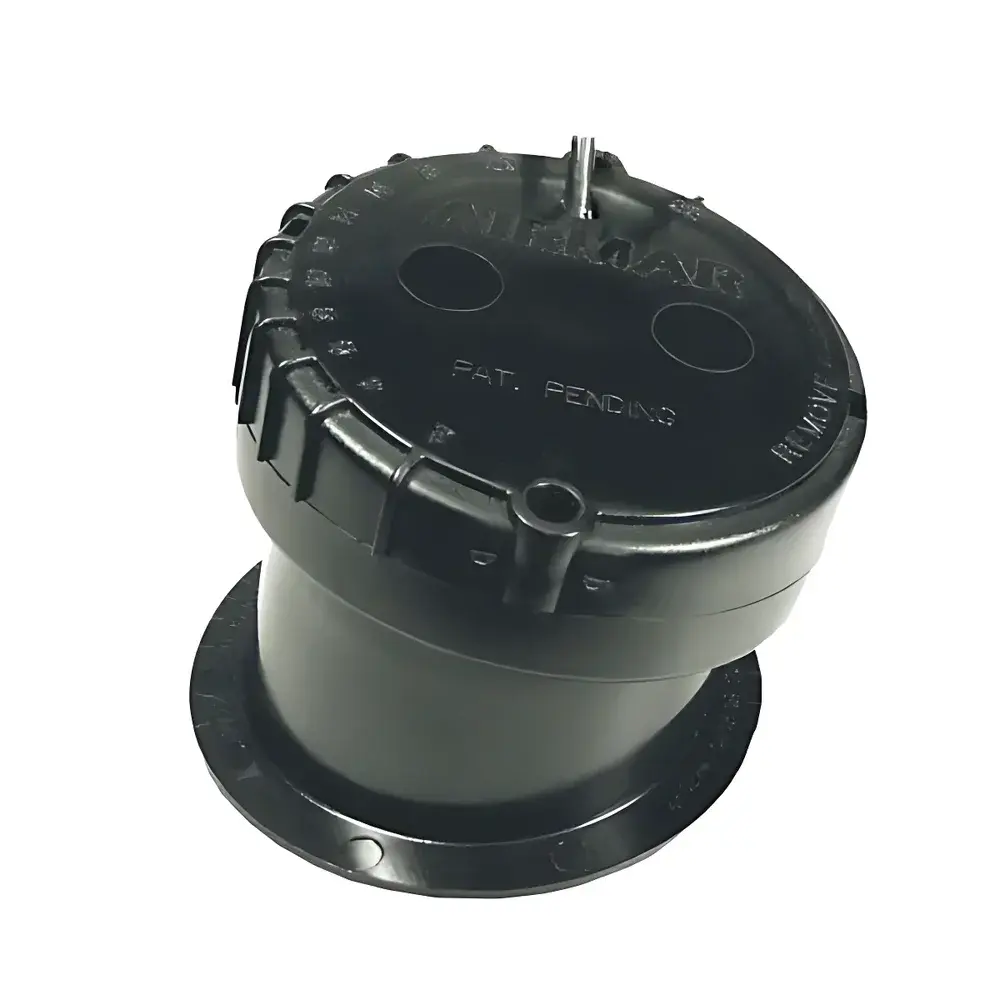
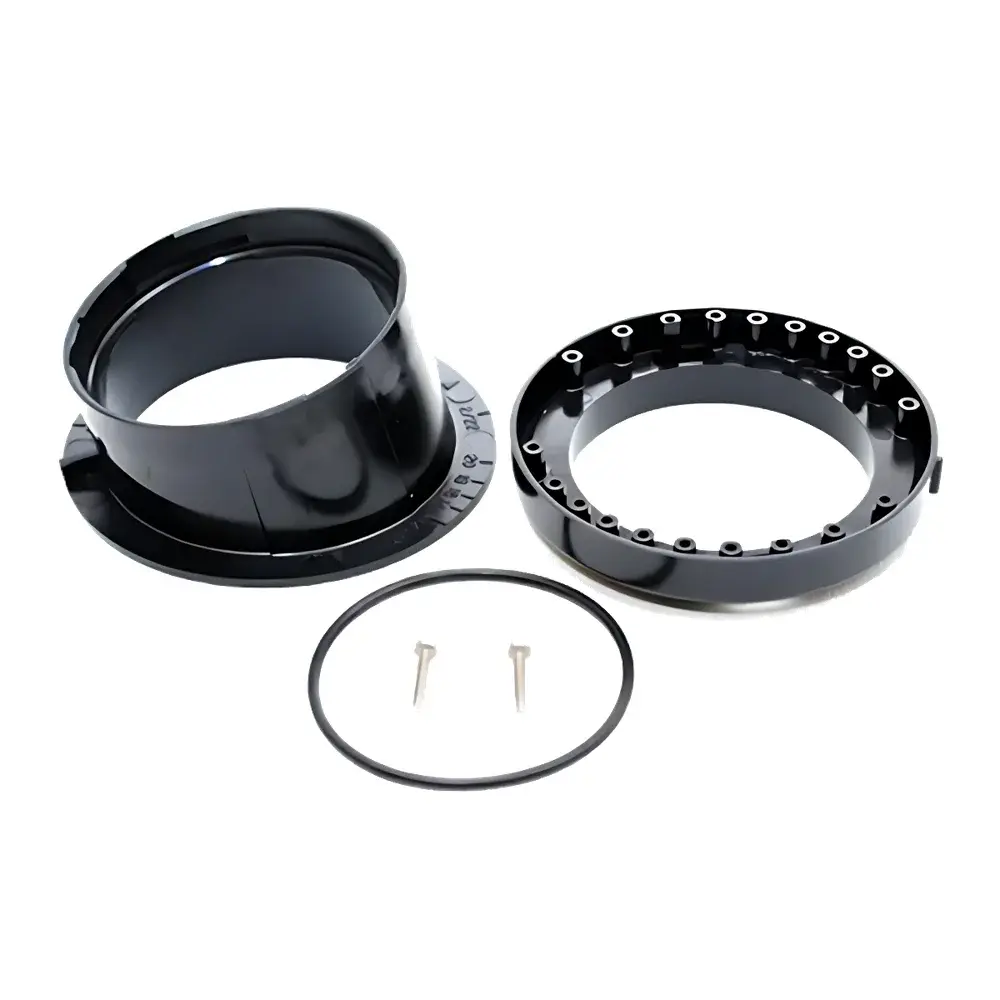
AirMar P79S In-Hull Smart Depth Sounder
| Brand | Airmar |
|---|---|
| Origin | USA |
| Model | P79S |
| Frequency | 235 kHz (primary operational frequency) |
| Beamwidth | 45° @ 50 kHz, 12° @ 200 kHz |
| Max. Power Output | 600 W |
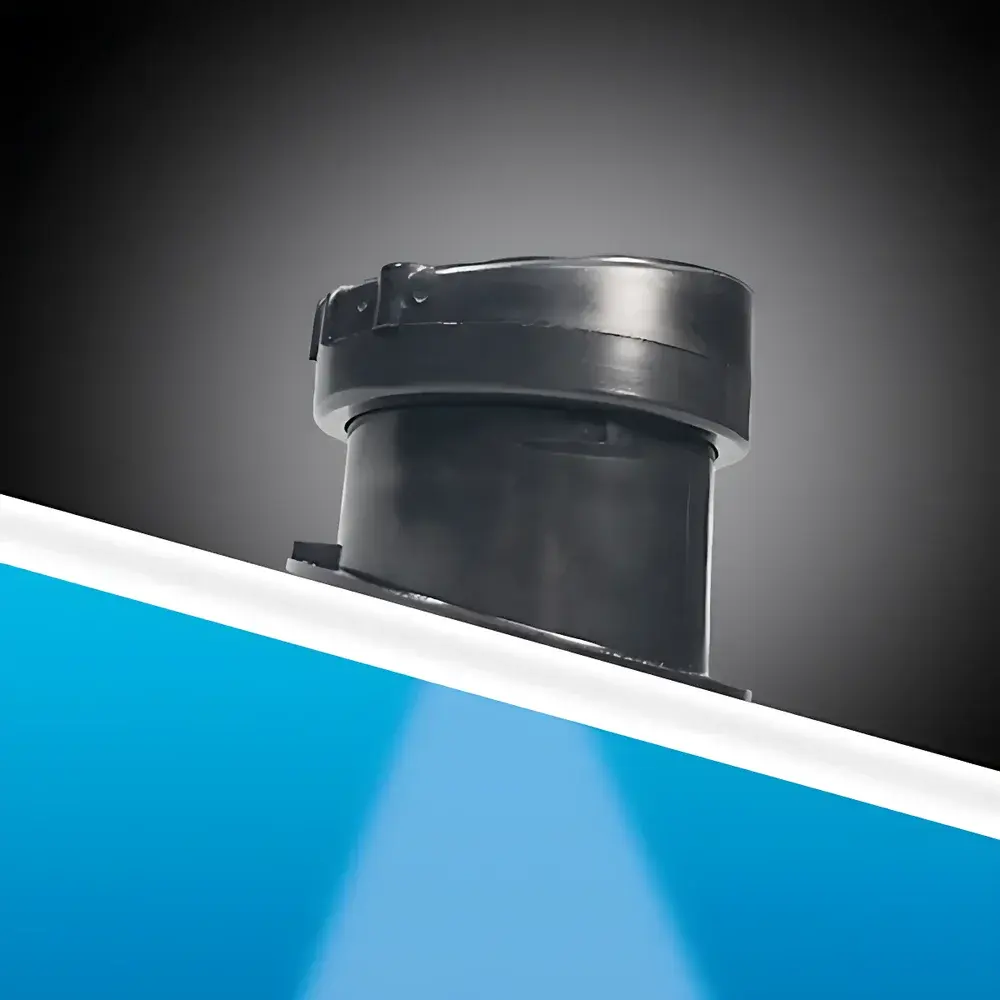
| Installation Type | In-hull (non-penetrating) |
| Housing Material | Plastic with Polyurethane acoustic window |
| Hull Tilt Compensation Range | 0–22° |
| Depth Range | 206–294 m @ 50 kHz, 118–180 m @ 200 kHz |
| Cable Length | 6 m NMEA 2000® cable (standard), optional 10 m variant available |
| Operating Temperature Sensor | Not integrated |
| Weight | 2.3 kg |
| Compliance | NMEA 0183 v3.01 & NMEA 2000® certified (DeviceNet™-compatible connector) |
Overview
The AirMar P79S is an in-hull mounted smart depth sounder engineered for precision hydrographic measurement on recreational and light commercial vessels with solid fiberglass or thin aluminum hulls. Unlike traditional through-hull transducers requiring hull penetration, the P79S employs a non-invasive installation method—its piezoelectric element couples acoustically to the hull interior via a proprietary polyurethane acoustic window and temperature-stable propylene glycol coupling medium. The sensor operates primarily at 235 kHz, a frequency selected to minimize cross-talk interference with standard 50/200 kHz echosounders commonly deployed on multi-transducer platforms. Internally embedded microprocessor logic performs real-time signal conditioning, echo detection, and depth calculation before outputting calibrated depth, water temperature (when paired with external probe), and speed-through-water data via standardized marine protocols. This architecture eliminates analog signal degradation over long cable runs and ensures consistent data integrity across heterogeneous bridge systems.
Key Features
- Non-penetrating in-hull installation—no drilling, no hull integrity compromise, suitable for vessels underway or dockside
- Integrated signal processing engine compliant with NMEA 0183 v3.01 and NMEA 2000® standards (DeviceNet™ physical layer)
- Polyurethane acoustic window optimized for broadband transmission and mechanical damping across hull vibration spectra
- Adjustable locking ring mechanism enabling precise angular alignment for hull tilt compensation up to ±22°
- Factory-calibrated beam pattern: 45° conical beam at 50 kHz (long-range bathymetry), 12° narrow beam at 200 kHz (high-resolution shallow-water profiling)
- 6-meter NMEA 2000® trunk cable with DeviceNet™ M12 connector; supports daisy-chaining in CAN-based marine networks
- Proprietary coupling procedure using USP-grade propylene glycol—non-toxic, non-corrosive, freeze-resistant to –40°C
Sample Compatibility & Compliance
The P79S is validated for use on monolithic fiberglass hulls and aluminum hulls coated with epoxy barrier layers ≤0.38 mm (0.150″) thick. It is not recommended for cored composite, wood, or steel hulls due to acoustic impedance mismatch and attenuation. All firmware and data packet structures conform to NMEA 2000® certification requirements (NMEA 2000® Standard PGN 128259, 128267, 129025, 129026). The device meets EMC Directive 2014/30/EU and RoHS 2011/65/EU compliance for marine electronics. While it does not incorporate an onboard temperature sensor, its NMEA 2000® interface supports seamless integration with external PT1000 or thermistor-based water temperature probes meeting ISO 10523:2021 calibration traceability.
Software & Data Management
Depth, speed, and auxiliary sensor data are transmitted as raw NMEA 2000® PGNs—requiring no proprietary drivers or configuration utilities. Compatible with all major chartplotter platforms (Garmin, Raymarine, Furuno, Simrad, B&G) and PC-based navigation software (OpenCPN, TimeZero, MaxSea). For fleet monitoring or regulatory reporting, the P79S integrates into NMEA 2000®-enabled VMS (Vessel Monitoring Systems) without middleware. Audit trails and configuration logs are maintained by the host display unit per IEC 62287-1:2019 guidelines for navigational data recording. No FDA 21 CFR Part 11 or GLP/GMP validation is applicable, as the device serves navigational—not analytical or clinical—measurement purposes.
Applications
- Shallow-water hydrographic surveying on research support vessels operating in estuarine or lacustrine environments
- Dynamic draft monitoring for yachts and pilot boats navigating variable tidal zones
- Integration into autonomous surface vehicle (ASV) perception stacks for bathymetric SLAM (Simultaneous Localization and Mapping)
- Redundant depth sensing in dual-transducer configurations where spectral isolation from primary 50/200 kHz units is required
- Post-installation verification of hull thickness uniformity via acoustic impedance profiling (requires post-processing in MATLAB or Python with custom beam modeling)
FAQ
Can the P79S be installed on a cored fiberglass hull?
No. Core materials (e.g., balsa, foam) introduce acoustic scattering and signal loss. Only solid-laminate fiberglass hulls are supported.
Is the 235 kHz frequency selectable or fixed?
Fixed. The transducer is resonant at 235 kHz for optimal SNR and minimal interference; dual-frequency operation (50/200 kHz) is not supported.
Does the unit include temperature compensation for sound velocity?
No. Sound velocity correction requires external input of water temperature and salinity—typically sourced from co-located CTD sensors or user-defined constants.
What is the maximum allowable hull thickness for reliable coupling?
For fiberglass: ≤45 mm (1.77″); for aluminum: ≤6 mm (0.24″) with full epoxy encapsulation. Exceeding these limits degrades signal amplitude below detection threshold.
Can the P79S output raw echo data for post-processing?
No. It outputs only processed depth, speed, and status messages per NMEA standards. Raw A-scan or time-series voltage data is not accessible.