
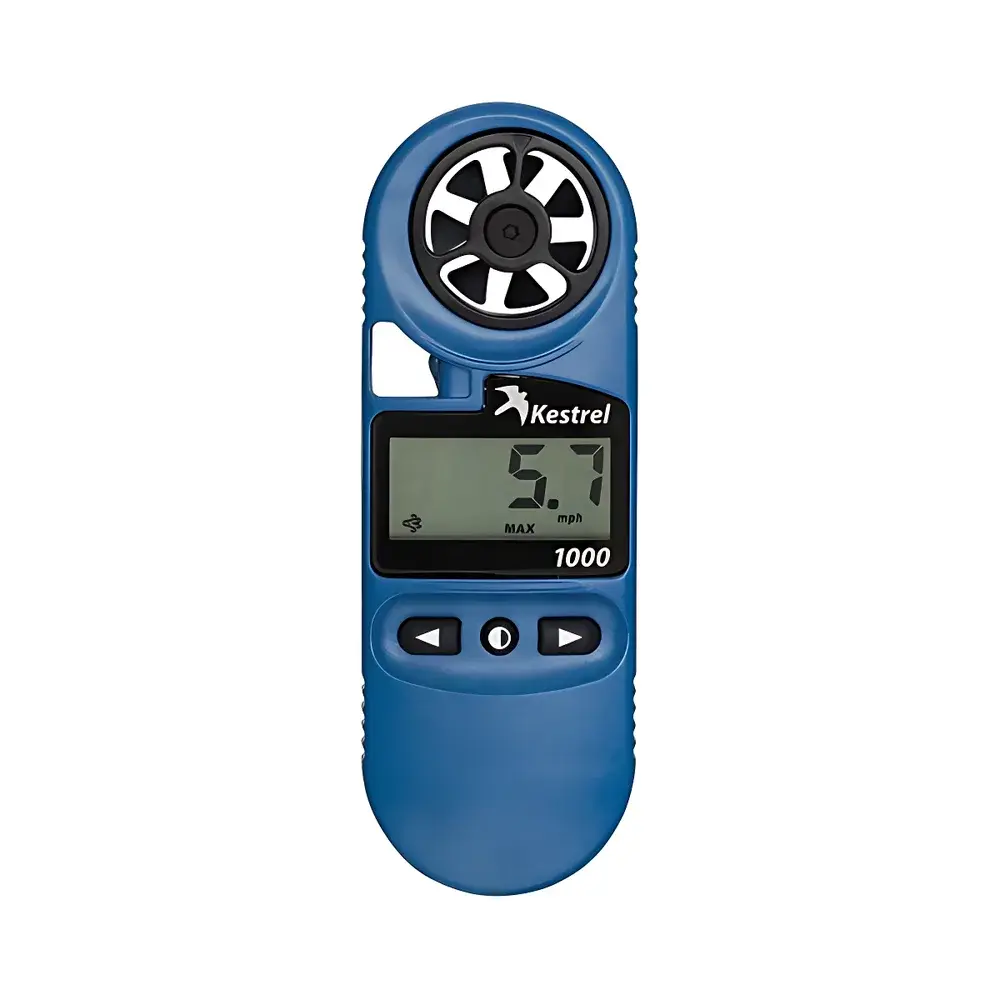
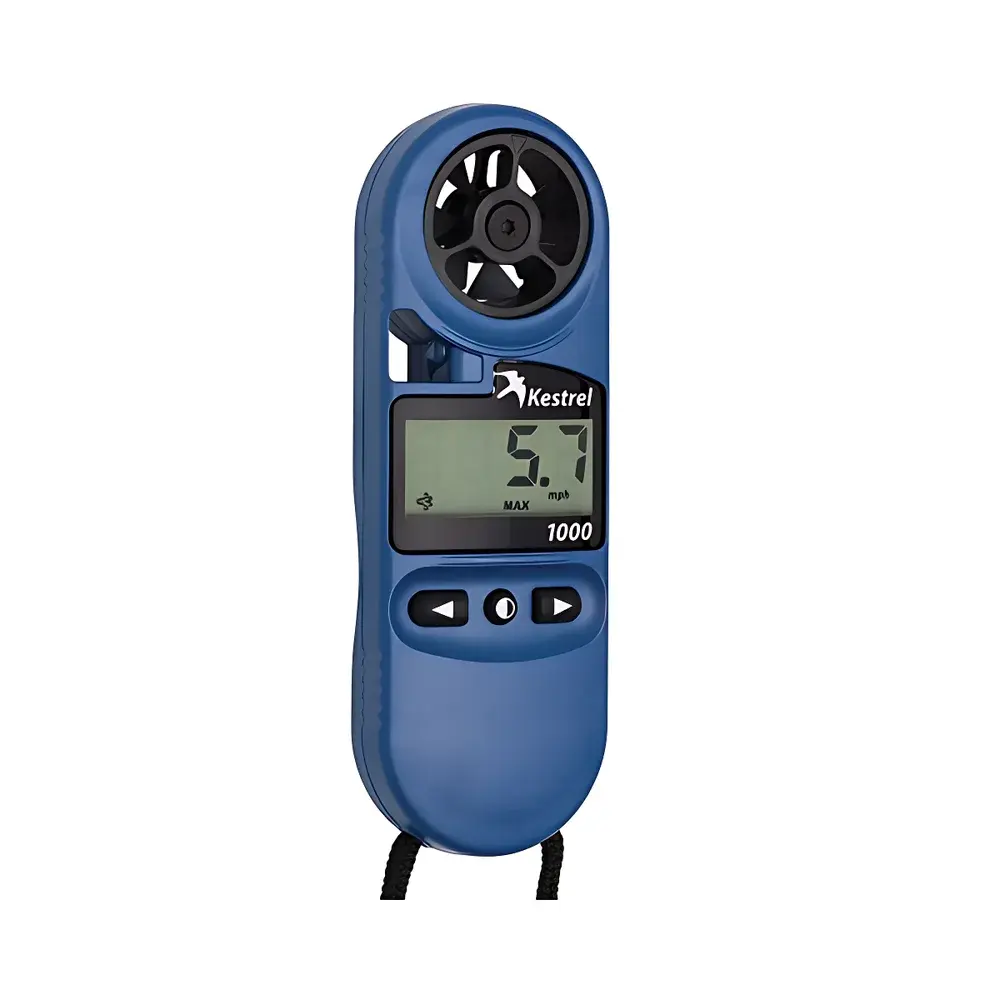
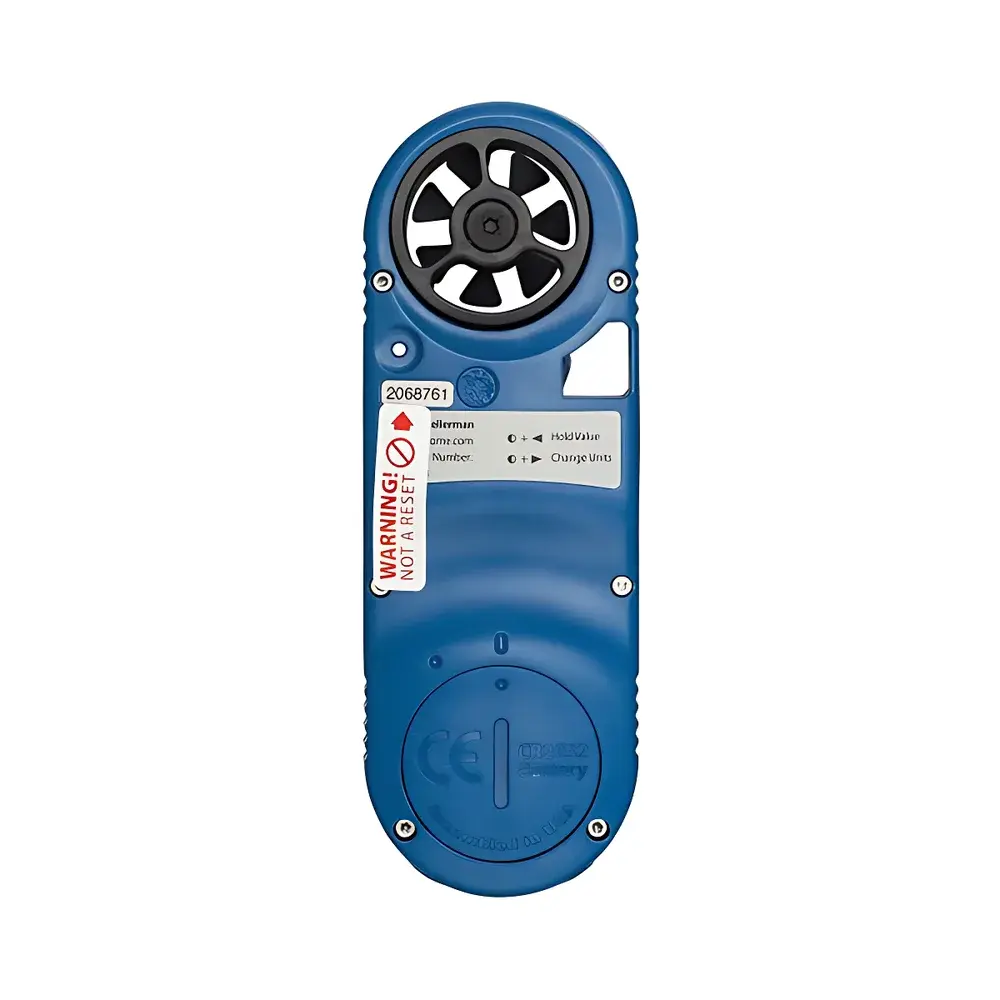
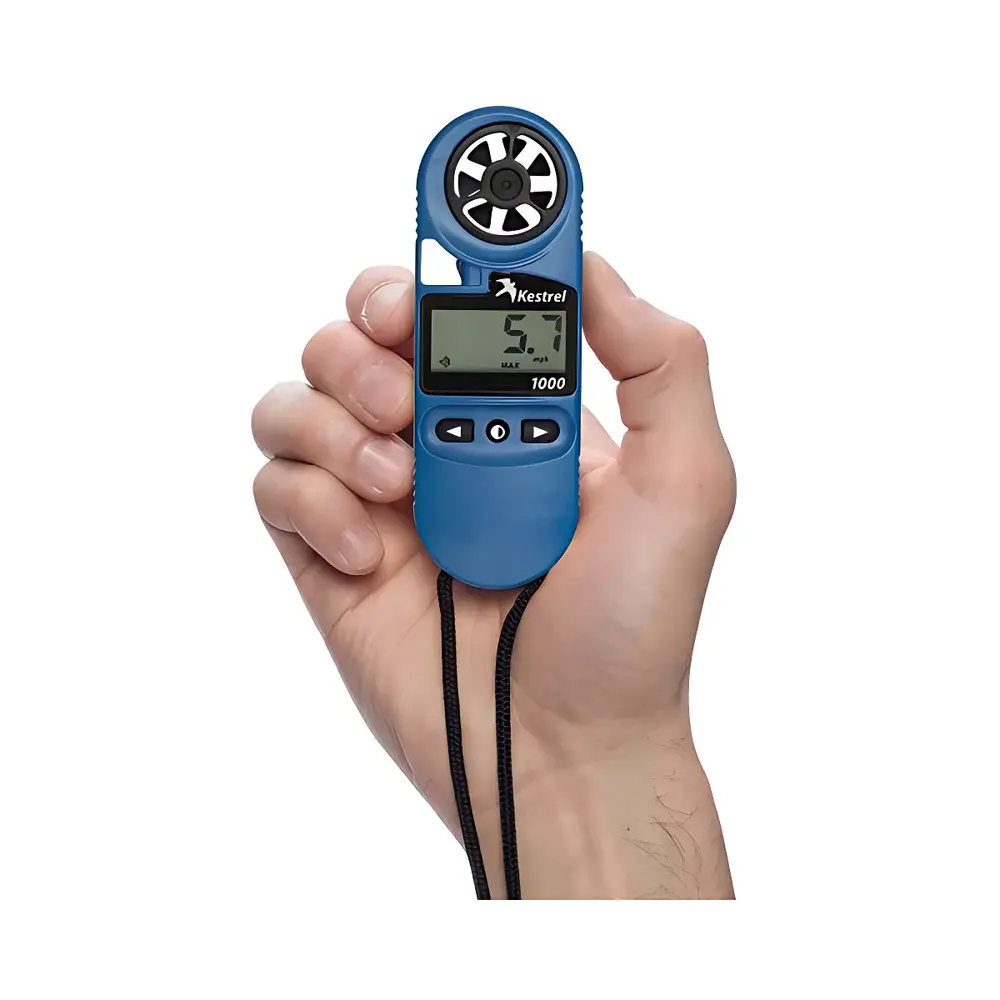
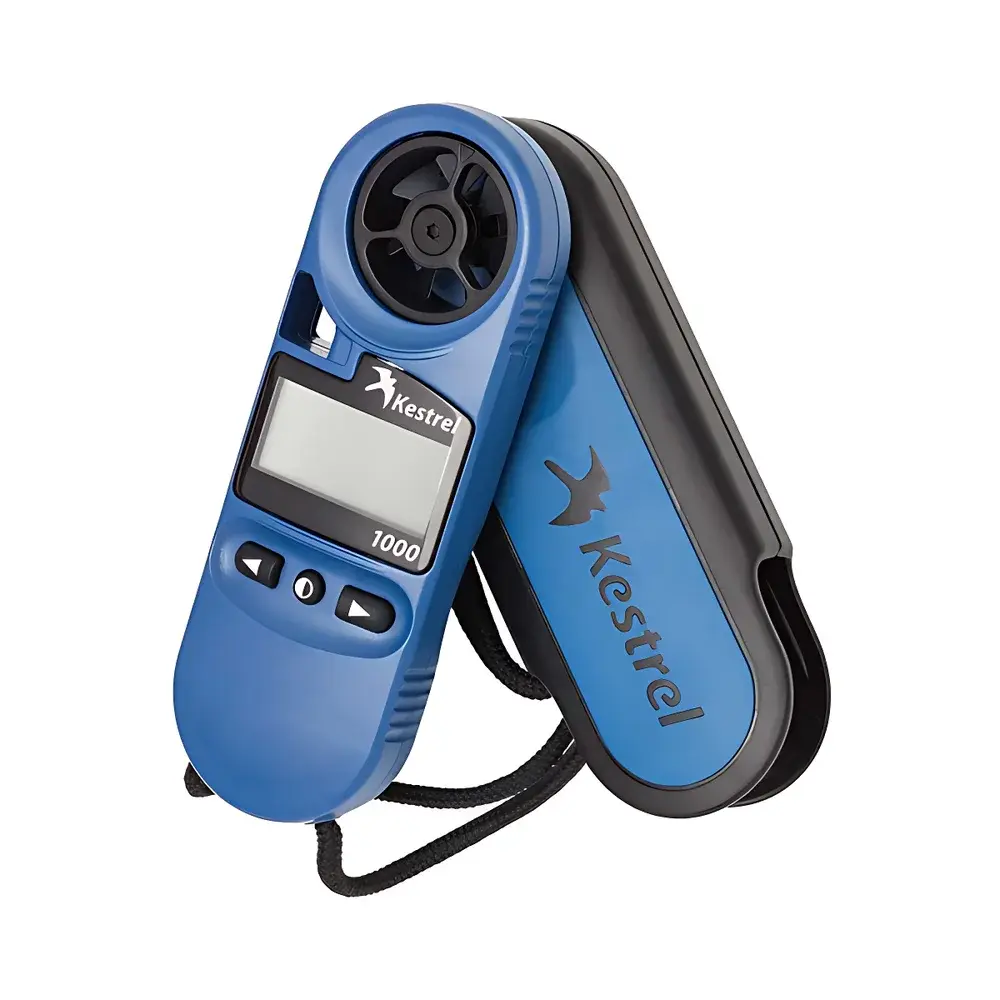
NK Kestrel 1000 Handheld Vane Anemometer
| Brand | NK |
|---|---|
| Origin | USA |
| Model | Kestrel 1000 |
| Instrument Type | Vane Anemometer |
| Resolution | 0.1 m/s |
| Measurement Range | 0.4–60 m/s |
| Accuracy | ±3% of reading |
| Operating Temperature | −10 °C to +55 °C |
| Operating Humidity | 0–100% RH |
| Power Source | CR2032 lithium coin cell (typical battery life: 300 hours) |
| Compliance | MIL-STD-810F drop-tested, IP67-rated waterproof, floatable |
| Certifications | Manufacturer’s Certificate of Conformance (COC) |
Overview
The NK Kestrel 1000 Handheld Vane Anemometer is a field-deployable, precision-engineered instrument designed for direct measurement of air velocity in dynamic environmental and industrial settings. Utilizing a calibrated vane-type sensor architecture—comprising a low-inertia, aerodynamically balanced impeller mounted on high-grade stainless-steel bearings—the device delivers repeatable wind speed data across a broad operational envelope. Its measurement principle relies on rotational kinetics: airflow induces proportional angular velocity in the vane assembly, which is transduced via Hall-effect or optical sensing into a digital signal processed by an ultra-low-power microcontroller. Unlike thermal anemometers, the Kestrel 1000 exhibits minimal drift under varying ambient humidity and temperature gradients, making it especially suitable for outdoor, marine, and HVAC commissioning applications where long-term stability and mechanical robustness are critical.
Key Features
- Vane-based sensing mechanism with replaceable impeller and precision-ground bearing system for consistent response at low wind speeds (down to 0.4 m/s)
- Three-button interface enabling intuitive navigation between real-time, maximum, and average wind speed modes
- Backlit LCD display with high contrast and wide viewing angle for readability under direct sunlight or low-light conditions
- Multi-unit wind speed output: m/s, mph, km/h, ft/min, knots, and Beaufort scale—user-selectable without external software
- MIL-STD-810F certified for mechanical shock resistance; tested for drops from 1.2 meters onto concrete
- IP67 ingress protection rating: fully dust-tight and submersible up to 1 meter for 30 minutes; unit remains buoyant in freshwater and seawater
- CR2032 lithium battery (included), delivering ~300 hours of continuous operation; hot-swappable with no memory loss
- Data hold function for freezing instantaneous readings during field observation or documentation
- Integrated lanyard attachment point and molded protective rubber boot for enhanced grip and impact absorption
Sample Compatibility & Compliance
The Kestrel 1000 is optimized for open-air and semi-confined airflow measurements—including natural ventilation ducts, building façade zones, outdoor sports venues, and marine decks—where turbulent or unidirectional flow profiles prevail. It does not require calibration gas standards or external reference instrumentation for routine use. The device complies with general-purpose environmental monitoring requirements under ISO 9060:2018 (classification for solar radiation instruments, referenced contextually for environmental sensor ruggedness), and its construction materials meet RoHS Directive 2011/65/EU for hazardous substance restrictions. While not formally validated per FDA 21 CFR Part 11 or GLP/GMP Annex 11, its audit-ready COC (Certificate of Conformance) supports traceability in non-regulated field QA/QC workflows. No firmware or hardware modifications are required to satisfy ASTM D5096–17 (Standard Practice for Field Calibration of Anemometers) when used with manufacturer-provided zero-wind verification procedures.
Software & Data Management
The Kestrel 1000 operates as a standalone, embedded-system instrument with no onboard data logging or Bluetooth/Wi-Fi connectivity. All measurement functions—including min/max/avg capture and unit conversion—are executed locally using firmware version 2.1 (field-upgradable via proprietary Kestrel LiNK adapter, sold separately). Data export is manual: users record values directly from the display into lab notebooks, spreadsheets, or LIMS-compatible forms. This architecture eliminates cybersecurity vulnerabilities associated with wireless transmission and ensures deterministic response latency—critical in time-sensitive applications such as aviation pre-flight checks or emergency ventilation assessments. The included COC documents serial-numbered unit verification against factory-set wind tunnel calibration curves, traceable to NIST-traceable reference anemometers.
Applications
- Aerospace ground operations: crosswind assessment during aircraft taxi, takeoff, and landing preparation
- HVAC system balancing and duct traverse validation in commercial and institutional buildings
- Sports meteorology: wind profiling for sailing regattas, paragliding launch decisions, and archery range safety evaluation
- Renewable energy site surveys: preliminary wind resource screening prior to mast-based anemometry deployment
- Marine safety: real-time gust detection aboard small craft, dockside cargo handling, and sail trim optimization
- Firefighting and emergency response: ventilation strategy planning in structural fire scenarios requiring rapid airflow characterization
- Environmental education and citizen science projects requiring durable, entry-level atmospheric instrumentation
FAQ
Is the Kestrel 1000 suitable for indoor airflow measurements in cleanrooms or laminar flow hoods?
It is not recommended for Class ISO 5 or stricter environments due to lack of laminar-flow-optimized sensor geometry and absence of ISO 14644-3 compliant uncertainty reporting.
Can the impeller be recalibrated in the field?
No—calibration is performed at the factory using NIST-traceable wind tunnels; however, the replaceable impeller allows full mechanical restoration after physical damage.
Does the device meet IEC 61000-4 electromagnetic immunity standards?
It is not certified to IEC 61000-4 series; typical RF immunity is sufficient for general outdoor and industrial use but not for proximity to high-power radar or broadcast transmitters.
What is the temperature coefficient of accuracy above 40 °C?
Per NK technical documentation, accuracy degrades linearly at +0.05% per °C beyond 40 °C, remaining within ±4.5% up to the upper limit of +55 °C.
Is the COC issued per unit or per batch?
Each shipped Kestrel 1000 includes an individual COC referencing its unique serial number and date of final verification.
Related Products







