
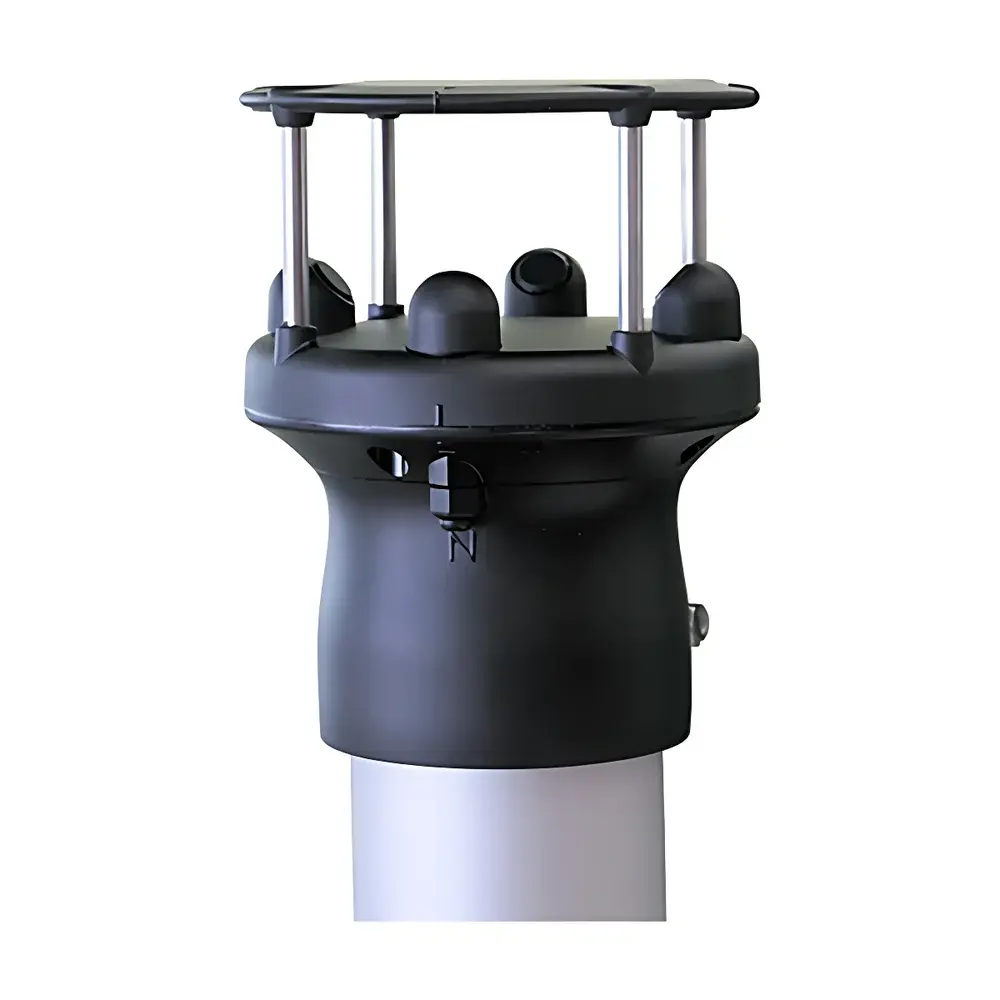
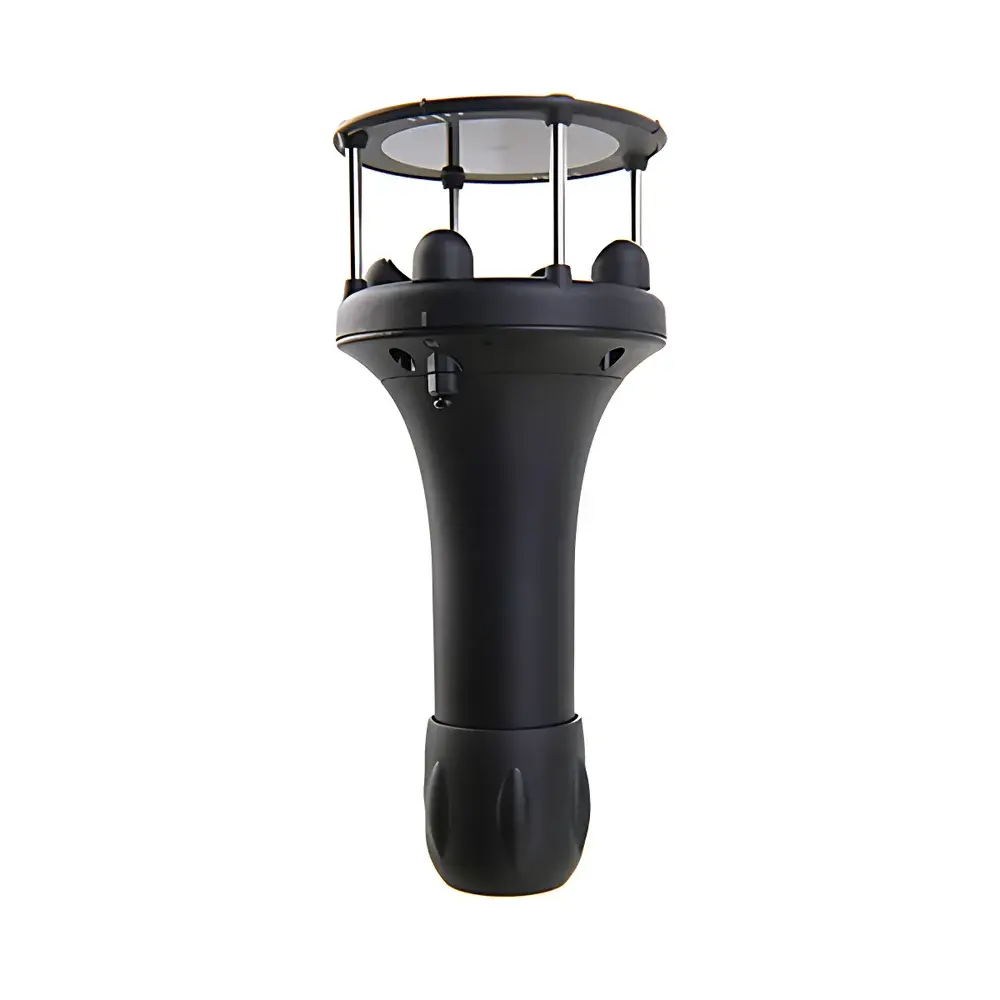
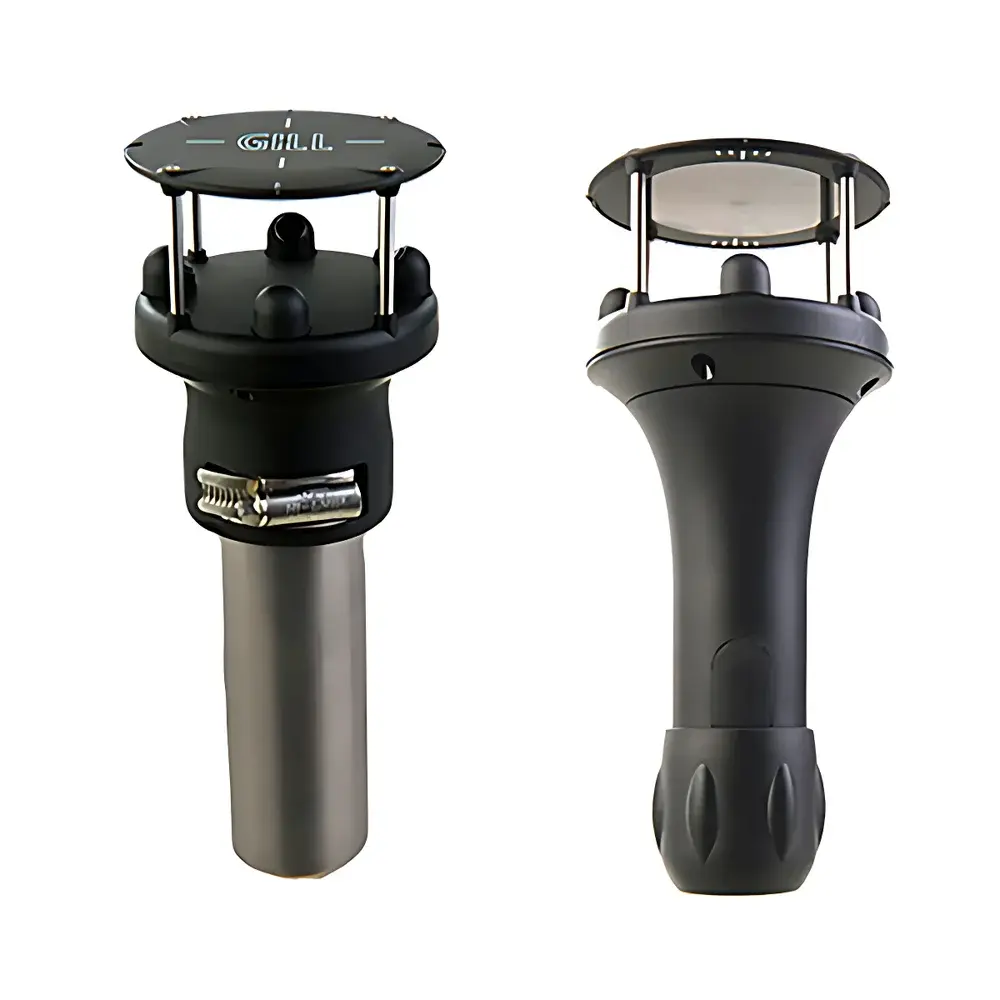
Gill WindUltra Ultrasonic Anemometer
| Brand | Gill |
|---|---|
| Origin | United Kingdom |
| Model | WindUltra |
| Instrument Type | Ultrasonic Anemometer |
| Resolution | 0.01 m/s |
| Measurement Range | 0–75 m/s |
| Accuracy | ±2% of reading |
| Operating Temperature | −40 °C to +70 °C |
| Operating Humidity | 5–100% RH |
| Output Protocols | ASCII, Modbus RTU, NMEA 0183, SDI-12 |
| Heating System | User-configurable low-power resistive heater |
Overview
The Gill WindUltra Ultrasonic Anemometer is a compact, high-performance 3-axis ultrasonic wind sensor engineered for precision measurement of wind speed and direction under demanding environmental conditions. Utilizing time-of-flight (TOF) ultrasonic principle—where wind-induced changes in the transit time of acoustic pulses between opposing transducer pairs are measured—the WindUltra delivers true vector wind data without mechanical moving parts. This solid-state architecture eliminates wear, inertia-related lag, and maintenance associated with cup-and-vane anemometers, ensuring long-term stability and high reproducibility across its full 0–75 m/s range. Designed and manufactured in the UK, the WindUltra complies with IEC 61000-6-2 (immunity) and IEC 61000-6-4 (emissions) standards, and its robust enclosure meets IP66 ingress protection requirements for continuous outdoor deployment.
Key Features
- Compact form factor: 84 mm diameter housing—smallest in Gill’s ultrasonic anemometer portfolio—optimized for space-constrained installations including UAVs, mast-mounted arrays, and embedded IoT nodes.
- High-resolution wind sensing: 0.01 m/s resolution with ±2% accuracy over the entire operational range, traceable to NPL-calibrated reference standards.
- Integrated, user-configurable heating system: Low-power resistive heater enables reliable operation in sub-zero and high-humidity environments; activation temperature threshold is programmable via configuration software.
- Multi-protocol digital output: Simultaneous support for ASCII serial, Modbus RTU (RS-485), NMEA 0183 (for marine integration), and SDI-12 (for compatibility with Campbell Scientific and other environmental dataloggers).
- Tool-free mounting system: Patented quick-lock bracket allows precise azimuth alignment and secure mechanical fixation without torque tools or calibration revalidation after installation.
- Low power consumption: Typical operating current <25 mA at 12 V DC (heater off); <120 mA peak during heater activation—suitable for solar-powered remote stations.
Sample Compatibility & Compliance
The WindUltra is designed for direct exposure to ambient atmospheric conditions across diverse geographies—from Arctic research sites to tropical coastal zones. Its anodized aluminum housing and UV-stabilized polymer components resist corrosion, salt spray (tested per ASTM B117), and prolonged UV exposure (IEC 60068-2-5). The sensor meets EN 13030:2001 for meteorological instrumentation and is compatible with WMO observational guidelines for surface wind measurement. No field recalibration is required; factory calibration includes temperature-compensated velocity and directional offset correction across −40 °C to +70 °C. Data logging systems integrating WindUltra outputs may be configured to meet GLP-compliant audit trails when paired with compliant dataloggers supporting timestamped, non-erasable storage.
Software & Data Management
Configuration and firmware updates are performed using Gill’s Windows-based WindCom software (v3.2+), which provides real-time diagnostics, heater setpoint adjustment, output protocol selection, and raw transducer timing diagnostics. All configuration parameters are stored non-volatilely in EEPROM. The device supports standard asynchronous serial communication (9600–115200 baud) and includes built-in CRC error checking on all protocol frames. For integration into SCADA or cloud-based IoT platforms, Gill provides documented API schemas and sample Python/Node.js libraries for ASCII and Modbus parsing. Data streams are timestamped with microsecond resolution using internal RTC synchronized to host system upon connection.
Applications
- Automated Weather Stations (AWS): Deployed as primary wind sensor in national meteorological networks, airport ASOS/AWOS systems, and agricultural microclimate monitoring networks.
- HVAC and Building Energy Management: Integrated into demand-controlled ventilation (DCV) systems for real-time outdoor air intake optimization and rooftop unit control.
- Marine & Offshore Monitoring: Installed on buoys, lighthouses, port infrastructure, and offshore wind turbine nacelles—certified for continuous operation in salt-laden, high-wind environments.
- Smart City Infrastructure: Embedded in streetlight-integrated environmental pods and traffic management systems for localized wind profiling and air quality dispersion modeling.
- Research & Education: Used in boundary-layer meteorology studies, UAV-based atmospheric profiling, and university teaching labs due to its plug-and-play interface and pedagogical documentation suite.
FAQ
Does the WindUltra require periodic recalibration?
No—factory calibration is stable for the instrument’s service life under normal operating conditions. Gill recommends verification against a traceable reference every 24 months for ISO/IEC 17025-compliant deployments.
Can the heater be disabled entirely?
Yes—the heating function is fully software-disablable and defaults to OFF at power-up unless explicitly enabled and configured.
Is the WindUltra compatible with Campbell Scientific CR1000X dataloggers?
Yes—via SDI-12 or RS-485 Modbus RTU; Gill provides pre-tested SDI-12 command sets and Modbus register maps in the Integration Guide.
What is the minimum update rate for wind vector output?
Standard output interval is 1 Hz; configurable down to 0.1 Hz (10 s averaging) or up to 4 Hz for turbulence studies—subject to protocol bandwidth constraints.
How is directional accuracy maintained after physical repositioning?
The WindUltra does not contain an internal compass; azimuth alignment must be performed mechanically during installation using the integrated bubble level and orientation marks—no electronic recalibration is needed post-alignment.







