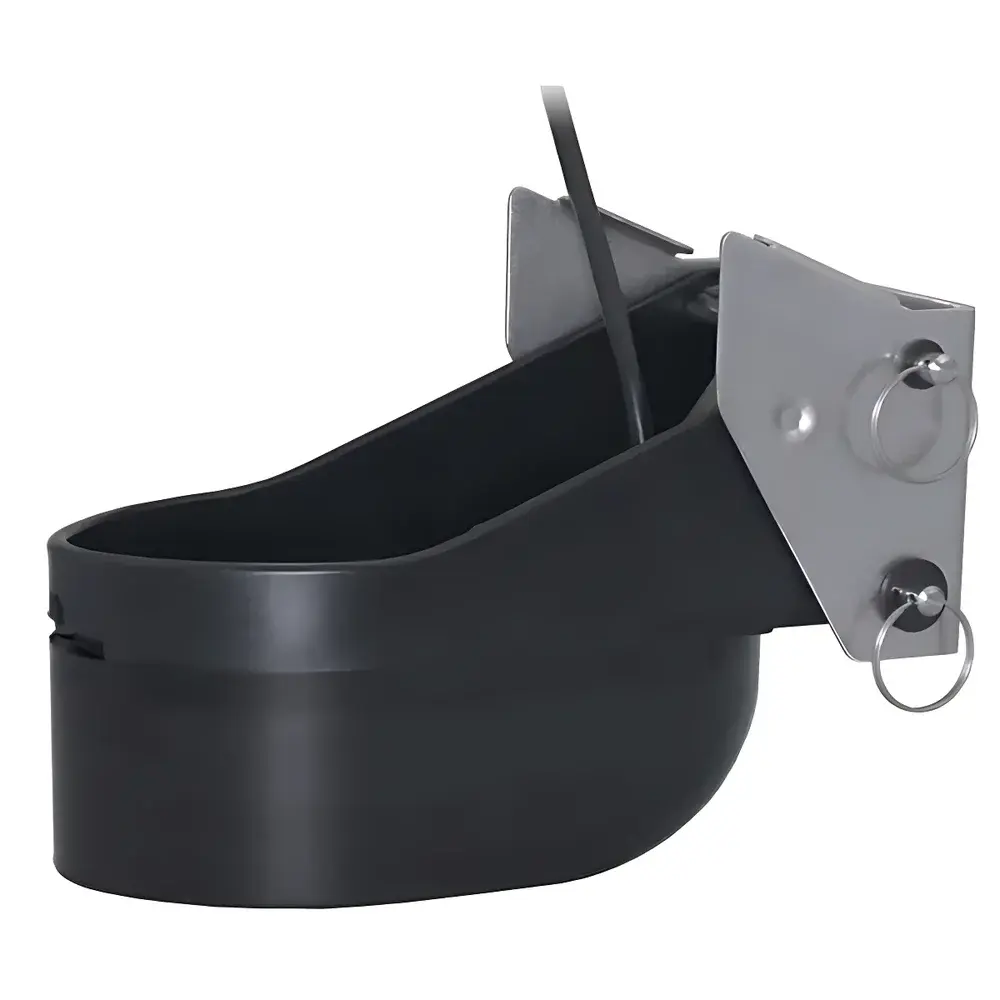
Airmar TM258 Transom-Mount Depth Sounder
| Brand | Airmar |
|---|---|
| Origin | USA |
| Model | TM258 |
| Output Power | 1000 W |
| Operating Frequencies | 50 kHz / 200 kHz |
| Beamwidth | 15° × 21° @ 50 kHz / 3° × 5° @ 200 kHz |
| Housing Material | Polyurethane with Stainless Steel Mounting Bracket |
| Cable Length | 10 m |
| Integrated Temperature Sensor | ±0.2 °C Accuracy |
| Maximum Vessel Speed | 30 knots (35 mph) |
| Hull Tilt Range | 3°–21° |
| Transducer Weight | 3.6 kg |
| Acoustic Window | Polyurethane |
| Maximum Vessel Length | 12 m |
| XducerID® Technology | Yes |
Overview
The Airmar TM258 is a high-power, transom-mounted echosounder engineered for precision depth measurement and bottom profiling in dynamic marine environments. Utilizing dual-frequency pulse-echo sonar technology—operating simultaneously at 50 kHz and 200 kHz—the TM258 delivers high-resolution bathymetric data across variable water column conditions. At 50 kHz, the wide elliptical beam (15° × 21°) provides broad seabed coverage ideal for navigation safety and large-area surveying; at 200 kHz, the narrow focused beam (3° × 5°) enables fine-detail resolution of fish targets, structural features, and sediment layering. Its hydrodynamic polyurethane housing and stainless steel mounting assembly are optimized for low-drag performance up to 30 knots (35 mph), ensuring stable acoustic coupling and minimal flow-induced noise—even under high-speed planing or rough-water operation. The TM258 complies with IEC 62288 (Maritime Navigation and Radiocommunication Equipment) for operational reliability and electromagnetic compatibility in commercial and professional vessel installations.
Key Features
- Dual-frequency transduction (50/200 kHz) with independent beam focusing for simultaneous wide-area scanning and high-definition target discrimination
- 1000 W peak output power enabling reliable detection in turbid, deep, or thermally stratified waters up to 600 m (depending on frequency and bottom composition)
- Integrated high-accuracy temperature sensor (±0.2 °C) co-located with the acoustic window, supporting real-time sound velocity correction per ISO 17025 traceable calibration protocols
- XducerID® digital identification technology—enables automatic configuration, firmware validation, and audit-ready transducer history logging within compatible chartplotter ecosystems (e.g., Furuno TZtouch, Raymarine Axiom)
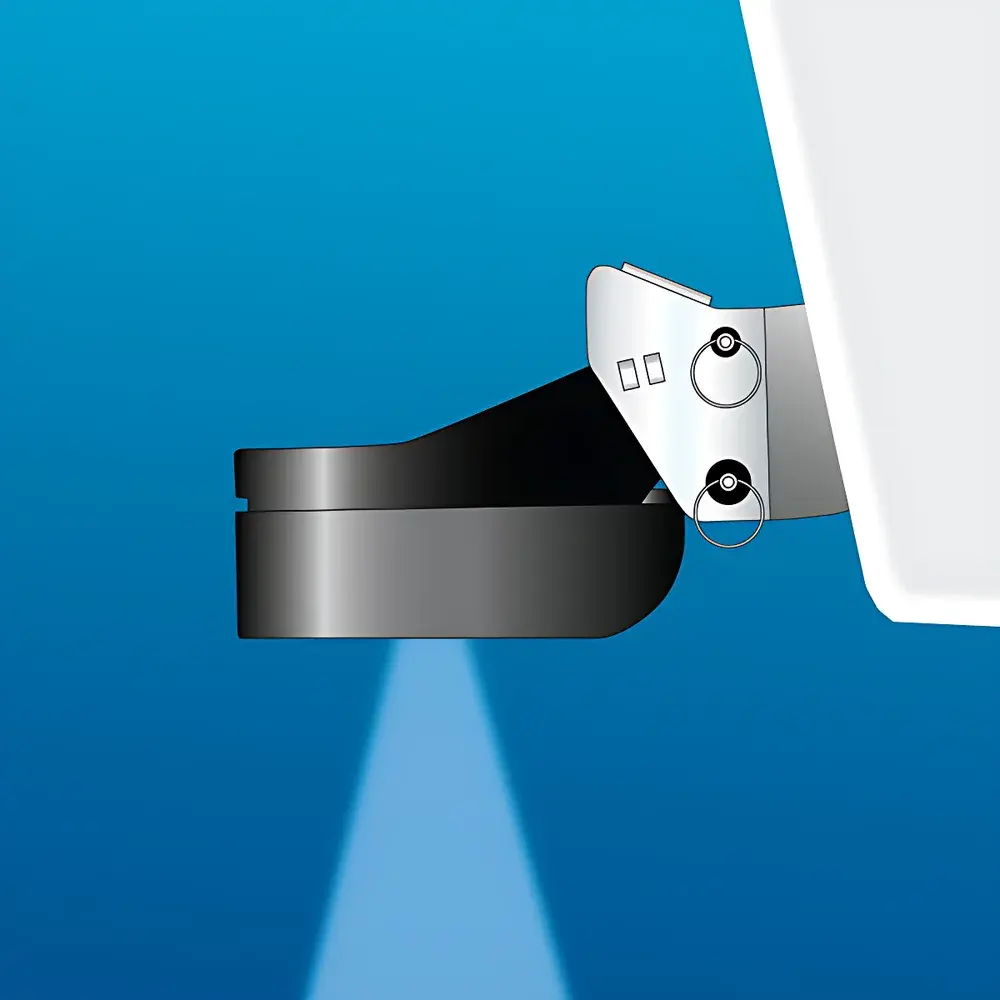
- Adjustable transom bracket with mechanical lock-in “up” position to prevent accidental impact during trailering or shallow-water maneuvering
- Optimized hull tilt compensation range (3°–21°) ensures consistent beam alignment across diverse vessel hull forms—from flat-bottom workboats to deep-V offshore craft
- Polyurethane acoustic window with embedded stress-relief geometry, resistant to UV degradation, biofouling adhesion, and mechanical abrasion
Sample Compatibility & Compliance
The TM258 is designed for deployment on vessels up to 12 meters LOA with transom angles between 3° and 21°. It interfaces natively with NMEA 2000 (via optional adapter cable) and analog 10-pin Furuno/Raymarine harnesses (part numbers 41-192-4-01 and 41-267-1-01, respectively). All electrical interfaces conform to ISO 8846 (Marine Electrical Systems – Safety Requirements) and EN 60945 (Maritime Navigation Equipment – General Requirements). The transducer housing meets IP68 ingress protection standards and is certified for continuous submersion at depths exceeding 50 m. For regulatory compliance in commercial fishing or hydrographic survey operations, the TM258 supports GLP-aligned data logging when paired with compliant host systems featuring FDA 21 CFR Part 11–compliant audit trails.
Software & Data Management
While the TM258 operates as a standalone analog/digital transducer, its full capability is realized through integration with modern multifunction displays (MFDs) supporting CHIRP-ready processing, bottom discrimination algorithms, and split-screen depth/temperature overlays. XducerID® enables plug-and-play recognition and auto-loading of calibrated beam pattern profiles—eliminating manual gain/tuning setup and reducing operator error. When connected to systems with built-in data recording (e.g., Furuno DFF3D or Raymarine Dragonfly), raw echo log files can be exported in industry-standard .csv or .nmea formats for post-processing in QGIS, SonarWiz, or MATLAB-based analysis pipelines. Firmware updates are delivered via Airmar’s secure web portal and validated using SHA-256 checksum verification.
Applications
- Commercial and recreational vessel depth sounding and shallow-water hazard avoidance
- Hydrographic reconnaissance for coastal mapping and dredging pre-survey planning
- Fisheries research requiring dual-frequency target strength differentiation (e.g., pelagic vs. demersal species classification)
- Underwater infrastructure inspection (pipelines, cables, mooring systems) via high-resolution 200 kHz imaging
- Environmental monitoring programs tracking seasonal sediment transport and bathymetric change over time
- USCG and NOAA auxiliary patrol vessel instrumentation where ruggedized, field-serviceable sonar is mandated
FAQ
What is the maximum operational depth for the TM258 at each frequency?
At 50 kHz, typical maximum depth ranges from 300 to 600 m in clear seawater; at 200 kHz, effective depth is limited to approximately 150–250 m due to higher acoustic attenuation.
Is the TM258 compatible with CHIRP-enabled MFDs?
No—the TM258 is a fixed-frequency (non-CHIRP) transducer. It delivers discrete 50 kHz and 200 kHz pulses but does not support swept-frequency modulation.
Can the temperature sensor be calibrated independently?
Yes—its PT1000-class RTD element supports two-point calibration against NIST-traceable reference probes per IEC 60751 guidelines.
Does the TM258 require a dedicated power supply or isolation transformer?
It operates directly from standard 12/24 VDC marine electrical systems; however, Airmar recommends use of a dedicated circuit with ferrite-core filtering to suppress EMI from alternators or inverters.
How often should the polyurethane acoustic window be inspected for micro-cracking or delamination?
Visual inspection is recommended every 12 months or after 500 operating hours—especially following exposure to diesel fuel, antifouling solvents, or prolonged UV exposure without protective coating.