
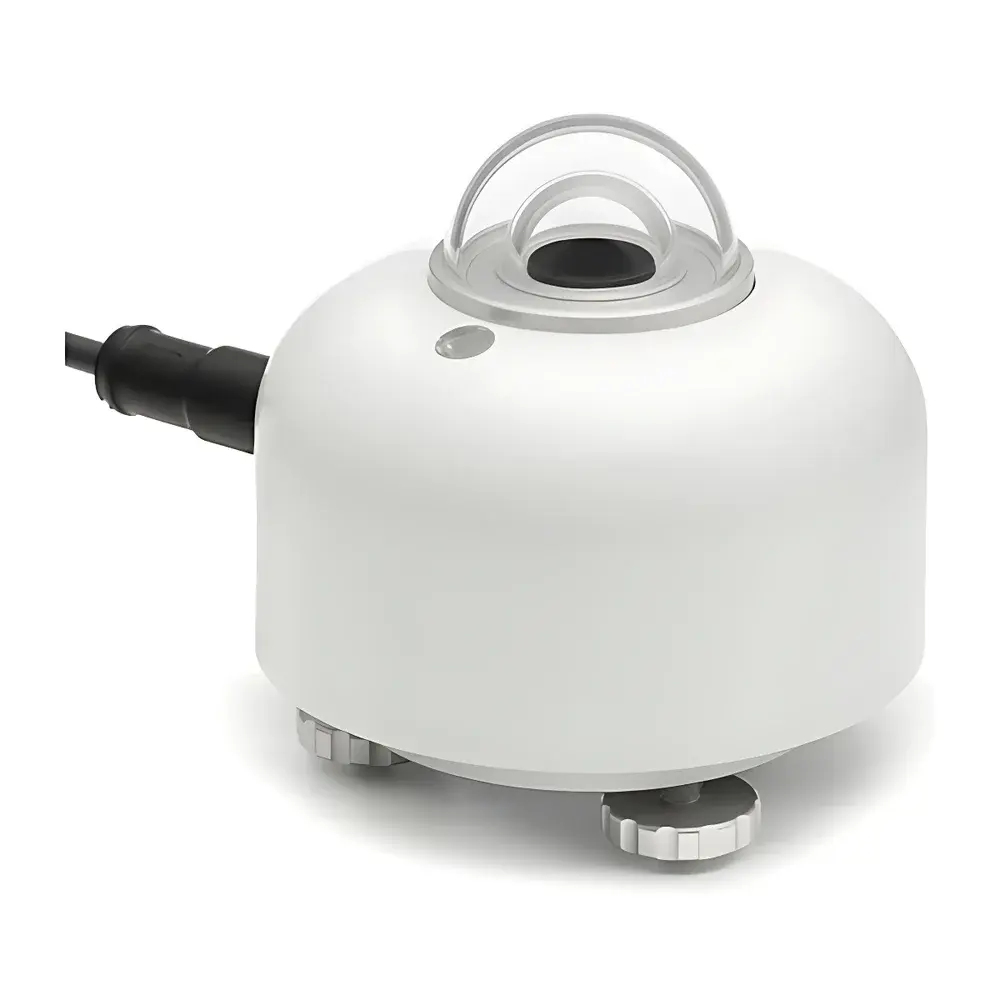
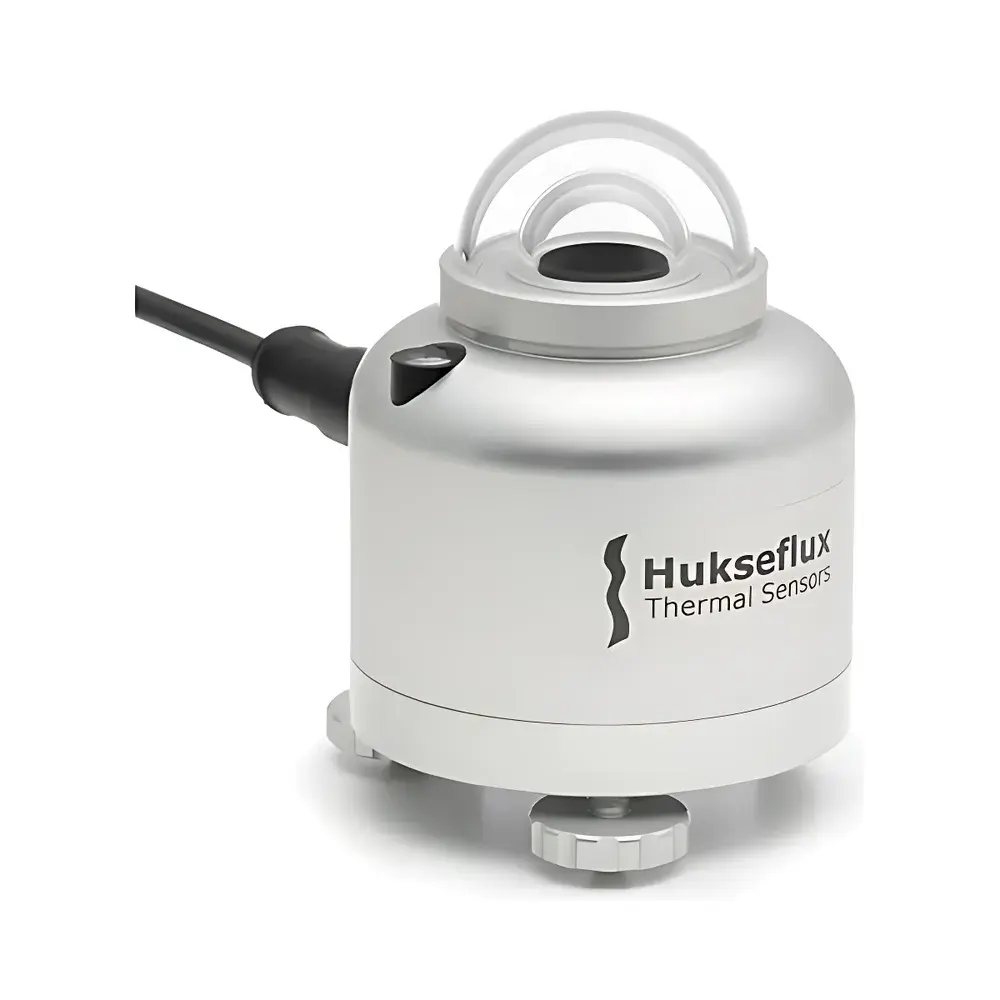
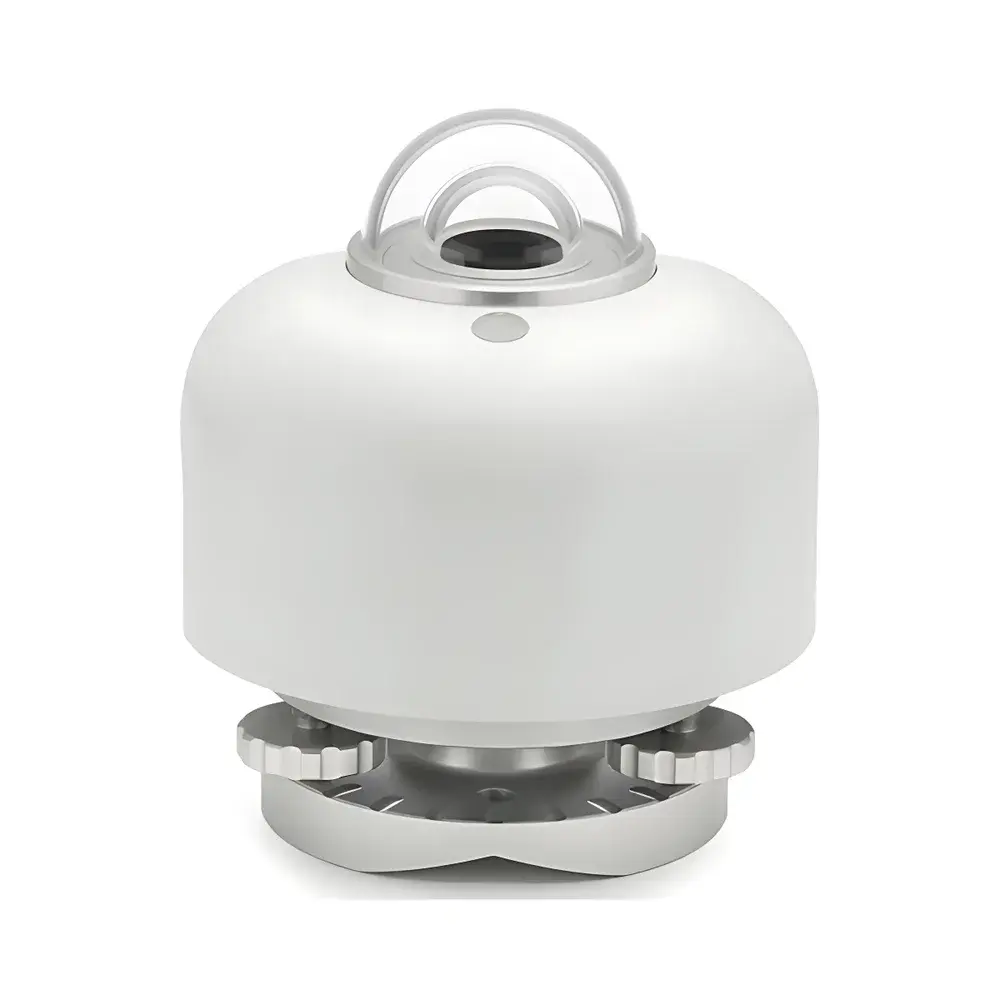
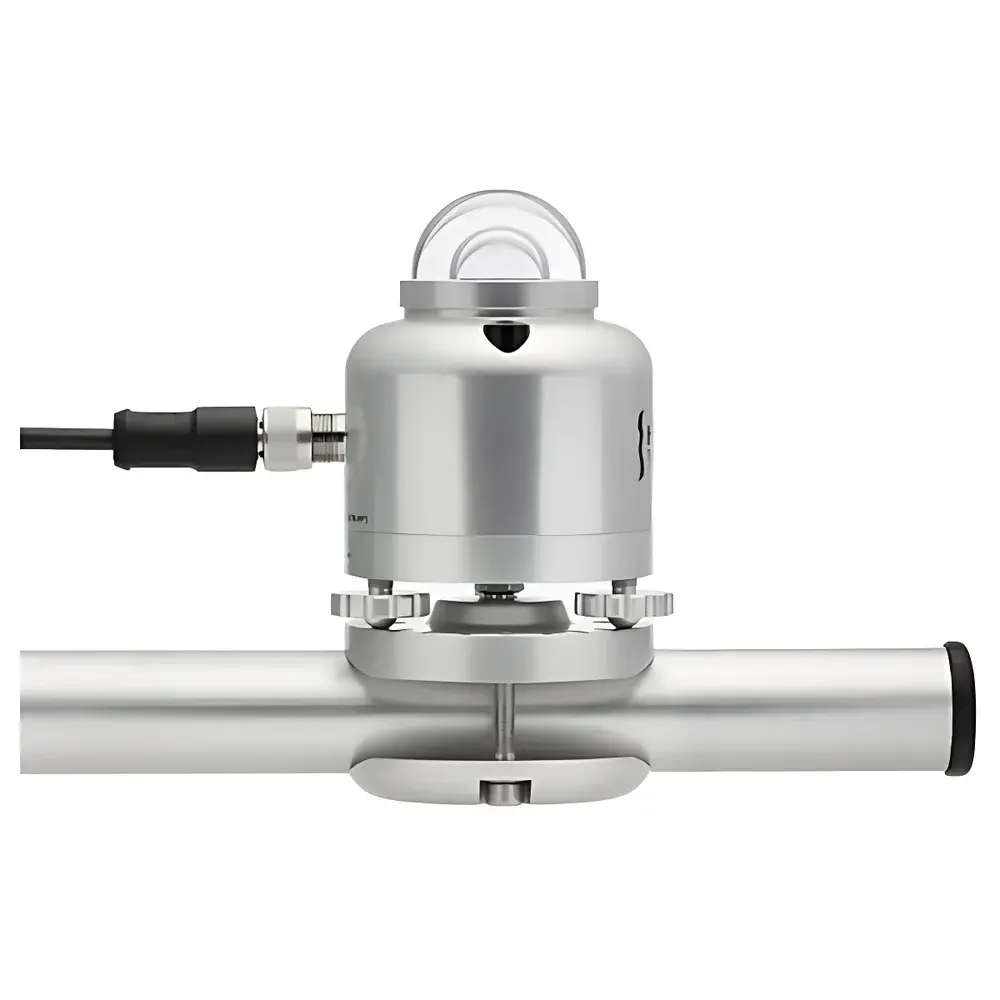

Hukseflux SR15-D1 Pyranometer
| Brand | Hukseflux |
|---|---|
| Origin | Netherlands |
| Model | SR15-D1 |
| Spectral Class | ISO 9060:2018 Spectrally Flat Class B |
| Calibration Uncertainty | < 1.8 % (k = 2) |
| Measurement Range | 0–3000 W/m² |
| Spectral Range | 285–3000 nm |
| Response Time | < 10 s |
| Zero Offset (unventilated) | 5 W/m² |
| Operating Temperature | −40 to +80 °C |
| Temperature Response | < ±2 % (−40 to +80 °C) |
| Heater Power | 1.5 W @ 12 VDC |
| Supply Voltage | 5–30 VDC |
| Output | RS-485 Modbus RTU (2-wire) |
| Cable Length | 5 m |
| Field of View | 180° hemispherical |
Overview
The Hukseflux SR15-D1 is a high-accuracy, spectrally flat Class B pyranometer engineered for reliable hemispherical solar irradiance measurement in demanding meteorological, photovoltaic (PV), and solar resource assessment applications. Designed and manufactured in the Netherlands, it complies fully with ISO 9060:2018 (spectrally flat Class B) and WMO No. 8 guidelines—making it suitable for national radiation monitoring networks and reference-grade field deployments. Its thermopile-based sensing principle ensures stable, drift-free output proportional to total broadband solar radiation incident on a horizontal or tilted plane, expressed in W/m². Unlike silicon-cell sensors, the SR15-D1 delivers spectrally uniform responsivity across the 285–3000 nm range—critical for accurate energy yield modeling under varying atmospheric conditions and spectral distributions (e.g., clear sky vs. overcast, morning vs. afternoon). The integrated heater mitigates dew, frost, and snow accumulation without compromising thermal equilibrium or long-term calibration stability—a key differentiator for unattended outdoor operation across diverse climatic zones.
Key Features
- ISO 9060:2018 spectrally flat Class B classification—certified traceable to the World Radiometric Reference (WRR)
- Digital RS-485 Modbus RTU output with built-in diagnostics, enabling remote sensor health monitoring and configuration
- Onboard heater (1.5 W @ 12 VDC) optimized for dew/frost suppression while maintaining low power consumption and thermal self-heating control
- Calibration uncertainty 2.8 %), validated per ISO 9847
- Robust temperature response (< ±2 % from −40 to +80 °C) and low zero-offset (5 W/m², unventilated), minimizing environmental bias
- Wide operating voltage range (5–30 VDC) and compatibility with standard industrial data loggers and SCADA systems
- IP67-rated housing with quartz dome and precision-ground black thermopile detector for long-term outdoor durability
Sample Compatibility & Compliance
The SR15-D1 is designed for direct measurement of global horizontal irradiance (GHI), plane-of-array (POA) irradiance on tilted PV surfaces, and reflected (albedo) irradiance when inverted—enabling full radiation budget analysis. It meets ASTM E2848 (for PV system performance testing) and IEC 61724-1 (photovoltaic system monitoring) requirements for irradiance instrumentation. As endorsed by the World Meteorological Organization, Class B pyranometers—including the SR15 series—are recommended for operational radiation networks where cost-effective, high-reliability instrumentation is required. Its compliance with ISO 9060:1990 (as “First Class”) further supports legacy network integration. For solar simulation applications, the SR15-D1 is validated for use with xenon arc, metal halide, and LED-based solar simulators under controlled laboratory conditions.
Software & Data Management
Hukseflux Sensor Manager software provides native Windows-based communication with SR15-D1 units via USB-to-RS-485 adapter. Users can configure Modbus slave addresses, baud rates, parity, and polling intervals; visualize real-time irradiance and internal sensor temperature; and export timestamped CSV files for post-processing. Diagnostic functions include live readout of heater status, supply voltage, and internal error flags—supporting preventive maintenance and GLP-aligned instrument verification. All firmware updates and configuration changes are logged with timestamps, aligning with audit-trail requirements under FDA 21 CFR Part 11 and ISO/IEC 17025 quality management frameworks. Uncertainty evaluation spreadsheets—based on the GUM (Guide to the Expression of Uncertainty in Measurement)—are provided to assist users in quantifying combined measurement uncertainty under site-specific environmental and installation conditions.
Applications
- Photovoltaic plant performance ratio (PR) and yield analysis, per IEC 61724-1 Tier 1–3 monitoring protocols
- Solar resource assessment for utility-scale project feasibility and bankable energy yield modeling
- National and regional meteorological radiation networks (WMO-compliant Class B deployment)
- Indoor solar simulator validation and spectral mismatch correction in PV cell and module testing labs
- Albedo and surface reflectance studies in climate science and urban heat island research
- Daylight duration calculation using the “sunshine threshold method” per WMO-No. 8—eliminating need for dedicated sunshine recorders
FAQ
What is the difference between SR15-D1 and SR15-A1?
The SR15-D1 features digital RS-485 Modbus RTU output and onboard heater, whereas the SR15-A1 provides analog millivolt output (no digital interface) with identical heater functionality.
Is the SR15-D1 suitable for tilted or inverted mounting?
Yes—it supports horizontal, tilted (e.g., POA irradiance), and inverted (reflected/albedo) configurations without recalibration, thanks to its 180° cosine-corrected field of view and symmetrical thermal design.
How is calibration traceability ensured?
Each unit is calibrated against WRR-traceable reference standards at Hukseflux’s ISO/IEC 17025-accredited laboratory, with certificates including expanded uncertainty (k = 2) and compliance statements per ISO 9847.
Can the heater be controlled externally?
No—the heater operates autonomously based on internal temperature and humidity thresholds; it cannot be toggled via Modbus command but its status is reportable.
What mounting accessories are available?
Options include spring-loaded leveling mounts, tubular leveling stands with M8 bolts, and extended cable variants (10 m and 20 m with dual connectors) for flexible site integration.







