
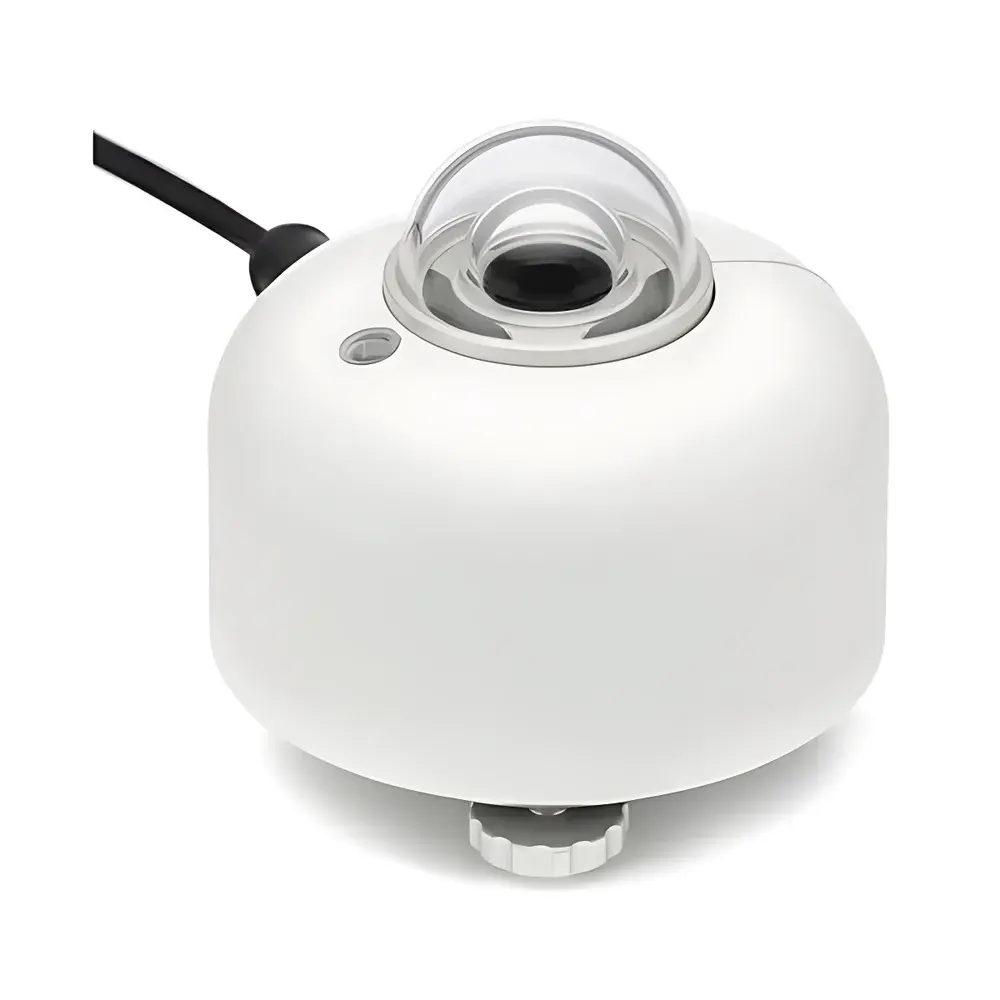
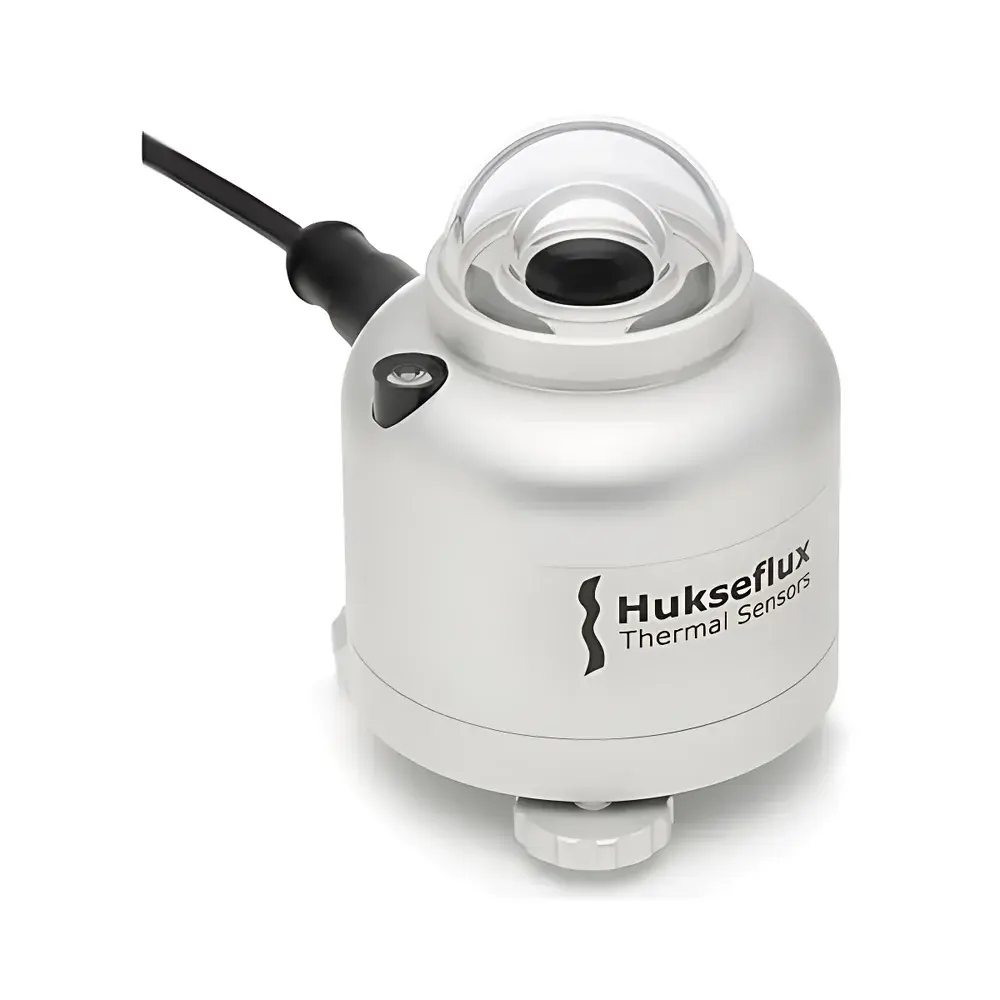
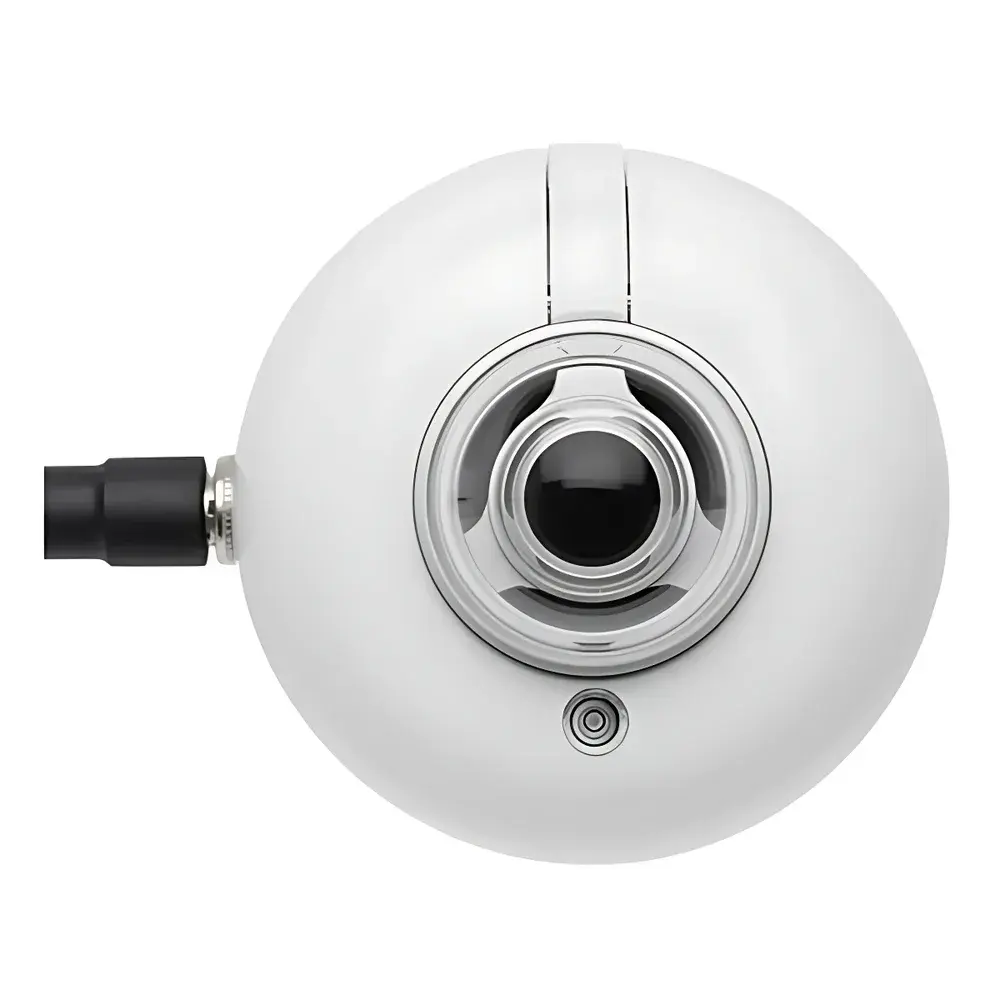
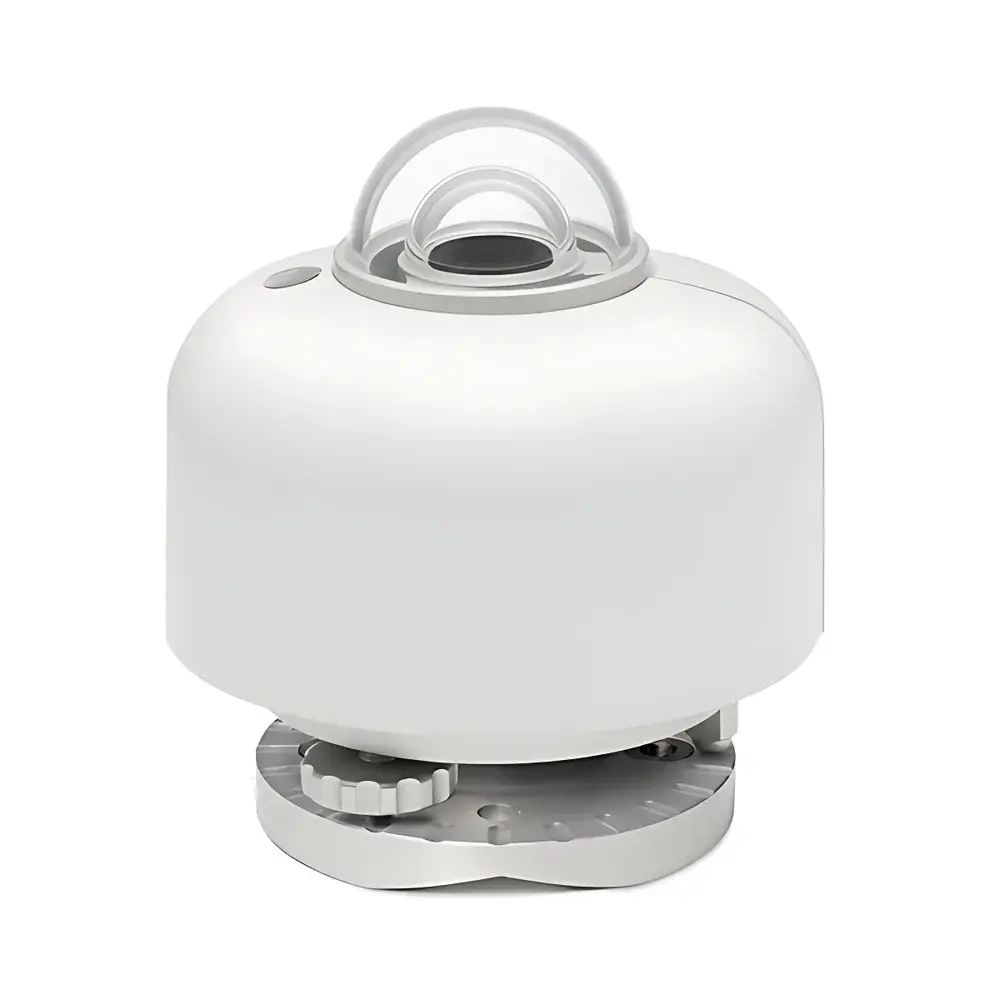
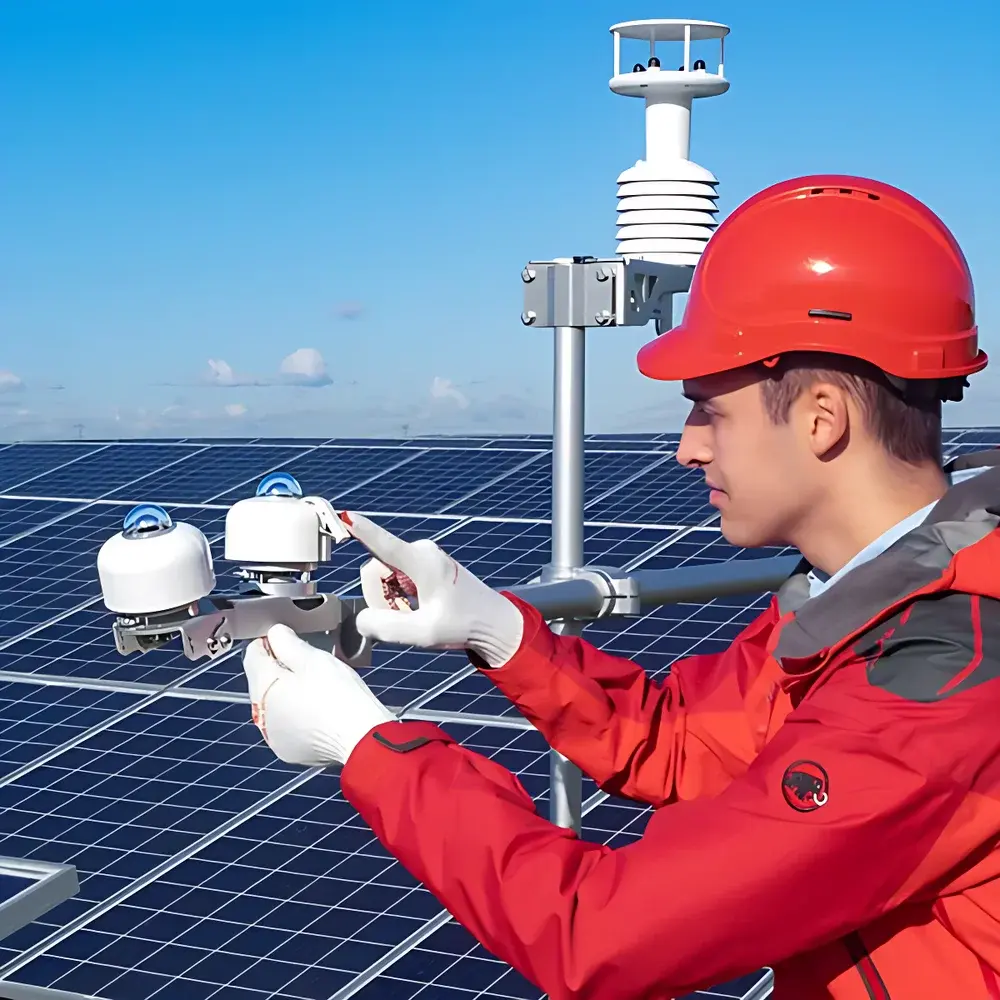
Hukseflux SR30-M2-D1 Spectrally Flat Class A Pyranometer
| Brand | Hukseflux |
|---|---|
| Origin | Netherlands |
| Model | SR30-M2-D1 |
| Spectral Range | 285–3000 nm |
| Calibration Uncertainty | <1.2 % (k=2) |
| Measurement Range | –400 to +4000 W/m² |
| Zero Offset | <2 W/m² |
| Response Time (95%) | 4 s |
| Operating Temperature | –40 to +80 °C |
| Temperature Response | <±0.4 % (–30 to +50 °C) |
| Tilt Sensor Accuracy | ±1° (0–90°, –30 to +50 °C) |
| Power Consumption | <3 W @ 12 VDC (heated/ventilated mode) |
| Output | Modbus RTU over 2-wire RS-485 |
| Cable Length | 5 m (standard) |
| Compliance | ISO 9060:2018 Spectrally Flat Class A, IEC 61724-1:2017 Class A & B, WMO Performance Level I |
Overview
The Hukseflux SR30-M2-D1 is a high-accuracy, spectrally flat Class A pyranometer engineered for demanding solar radiation monitoring applications where traceable metrology, long-term stability, and environmental resilience are critical. It measures global horizontal irradiance (GHI), plane-of-array (POA) irradiance, albedo, and net radiation using thermopile-based detection across a spectral range of 285–3000 nm. Unlike conventional pyranometers classified only by angular or thermal response (e.g., ISO 9060:1990 “Secondary Standard”), the SR30-M2-D1 conforms to the updated ISO 9060:2018 standard’s “Spectrally Flat” subcategory—ensuring minimal spectral error under diffuse, partially cloudy, or reflected-radiation conditions. This specification is essential for photovoltaic performance monitoring, climate research, and solar resource assessment where irradiance components vary significantly in spectral distribution. The instrument incorporates a precision thermopile sensor with dual quartz domes, temperature-compensated electronics, and an integrated tilt sensor calibrated from –30 to +50 °C with ±1° uncertainty.
Key Features
- Spectrally Flat Class A Compliance: Meets ISO 9060:2018 requirements for spectral flatness, enabling accurate GHI, POA, and albedo measurements under all sky conditions—including overcast, broken cloud, and high-albedo surfaces—where non-flat instruments exhibit significant spectral bias.
- Recirculating Ventilation and Heating (RVH™) Technology: A proprietary closed-loop system that heats and ventilates the annular space between inner and outer domes without external air intake. RVH™ suppresses dew, frost, and snow accumulation while maintaining thermal equilibrium across the dome assembly—reducing zero-offset drift to <2 W/m² and eliminating convective artifacts common in open-air ventilated systems.
- Ultra-Low Power Operation: Consumes 10 W for conventional ventilated pyranometers), and <0.1 W in low-power diagnostic mode—enabling deployment on battery- or solar-powered remote stations with extended autonomy.
- Integrated Diagnostics & Digital Output: Delivers real-time diagnostic data via Modbus RTU over 2-wire RS-485, including internal humidity (%), fan RPM, heater current (A), dome temperature (°C), tilt angle (°), and ventilation status—supporting predictive maintenance and remote validation per GLP/GMP-aligned QA workflows.
- IEC 61724-1:2017 Dual-Class Certification: Certified for both Class A (high-accuracy PV monitoring) and Class B (utility-scale performance assessment) without add-on accessories—a distinction not met by most competing heated pyranometers.
- Traceable Calibration & Documentation: Each unit ships with a full ISO 9060:2018 test report covering directional response, temperature response, tilt measurement accuracy, and sensitivity calibration traceable to the World Radiometric Reference (WRR) with k=2 uncertainty <1.2 %.
Sample Compatibility & Compliance
The SR30-M2-D1 is designed for outdoor, unsheltered deployment in meteorological networks, solar farm SCADA systems, and research-grade radiation observatories. Its robust aluminum housing, IP67-rated enclosure, and quartz dome construction ensure compatibility with harsh environments ranging from Arctic tundra (–40 °C) to desert installations (+80 °C). It complies with international standards governing solar measurement integrity: ISO 9060:2018 (Spectrally Flat Class A), IEC 61724-1:2017 (Classes A and B), and WMO Performance Level I. For regulated applications—including utility interconnection studies and bankable solar yield assessments—the instrument supports audit-ready data provenance through time-stamped diagnostics, firmware version logging, and calibration certificate traceability. All calibration services are performed at Hukseflux-accredited laboratories accredited to ISO/IEC 17025, with re-calibration recommended every 24 months in accordance with WMO and IEC guidance.
Software & Data Management
The SR30-M2-D1 interfaces natively with industry-standard SCADA, DAQ, and cloud telemetry platforms via its Modbus RTU protocol. No proprietary drivers or gateways are required. Diagnostic parameters—including tilt deviation, internal humidity, and heater duty cycle—are mapped to discrete Modbus registers (0x0001–0x000F), enabling integration into automated QA/QC pipelines. When deployed in arrays, multiple units can be daisy-chained on a single RS-485 bus with configurable slave IDs. For compliance with FDA 21 CFR Part 11 and EU Annex 11, Hukseflux provides optional firmware-enabled audit trail logging (timestamped parameter changes, configuration edits, and calibration events) when paired with compatible data loggers supporting secure user authentication and electronic signatures. Raw W/m² output is linearized and temperature-compensated onboard, eliminating post-processing dependencies.
Applications
- Photovoltaic power plant performance ratio (PR) and availability monitoring per IEC 61724-1
- High-fidelity solar resource assessment for bankable energy yield models
- Albedo and surface radiation balance studies in cryospheric and urban climate research
- Calibration reference for secondary pyranometers and pyrheliometers in field intercomparisons
- Diffuse horizontal irradiance (DHI) derivation via shaded/unshaded paired configurations
- Long-term climate monitoring networks requiring WMO Performance Level I instrumentation
FAQ
What distinguishes “spectrally flat” from standard ISO 9060 Class A classification?
Spectral flatness—introduced in ISO 9060:2018—is a mandatory requirement for Class A instruments used under non-direct-beam conditions. It ensures uniform responsivity across 285–3000 nm, minimizing errors caused by varying atmospheric scattering and surface reflectance. Non-flat Class A devices may meet angular and thermal criteria but fail under diffuse-dominant irradiance.
Does the SR30-M2-D1 require external ventilation or power conditioning?
No. Its integrated RVH™ system operates autonomously within the 8–30 VDC input range. No external fans, heaters, or air filters are needed—reducing installation complexity and lifecycle maintenance costs.
Can the tilt sensor be used for automated solar tracker alignment verification?
Yes. The ±1° accuracy tilt measurement (validated across –30 to +50 °C) enables remote validation of tracker positioning and long-term mechanical drift detection without site visits.
Is the Modbus register map publicly available for custom integration?
Yes. Hukseflux publishes the complete register definition (including scaling factors, units, and diagnostic thresholds) in its Technical Note TN-032, available upon registration in the Hukseflux Support Portal.
How often must the SR30-M2-D1 be recalibrated to maintain Class A compliance?
Hukseflux recommends recalibration every 24 months, aligned with WMO Guide to Meteorological Instruments and Methods of Observation (CIMO Guide) Chapter 10 and IEC 61724-1:2017 Annex D. Field verification using reference cells or shadow-band comparisons may extend intervals where statistical process control demonstrates stability.
Related Products







