
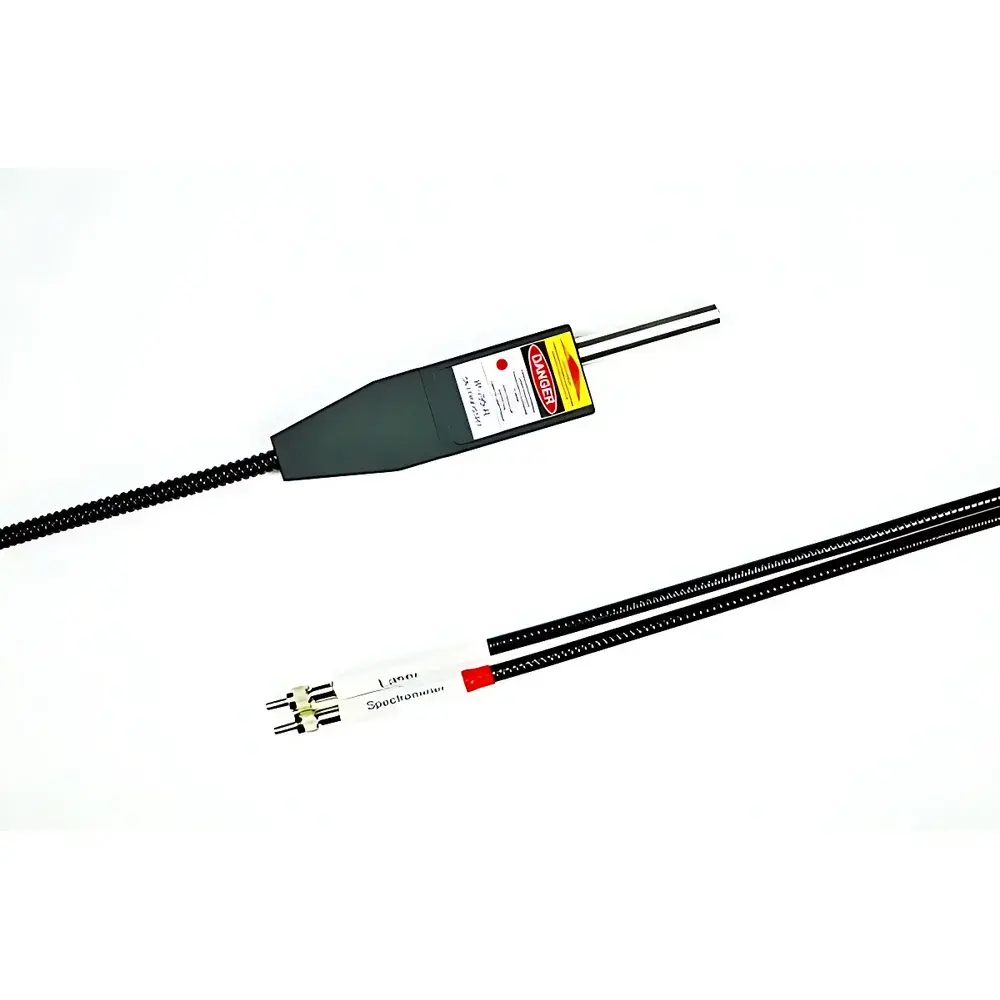
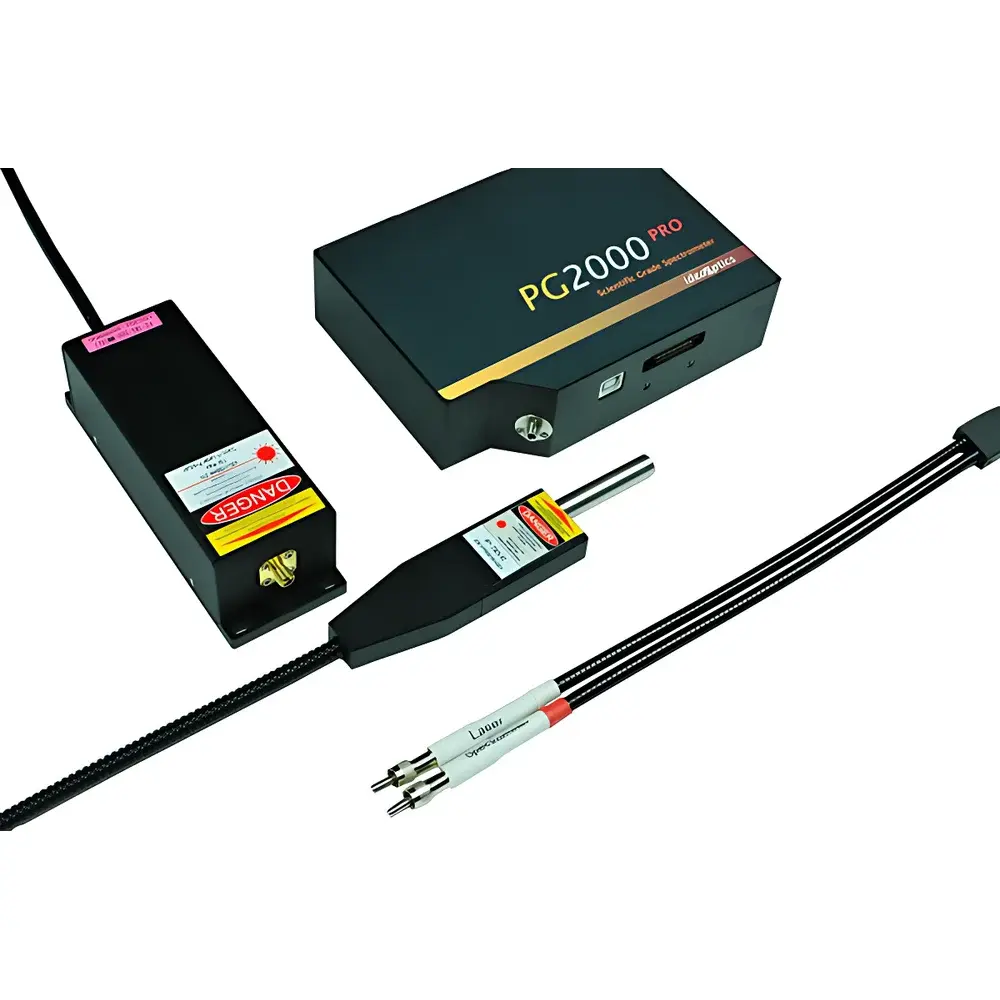
IdeaOptics fProbe Raman Probe
| Brand | IdeaOptics |
|---|---|
| Origin | Shanghai, China |
| Manufacturer Type | OEM/ODM Manufacturer |
| Country of Origin | China |
| Model | fProbe |
| Component Category | Optical Component |
| Laser Rejection Ratio | OD6 (10⁶) |
| Compatibility | K-Sens & Kun Series Raman Spectrometers |
| Construction | Monolithic CNC-Machined Tip with Polyimide/Metal Mesh Reinforced Jacket |
| Customization | Available for Multiple Excitation Wavelengths (e.g., 532 nm, 785 nm, 830 nm) and Field-Deployable Configurations |
Overview
The IdeaOptics fProbe is a high-performance, modular Raman probe engineered for laboratory-grade and field-deployable Raman spectroscopy applications. Based on the principle of inelastic light scattering—where monochromatic laser excitation induces molecular vibrational transitions—the fProbe enables efficient collection of weak Raman signals while suppressing intense Rayleigh scattered light by a factor of 10⁶ (OD6). Its optical architecture is optimized for coupling with compact, benchtop, and portable Raman spectrometers, particularly the K-Sens and Kun series platforms. Designed for precision, durability, and ergonomic operation, the fProbe integrates rigorous optical engineering with mechanical robustness to support demanding analytical workflows across quality control, forensic screening, and raw material verification.
Key Features
- OD6 Laser Rejection Performance: Achieved via magnetron sputtered multi-layer hard coatings on fused silica optics, delivering consistent 10⁶ attenuation of Rayleigh scatter at common excitation wavelengths (532 nm, 785 nm, 830 nm), thereby maximizing signal-to-noise ratio for low-intensity Raman bands.
- Monolithic CNC-Machined Probe Tip: Precision-machined from a single block of aerospace-grade aluminum alloy, eliminating optical misalignment risks associated with glued or assembled tip structures—ensuring long-term repeatability and thermal stability under repeated thermal cycling.
- Polyimide/Metal Mesh Hybrid Jacket: A tri-layer protective sheath—comprising inner polyimide tubing, interwoven stainless-steel mesh, and outer abrasion-resistant polymer coating—provides exceptional flex fatigue resistance (>100,000 bend cycles) and crush protection up to 200 N, critical for industrial and customs inspection environments.
- Ergonomic Mechanical Design: Optimized mass distribution and reduced tip inertia enable stable handheld operation during extended measurements; weight distribution ensures minimal operator fatigue during point-and-measure protocols.
- Modular Interchangeability: Standard SMA905 or FC/PC fiber interfaces allow rapid integration with existing spectrometer systems without recalibration; optional magnetic quick-connect variants available for high-throughput lab automation.
Sample Compatibility & Compliance
The fProbe supports non-contact and contact-based Raman interrogation of solids, powders, liquids, gels, and packaged samples—including opaque containers (e.g., amber glass vials, plastic pouches) when used with appropriate standoff configurations. It complies with IEC 61000-4-2 (ESD immunity), IP54-rated for dust and splash resistance, and meets RoHS Directive 2011/65/EU requirements. For regulated environments—including pharmaceutical QC labs operating under cGMP—fProbe systems may be deployed within validated workflows supporting ASTM E1840-22 (Standard Guide for Raman Spectroscopy) and USP (Raman Spectroscopy) guidelines. Full audit trails and instrument configuration logs are supported when paired with compliant data acquisition software.
Software & Data Management
While the fProbe itself is a passive optical component, it is fully compatible with industry-standard spectroscopic software platforms—including OceanView (Ocean Insight), SpectraSuite, and custom LabVIEW- or Python-based acquisition suites. When integrated into IdeaOptics’ certified validation packages, the probe supports 21 CFR Part 11-compliant electronic records, including user authentication, electronic signatures, and immutable measurement metadata (timestamp, excitation wavelength, integration time, probe ID). Firmware-upgradable spectrometer hosts can store probe-specific calibration coefficients (e.g., wavelength-dependent transmission profiles, background offset maps) directly in onboard memory.
Applications
- Food Safety Screening: Rapid detection of melamine adulteration in dairy products—leveraging high collection efficiency and OD6 rejection to resolve characteristic 680 cm⁻¹ and 707 cm⁻¹ Raman peaks even in turbid, fluorescent matrices.
- Pharmaceutical Raw Material Verification: On-site identification of excipients (e.g., microcrystalline cellulose, lactose polymorphs) and active pharmaceutical ingredients (APIs) in manufacturing environments, where probe portability and mechanical resilience reduce turnaround time versus traditional ATR sampling.
- Customs & Forensic Hazardous Substance Detection: Identification of explosives such as TNT (2,4,6-trinitrotoluene) in powder form through characteristic nitro-group vibrations (1350 cm⁻¹ asymmetric stretch), enabled by the probe’s ruggedized housing and resistance to accidental impact or vibration-induced misalignment.
- Chemical Process Monitoring: In-situ reaction monitoring in jacketed reactors or flow cells using customized standoff adapters, maintaining optical alignment stability over extended operational periods (>1000 h).
FAQ
What excitation wavelengths is the fProbe optimized for?
The standard fProbe is configured for 785 nm laser excitation, with optional variants available for 532 nm and 830 nm systems. Custom anti-reflection and laser-line filter coatings are applied per wavelength specification.
Can the fProbe be used with non-IdeaOptics spectrometers?
Yes—it features standardized SMA905 or FC/PC connectors and is compatible with any Raman spectrometer accepting 200–600 µm core multimode fibers and requiring collimated or focused input beam geometry.
Is the probe suitable for GMP-regulated environments?
When deployed with validated acquisition software and documented calibration procedures, the fProbe supports IQ/OQ/PQ execution and meets traceability requirements under ISO/IEC 17025 and FDA guidance for analytical instrument qualification.
Does the fProbe require periodic recalibration?
No optical recalibration is needed; however, users should perform routine performance verification using NIST-traceable polystyrene or silicon reference standards every 30 days or after mechanical shock events.
Can custom working distances or focusing optics be integrated?
Yes—IdeaOptics offers bespoke optical designs including adjustable focus collimators, immersion lenses for liquid-phase measurements, and extended-working-distance configurations for hazardous or temperature-controlled enclosures.





