
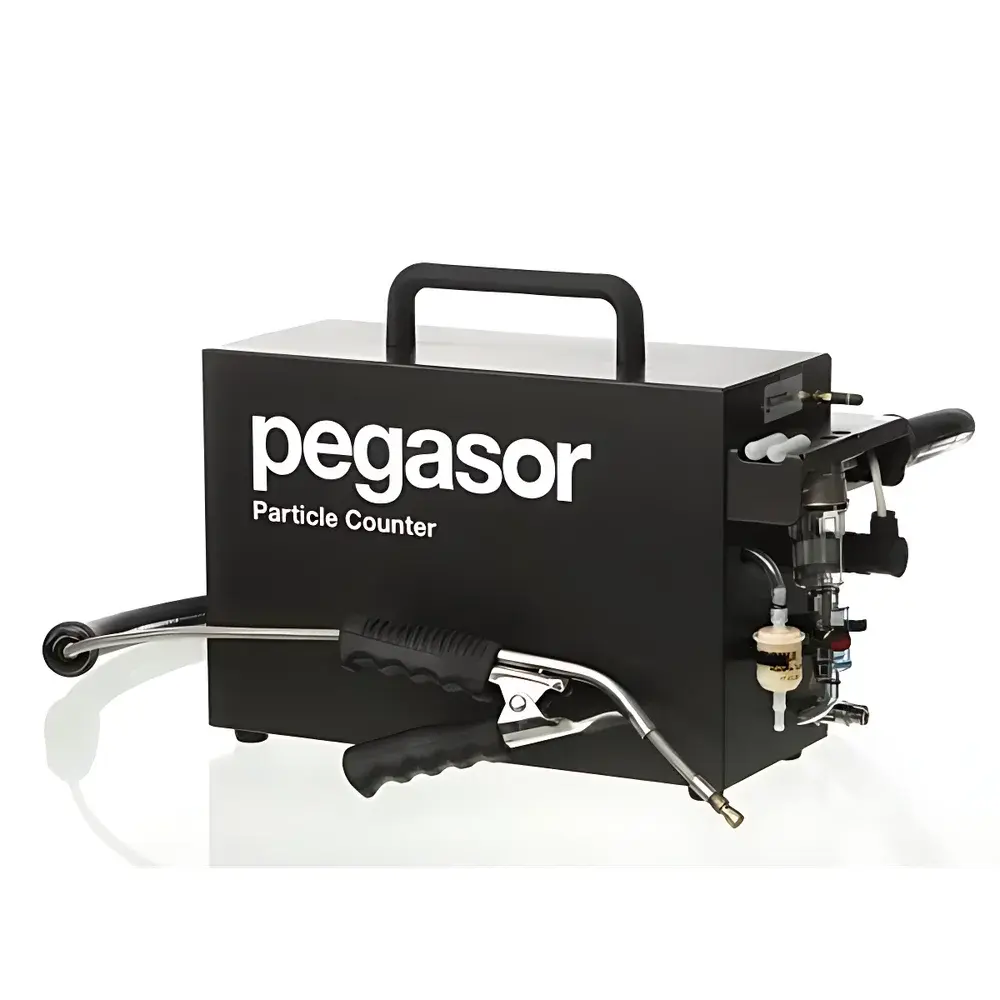
Pegasor PPC Portable Particle Counter
| Brand | Pegasor |
|---|---|
| Origin | Finland |
| Model | PPC |
| Instrument Type | Handheld |
| Flow Rate | High-flow (5.5 L/min) |
| Concentration Range (PN) | 0–100,000,000 #/cm³ |
| Size Range (PN & LDSA) | 10 nm–1 µm |
| Size Range (PM & Dp) | 10–300 nm |
| Detection Sensitivity | 30–1,500 #/cm³ |
| Response Time | 0.2 s |
| Sampling Frequency | 10 Hz / 1 Hz / 60 s |
| Operating Temperature | 5–40 °C |
| Sample Gas Temperature | up to 600 °C |
| Heated Sensor Module | 200 °C |
| Integrated VPR | Yes |
| Power Input | 100–260 VAC, 50–60 Hz |
| Power Consumption | 140 W (steady), 1200 W (startup) |
| Dimensions | 464 × 175 × 339 mm |
| Weight | 9.1 kg (without heated sampling line) |
Overview
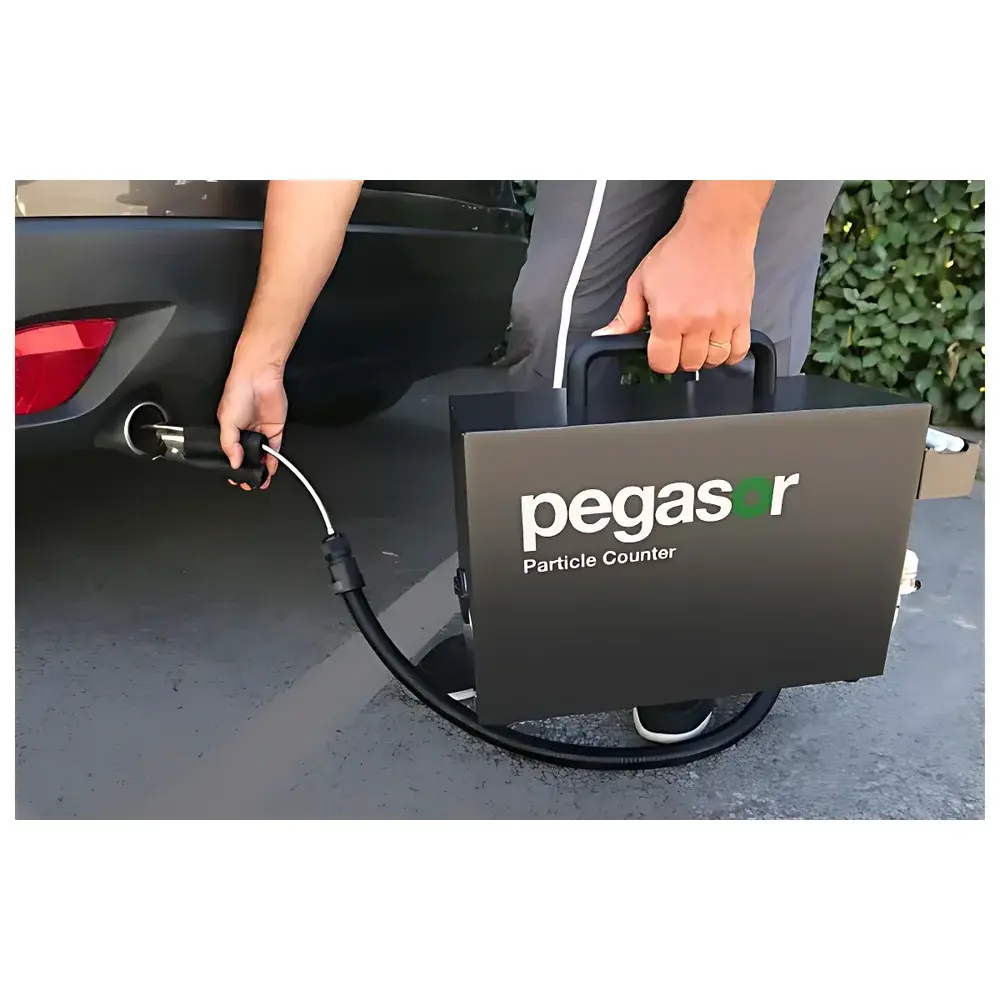
The Pegasor PPC Portable Particle Counter is a field-deployable, high-performance instrument engineered for real-time measurement of ultrafine particulate emissions from combustion sources—primarily internal combustion engines, diesel particulate filters (DPF), and aviation exhaust systems. Based on diffusion charging coupled with electrostatic detection and mobility-based particle sizing, the PPC implements a non-intrusive, non-dilution measurement principle that eliminates reliance on consumables, compressed air supplies, or liquid reagents. Its core sensor—the PPS-G2—integrates a jet pump, heated volatile particle remover (VPR), and a temperature-stabilized electrostatic classifier to enable simultaneous quantification of particle number concentration (PN), lung-deposited surface area (LDSA), and mass concentration (PM), along with median particle diameter (Dp). Designed originally to meet EU Regulation (EU) 2018/858 and UNECE R83/R137 requirements for New Periodic Technical Inspection (nPTI), the PPC delivers regulatory-grade traceability without laboratory infrastructure.
Key Features
- Simultaneous real-time output of PN (#/cm³), PM (µg/cm³), LDSA (µm²/cm³), and Dp (nm) — all derived from a single, un-diluted sample stream
- Integrated heated sensor module (200 °C) and heated sampling line (up to 600 °C) to prevent condensation and thermophoretic losses in hot exhaust streams
- Onboard volatile particle remover (VPR) removes semi-volatile compounds prior to charging, ensuring robust discrimination between solid-core and nucleation-mode artifacts
- No external dilution system, no compressed air supply, and no consumables — operation relies solely on integrated jet pump and ionization source
- High temporal resolution: 10 Hz sampling frequency enables transient emission characterization during acceleration, load changes, or cold-start events
- Ruggedized enclosure (IP54-rated) and vibration-insensitive design validated for mobile use in roadside inspections, chassis dynamometers, and flight-line monitoring
- Self-diagnostic firmware with continuous sensor health monitoring, automatic zero-check routines, and error logging compliant with ISO 21501-4 and ISO 14644-1 traceability frameworks
Sample Compatibility & Compliance
The PPC is calibrated and validated for direct sampling of undiluted engine exhaust across gasoline, diesel, biodiesel, and sustainable aviation fuel (SAF) combustion cycles. It meets the metrological requirements of EU nPTI testing protocols (Annex XXI of Regulation (EU) 2018/858), including dynamic range, repeatability (<±5% CV), and response time (<0.5 s). The instrument conforms to ISO 27891:2019 (determination of particle number emissions from compression ignition engines), ISO 29463-3 (test methods for high-efficiency filters), and supports GLP-compliant data integrity through audit-trail-enabled firmware. All calibration certificates are traceable to NIST SRM 1963 and PTB reference aerosols. No regulatory exemption applies for use in RDE (Real Driving Emissions) or PEMS (Portable Emission Measurement Systems) applications under EU 2016/427 and UN GTR No. 15.
Software & Data Management
Data acquisition and visualization are managed via Pegasor’s cross-platform PPC Control Suite (Windows/macOS/Linux), supporting configurable logging intervals, metadata tagging (vehicle ID, test cycle phase, ambient conditions), and export to CSV, HDF5, or SQLite formats. Bluetooth 5.0 and USB-to-serial interfaces enable wireless synchronization with tablet-based inspection platforms or integration into OEM telematics gateways. Firmware supports remote updates and secure configuration locking per ISO/IEC 27001-aligned access control policies. Raw current signals and classified mobility spectra are retained for post-processing; optional API access allows integration with cloud-based emission analytics platforms compliant with FDA 21 CFR Part 11 electronic record requirements.
Applications
- Regulatory nPTI inspections at vehicle testing centers and roadside enforcement units
- DPF functional verification during maintenance and retrofit validation
- RDE and PEMS campaigns for light- and heavy-duty vehicles under WLTP and CAFE cycles
- Aircraft engine certification and ground-support emissions monitoring (ICAO Annex 16 Vol. II)
- Combustion research in academia and engine development labs (e.g., low-temperature combustion, HCCI, ammonia-fueled engines)
- Indoor air quality audits where ultrafine particle penetration through HVAC systems must be quantified
FAQ
Does the PPC require dilution or external air supply?
No. The PPC operates without dilution air or external compressed gas sources. Its integrated jet pump provides stable sample flow at 5.5 L/min using only mains power.
Can it measure particles above 1 µm?
No. The PPS-G2 sensor is optimized for the ultrafine fraction (10 nm–1 µm). Coarse-mode particles (>1 µm) fall outside its electrostatic classification range and are not reported.
Is calibration traceable to national standards?
Yes. Factory calibrations use NIST-traceable monodisperse aerosols (SRM 1963) and are documented per ISO/IEC 17025 requirements. Field recalibration kits are available with certified reference generators.
What is the maximum allowable sample gas temperature?
The standard heated sampling line supports continuous operation up to 600 °C. Sensor inlet temperature is actively regulated at 200 °C to maintain charging efficiency and minimize wall losses.
How does the VPR improve measurement accuracy?
The integrated volatile particle remover thermally desorbs semi-volatile organics and sulfates upstream of the charger, preventing false-positive counts and ensuring reported PN reflects only solid-core nanoparticles relevant to health impact assessment.
Related Products







