
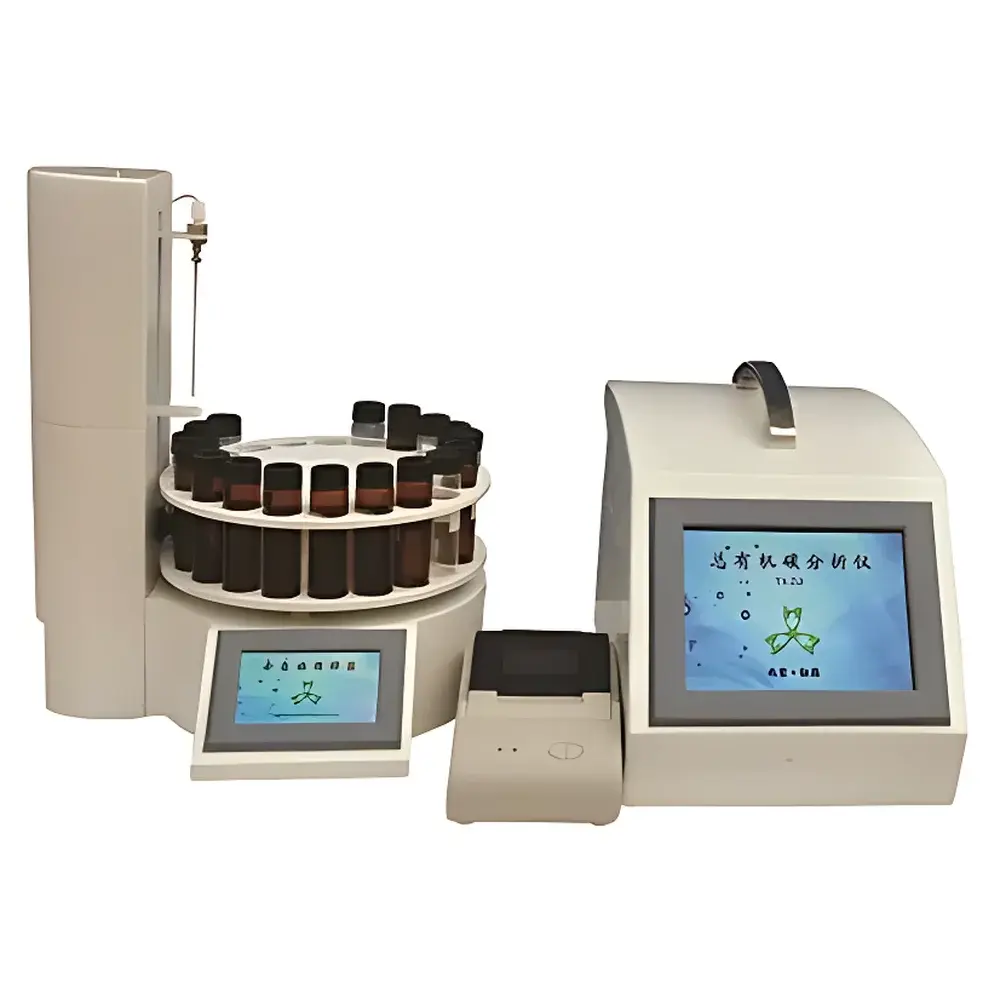
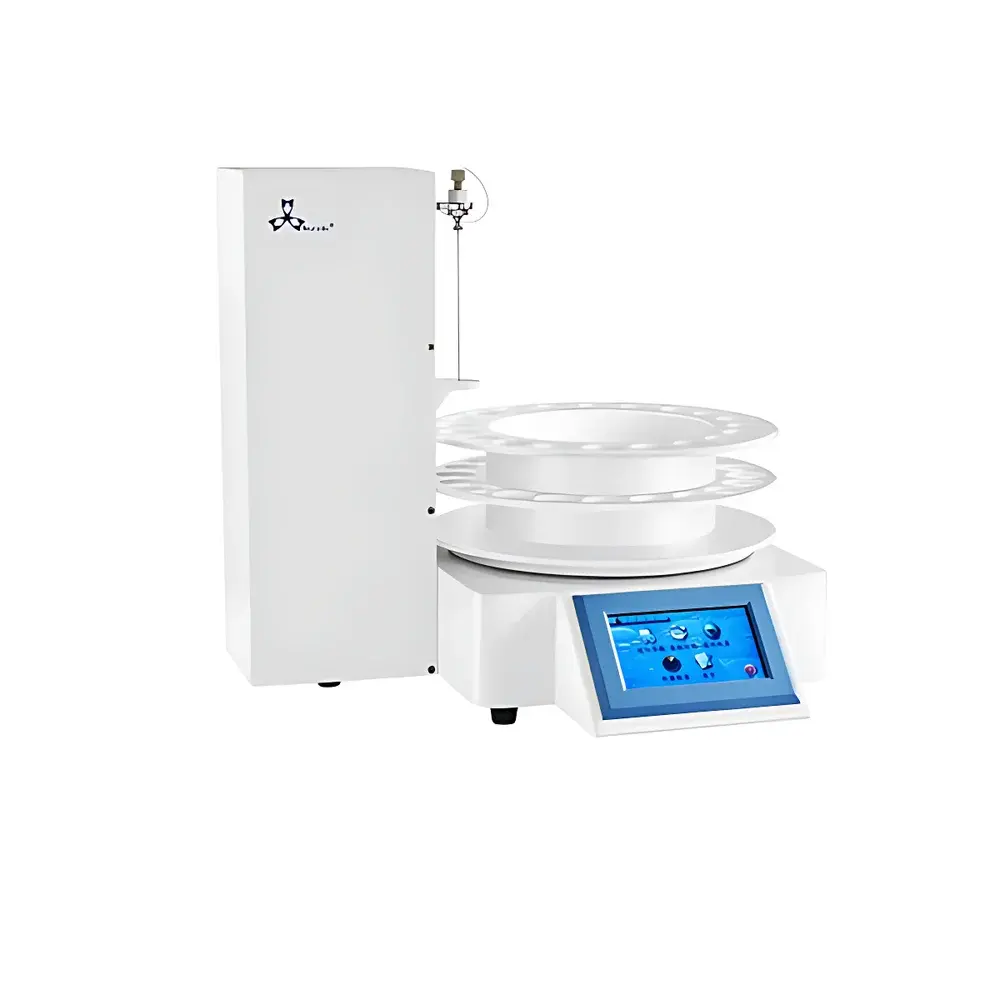
NeuronBC Autosampler for TOC Analyzers
| Brand | NeuronBC |
|---|---|
| Origin | Beijing, China |
| Manufacturer Type | Authorized Distributor |
| Product Category | Domestic |
| Model | Autosampler |
| Price | USD 2,500 (approx.) |
| Instrument Type | Liquid-phase TOC Sampler |
| Max Sample Capacity | 20 vials |
| Minimum Injection Volume | 1 µL |
| Fixed-Loop Volume | 10 µL |
| Positioning Accuracy | < 0.3 mm |
| Operation Modes | Automatic / Manual / Passive |
| Needle Wash Cycles | Unlimited |
| Replicate Injection Capability | Unlimited |
Overview
The NeuronBC Autosampler is a dedicated, high-reliability liquid-handling module engineered specifically for integration with total organic carbon (TOC) analyzers in regulated and research-grade laboratories. Unlike general-purpose HPLC autosamplers, this system is optimized for low-volume, high-integrity aqueous sample introduction under strict time-sensitive conditions—critical when analyzing pharmaceutical water (Purified Water, Water for Injection), environmental monitoring samples, or ultra-pure process streams where sample degradation or atmospheric CO₂ absorption must be minimized. It operates on a precision stepper-motor-driven XYZ gantry architecture, enabling repeatable syringe-based aspiration and dispense via a fixed-loop injection mechanism. The system ensures consistent delivery of sub-milliliter volumes without carryover or air entrapment, leveraging real-time liquid-level sensing to dynamically adjust needle immersion depth—a core requirement for compliant TOC analysis per USP , EP 2.2.44, and ASTM D7573.
Key Features
- Intuitive 7-inch capacitive touchscreen interface with native Chinese/English language toggle—no external PC required for basic operation.
- Intelligent liquid-level detection algorithm prevents vacuum-induced air draw-in during aspiration, eliminating false high-TOC readings caused by entrained atmospheric CO₂.
- Modular mechanical design with key components—including precision syringe pump, optical position encoders, and corrosion-resistant fluidic path—sourced from ISO 9001-certified European and Japanese suppliers.
- Compact footprint (280 × 320 × 360 mm) and lightweight construction (≤12 kg) enable benchtop deployment adjacent to TOC analyzers without requiring dedicated cabinetry or vibration isolation.
- Three operational modes: fully automated sequence execution, single-step manual trigger, and passive mode for external control via RS-232 or TTL-level digital I/O signals—supporting integration into LIMS or SCADA environments.
Sample Compatibility & Compliance
The autosampler accommodates standard 40 mL borosilicate glass vials (with PTFE-lined silicone caps) and accepts custom vial racks for alternative formats (e.g., 10 mL screw-thread vials). All wetted materials—including the stainless-steel sampling needle, PEEK tubing, and sapphire-plated valve rotor—are certified non-leaching and compatible with ultrapure water, dilute acid/base solutions (up to 0.1 M HCl or NaOH), and low-conductivity matrices typical of pharmaceutical water testing. The system supports audit-trail-ready operation when paired with compliant TOC analyzers meeting FDA 21 CFR Part 11 requirements—retaining timestamps, operator IDs, and sequence logs with write-protection and electronic signature capability.
Software & Data Management
No proprietary software installation is required for standalone use; all method parameters—including vial positions, injection volume, loop fill speed, wash cycles (pre- and post-injection), and delay intervals—are configured directly on the embedded HMI. For enterprise integration, optional ASCII protocol support enables bidirectional communication with third-party data systems. Raw sequence metadata (start time, completion status, error codes) is exportable via USB flash drive in CSV format, preserving full traceability for GLP/GMP documentation. Firmware updates are delivered via signed binary files validated using SHA-256 checksums to ensure integrity.
Applications
- Pharmaceutical water quality assurance: routine TOC monitoring of Purified Water (PW) and Water for Injection (WFI) per USP and EU GMP Annex 1.
- Clean-in-place (CIP) and cleaning validation studies requiring unattended sequential analysis of rinse water samples across multiple production lines.
- Environmental laboratories performing EPA Method 415.3-compliant TOC analysis on surface water, wastewater effluents, and drinking water sources.
- Semiconductor and microelectronics facilities conducting ultrapure water (UPW) qualification per SEMI F63 standards.
- Academic and contract research organizations requiring reproducible, low-carbon-background sample introduction for kinetic TOC studies or oxidation efficiency benchmarking.
FAQ
Is this autosampler compatible with non-NeuronBC TOC analyzers?
Yes—it supports analog voltage-triggered start signals and TTL-level synchronization pulses, enabling interoperability with major TOC platforms including GE Sievers, Elementar enviroTOC, and Shimadzu TOC-L series.
Does the system meet ISO/IEC 17025 calibration traceability requirements?
While the autosampler itself is not a measuring instrument, its positioning accuracy (<0.3 mm) and volumetric repeatability (RSD <0.8% at 10 µL) are verified using NIST-traceable calibrators and documented in the factory acceptance test (FAT) report provided with each unit.
Can the wash cycle be customized per vial position?
No—wash parameters are defined globally per method, but users may assign distinct wash protocols to different sequences, allowing differentiated cleaning rigor for high-contamination vs. blank samples.
What maintenance intervals are recommended?
Needle cleaning and O-ring inspection every 500 injections; syringe lubrication and encoder calibration annually—or after any mechanical impact—per the included maintenance logbook and OEM service manual.



