
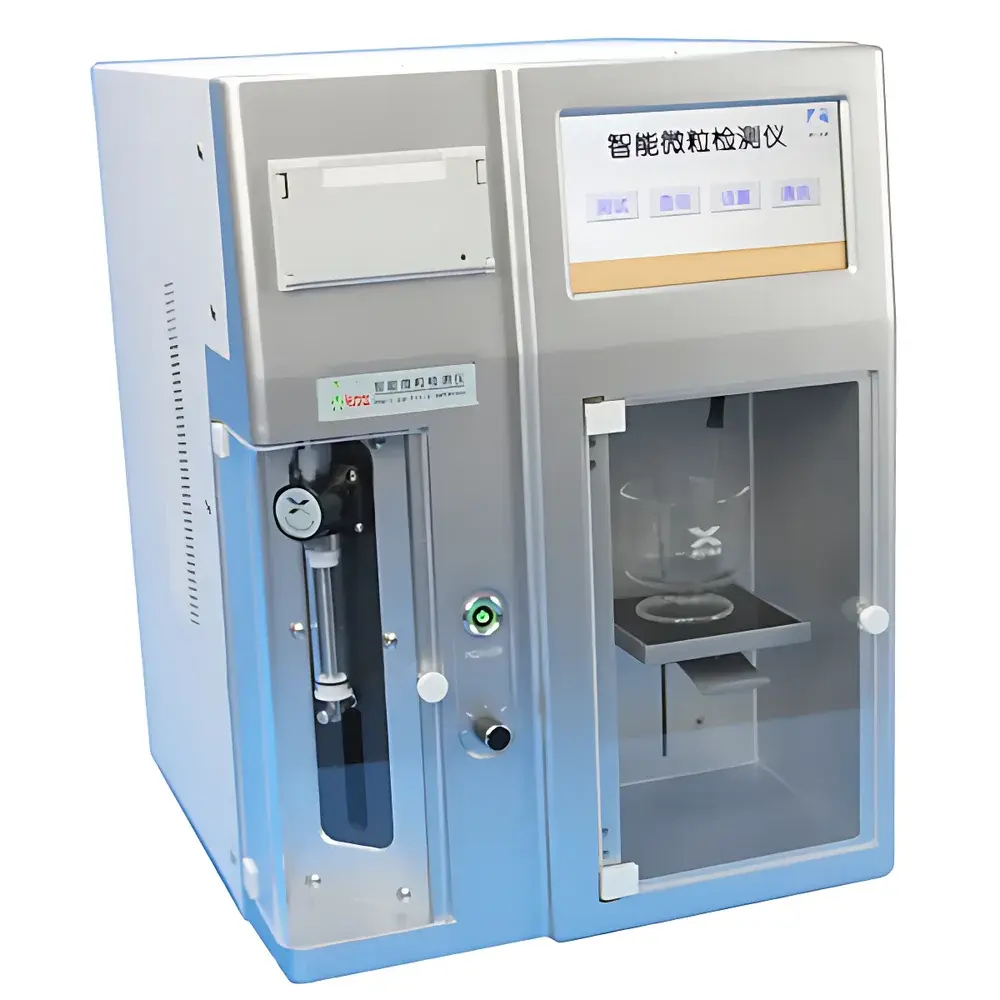
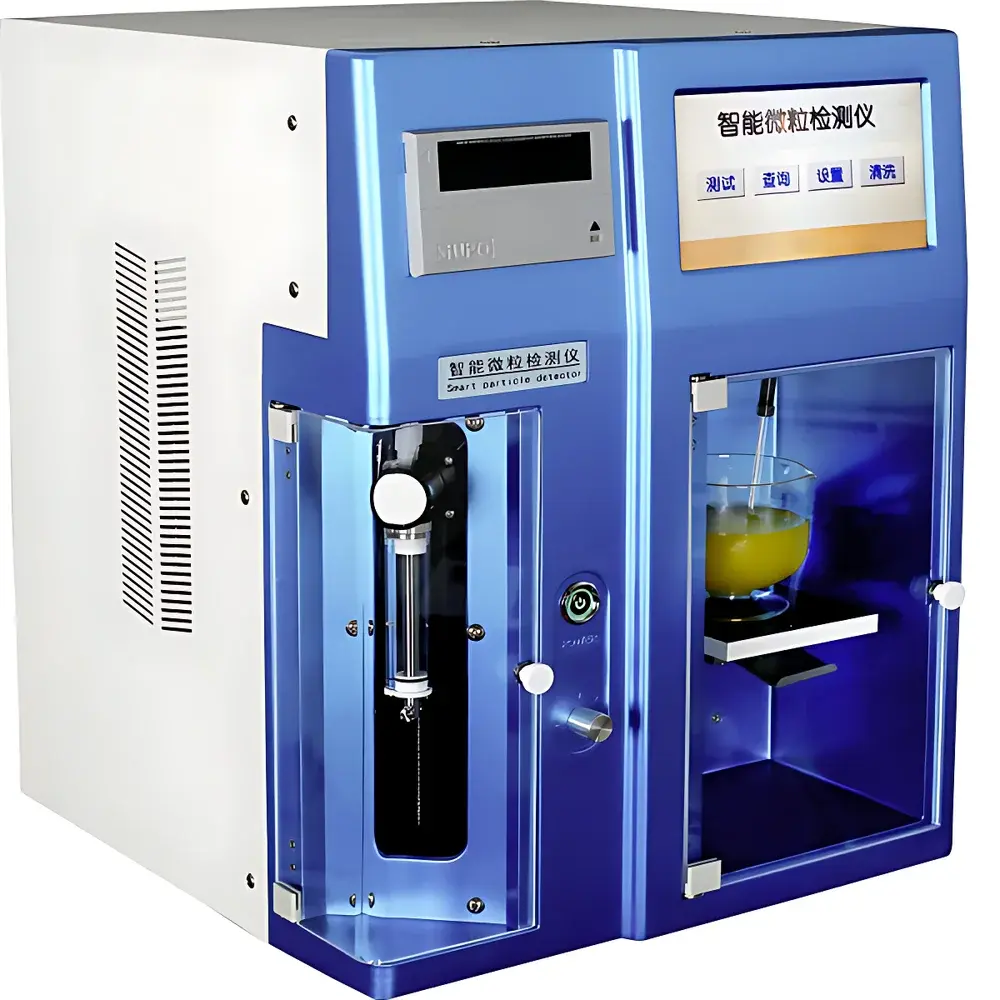
NeuronBC JWG-8A Pharmaceutical Particulate Analyzer
| Brand | NeuronBC |
|---|---|
| Model | JWG-8A |
| Origin | Beijing, China |
| Compliance | Chinese Pharmacopoeia (2015 Edition), USP <788>, USP <789>, ISO 21501-4 |
| Detection Principle | Light Obscuration (LO) / Single-Particle Optical Sizing (SPOS) |
| Sample Volume Range | 0.1–25 mL (adjustable via interchangeable high-pressure syringe pumps) |
| Laser Source | Imported stabilized diode laser (650 nm, Class 1) |
| Particle Size Range | 2–100 µm (calibrated with NIST-traceable polystyrene latex standards) |
| Sensitivity | ≥90% counting efficiency for particles ≥10 µm |
| Flow Cell Material | 316L stainless steel + PTFE-wetted path |
| Stirring System | Variable-speed glass paddle stirrer (0–300 rpm, ±2 rpm control accuracy) |
| Display | 10.1″ capacitive color touchscreen (1280×800) |
| Data Storage | Internal SSD (≥64 GB), supports CSV/PDF export |
| Software | NeuronBC PartiView™ v3.2 (audit-trail enabled in “S” variant), 21 CFR Part 11 compliant modules available |
| Connectivity | USB 3.0, Ethernet, RS-232 |
| Environmental Operation | 5–40 °C, 20–85% RH, altitude-independent performance (0–5000 m ASL) |
| Regulatory Support | IQ/OQ/PQ documentation package available |
Overview
The NeuronBC JWG-8A Pharmaceutical Particulate Analyzer is a light obscuration (LO)-based instrument engineered for quantitative detection and sizing of insoluble particulate matter in parenteral drug products and pharmaceutical packaging materials. It operates in strict accordance with the particle counting methodology defined in the Chinese Pharmacopoeia (ChP) 2015 Edition, USP “Particulate Matter in Injections”, USP “Particulate Matter in Ophthalmic Solutions”, and ISO 21501-4 “Determination of particle size distribution — Single particle optical sizing”. The system employs a stabilized 650 nm diode laser source coupled with a precision optical detection channel and a fully wetted flow path constructed from 316L stainless steel and PTFE—ensuring compatibility with aqueous, organic, oily, and low-conductivity formulations without dilution or electrolyte addition. Its altitude-independent high-pressure syringe pump architecture enables reproducible volumetric sampling across diverse geographical installations, including high-elevation laboratories.
Key Features
- Regulatory-aligned operation: Pre-configured test protocols for large-volume parenterals (LVPs), small-volume parenterals (SVPs), lyophilized powders, and primary packaging components per ChP, USP, and ISO requirements.
- Modular high-pressure sampling: Interchangeable syringe pump assemblies support precise volume delivery (0.1–25 mL) with ≤±0.5% volumetric accuracy—critical for viscous or shear-sensitive formulations.
- Chemically inert fluidics: Entire sample pathway—including inlet needle, flow cell, and outlet tubing—is fabricated from 316L SS and PTFE, enabling direct analysis of ethanol-based, propylene glycol, castor oil, and other aggressive solvents.
- Dynamic suspension control: Motor-driven glass paddle stirrer (0–300 rpm, digitally adjustable) maintains homogeneous particle dispersion throughout measurement, minimizing sedimentation bias and improving statistical representativeness.
- Real-time multichannel visualization: 10.1″ high-resolution touchscreen displays simultaneous particle count histograms, cumulative distributions, and pass/fail status against user-defined limits.
- Integrated data governance: Audit-trail-capable firmware (JWG-8A-S variant) logs all user actions, parameter changes, and calibration events with timestamps and operator IDs—supporting 21 CFR Part 11 compliance when deployed with validated IT infrastructure.
Sample Compatibility & Compliance
The JWG-8A accommodates a broad spectrum of pharmaceutical dosage forms without sample preparation: sterile injectables (clear and colored), lyophilized powders reconstituted in WFI or saline, ophthalmic solutions, suspensions, emulsions, and elastomeric closures or glass vials rinsed per extractables protocols. Its optical design eliminates interference from intrinsic solution coloration or low ionic strength—eliminating the need for conductivity enhancers that may alter particle surface behavior. All hardware and software configurations are documented to support qualification under GMP Annex 15 (IQ/OQ/PQ), and the instrument meets mechanical and electrical safety requirements per IEC 61010-1. Optional validation packages include full 3Q documentation, traceable calibration certificates (NIST-traceable PSL standards), and risk assessments aligned with ICH Q5C and Q9 principles.
Software & Data Management
NeuronBC PartiView™ v3.2 is a dedicated analytical platform providing automated data acquisition, real-time statistical processing (mean particle count per container, % RSD, trend analysis), and configurable reporting templates compliant with ALCOA+ principles. Raw event data is stored in encrypted binary format with metadata tagging (sample ID, operator, timestamp, method version). Export options include CSV (for LIMS integration), PDF (signed reports with digital signature fields), and XML (for enterprise laboratory informatics systems). The “S” model includes built-in electronic signatures, role-based access control, and immutable audit trails meeting FDA 21 CFR Part 11 Subpart B requirements. Network deployment supports centralized monitoring via HL7 or RESTful API interfaces compatible with major ELN/LIMS platforms.
Applications
- Final container testing of injectables per ChP Section 0903 and USP acceptance criteria (e.g., ≤25 particles ≥10 µm and ≤3 particles ≥25 µm per mL).
- Extractables and leachables assessment of rubber stoppers, syringe barrels, and IV bags using rinse solution analysis.
- Stability-indicating monitoring of subvisible particle formation during accelerated and long-term storage studies.
- Process validation support: filtration integrity verification, filling line monitoring, and cleaning validation residue quantification.
- Comparative evaluation of generic vs. innovator products in bioequivalence programs requiring particulate equivalence demonstration.
FAQ
Does the JWG-8A comply with USP and ISO 21501-4?
Yes—the optical configuration, calibration protocol, and software algorithms are validated against USP Appendix A and ISO 21501-4 Annex B requirements for resolution, counting efficiency, and size calibration traceability.
Can it analyze samples containing organic solvents like ethanol or DMSO?
Yes—the entire fluidic path uses chemically resistant 316L stainless steel and PTFE components, eliminating corrosion or swelling issues observed with standard acrylate or silicone-based systems.
Is 21 CFR Part 11 compliance supported out-of-the-box?
The JWG-8A-S variant includes embedded audit trail, electronic signature, and permission management features. Full Part 11 implementation requires site-specific IT validation, for which NeuronBC provides protocol templates and vendor qualification letters.
What validation documentation is included with purchase?
Standard shipment includes Factory Acceptance Test (FAT) report and installation checklist. Optional IQ/OQ/PQ packages—complete with test scripts, evidence records, and deviation handling procedures—are available upon request.
How is calibration verified and maintained?
Calibration is performed using NIST-traceable polystyrene latex (PSL) standards at 5, 10, 25, and 50 µm. Annual recalibration services include optical alignment verification, flow rate validation, and counting efficiency assessment per ISO 21501-4 Clause 8.






