
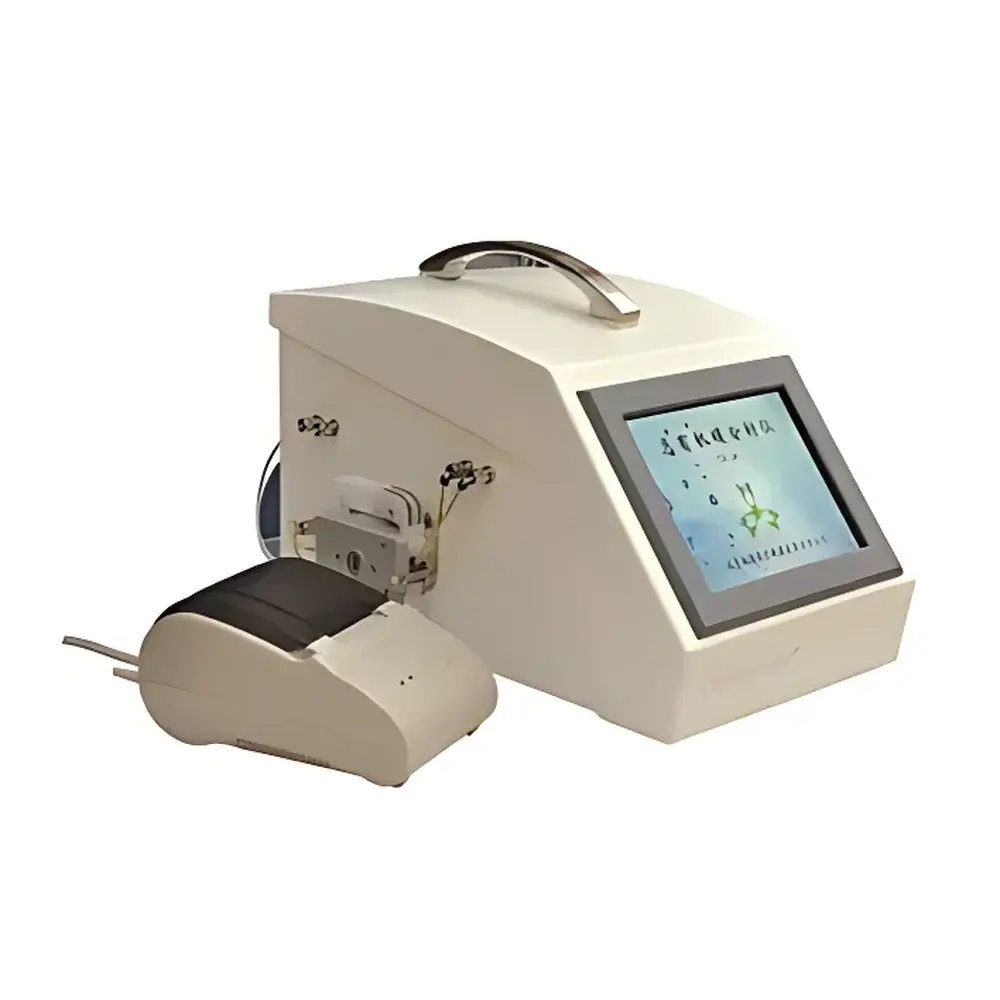
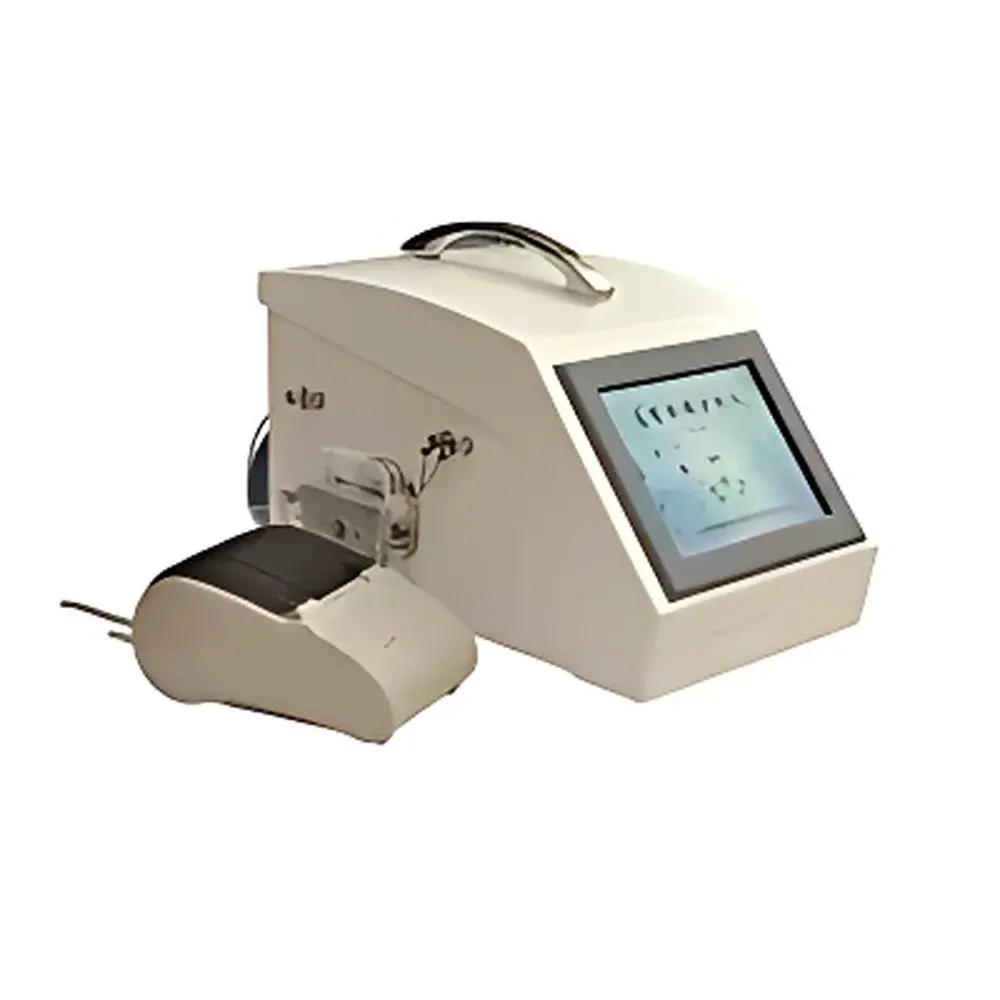
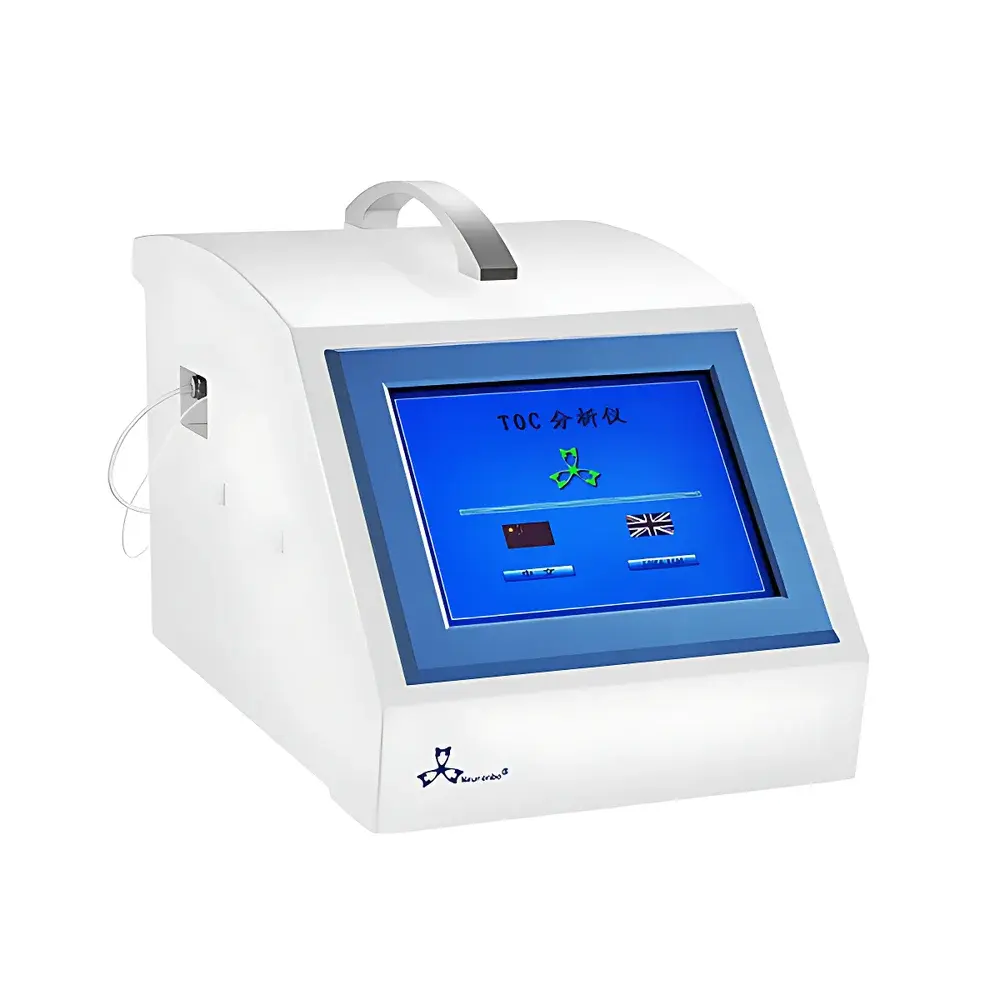
NeuronBC TA-1.0 Portable Total Organic Carbon (TOC) Analyzer
| Brand | NeuronBC |
|---|---|
| Origin | Beijing, China |
| Model | TA-1.0/TOC |
| Instrument Type | Portable TOC Analyzer |
| Detection Principle | Direct Conductivity Method |
| Oxidation Method | UV Photolysis (185/254 nm) |
| Measurement Range | 1–1000 ppb (as C) |
| Accuracy | ±3% of reading |
| Detection Limit | 1 ppb (as C) |
| Resolution | 1 ppb (as C) |
| Repeatability | ±3% RSD |
| Sample Temperature Range | 1–95 °C |
| Analysis Time | ≤5 min per sample |
| Power Supply | 220 V AC |
| Display | Color TFT Touchscreen |
| Data Storage | Internal memory for ≥10,000 test records |
| Compliance | Meets Chinese Pharmacopoeia 2020 Edition (ChP) Chapter 0682 requirements for purified water and WFI |
Overview
The NeuronBC TA-1.0 Portable Total Organic Carbon (TOC) Analyzer is a compact, field-deployable instrument engineered for precise quantification of organic carbon contamination in ultrapure water systems. It operates on the fundamental principle of differential conductivity measurement following selective oxidation—specifically, UV photolysis at dual wavelengths (185 nm for radical generation and 254 nm for direct organic bond cleavage) to convert non-volatile and semi-volatile organic compounds into CO₂. The resulting CO₂ dissolves in the aqueous matrix, forming carbonic acid, which alters solution conductivity proportionally to total carbon concentration. By measuring conductivity before (TIC) and after (TC) UV oxidation, the analyzer computes TOC as TC − TIC. This method eliminates reliance on carrier gases, chemical oxidants, or catalytic combustion—reducing consumables, operational complexity, and long-term cost of ownership. Designed explicitly for compliance-critical environments, the TA-1.0 delivers trace-level sensitivity (1 ppb detection limit) with metrological consistency required for pharmaceutical water validation under ChP 2020, USP , and EP 2.2.44.
Key Features
- Gas-free, reagent-free operation: No requirement for persulfate, ozone, or compressed air—minimizing maintenance, safety hazards, and calibration drift.
- UV-only oxidation architecture: Dual-wavelength low-pressure mercury lamp ensures robust, stable oxidation efficiency across diverse organic matrices without catalyst degradation.
- True portable form factor: Weighing <2.5 kg with integrated battery option (optional), enabling point-of-use testing at distribution loops, still points, or cleanroom sampling stations.
- Intuitive color touchscreen interface: 7-inch capacitive display with multilingual UI (English default), configurable user roles, and electronic signature support aligned with ALCOA+ data integrity principles.
- Real-time alarm and control output: Programmable upper-limit thresholds trigger visual/audible alerts and dry-contact relay signals for integration with SCADA or building management systems.
- IQ/OQ/PQ-ready documentation package: Includes factory calibration certificates, traceable standards verification reports, and protocol templates compliant with GMP Annex 15 and FDA Guidance for Process Validation.
Sample Compatibility & Compliance
The TA-1.0 is validated for use with purified water (PW), water for injection (WFI), and clean steam condensate per ISO 14644-1 Class 5–8 environments. It accommodates samples within 1–95 °C without pre-cooling or heating stages—critical for hot-loop PW monitoring. Its measurement range (1–1000 ppb as carbon) aligns precisely with pharmacopeial action limits: ChP specifies ≤500 ppb for PW and ≤100 ppb for WFI; USP permits ≤1000 ppb for PW and ≤100 ppb for WFI. The analyzer meets essential regulatory expectations for data security and auditability, including 21 CFR Part 11-compliant electronic records (user authentication, audit trail, immutable timestamps), GLP/GMP-aligned data archiving, and secure export via USB or optional Ethernet/Wi-Fi module.
Software & Data Management
Embedded firmware supports full-cycle data lifecycle management: acquisition, storage, retrieval, and export. All measurements are timestamped, user-annotated, and stored with full metadata—including sample ID, operator, location tag, temperature, and system status logs. Internal flash memory retains ≥10,000 complete test records with automatic overwrite protection. Data export options include CSV and PDF formats compatible with LIMS integration. Optional PC software provides advanced trend analysis, SPC charting (X-bar/R charts), and deviation reporting for CAPA workflows. Audit trails record all configuration changes, calibration events, and user logins—retained for minimum 12 months per internal retention policy.
Applications
- Pharmaceutical water systems: Routine offline verification and periodic online spot-checking of PW/WFI distribution networks during commissioning, routine monitoring, and cleaning validation cycles.
- Biotechnology facilities: Monitoring TOC in buffer preparation tanks, CIP rinse waters, and final product contact surfaces where organic residue may compromise sterility or stability.
- Medical device manufacturing: Verification of rinse water purity post-sterilization and pre-packaging processes per ISO 13485 requirements.
- Microelectronics: Ultrapure water QC in wafer fabrication lines where sub-ppb organic contamination induces defects or reduces etch uniformity.
- Academic and contract research labs: Method development for low-carbon water matrices requiring rapid turnaround and minimal infrastructure dependency.
FAQ
Does the TA-1.0 require daily calibration or standard addition?
No—factory-calibrated sensors and stable UV source output enable drift-free operation for ≥30 days between verification checks using certified KHP or sucrose standards.
Can it be used for online continuous monitoring?
Yes—equipped with 4–20 mA analog output and Modbus RTU (RS-485), it integrates directly with PLCs or DCS for real-time TOC trending without intermediate sampling.
Is method equivalence to USP demonstrated?
Yes—validation reports include side-by-side comparison data against certified reference materials (CRM) and interlaboratory precision studies meeting USP system suitability criteria.
What is the expected lifetime of the UV lamp?
The dual-wavelength low-pressure mercury lamp is rated for ≥12,000 hours of operation, with built-in usage counter and predictive end-of-life warning.
How is data integrity ensured during power interruption?
Non-volatile memory preserves all unsaved measurements and audit trail entries during unexpected shutdown; resume-on-power-up functionality restores active session state.
Related Products







