
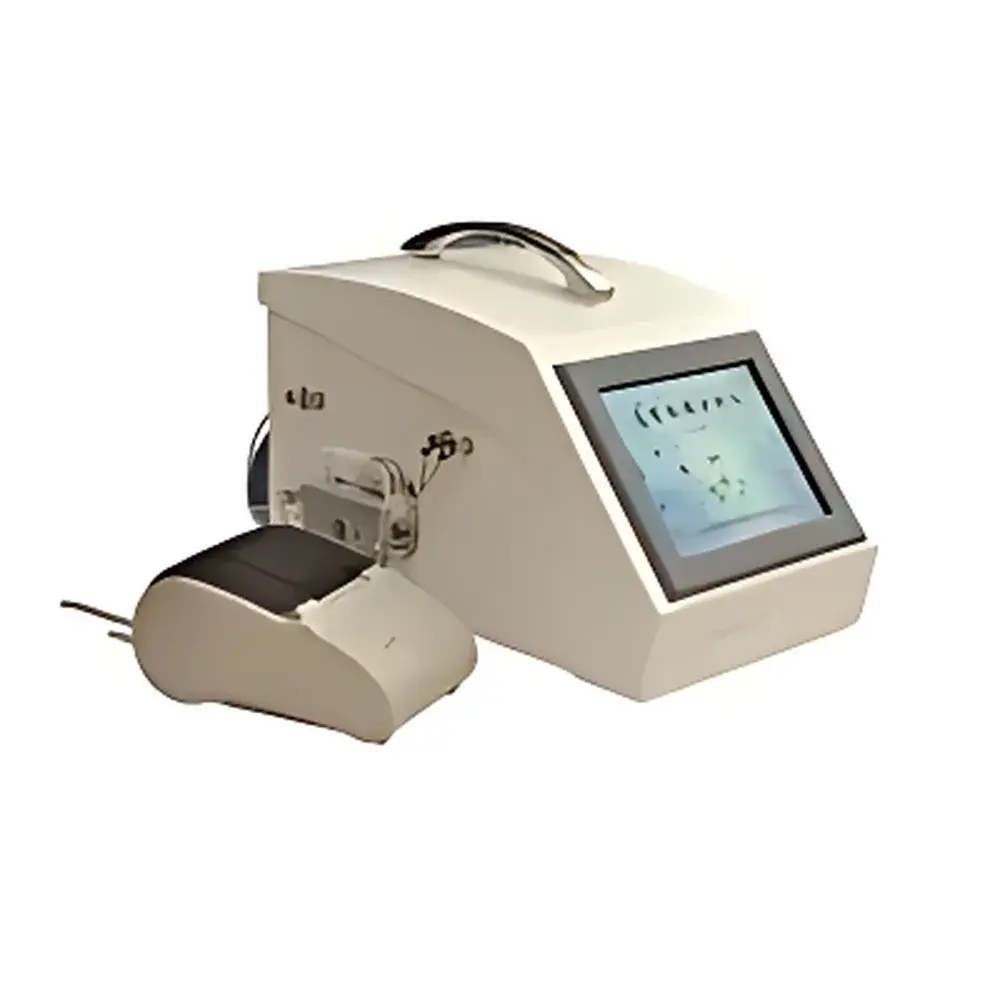
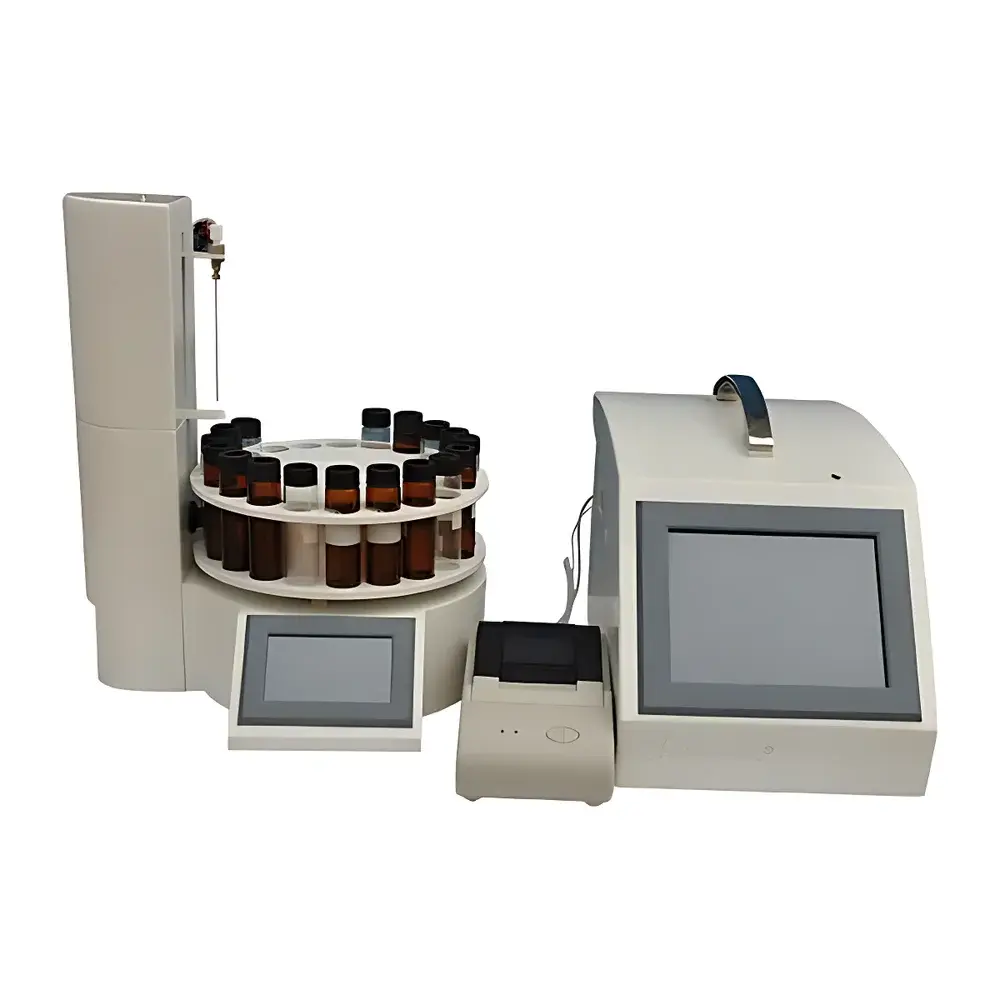
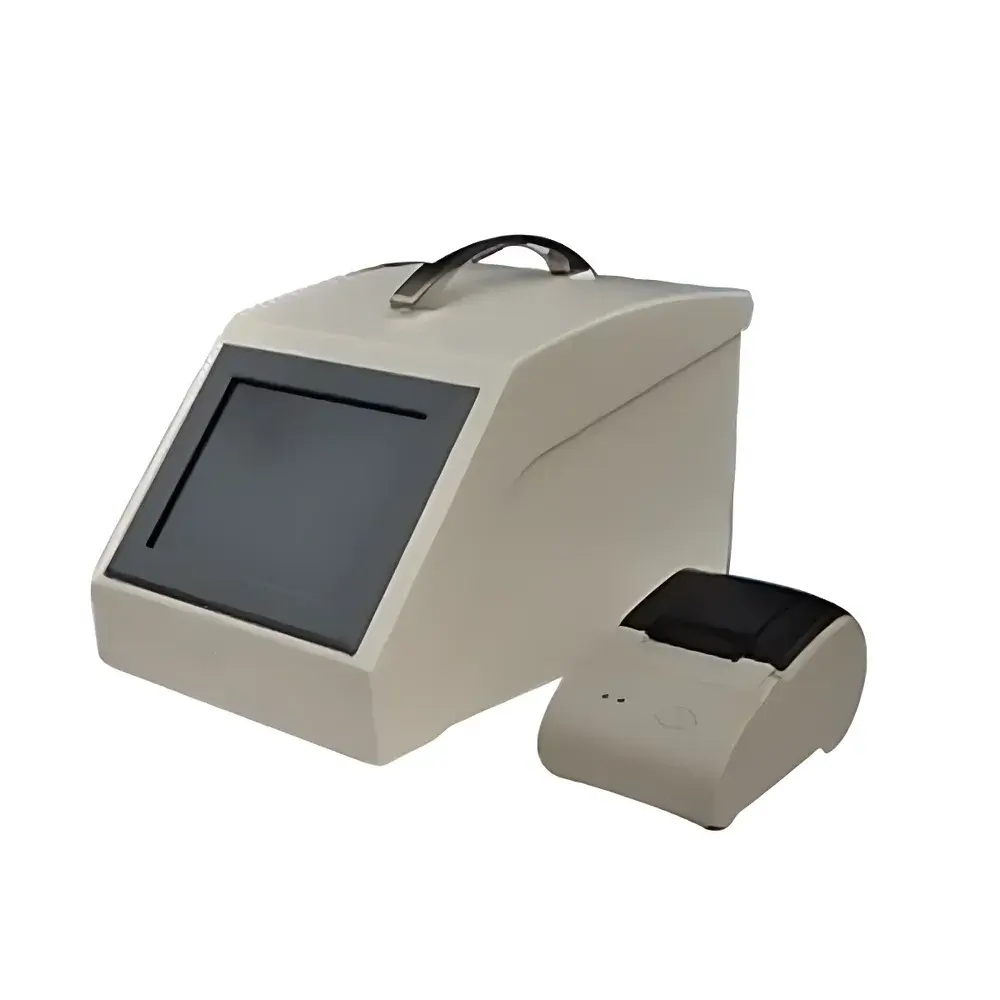
NeuronBC TA-1.0 Laboratory Total Organic Carbon (TOC) Analyzer
| Brand | NeuronBC |
|---|---|
| Origin | Beijing, China |
| Model | TA-1.0 |
| Instrument Type | Benchtop Laboratory TOC Analyzer |
| Detection Principle | Direct Conductivity Detection |
| Oxidation Method | UV Photocatalytic Oxidation (254 nm) |
| Measurement Range | 0.001–1.0 mg/L (1–1000 ppb) |
| Accuracy | ±3% of reading |
| Resolution | 0.001 mg/L |
| Detection Limit | 0.001 mg/L |
| Repeatability | ±3% RSD |
| Power Supply | 100–240 VAC, 50 Hz, 120 W |
| Dimensions (L×W×H) | 400 × 240 × 270 mm |
| Weight | 8.5 kg |
| Sample Temperature Range | 1–99 °C |
| Audit Trail | 16-event log with timestamped entries |
| User Access Control | 4-tier role-based authentication |
| Data Export | USB flash drive support |
| Data Storage Capacity | >5000 test records |
| Display | Color capacitive touchscreen |
| Compliance | Meets Chinese Pharmacopoeia 2020 Edition (ChP) General Chapter <0682>, FDA 21 CFR Part 11 (electronic records & signatures), and GLP/GMP-aligned validation protocols (IQ/OQ/PQ support available) |
Overview
The NeuronBC TA-1.0 Laboratory Total Organic Carbon (TOC) Analyzer is a benchtop, offline analytical system engineered for precise quantification of total organic carbon in ultrapure water matrices. It operates on the principle of UV photocatalytic oxidation coupled with direct conductivity detection — a method widely accepted for low-conductivity, low-TOC samples where catalytic efficiency and baseline stability are critical. In this process, dissolved organic compounds are oxidized to CO₂ under 254 nm ultraviolet irradiation in the presence of a TiO₂-coated rotating quartz reaction tube. The resulting CO₂ dissolves in the carrier stream, forming carbonic acid and inducing a measurable increase in solution conductivity. This change is detected by a high-stability, temperature-compensated conductivity sensor, enabling trace-level TOC determination without chemical reagents, carrier gases, or acidic oxidants. Designed specifically for regulated environments, the TA-1.0 meets ChP requirements for pharmaceutical water testing and supports full lifecycle compliance through integrated audit trail, electronic signature capability, and structured validation documentation.
Key Features
- Reagent-free UV photocatalytic oxidation using a TiO₂-coated rotating quartz tube — eliminates need for persulfate, acid, oxygen, or nitrogen gas supplies
- Direct conductivity detection architecture optimized for ultrapure water (resistivity >15 MΩ·cm), minimizing interference from inorganic ions
- Integrated peristaltic pump and delay coil for controlled residence time and complete CO₂ dissolution prior to measurement
- Color capacitive touchscreen interface with intuitive workflow navigation and real-time signal monitoring
- Four-level user permission system with password protection, aligned with FDA 21 CFR Part 11 requirements for electronic records
- Automated system suitability testing (SST) and calibration verification sequences; supports IQ/OQ/PQ execution with vendor-supplied protocols
- Configurable limit alarm function — triggers audible/visual alert when sample TOC exceeds user-defined specification thresholds
- Onboard data management: >5000 test records stored with date/time stamp, operator ID, and method version
Sample Compatibility & Compliance
The TA-1.0 is validated for offline analysis of pharmacopeial waters including Purified Water (PW), Water for Injection (WFI), and Ultrapure Water (UPW) per USP , EP 2.2.44, and ChP . Its low detection limit (0.001 mg/L) and narrow dynamic range (0.001–1.0 mg/L) ensure optimal sensitivity for clean water applications where background interference must be minimized. The instrument conforms to ISO/IEC 17025 principles for testing laboratories and supports GxP-compliant operation via configurable audit trail (16 event types, including login/logout, method change, calibration, result override), electronic signature capture, and immutable data archiving. All firmware and software modules undergo periodic revision control and are documented to support regulatory inspections.
Software & Data Management
Data acquisition, processing, and reporting are managed through embedded firmware with no external PC dependency. Raw conductivity signals are digitally filtered and converted to TOC concentration using a linearized calibration curve derived from potassium hydrogen phthalate (KHP) standards. All measurements include automatic temperature compensation (1–99 °C). Audit trail entries are time-stamped, non-erasable, and searchable by date range or operator. Data export is supported via USB mass storage mode — outputs CSV-formatted files compatible with LIMS integration. Optional thermal printer interface enables hardcopy generation of reports containing sample ID, method parameters, raw signal trace, final result, and operator signature field.
Applications
The TA-1.0 serves as a primary TOC measurement platform in quality control laboratories across pharmaceutical manufacturing, biotechnology R&D, semiconductor fabrication, and power generation facilities. Typical use cases include routine batch release testing of PW/WFI, cleaning validation of process equipment (e.g., stainless-steel piping, tanks, filters), qualification of UPW distribution loops, and monitoring of pretreatment stages in high-purity water systems. Its offline design ensures operational independence from plant utilities while maintaining metrological traceability to NIST-traceable KHP reference materials. The analyzer is routinely deployed in conjunction with conductivity analyzers and particle counters to form a comprehensive water quality assurance suite.
FAQ
Does the TA-1.0 require carrier gas or chemical oxidants during operation?
No — it uses only UV light (254 nm) and a TiO₂ photocatalyst for oxidation, eliminating dependence on oxygen, nitrogen, persulfate, or acid reagents.
Is the instrument compliant with FDA 21 CFR Part 11?
Yes — it implements role-based access control (4 tiers), electronic signatures, and an immutable, time-stamped audit trail meeting Part 11 requirements for closed systems.
Can the TA-1.0 be used for online monitoring?
No — it is designed exclusively for offline, grab-sample analysis in laboratory settings. Online TOC monitoring requires dedicated flow-cell configurations not supported by this model.
What calibration standards are recommended?
Potassium hydrogen phthalate (KHP) solutions prepared in high-purity water are the primary standard; calibration verification is performed using sucrose and 1,4-benzoquinone per pharmacopeial guidelines.
How is system suitability verified?
Automated SST includes recovery testing at 500 ppb TOC level using KHP, repeatability assessment (n=3), and blank response evaluation — all executed within the instrument’s built-in protocol engine.







