
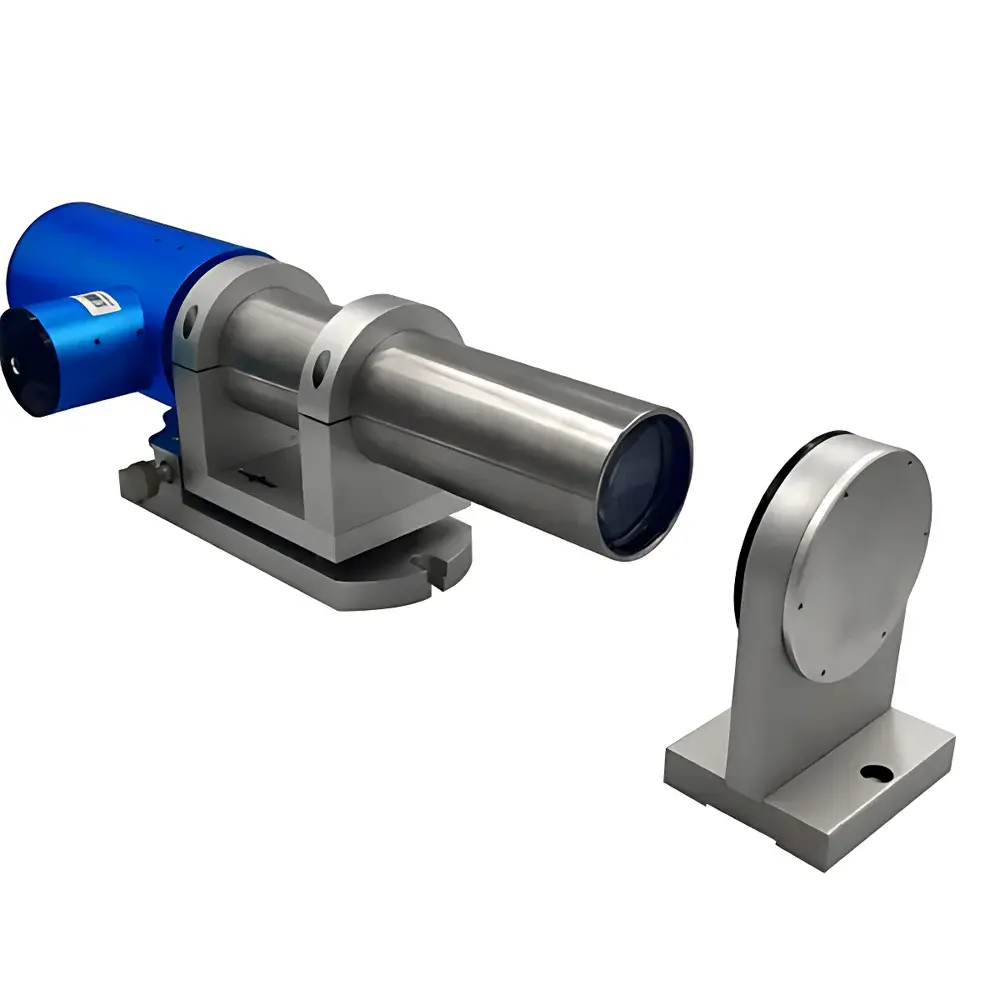
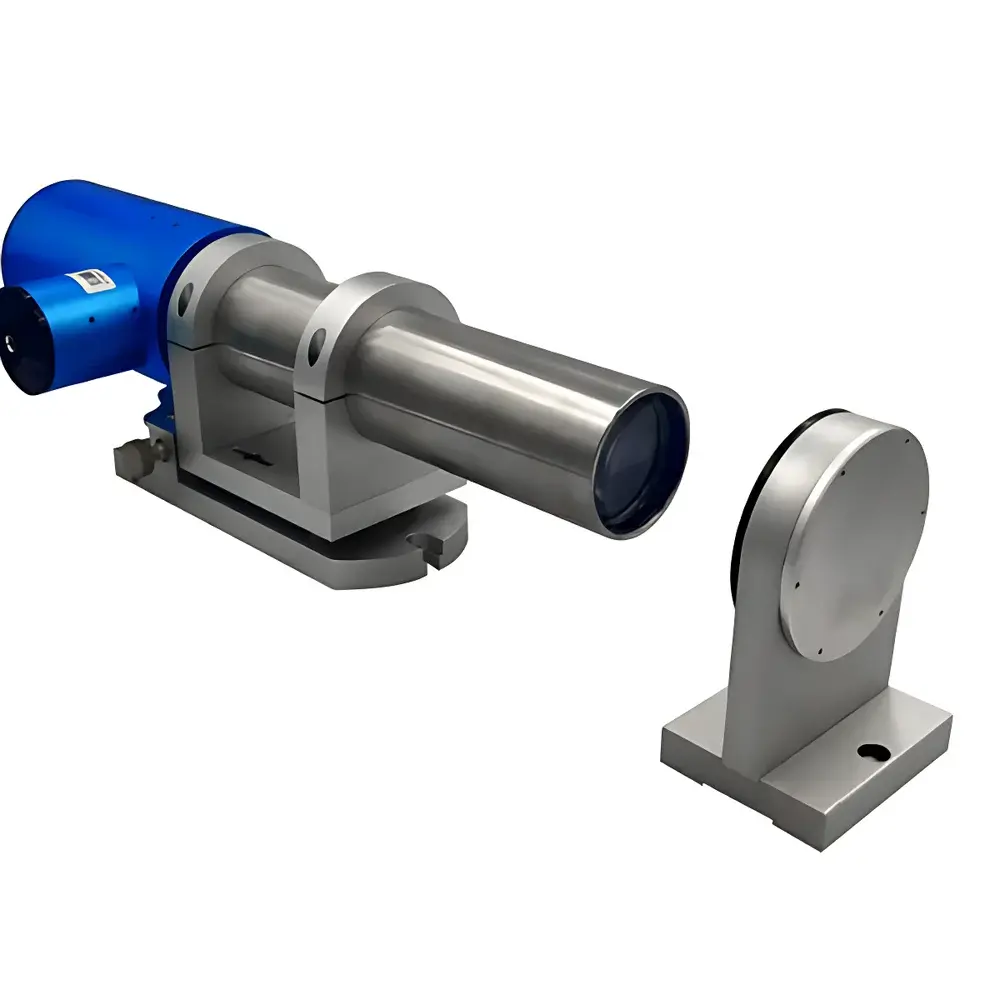
Yanrun YRMAT3028H Dual-Axis Electronic Autocollimator (1″ Accuracy)
| Brand | Yanrun |
|---|---|
| Origin | Shanghai, China |
| Manufacturer Type | Direct Manufacturer |
| Model | YRMAT3028H |
| Focal Length | 300 mm |
| Aperture | 60 mm |
| Measurement Range | 0–28 m |
| Detector | High-Resolution Image Sensor |
| Display Resolution | 0.01″ to 1″ |
| Field of View (X/Y) | 2200″ × 1800″ |
| Central Accuracy | ±1″ (±100″ full range) |
| Light Source | Long-Life Semiconductor LED |
| Interface | USB 2.0 |
| Software | Autocollimator Control Software V2.0 (incl. Straightness Module) |
| Dimensions (L×W×H) | 388 × 135 × 125 mm |
| OS Requirement | Windows 7 or later, 64-bit |
Overview
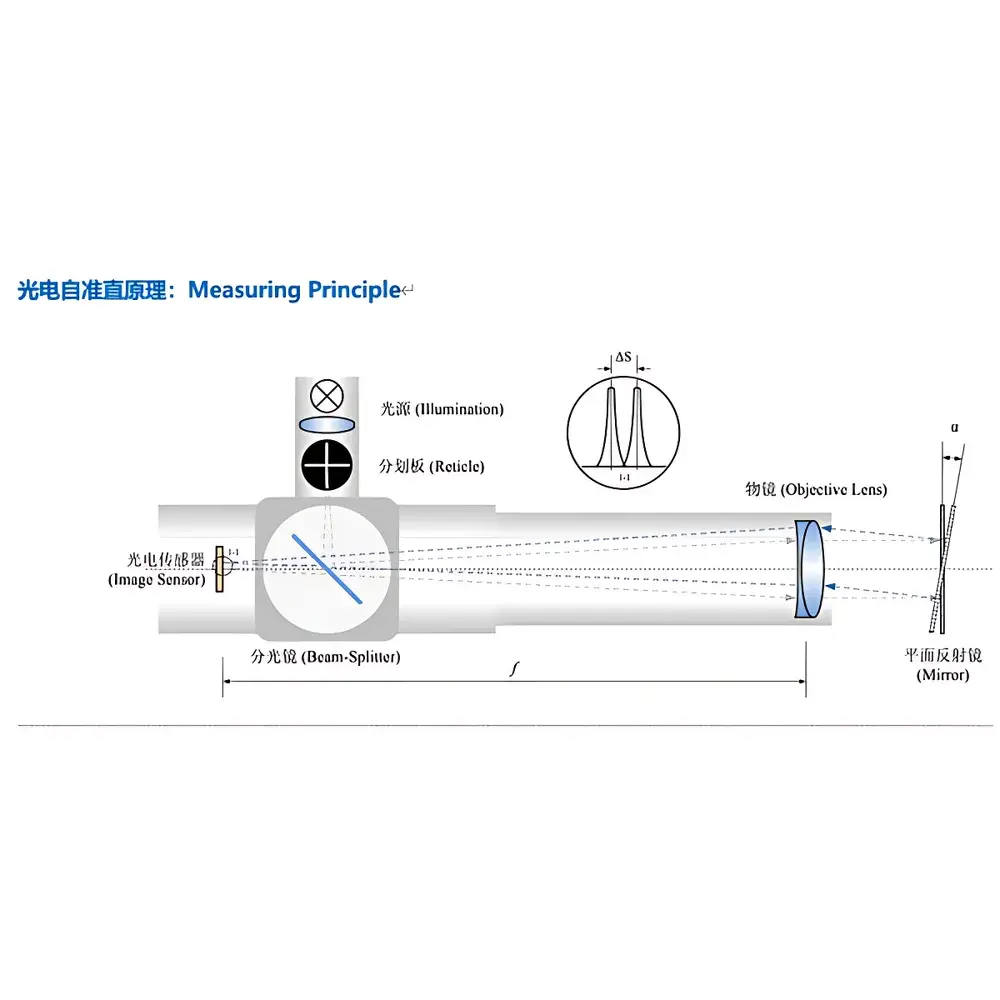
The Yanrun YRMAT3028H Dual-Axis Electronic Autocollimator is an advanced optical metrology instrument engineered for high-precision angular measurement in industrial metrology, precision assembly, and calibration laboratories. Based on the fundamental principle of autocollimation—where a collimated beam is reflected back from a plane mirror and its displacement on a high-resolution image sensor is translated into angular deviation—the YRMAT3028H delivers real-time, non-contact angular assessment along both X and Y axes simultaneously. Its 300 mm focal length and 60 mm clear aperture support stable beam formation over extended working distances up to 28 meters, while the integrated semiconductor LED light source ensures consistent illumination intensity, minimal thermal drift, and >20,000 hours of operational lifetime—critical for long-duration alignment tasks and GLP-compliant calibration workflows. Unlike traditional visual autocollimators requiring subjective eyepiece interpretation, the YRMAT3028H employs digital imaging with sub-pixel centroid detection algorithms, eliminating parallax and observer-dependent bias. The system’s native 1 arcsecond (1″) central accuracy—traceable to NIST-traceable angle standards—is maintained across its full angular field of view (2200″ × 1800″), making it suitable for ISO 230-1 geometric testing and ASME B89.3.7 alignment verification.
Key Features
- Dual-axis synchronous measurement: Simultaneous acquisition of pitch and yaw deviations without mechanical reorientation.
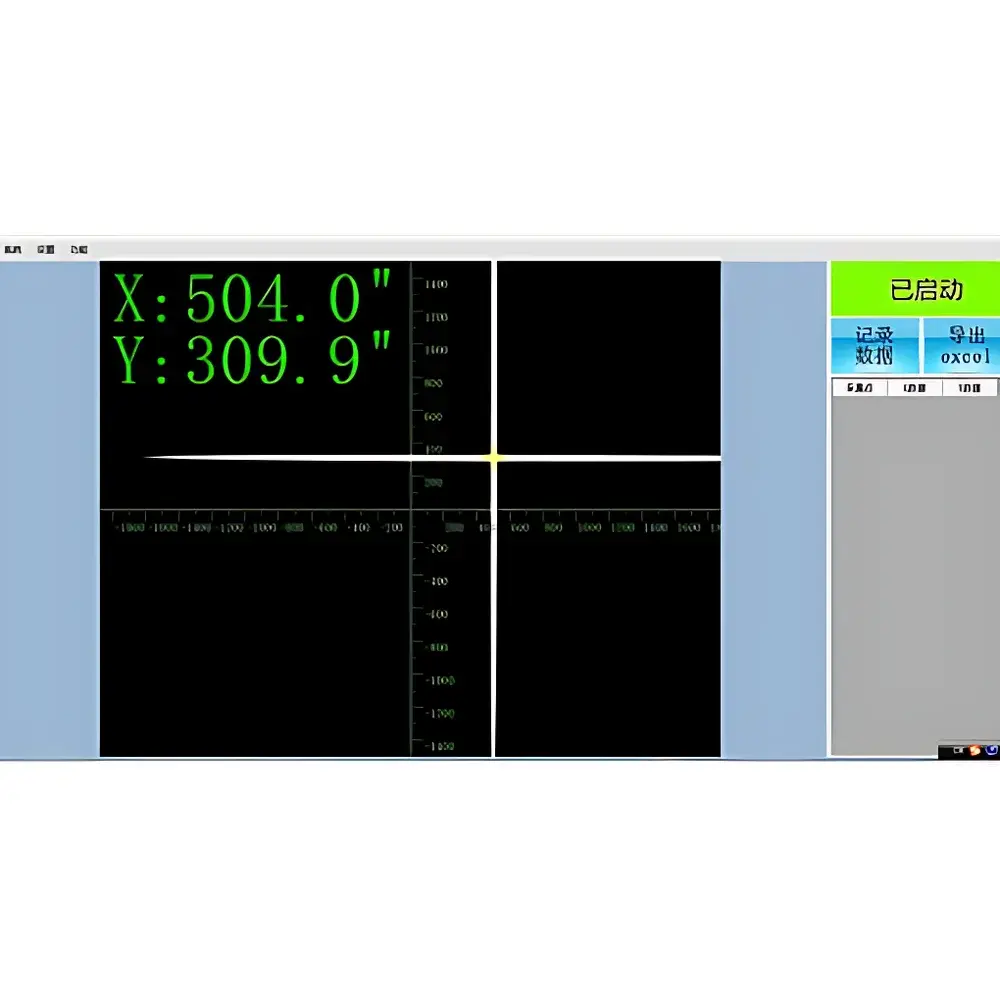
- Real-time electronic reticle display: On-screen crosshair overlay with dynamic feedback enables rapid mirror alignment and reduces setup time by >40% compared to manual methods.
- High-stability optical-mechanical architecture: Precision-machined aluminum housing with low-coefficient thermal design minimizes drift during multi-hour measurements.
- USB 2.0 plug-and-play interface: Compatible with standard industrial PCs; no external power supply required—powered entirely via bus.
- Embedded digital signal processing: Real-time centroid calculation, noise suppression filtering, and automatic zero-point compensation are performed onboard prior to data transmission.
- Scalable resolution modes: Selectable display resolutions from 1″ down to 0.01″ to balance speed and sensitivity per application requirement.
Sample Compatibility & Compliance
The YRMAT3028H is compatible with standard first-surface mirrors (≥λ/10 flatness, ≥95% reflectivity at 635 nm), retroreflectors, and optical flats used in machine tool calibration and optical bench alignment. It supports compliance with ISO 10360-8 (coordinate measuring systems), ISO 230-1 (machine tool testing), and ASTM E2919 (standard practice for angular measurement using autocollimators). When operated with documented procedures and traceable reference mirrors, measurement records satisfy requirements for ISO/IEC 17025 accredited laboratories. The system’s software audit trail functionality—including user login timestamps, parameter change logs, and raw image archiving—enables adherence to FDA 21 CFR Part 11 electronic record controls when deployed in regulated manufacturing environments.
Software & Data Management
The included Autocollimator Control Software V2.0 provides a unified interface for instrument control, data visualization, and geometric error evaluation. Core modules include straightness analysis (per ISO 230-2), tilt-compensated angular trending, and batch report generation. All measurement data export natively to .CSV and Excel-compatible formats (.XLSX) with embedded metadata (timestamp, operator ID, environmental conditions if logged externally). Raw image frames (12-bit grayscale TIFF) are stored alongside processed results, supporting retrospective uncertainty analysis per GUM (JCGM 100:2008). Optional add-on modules—such as Plane Surface Analysis, Perpendicularity Evaluation, and Rotary Table Error Mapping—extend the platform’s capability to full six-degree-of-freedom characterization without hardware modification.
Applications
- Precision alignment of CNC machine tool spindles, guideways, and linear stages.
- Verification of squareness between orthogonal axes in coordinate measuring machines (CMMs) and multi-axis machining centers.
- Calibration of optical benches, interferometer baseplates, and laser cavity mounts in photonics R&D labs.
- In-process monitoring of bearing pre-load angles and gear mesh alignment in aerospace powertrain assembly.
- Flatness assessment of granite surface plates using bridge-mounted scanning protocols.
- Educational use in undergraduate optics and precision engineering laboratories for hands-on autocollimation theory demonstration.
FAQ
What is the maximum recommended measurement distance for optimal accuracy?
For ≤1″ uncertainty, the recommended working distance is ≤10 meters; at 28 meters, angular resolution degrades to ~2.5″ due to diffraction-limited spot size expansion.
Can the YRMAT3028H perform dynamic angular tracking?
Yes—when paired with optional high-frame-rate acquisition firmware and external trigger synchronization, it supports sampling rates up to 50 Hz for vibration-induced angular deviation analysis.
Is third-party software integration supported?
The device exposes a documented DLL-based API and SCPI-like command set, enabling integration with LabVIEW, MATLAB, Python (via PyUSB), and custom MES/QMS platforms.
Does the system require periodic factory recalibration?
Annual verification against a certified angle standard (e.g., optical polygon or laser interferometer) is recommended per ISO/IEC 17025 Clause 6.5; no user-serviceable optical adjustments are provided.
Are environmental operating conditions specified?
Rated for 15–30 °C ambient temperature, <70% RH non-condensing; performance specifications assume stabilized thermal conditions for ≥30 minutes prior to critical measurements.




