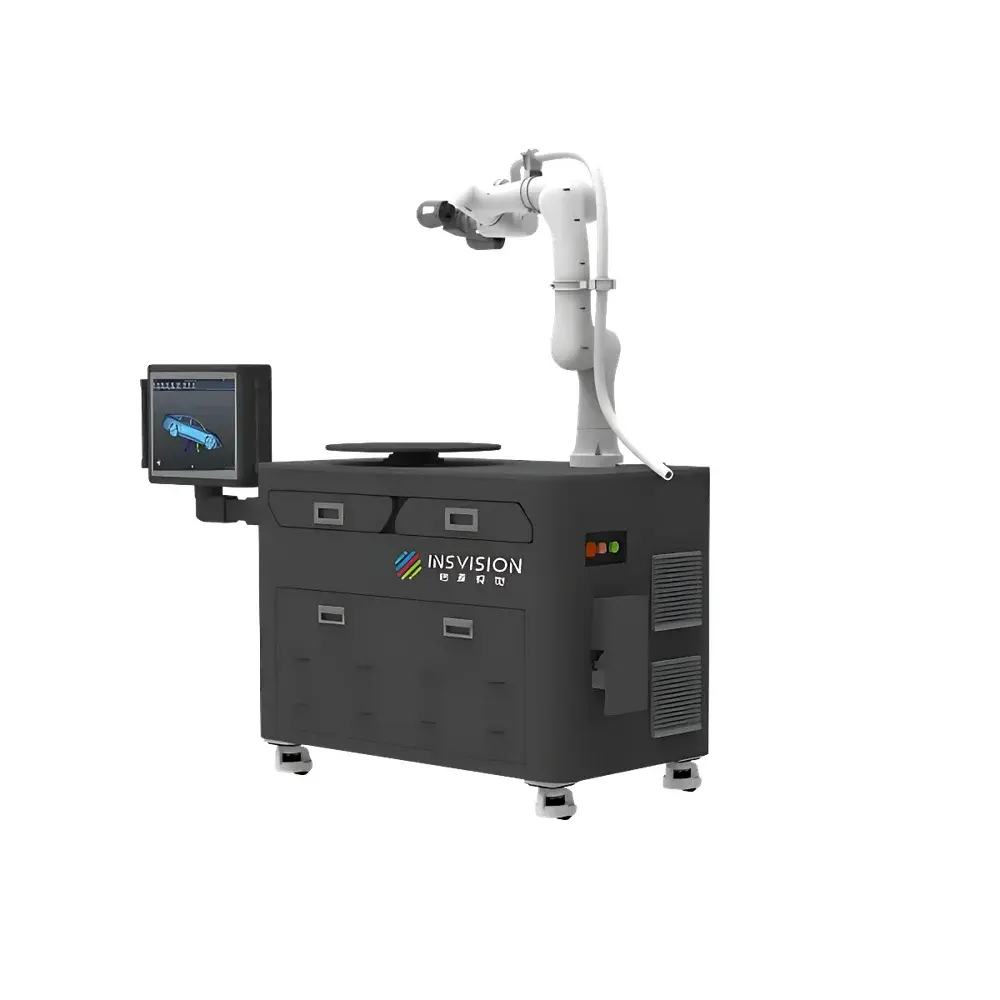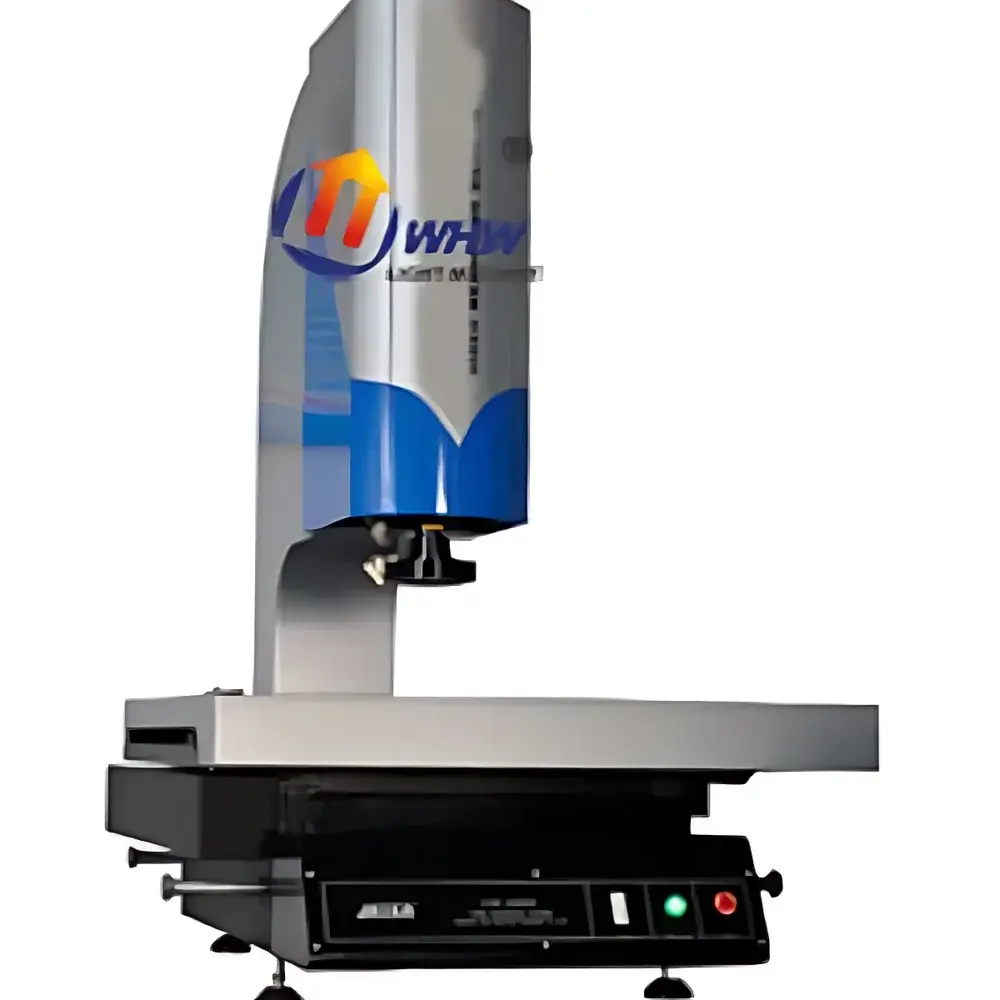
YANRUN YR-N4030 Entry-Level Automated Vision Measuring System
| Brand | YANRUN |
|---|---|
| Origin | Shanghai, China |
| Manufacturer Type | Direct Manufacturer |
| Country of Origin | China |
| Model | YR-N4030 |
| Operation Mode | Fully Automatic |
| X-Y Travel Range | 400 × 300 mm |
| Overall Dimensions (W×D×H) | 1050 × 750 × 1735 mm |
| Measurement Accuracy | X/Y-axis ≤ (3 + L/200) µm |
| Encoder Resolution | 0.5 µm (High-Accuracy Linear Encoders) |
| Camera | Sony Color CCD Sensor |
| Optical System | Fixed-Magnification Zoom Lens (Optional: Auto-Zoom Lens or Laser Probe Module) |
| Illumination | Programmable LED Ring Light (Surface Illumination) and Profile Light with Brightness Control Synchronized to Magnification |
| Software | Proprietary Automated Vision Metrology Suite |
| Power Supply | AC 220 V ±10%, 50 Hz |
| Environmental Requirements | 20 °C ±3 °C, 45–75% RH |
Overview
The YANRUN YR-N4030 Entry-Level Automated Vision Measuring System is an industrial-grade coordinate metrology platform engineered for high-reproducibility 2D and 3D geometric measurement of small-to-medium-sized mechanical and electronic components. Based on the principle of optical projection metrology—where high-resolution digital imaging, calibrated stage motion, and sub-pixel edge detection algorithms converge—the system delivers traceable dimensional data without physical contact. Its rigid granite base, thermally stable frame, and precision linear encoders ensure mechanical stability under standard metrology lab conditions (20 °C ±3 °C, 45–75% RH). Designed as a cost-optimized solution for quality control labs requiring automated repeatability but not ultra-high-end resolution, the YR-N4030 bridges the gap between manual toolmakers’ microscopes and fully integrated CMM-based vision systems.
Key Features
- Fully automatic operation with programmable measurement routines, eliminating operator-dependent variability in positioning and feature extraction.
- 400 mm × 300 mm motorized X-Y travel range accommodates common PCBs, machined housings, connector assemblies, and precision stamped parts.
- High-accuracy linear encoders with 0.5 µm resolution provide real-time position feedback, enabling compliance with ISO 10360-7 and VDI/VDE 2617 Part 8 guidelines for vision system performance verification.
- Sony color CCD sensor coupled with a fixed-magnification zoom lens ensures consistent image fidelity across the field of view; optional auto-zoom and laser probe modules extend capability to height profiling and transparent substrate thickness analysis.
- Intelligent dual-illumination system—programmable ring light (surface illumination) and coaxial profile light—dynamically adjusts intensity based on objective magnification and part reflectivity, improving edge contrast for robust sub-pixel edge detection.
- Robust mechanical architecture with vibration-damped granite base minimizes thermal drift and mechanical hysteresis, supporting long-duration batch measurements with maintained repeatability.
Sample Compatibility & Compliance
The YR-N4030 supports measurement of metallic, plastic, ceramic, and glass components within its working volume. It is routinely deployed for GD&T evaluation—including position, concentricity, parallelism, and profile of surface—on parts manufactured via CNC milling, injection molding, sheet metal stamping, and semiconductor packaging. The system meets baseline requirements for ISO/IEC 17025-compliant calibration laboratories when operated within specified environmental parameters and validated using certified gauge blocks and step gauges. While not pre-certified for FDA 21 CFR Part 11, its software architecture supports audit-trail-enabled user accounts and measurement log export (CSV/PDF), facilitating internal GLP/GMP documentation workflows.
Software & Data Management
The proprietary vision metrology software provides intuitive CAD-based alignment, automated feature recognition (lines, circles, arcs, slots, polygons), and customizable reporting templates. All measurement sequences are scriptable via built-in macro language, enabling integration into factory MES environments through standardized data export (DXF, STEP, CSV, XML). Raw image capture, coordinate logs, and tolerance pass/fail flags are time-stamped and stored with user ID metadata—supporting basic traceability requirements. Software updates are delivered via secure offline installer packages; no cloud dependency or remote telemetry is implemented, preserving data sovereignty in regulated manufacturing settings.
Applications
- Mechanical component inspection: shaft diameters, hole positions, thread pitch, flatness of machined faces.
- Electronics manufacturing: SMT pad geometry, BGA ball placement, flex circuit trace width, solder mask opening verification.
- Precision instrumentation: gear tooth profile, dial caliper scale linearity, pressure sensor diaphragm flatness.
- Plastic and rubber parts: wall thickness uniformity, gasket contour conformity, snap-fit feature dimensions.
- Aerospace and defense subcontracting: turbine blade root geometry, fastener hole pattern accuracy, composite layup registration marks.
- Optical component QA: lens mount concentricity, filter substrate parallelism, IR window surface flatness (with optional laser probe).
FAQ
What standards does the YR-N4030 comply with for measurement uncertainty?
The system’s stated accuracy formula (X/Y ≤ 3 + L/200 µm) aligns with ISO 10360-7 Annex B methodology for vision system verification; users must perform periodic validation using traceable artifacts per their internal quality procedure.
Can the system measure transparent materials such as glass or acrylic?
Yes—when equipped with the optional laser displacement probe module, it performs non-contact thickness and surface flatness measurement on transparent substrates up to 25 mm thick.
Is the software compatible with Windows 10/11 64-bit operating systems?
Yes, the current software release supports Windows 10 Pro (22H2) and Windows 11 Pro (23H2) with .NET Framework 4.8 and DirectX 12 runtime.
Does the system support multi-sensor fusion (e.g., vision + tactile probe)?
The base configuration is vision-only; tactile probing is not supported. However, the optional laser probe enables non-contact Z-height acquisition synchronized with XY imaging.
What is the recommended recalibration interval?
YANRUN recommends annual verification against certified reference standards; frequency may increase based on usage intensity, environmental fluctuations, or internal quality policy requirements.