
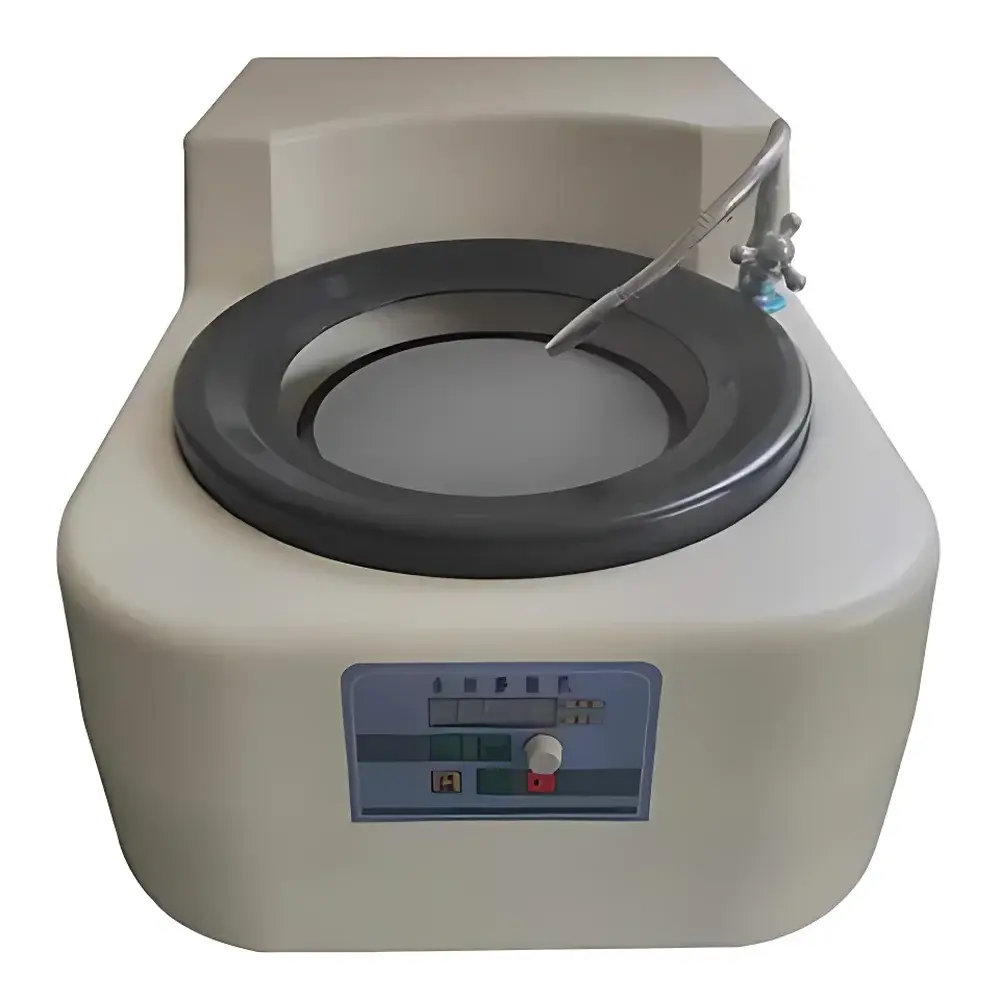
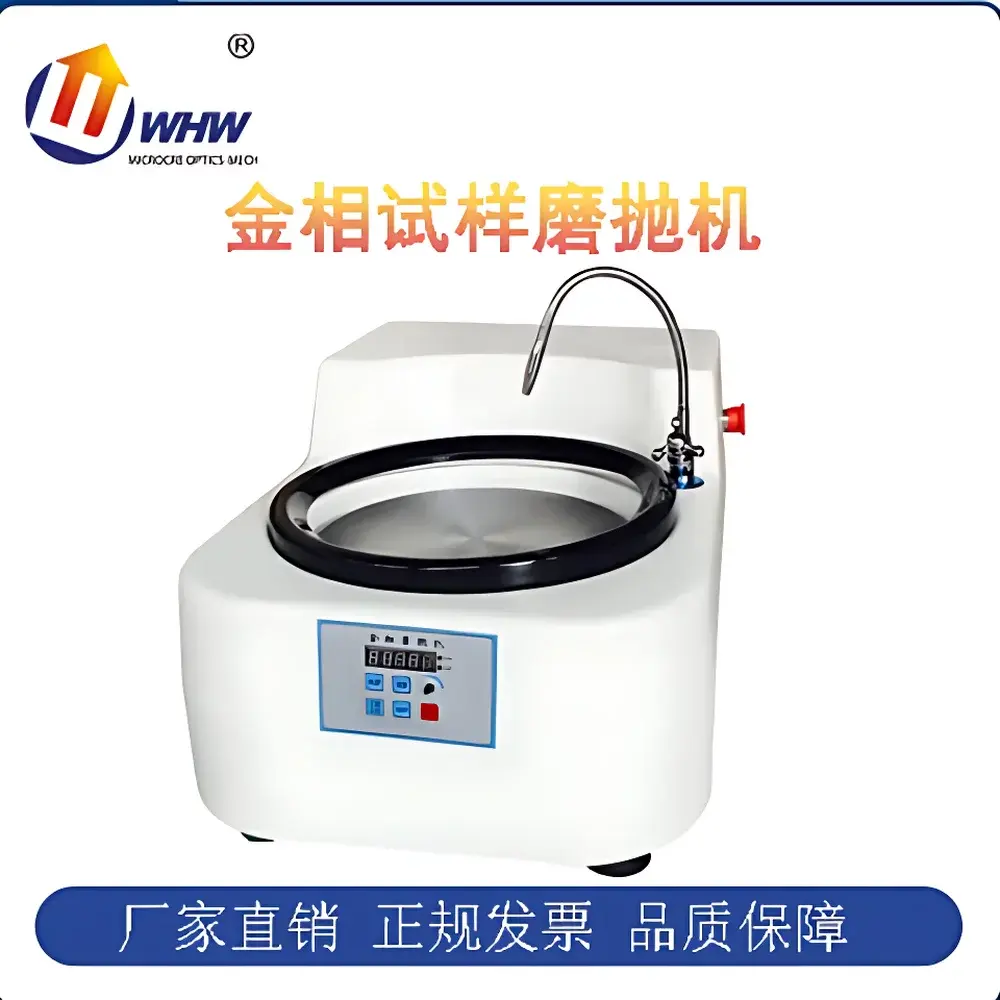
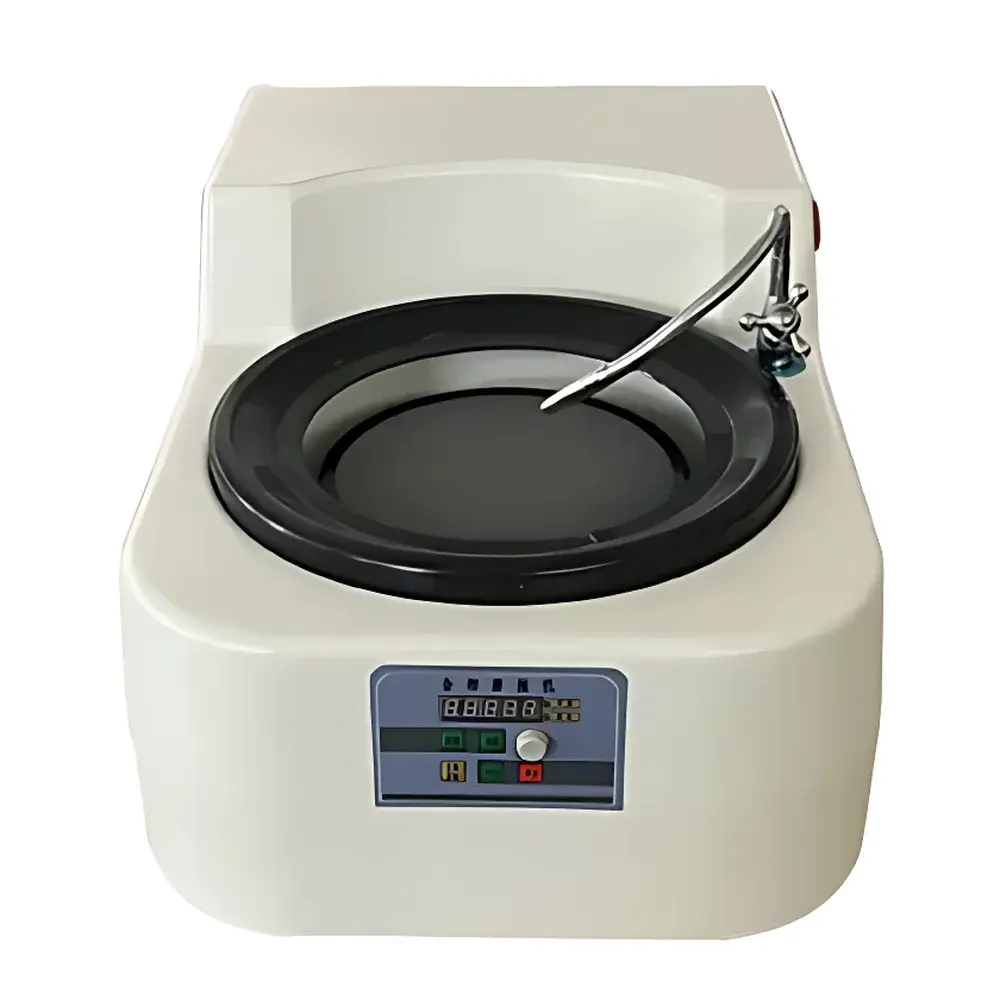
YANRUN MPD-1 Single-Station Metallographic Grinding and Polishing Machine
| Brand | YANRUN |
|---|---|
| Origin | Shanghai, China |
| Manufacturer Type | Direct Manufacturer |
| Country of Origin | China |
| Model | MPD-1 |
| Speed Range | 100–1000 rpm (infinitely variable + dual fixed speeds: 300 rpm low / 600 rpm high) |
| Platen Diameter | Ø230 mm |
| Number of Platens | 1 |
| Power Rating | 500 W |
| Dimensions (L×W×H) | 450 × 680 × 340 mm |
| Voltage | 220 V AC |
| Rotation Direction | Bidirectional (forward/reverse selectable) |
| Water Control | 360° swivel faucet with sealed inlet/outlet system |
| Housing Material | ABS injection-molded enclosure |
| Standard Platen Compatibility | Ø200 mm, Ø230 mm, Ø250 mm, Ø300 mm (Ø230 mm supplied) |
Overview
The YANRUN MPD-1 is a benchtop single-platen metallographic grinding and polishing machine engineered for precision sample preparation in metallurgical, materials science, and failure analysis laboratories. It operates on the principle of controlled mechanical abrasion—using sequentially finer abrasive media (silicon carbide papers, diamond suspensions, and cloth-based polishing cloths) mounted on a rotating platen to progressively remove material, eliminate deformation, and reveal true microstructural features. The MPD-1 supports both coarse grinding and final polishing in a single workstation, eliminating cross-contamination risks associated with multi-unit setups while maintaining strict repeatability across preparation cycles. Its ABS polymer housing provides chemical resistance against common coolants and polishing lubricants (e.g., water-based slurries, ethanol, and mild acidic or alkaline solutions), and its fully sealed fluid pathway isolates electrical components from moisture ingress—meeting IPX4-level splash protection standards for laboratory environments.
Key Features
- Robust ABS injection-molded chassis offering impact resistance, corrosion immunity, and ergonomic form factor—optimized for long-term stability under continuous operation.
- Sealed inlet/outlet water management system: coolant flow is physically isolated from control circuitry and motor housing, minimizing maintenance and enhancing operational safety.
- Dual-mode speed control: two preset speeds (300 rpm for coarse grinding; 600 rpm for intermediate polishing) plus infinitely variable speed adjustment from 100 to 1000 rpm—enabling precise adaptation to material hardness, abrasive type, and desired removal rate.
- Bidirectional rotation capability: user-selectable forward or reverse platen rotation improves uniformity during edge-sensitive preparations and mitigates directional artifact formation.
- 360° articulating water faucet with adjustable flow rate—facilitating targeted coolant delivery without manual repositioning or hose disconnection.
- Deep-draw grinding chamber design (depth ≥ 120 mm) effectively contains splashing coolant and slurry, reducing benchtop contamination and improving operator hygiene during large-sample processing (e.g., castings, weld sections, or PCB cross-sections).
- Modular platen interface supporting interchangeable Ø200 mm, Ø230 mm, Ø250 mm, and Ø300 mm platens—allowing method scalability from routine QC to R&D-level microstructure validation.
Sample Compatibility & Compliance
The MPD-1 accommodates a broad spectrum of rigid solid specimens, including ferrous and non-ferrous metals (steel, aluminum, titanium alloys), sintered ceramics, geological thin sections (granite, basalt), semiconductor wafers, and electronic packaging substrates. Its consistent rotational torque and stable speed regulation ensure reproducible surface finish across diverse hardness ranges (HV 50–800). While not certified to ISO/IEC 17025 or ASTM E3 as a standalone analytical instrument, the MPD-1 conforms to general laboratory equipment safety requirements per IEC 61010-1 (2012) and supports GLP-compliant documentation workflows when integrated into validated sample prep SOPs. All standard consumables—including SiC papers (P80–P2500), diamond-impregnated discs (15–1 µm), and woven/napped polishing cloths—are compatible with widely adopted international metallographic protocols (e.g., ASTM E3, ISO 14489, and EN 10365).
Software & Data Management
The MPD-1 is a manually operated, analog-controlled instrument with no embedded firmware or digital interface. Speed selection and direction toggling are executed via front-panel rotary dials and push-button switches—ensuring operational simplicity, electromagnetic interference (EMI) resilience, and zero software validation burden in regulated environments (e.g., aerospace QA labs operating under AS9100 or medical device facilities adhering to ISO 13485). For traceability, users may record process parameters (platen speed, rotation direction, dwell time, abrasive grade) in paper-based or LIMS-integrated logbooks. Optional external digital tachometers (e.g., handheld laser RPM meters) can be used to verify rotational accuracy during IQ/OQ qualification.
Applications
- Routine metallographic specimen preparation for optical and electron microscopy (SEM/EBSD).
- Quality control of heat-treated components, weld integrity assessment, and inclusion rating per ASTM E45 or ISO 4967.
- Failure analysis of fractured surfaces, fatigue crack propagation studies, and intergranular corrosion evaluation.
- Preparation of ceramic matrix composites (CMCs) and refractory materials for porosity quantification and phase distribution mapping.
- Microstructural characterization of additive-manufactured parts where layer bonding quality and residual stress-induced distortion must be assessed.
- Academic teaching labs requiring durable, intuitive instrumentation for undergraduate metallurgy and materials engineering curricula.
FAQ
Is the MPD-1 compliant with FDA 21 CFR Part 11 for electronic records?
No—the MPD-1 has no electronic data capture, storage, or user authentication capabilities. It is intended for use in environments where manual parameter logging satisfies regulatory expectations.
Can the MPD-1 accommodate automated force-controlled polishing modules?
No—it is a manually loaded, operator-controlled unit without motorized vertical actuation or load-sensing feedback. For force-regulated polishing, consider YANRUN’s MPD-2 dual-station series or third-party robotic prep systems.
What is the expected service life of the motor under continuous daily use?
With proper coolant management and periodic bearing inspection, the 500 W induction motor demonstrates >10,000 hours of operational durability based on accelerated lifetime testing conducted per IEC 60034-18-41.
Are replacement platens and backing plates available for non-standard diameters?
Yes—YANRUN supplies OEM-certified Ø200 mm, Ø250 mm, and Ø300 mm platens with matching adhesive-backed mounting kits and torque-spec fasteners for field retrofitting.
Does the sealed water system require periodic descaling or filter replacement?
No internal filtration is present; however, periodic flushing with deionized water is recommended if using hard tap water to prevent mineral buildup in the swivel faucet assembly.



