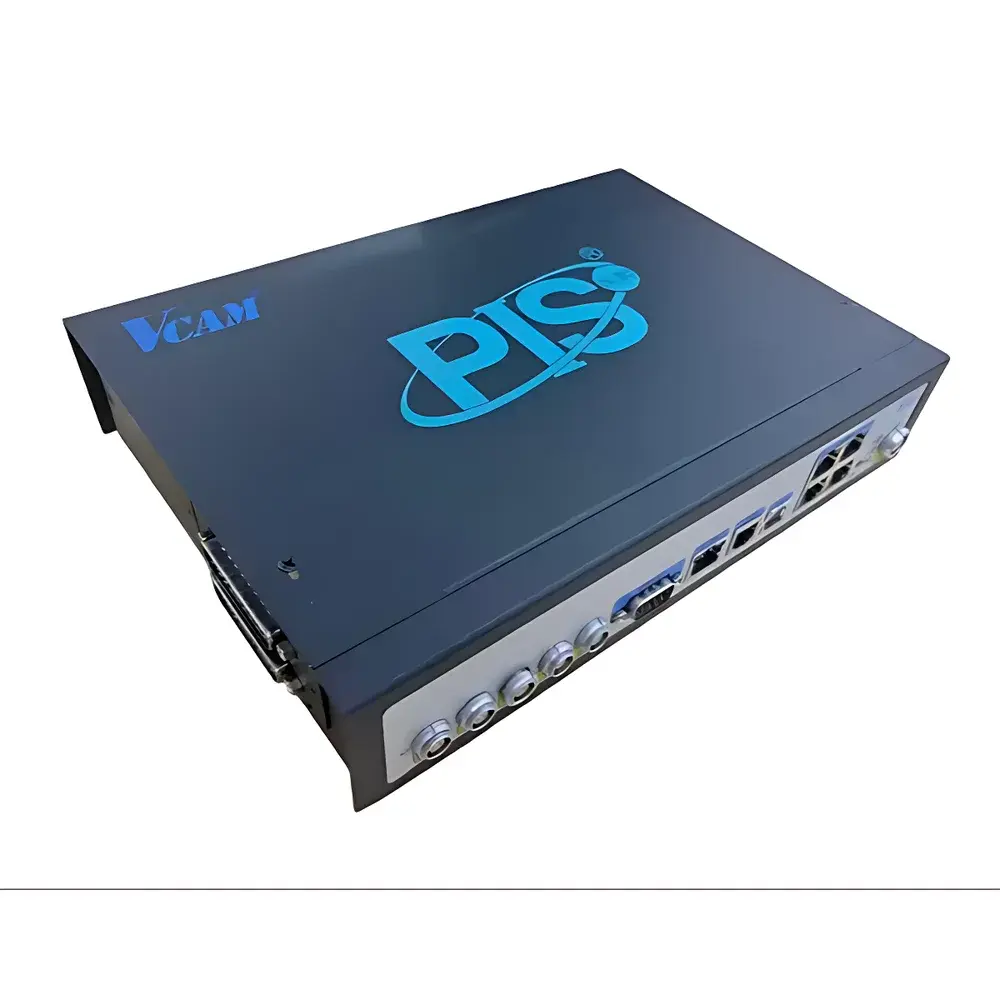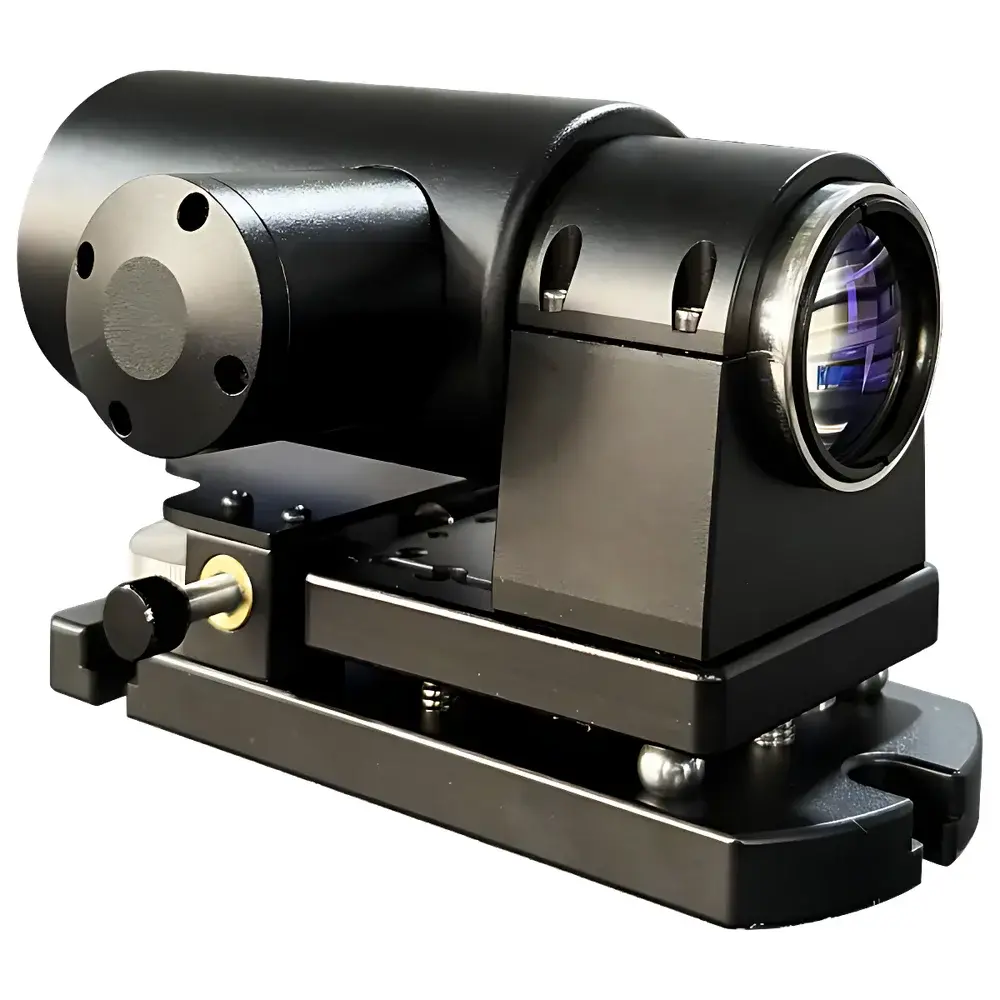
YANRUN MC030-WF100-10800 Dual-Axis Electronic Autocollimator
| Brand | YANRUN |
|---|---|
| Origin | Shanghai, China |
| Manufacturer Type | Direct Manufacturer |
| Model | MC030-WF100-10800 |
| Price Range | USD 7,000 – 14,000 |
| Angular Resolution | 0.0001 arcsec (optional configuration) |
| Measurement Axes | X and Y simultaneous |
| Sensor Type | High-resolution CMOS image sensor |
| Data Processing | Real-time digital image analysis engine |
| Compliance | ISO 10110-5, ISO 21096, GB/T 22043–2008 |
Overview
The YANRUN MC030-WF100-10800 is a dual-axis electronic autocollimator engineered for sub-microradian angular metrology in controlled laboratory, production, and calibration environments. It operates on the principle of optical autocollimation: a collimated laser beam is reflected from a high-quality reference mirror (or surface under test), and the displacement of the returned beam spot on a calibrated CMOS imaging sensor is quantified to derive angular deviation in both horizontal (X) and vertical (Y) planes simultaneously. Unlike traditional visual or analog autocollimators, this instrument integrates a thermally stabilized HeNe or solid-state laser source, precision kinematic mirror mount interface, and real-time digital centroiding algorithms—enabling continuous, non-contact measurement with traceable uncertainty down to ±0.0001 arcseconds (0.005 µrad) in optimized configurations. Its design targets applications where angular stability, repeatability, and long-term drift performance are critical—such as optical axis alignment in interferometer setups, straightness verification of ultra-precision guideways, and pitch/yaw monitoring during CNC machine tool thermal error compensation.
Key Features
- Dual-axis synchronous measurement architecture with independent X/Y readout channels and cross-talk suppression below –60 dB
- High-dynamic-range CMOS sensor (≥4.5 MP resolution) with programmable exposure control and on-sensor binning for signal-to-noise optimization
- Integrated laser source with <±0.5 µm beam pointing stability over 8-hour operation (23 °C ±1 °C ambient)
- Modular mechanical base with M6 threaded mounting points and kinematic V-groove interface for rapid mirror coupling
- Onboard FPGA-based processing unit enabling real-time centroid calculation at up to 100 Hz frame rate
- Thermal drift compensation algorithm calibrated across 15–30 °C operating range, reducing temperature-induced angular drift to <0.002 arcsec/°C
- IP52-rated enclosure with EMI-shielded electronics compartment for use in industrial metrology labs
Sample Compatibility & Compliance
The MC030-WF100-10800 is compatible with standard optical flats (λ/20 or better), kinematic mirror mounts (e.g., Newport KM100 series), and retroreflector cubes (1″ to 2″ aperture). It supports both single-surface reflection (e.g., on polished steel or fused silica) and double-pass configurations using roof prisms for enhanced sensitivity. The instrument conforms to ISO 21096:2021 (Autocollimators — Metrological characteristics and calibration methods) and aligns with the measurement traceability framework defined in ISO/IEC 17025:2017. Calibration reports include NIST-traceable angular standards (e.g., NIST SRM 2089a), and optional factory calibration certificates comply with ISO 10110-5 for optical surface orientation testing. For regulated environments, the system supports audit-ready data logging compliant with FDA 21 CFR Part 11 when paired with validated software modules.
Software & Data Management
The instrument ships with YANRUN Autocalc v4.2 — a Windows-based application supporting real-time waveform display, statistical process control (SPC) charting (X̄–R, Cpk), and automated report generation in PDF/CSV formats. Raw pixel displacement data is exported with timestamp, sensor temperature, and laser power metadata. API access via TCP/IP socket interface enables integration into LabVIEW, MATLAB, or custom MES/QMS platforms. All measurement sessions include immutable audit trails: user login ID, parameter settings, calibration certificate ID, and digital signature of raw image frames. Optional add-ons include GLP/GMP mode (with electronic signatures, role-based access control, and 21 CFR Part 11-compliant e-signature workflows) and multi-station network synchronization for distributed angular metrology networks.
Applications
- Precision alignment of optical benches, laser cavities, and synchrotron beamline components
- Dynamic angular error mapping of hydrostatic guideways and air-bearing spindles during motion profiling
- Verification of angular repeatability in robotic arm end-effectors and hexapod positioning systems
- In-process monitoring of thermal lensing effects in high-power laser optics assemblies
- Calibration of angle encoders, rotary tables, and coordinate measuring machine (CMM) articulating probe heads
- Validation of flatness and straightness per ISO 10360-2 and ASME B89.4.1 standards
FAQ
What is the minimum measurable angle with the MC030-WF100-10800 in standard configuration?
The base configuration achieves ±0.001 arcsecond resolution (0.005 µrad) with RMS repeatability ≤0.0005 arcsecond over 100 measurements. Higher-resolution variants (e.g., 0.0001 arcsecond) require optional low-noise sensor firmware and extended averaging protocols.
Can this autocollimator be used in vacuum or cleanroom environments?
The standard unit is rated for Class 10,000 cleanrooms (ISO 7). Vacuum operation requires optional hermetic housing and outgassing-certified materials (consult factory for custom build options).
Is external vibration isolation mandatory for achieving specified accuracy?
Yes. To maintain sub-arcsecond stability, operation on an active or passive optical table with >60 dB isolation above 10 Hz is required. The instrument includes built-in vibration compensation algorithms but does not replace mechanical isolation.
Does the system support third-party calibration services?
Yes. YANRUN provides full calibration documentation and accepts recalibration by ISO/IEC 17025-accredited laboratories. Traceability chains to national metrology institutes (NMI) are maintained for all delivered units.
How is angular data synchronized with external motion controllers or DAQ systems?
Via TTL trigger input/output ports and IEEE-488 (GPIB) or Ethernet TCP/IP interfaces. Synchronization jitter is <100 ns when using hardware trigger mode.