
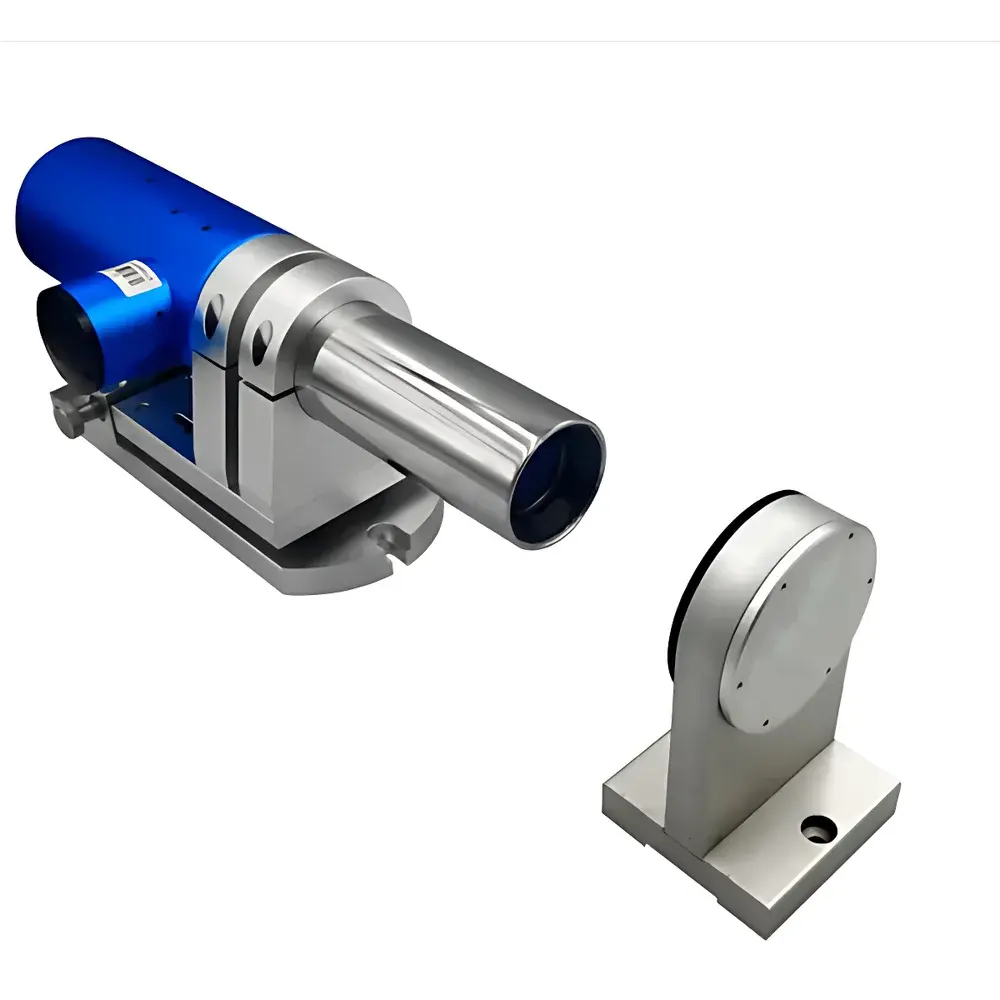
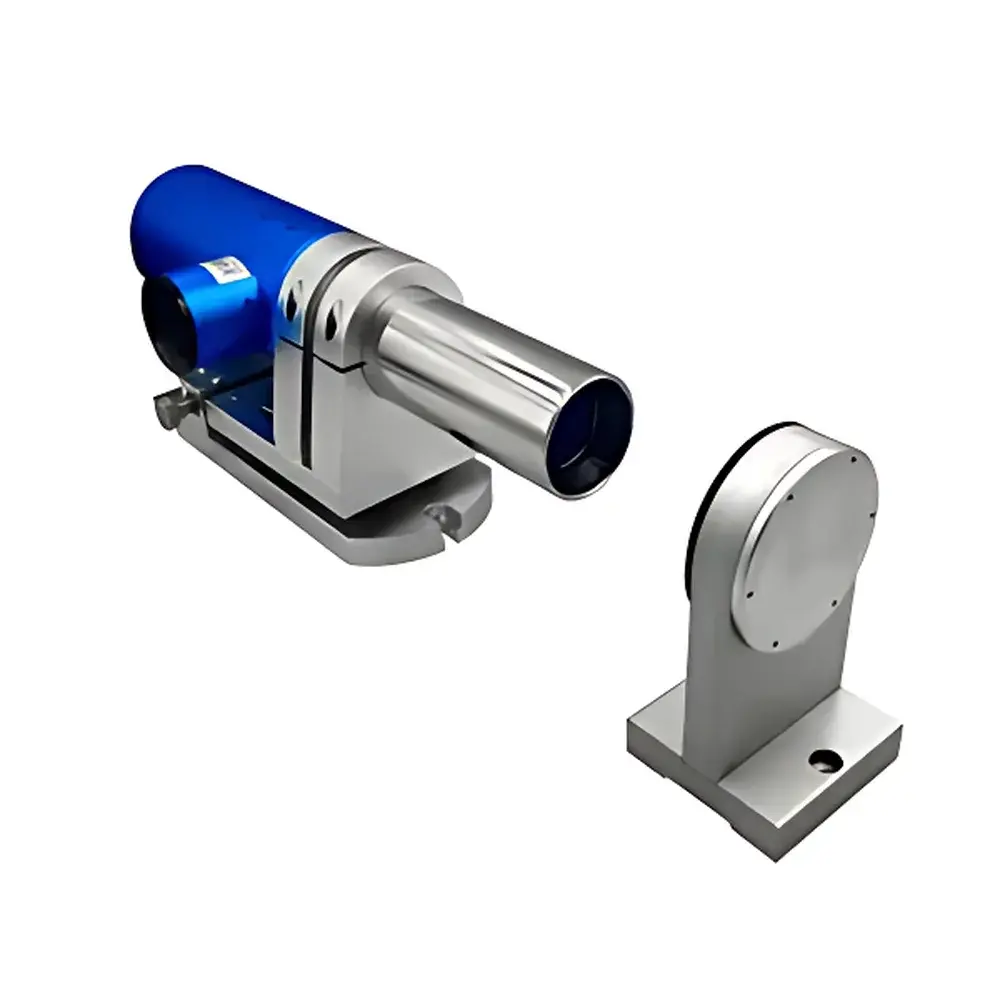
YANRUN YRMAT2515H Dual-Axis Electro-Optical Autocollimator (1 arcsecond)
| Brand | YANRUN |
|---|---|
| Origin | Shanghai, China |
| Manufacturer Type | Direct Manufacturer |
| Model | YRMAT2515H |
| Measurement Range | 0–15 m |
| Angular Resolution | Adjustable from 1″ to 0.1″ (arcsecond) |
| Angular Accuracy (Center) | ≤ ±1″ within ±1000″ |
| Field of View (X/Y) | 2600″ × 2000″ (arcsecond) |
| Objective Focal Length | 200 mm |
| Objective Aperture | 38 mm |
| Light Source | High-Stability Imported Semiconductor LED |
| Detector | High-Precision CCD/CMOS Position-Sensitive Sensor |
| Interface | USB 2.0/3.0 |
| Software Platform | Windows 7 or later (64-bit), Intel Core i3-4th Gen or higher, ≥2.3 GHz |
| Dimensions | 388 mm × 135 mm × 125 mm |
| Weight | 3.6 kg |
Overview
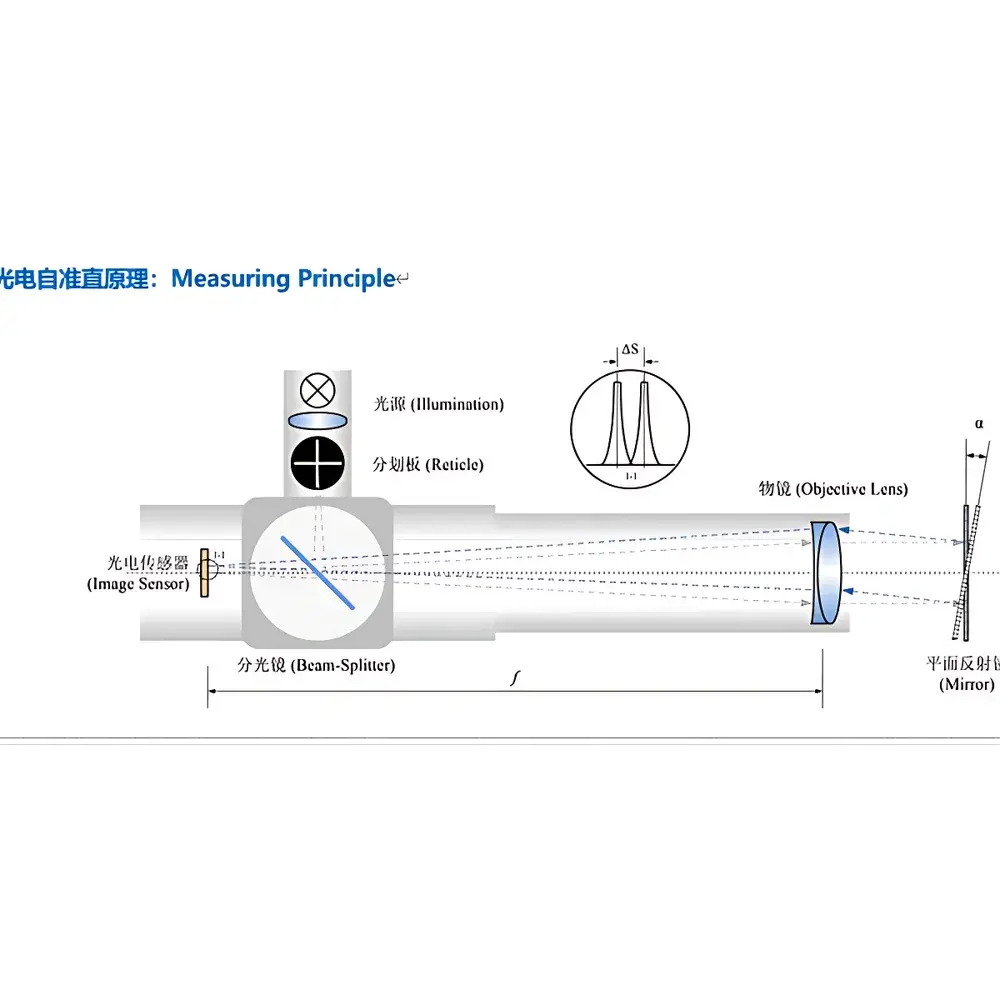
The YANRUN YRMAT2515H Dual-Axis Electro-Optical Autocollimator is a precision angular metrology instrument engineered for high-reproducibility measurement of minute angular deviations in industrial metrology, optical alignment, and mechanical assembly verification. It operates on the fundamental principle of optical autocollimation: a collimated beam—generated by projecting a reticle located at the focal plane of a high-stability objective lens—is reflected back from a planar mirror surface. Any angular tilt (α) of the mirror induces a linear displacement (ΔS) of the returned image on a co-focal position-sensitive detector, where ΔS = 2f·tan(α) ≈ 2f·α (for small angles in radians). This linear-to-angular conversion enables traceable, non-contact angle measurement with arcsecond-level resolution. Unlike traditional visual autocollimators requiring subjective eyepiece alignment, the YRMAT2515H integrates a calibrated CMOS/CCD imaging sensor, real-time digital image processing, and deterministic centroid calculation algorithms to eliminate observer-dependent parallax and targeting errors. Its 200 mm focal length objective and 38 mm aperture deliver optimal light throughput and depth-of-field balance for stable operation across its full 0–15 m working distance range.
Key Features
- Dual-axis simultaneous measurement of X- and Y-direction angular deviations—enabling vectorial error analysis without manual reorientation.
- Adjustable angular resolution from 1″ down to 0.1″ (arcsecond), configurable via software to match application-specific uncertainty budgets.
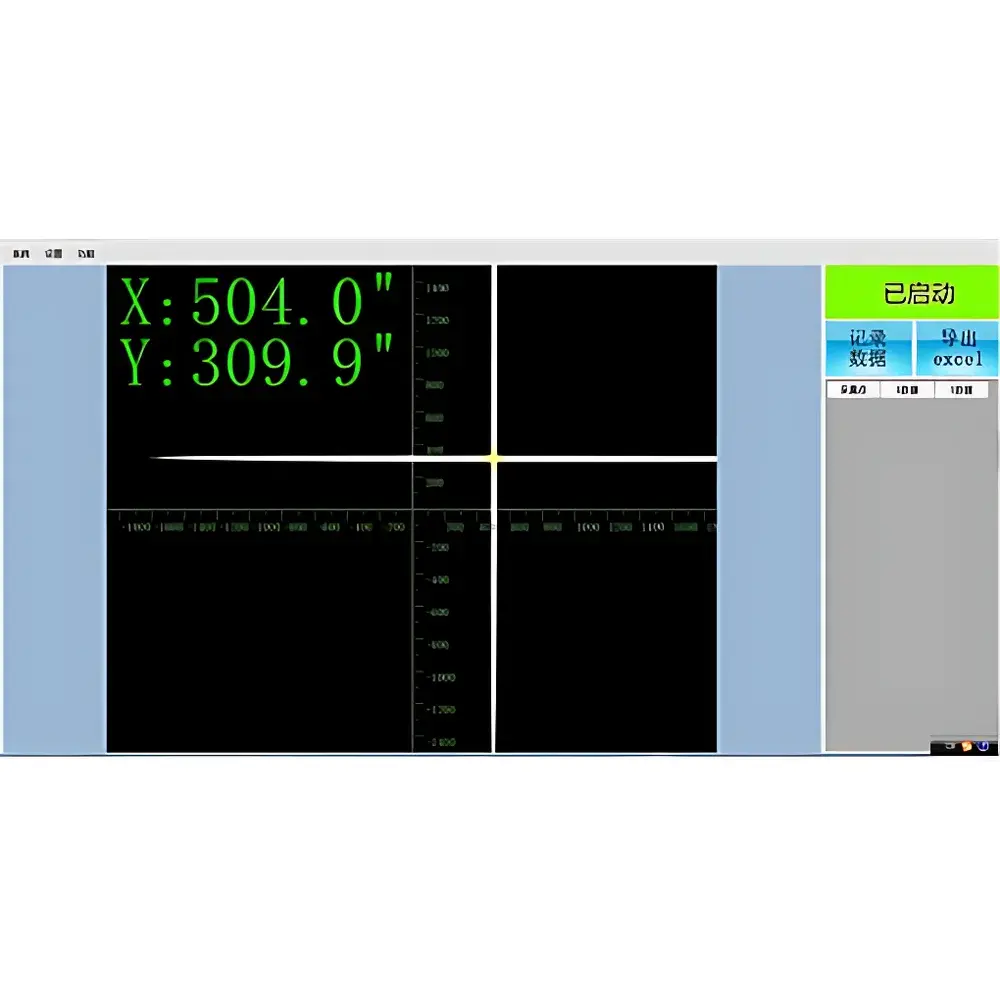
- Real-time electronic eyepiece display with dynamic crosshair overlay and live centroid tracking—supporting rapid setup and iterative alignment.
- Imported long-life semiconductor LED illumination system with >20,000-hour operational lifetime and negligible intensity drift over thermal cycling.
- Integrated two-axis fine-adjustment base with micrometer-driven kinematic mounts for precise mirror positioning and repeatable referencing.
- USB 2.0/3.0 interface ensures plug-and-play compatibility with standard industrial PCs; no external frame grabbers or proprietary hardware required.
- Multi-language GUI (English, Chinese, Russian, Korean) compliant with international lab documentation standards and multilingual operator environments.
- Modular software architecture supporting field-upgradable analysis modules—including straightness, flatness, perpendicularity, parallelism, and rotary table calibration routines.
Sample Compatibility & Compliance
The YRMAT2515H is compatible with standard optical flats, precision-machined mirror surfaces (≥λ/10 surface quality), and retroreflective targets meeting ISO 10110-7 specifications. It supports measurement of rigid, stationary, or slowly rotating components within ambient temperature stability of ±1°C over measurement duration. For metrological validation, the instrument conforms to core principles outlined in ISO 21098 (optical alignment instrumentation), ISO 10791-6 (test conditions for coordinate measuring machines), and ASTM E284 (standard terminology for optics). While not certified to ISO/IEC 17025 as a standalone calibration laboratory, it is routinely employed in GLP-compliant manufacturing QA workflows for verifying machine tool guideway straightness (per ISO 230-1), optical bench collimation (per ISO 10110-1), and inertial sensor platform leveling. Traceability is maintained through factory calibration against NIST-traceable angle artifacts, with optional annual recalibration services available.
Software & Data Management
The included YANRUN Autocollimator Control Suite runs natively on Windows 7+ (64-bit) and implements audit-trail functionality compliant with FDA 21 CFR Part 11 requirements for electronic records and signatures—enabling secure user authentication, version-controlled measurement protocols, and immutable raw-data logging. All measurements are stored in structured HDF5 format with embedded metadata (timestamp, operator ID, environmental conditions, instrument serial number). Export options include ANSI-standard CSV, ISO 10303-21 STEP AP242 geometry files for CAD-integrated GD&T analysis, and fully formatted Excel reports conforming to ISO/IEC 17025 Annex A.2 documentation templates. The software supports batch processing of multi-point datasets, statistical process control (SPC) charting (X̄-R, Cpk), and automated pass/fail evaluation against user-defined tolerance zones per ASME Y14.5.
Applications
- Precision installation and leveling of CNC machine tools, coordinate measuring machines (CMMs), and laser interferometer reference rails.
- Verification of straightness and flatness of granite surface plates (per ISO 8512-2) and air-bearing motion stages.
- Alignment of multi-element optical systems—including telescope secondary mirrors, laser cavity optics, and fiber coupling assemblies.
- Calibration of high-accuracy rotary tables and indexing heads used in aerospace component machining (e.g., turbine blade fixtures).
- Dynamic angular monitoring of vibration-isolated optical tables under low-frequency excitation (<5 Hz).
- Education and research in undergraduate and graduate optics laboratories for teaching wavefront sensing fundamentals and adaptive optics feedback control.
FAQ
What is the recommended warm-up time before high-accuracy measurement?
For measurements requiring ≤±1″ repeatability, power-on stabilization for ≥15 minutes is mandatory to allow thermal equilibrium of the optical path and sensor electronics.
Is the instrument suitable for in-situ use on production floors?
Yes—its compact form factor (3.6 kg), shock-resistant housing, and LED-based illumination make it suitable for shop-floor deployment; however, ambient vibration and air turbulence must be controlled per ISO 230-2 Annex B guidelines.
Can the YRMAT2515H measure angular motion over time?
Yes—the software supports time-synchronized acquisition at up to 50 Hz (dependent on PC performance), enabling dynamic angular tracking of slow-turning shafts or thermally induced drift studies.
Does the system support external triggering or synchronization with other instruments?
Not natively via hardware trigger input; however, time-stamped data streams can be aligned post-acquisition using PTPv2 or NTP-synchronized system clocks across distributed measurement nodes.
Are calibration certificates provided with shipment?
Each unit ships with a manufacturer’s calibration report referencing traceable angle standards; full ISO/IEC 17025-accredited calibration is available as an optional service with accredited third-party labs.





