
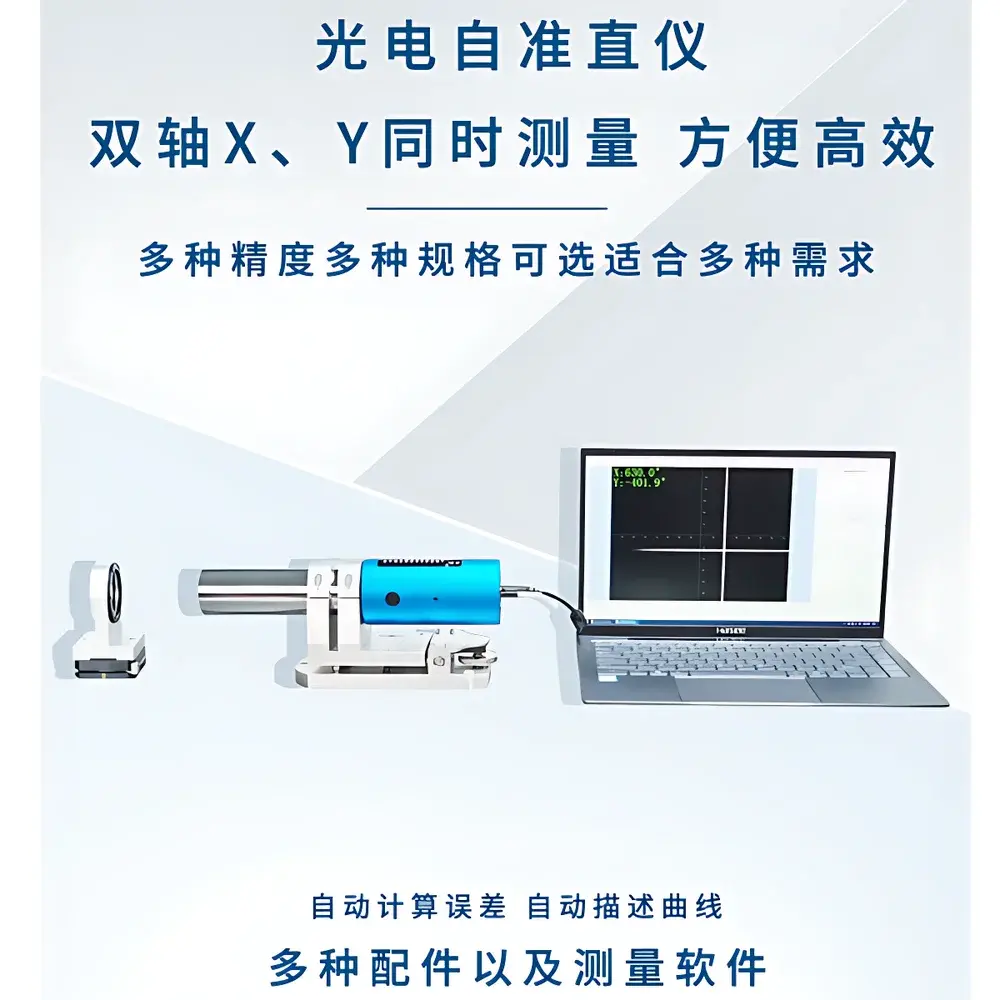
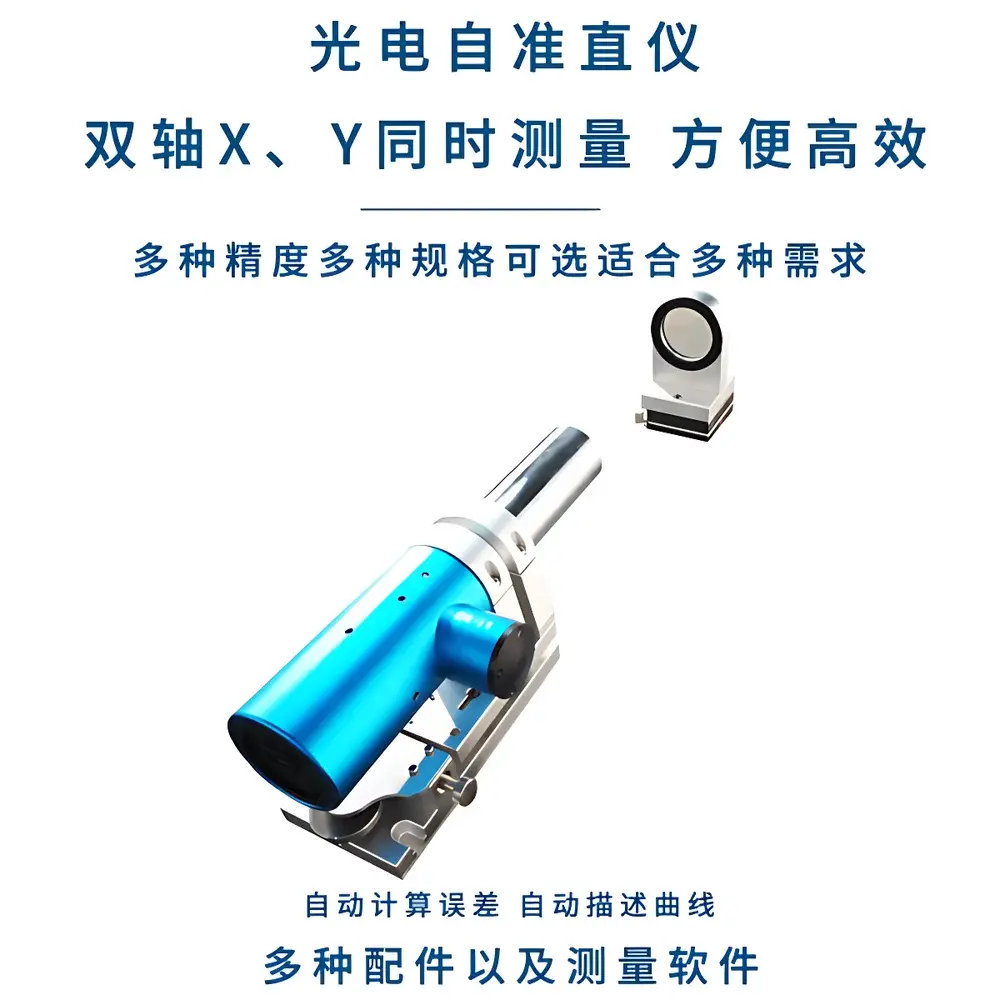
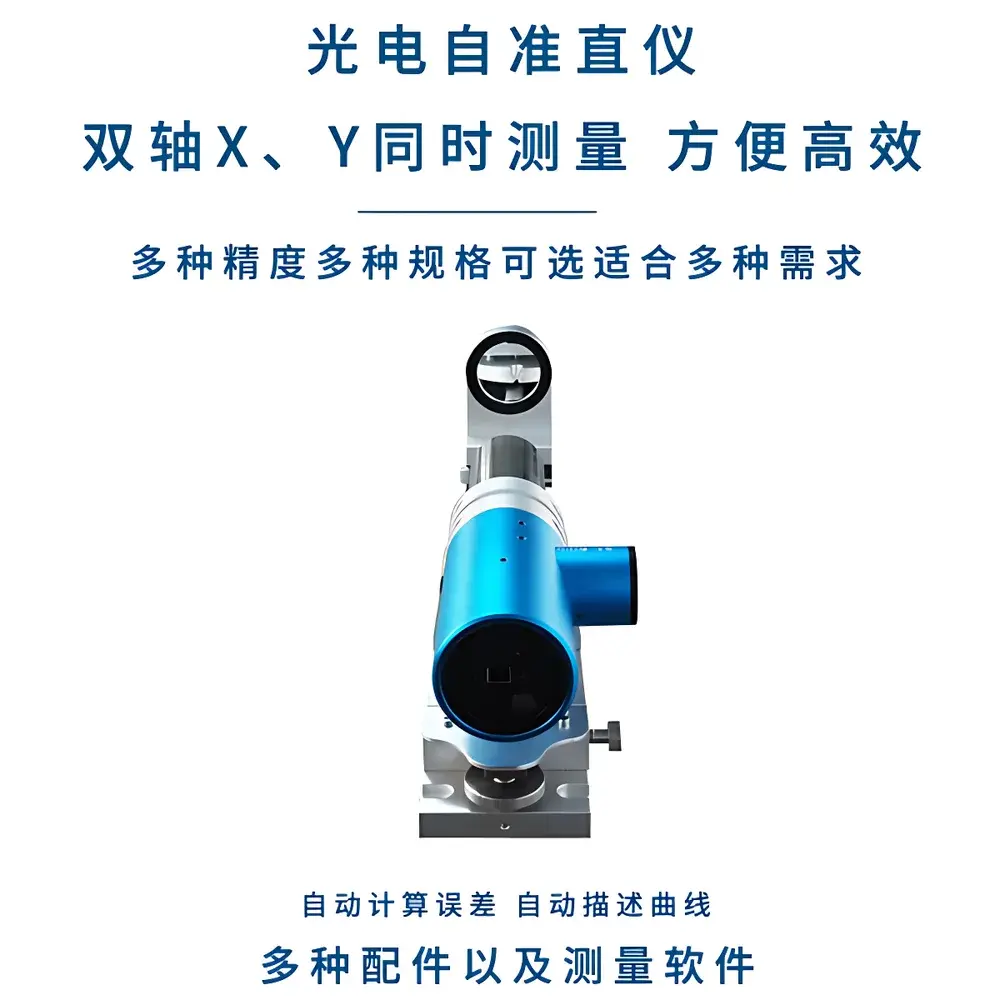
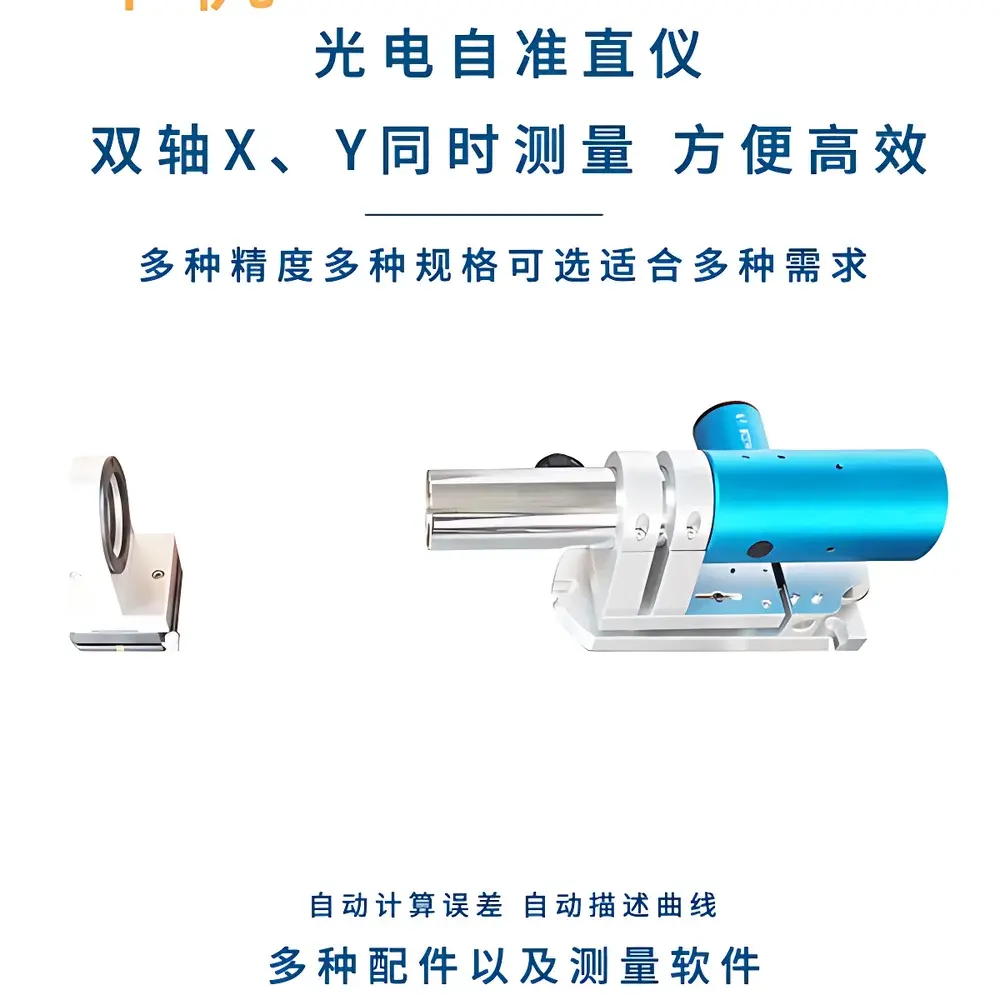
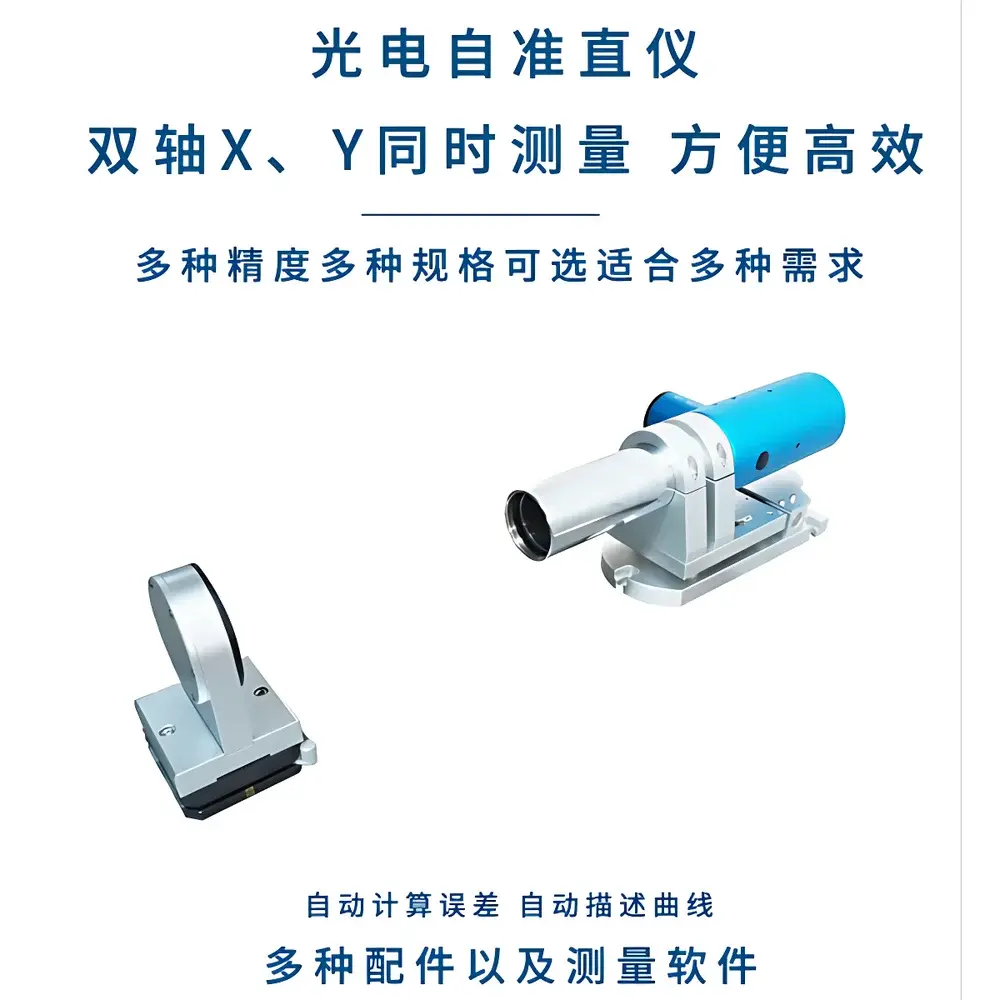
YANRUN YRMAT1510 Dual-Axis Electronic Autocollimator (1 arcsecond resolution)
| Brand | YANRUN |
|---|---|
| Origin | Shanghai, China |
| Manufacturer Type | OEM Manufacturer |
| Model | YRMAT1510 |
| Resolution | 1″ (adjustable down to 0.1″) |
| Focal Length | 200 mm |
| Aperture | 38 mm |
| Measurement Range | 0–12 m |
| Field of View (X/Y) | 3200″ × 2400″ |
| Accuracy (Center, ±1000″) | ≤ ±2″ |
| Detector | High-Precision Photodiode Array |
| Light Source | Imported Semiconductor LED (Lifespan > 50,000 h) |
| Interface | USB 2.0/3.0 |
| Dimensions | 288 × 130 × 115 mm |
| Weight | 3.3 kg |
| Software Platform | Windows 7+ (64-bit), Intel Core i3-4th Gen or higher |
Overview
The YANRUN YRMAT1510 Dual-Axis Electronic Autocollimator is an optomechanical metrology instrument engineered for high-precision angular measurement based on the fundamental principle of optical autocollimation. It operates by projecting collimated light—generated from a reticle placed at the focal plane of a 200 mm focal length objective lens—onto a reflective surface. The reflected beam re-enters the same objective and forms a real image of the reticle on a high-resolution photodiode array detector, co-located at the identical focal plane (a confocal optical architecture). When the reflector rotates by angle α, the image shifts by ΔS ≈ 2f·α (where f = 200 mm), enabling sub-arcsecond angular quantification via pixel-level displacement analysis. Unlike traditional visual autocollimators requiring manual eyepiece alignment, the YRMAT1510 replaces the ocular with a digital imaging sensor and real-time centroid tracking algorithm, eliminating observer-dependent parallax and fatigue errors. Its dual-axis (X/Y) synchronous acquisition capability supports vectorial angular deviation analysis critical for multi-degree-of-freedom alignment tasks in precision engineering environments.
Key Features
- Dual-axis simultaneous angular measurement with real-time coordinate display of reflected crosshair image on integrated software interface
- Adjustable angular resolution from 1″ down to 0.1″ (arcsecond), calibrated traceably to national metrology standards
- Confocal optical design with 200 mm focal length objective and 38 mm clear aperture ensures high light throughput and signal-to-noise ratio
- Imported long-life semiconductor LED illumination system (>50,000 h operational lifetime) providing stable, drift-free intensity output without warm-up delay
- USB 2.0/3.0 interface enables plug-and-play connectivity with industrial PCs; no external frame grabber or proprietary hardware required
- Compact monolithic housing (288 × 130 × 115 mm, 3.3 kg) facilitates field deployment, vibration-isolated benchtop use, and integration into automated alignment stations
- Multi-language UI support (English, Chinese, Russian, Korean) compliant with international laboratory documentation workflows
- Automated error curve generation and ISO 230-1/ISO 10360-compliant reporting templates exportable to Excel (.xlsx) format
Sample Compatibility & Compliance
The YRMAT1510 is compatible with standard optical flat mirrors (included), magnetic mirror mounts, kinematic mirror adjusters, and optional accessories including laser-assisted target finders, motorized rotation stages, and multi-faceted polygons (8–36 faces, Grade 0/1). It meets mechanical and optical stability requirements defined in ISO 10110-7 (surface form tolerances) and ISO 10360-1 (coordinate measuring machine acceptance testing). While not certified as a Class I medical device, its measurement uncertainty budget adheres to GUM (Guide to the Expression of Uncertainty in Measurement) principles and supports GLP/GMP-aligned calibration records when used with version-controlled software and audit-trail-enabled data logging (optional module). All firmware and control software are designed to operate within Windows 7+ 64-bit environments meeting IEC 61000-4-3 immunity specifications for electromagnetic compatibility in laboratory settings.
Software & Data Management
The bundled YRMAT Control Suite runs natively on Windows platforms (64-bit, Intel Core i3-4th Gen minimum) and provides modular measurement functionality—including straightness, flatness, perpendicularity, parallelism, and rotary table indexing analysis—via licensed software add-ons. Raw pixel displacement data is captured at ≥30 Hz frame rate and processed using centroid interpolation algorithms with sub-pixel accuracy. All measurement sessions generate timestamped binary logs (.yrmlog) containing raw sensor frames, environmental metadata (system time, USB bus voltage, ambient temperature if external sensor connected), and operator-defined project tags. Export options include CSV for statistical process control (SPC) integration and Excel-compatible reports conforming to ISO/IEC 17025 documentation requirements. Optional FDA 21 CFR Part 11 compliance package provides electronic signature enforcement, role-based access control, and immutable audit trails for regulated manufacturing environments.
Applications
- Precision alignment of CNC machine tool spindles, linear guideways, and hydrostatic bearing assemblies
- Verification of optical component tilt and decenter in interferometric null testing setups
- Calibration of rotary tables and indexing heads per ISO 230-2 Annex C procedures
- Flatness assessment of granite surface plates using reversal method and bridge-type traversing fixtures
- Dynamic angular monitoring during thermal deformation studies of aerospace structural components
- Telescope mount collimation and secondary mirror alignment in observatory instrumentation
- Education and research applications in undergraduate optics laboratories requiring quantitative verification of reflection laws and small-angle approximations
FAQ
What is the minimum recommended warm-up time before high-accuracy measurements?
For measurements requiring ≤±2″ repeatability, a minimum 15-minute power-on stabilization period is advised to allow thermal equilibrium of the LED source and detector electronics.
Can the YRMAT1510 measure angles beyond ±1000″?
Yes—the full field of view spans ±1600″ in both axes (3200″ × 2400″), though specified accuracy of ≤±2″ applies only within the central ±1000″ range per ISO 10360-1 linearity validation protocol.
Is third-party calibration certification available?
YANRUN offers NIST-traceable calibration services through CNAS-accredited partner labs; certificates include uncertainty budgets calculated per GUM Supplement 1 and reference to JJG 927-2019 (Chinese national verification regulation for autocollimators).
Does the system support synchronization with external motion controllers?
Via optional TTL trigger input/output ports (available on YRMAT-PRO variant), enabling hardware-triggered image capture synchronized with stepper motor step pulses or encoder zero-mark signals.
How is measurement traceability maintained across software updates?
Each software release undergoes internal verification against a master artifact library; version identifiers and checksums are embedded in all exported reports to ensure long-term reproducibility under ISO/IEC 17025 clause 7.7.



