
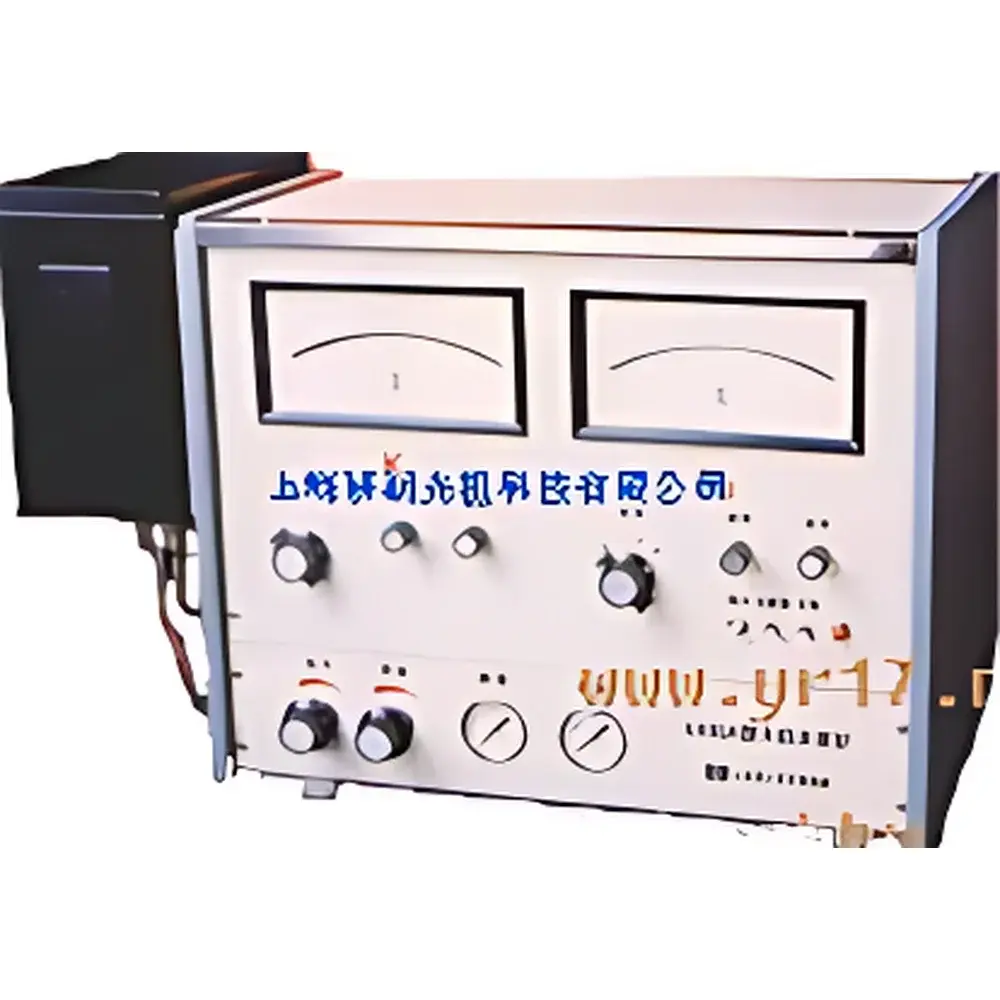
MC016-6400A Flame Photometer
| Origin | Shanghai, China |
|---|---|
| Manufacturer Type | Authorized Distributor |
| Origin Category | Domestic (PRC) |
| Model | MC016-6400A |
| Pricing | Available Upon Request |
| Sensitivity | K: 1 µg/mL for full-scale deflection |
| Na | 1 µg/mL for full-scale deflection |
| Repeatability | ≤2 scale divisions across 7 consecutive measurements of identical sample |
| Stability | ≤1 scale division drift over 15 s continuous aspiration |
Overview
The MC016-6400A Flame Photometer is a benchtop atomic emission spectrometer engineered for quantitative determination of alkali and alkaline earth metals—primarily sodium (Na), potassium (K), lithium (Li), calcium (Ca), and barium (Ba)—in aqueous solution samples. It operates on the fundamental principle of flame emission spectroscopy: analyte atoms are nebulized into a premixed air–acetylene or air–propane flame, where thermal energy excites valence electrons to higher energy states; upon relaxation to ground state, characteristic wavelength photons are emitted. The instrument isolates these emissions via optical filters (e.g., 589.3 nm for Na, 766.5 nm for K) and quantifies intensity using a photosensitive detector and analog galvanometer readout. Designed for robustness in routine laboratory environments, the MC016-6400A delivers reliable semi-quantitative to quantitative analysis without requiring complex calibration curves for many standard applications.
Key Features
- Integrated low-noise air compressor with built-in moisture trap and particulate filter—eliminates need for external compressed air supply and prevents flame instability due to water vapor or oil contamination.
- Dual-channel analog detection system with independent optical paths and calibrated filter wheels for simultaneous or sequential Na/K measurement.
- High-stability burner head with precision-machined stainless steel capillary and optimized air–fuel mixing geometry to ensure consistent flame temperature and minimal flicker-induced signal noise.
- Galvanometer-based analog output with linear 0–100% full-scale deflection scale, enabling direct visual assessment of signal magnitude and rapid qualitative screening.
- Adjustable aspiration rate control and flame height regulation to accommodate varying sample viscosities and optimize atomization efficiency.
- Front-panel zero and span calibration controls with mechanical lock for repeatable baseline adjustment and standardization against reference solutions.
Sample Compatibility & Compliance
The MC016-6400A accepts clarified, low-turbidity aqueous samples with total dissolved solids (TDS) < 0.5% w/v. Samples must be free of suspended particulates, organic solvents, and high-concentration chelating agents (e.g., EDTA) that suppress atomization or quench emission. Dilution series are routinely employed to maintain linearity within the instrument’s dynamic range (typically 0.1–100 ppm for Na and K). While not certified to ISO/IEC 17025 or FDA 21 CFR Part 11 out-of-the-box, the system supports GLP-compliant operation when used with documented SOPs, manual logbooks, and traceable calibration standards (e.g., NIST-traceable NaCl and KCl solutions). It meets general requirements for clinical chemistry (CLIA-waived testing for electrolyte screening), agricultural soil extract analysis (ASTM D5092), and industrial silicate product quality control per GB/T 176–2017 (Chinese national standard for cement chemical analysis).
Software & Data Management
The MC016-6400A is an analog-dominant instrument with no embedded microprocessor or digital data logging capability. Quantitative results are recorded manually from the galvanometer scale, and calibration is performed using two-point (zero and standard) methodology. Users may interface the analog output (0–1 V or 4–20 mA optional) with external chart recorders, PLCs, or PC-based DAQ systems for automated data capture. For laboratories requiring electronic records, integration with LIMS is achievable via third-party analog-to-digital converters and custom scripting (e.g., Python + PySerial), though audit trail functionality must be implemented at the host system level per 21 CFR Part 11 Annex 11 guidelines.
Applications
- Clinical diagnostics: Rapid serum, urine, and dialysate sodium/potassium screening in hospital core labs and point-of-care settings.
- Agricultural science: Quantification of exchangeable K⁺ and Na⁺ in Mehlich-3 or ammonium acetate soil extracts for fertility assessment.
- Industrial quality control: Alkali metal content verification in glass frits, ceramic glazes, boiler feedwater, and fertilizer blends (e.g., NPK formulations).
- Environmental monitoring: Sodium leakage detection in ion-exchange resin regeneration effluents and wastewater streams.
- Food & beverage: Salt (NaCl) content estimation in processed foods, brines, and dairy by-products.
FAQ
What flame gases are compatible with the MC016-6400A?
The instrument is configured for air–propane combustion. Acetylene is not recommended due to excessive flame temperature and potential safety hazards in non-ventilated environments.
Can the MC016-6400A measure calcium or lithium?
Yes—when equipped with appropriate interference-rejecting bandpass filters (e.g., 622 nm for Ca, 670.8 nm for Li) and optimized flame conditions (reducing flame for Ca, oxidizing for Li). Filter replacement kits are available as accessories.
Is daily recalibration required?
Calibration stability supports 4–8 hours of continuous operation under constant ambient conditions. Recalibration is advised after changing gas cylinders, cleaning the nebulizer, or analyzing matrix-shifted samples.
What maintenance intervals are recommended?
Nebulizer capillary cleaning every 8 hours of use; burner head descaling weekly with 10% HNO₃; air filter element replacement every 3 months or per visible saturation.
Does the system comply with ISO 9001 or ISO 15197?
The MC016-6400A itself is not certified to these standards; however, its performance characteristics align with ISO 15197:2013 accuracy criteria (±15% bias for Na/K at clinical ranges) when operated per manufacturer-specified protocols and verified with control materials.
Related Products






