
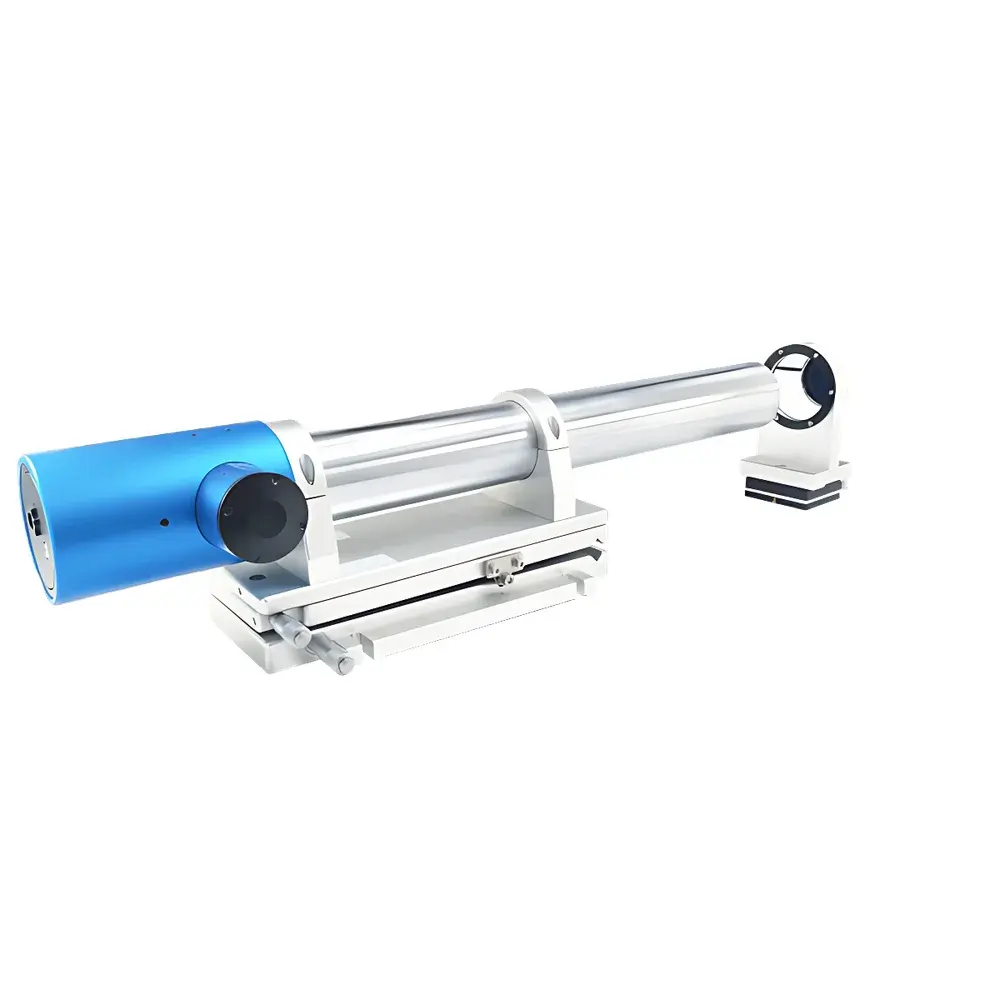
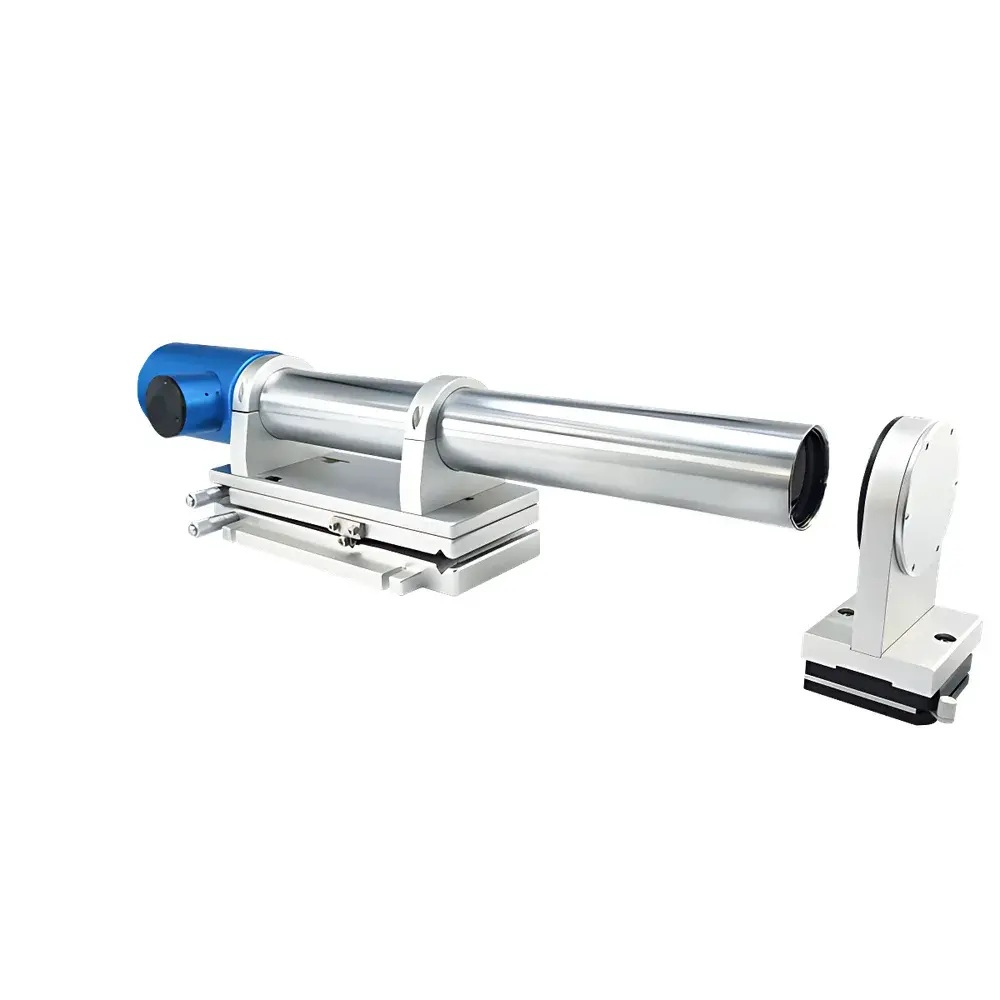
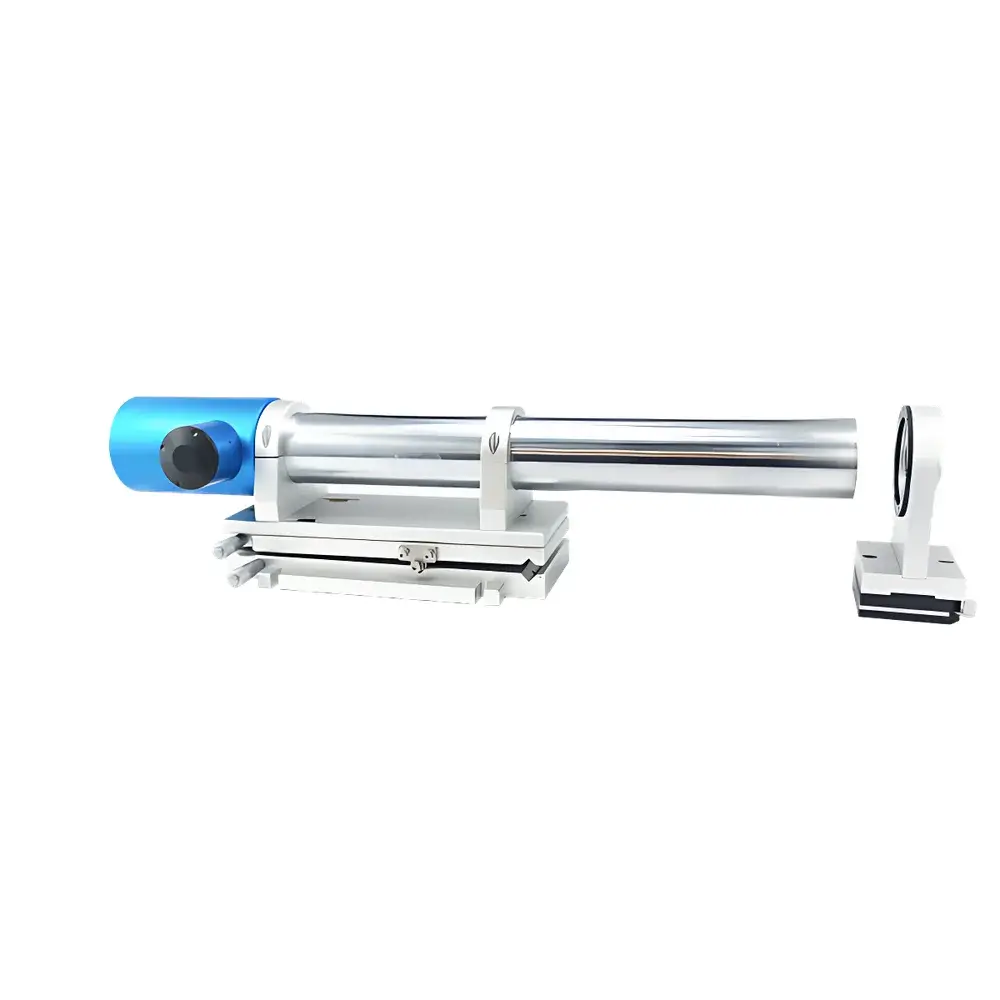
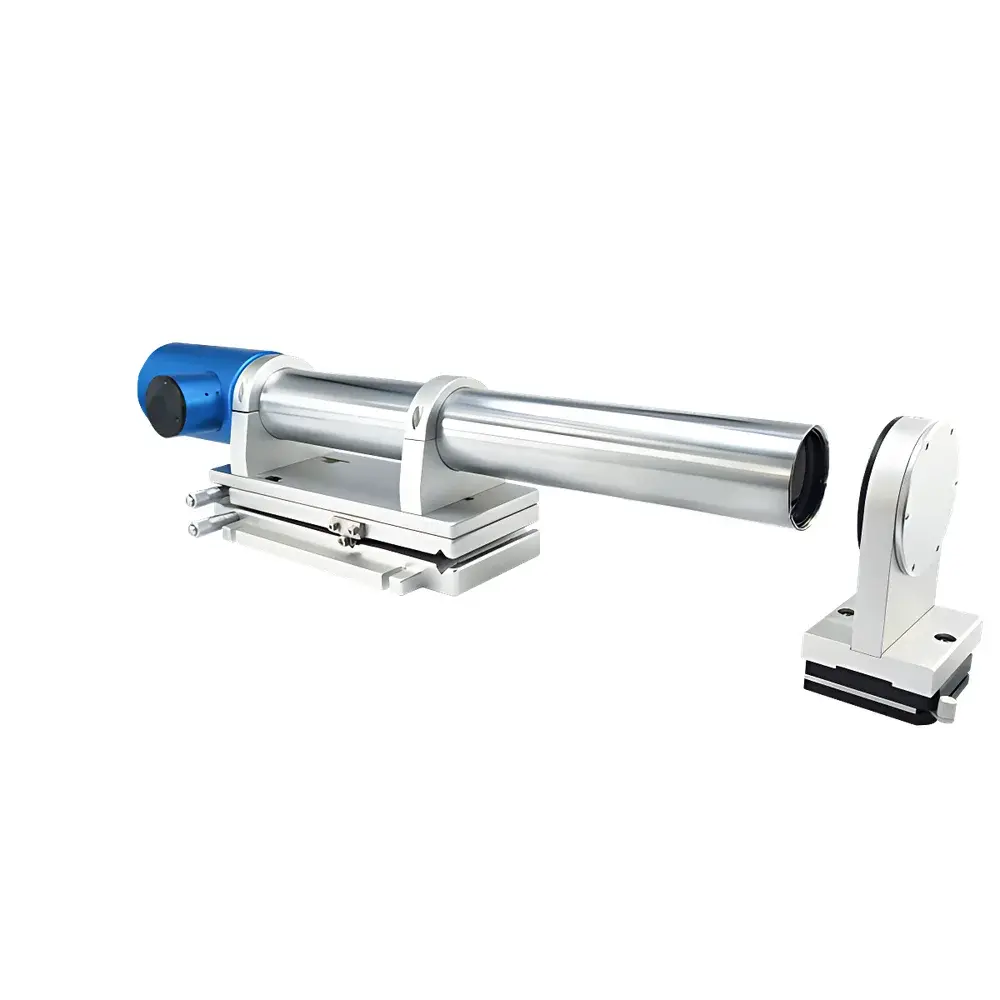
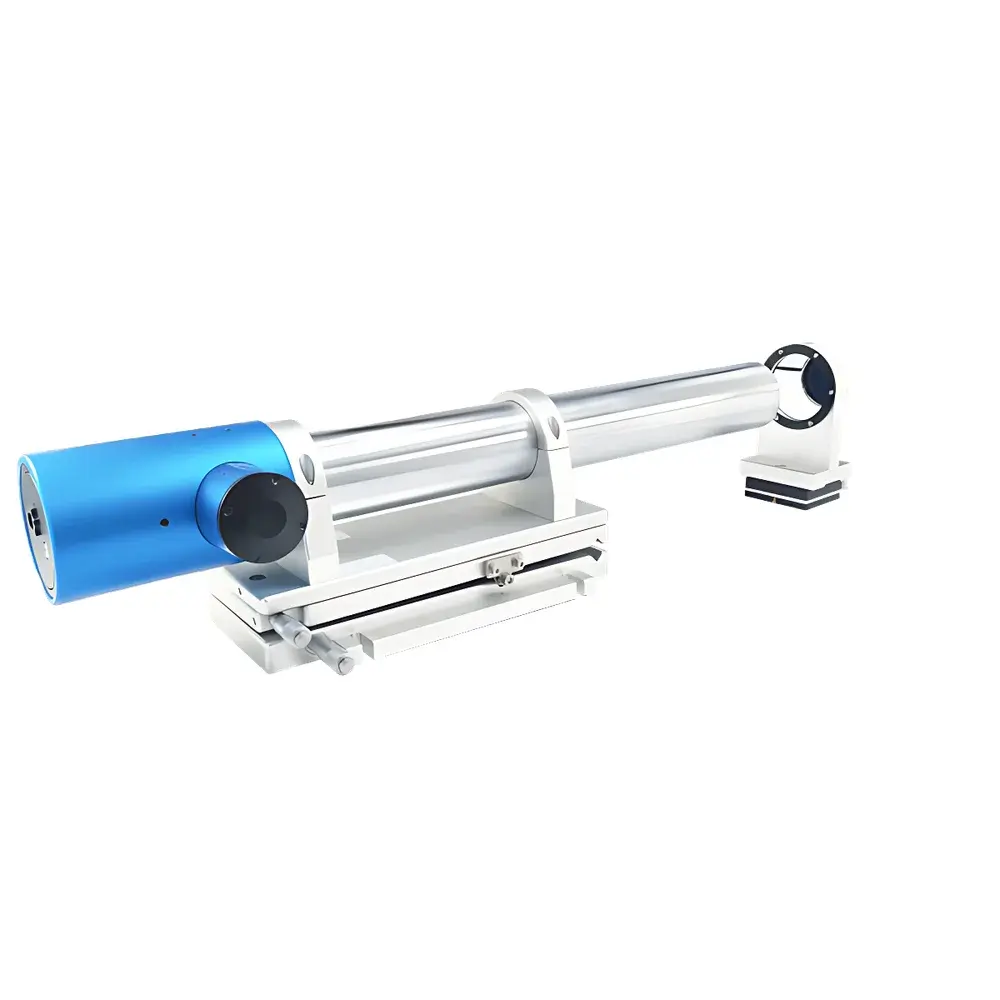
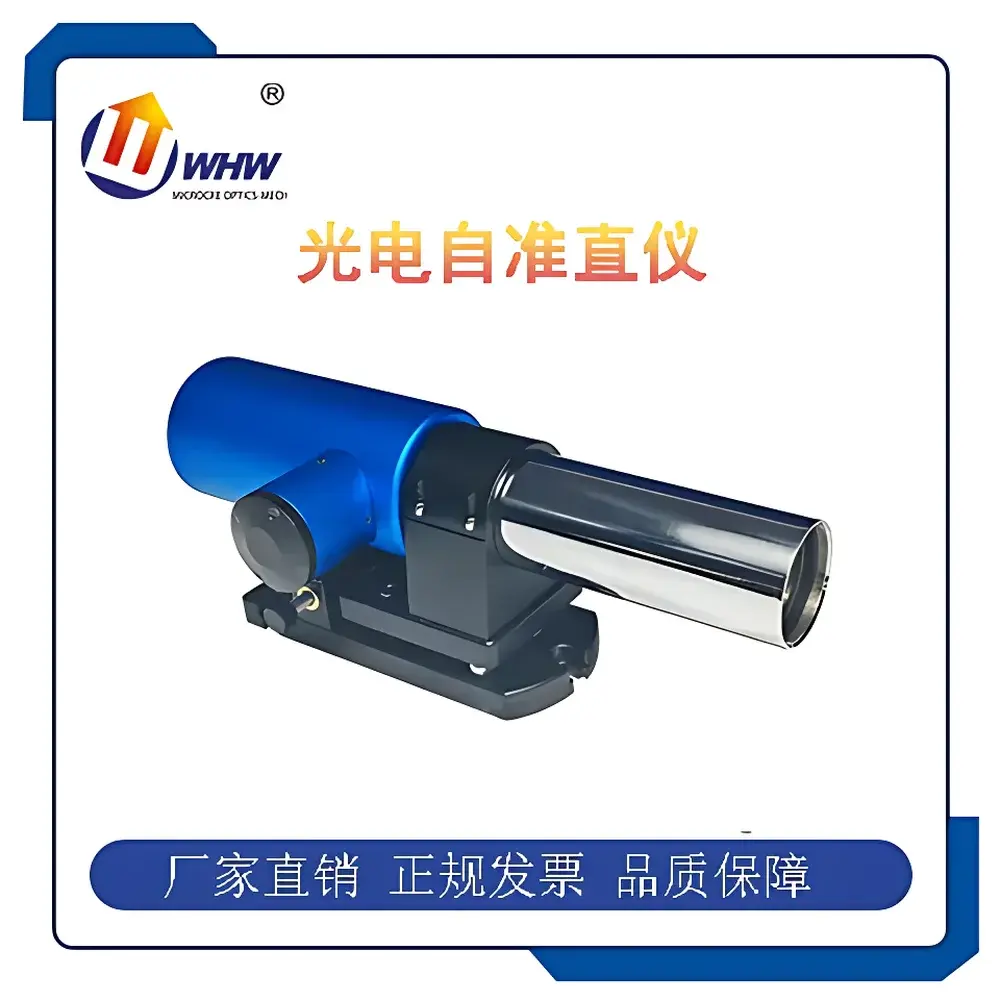
YANRUN MC030-YRUH2000/0.3 Dual-Axis Photoelectric Autocollimator
| Brand | YANRUN |
|---|---|
| Origin | Shanghai, China |
| Manufacturer Type | Manufacturer |
| Product Category | Domestic |
| Model | MC030-YRUH2000/0.3 |
| Price | Upon Request |
| Focal Length | 200 mm |
| Aperture | 38 mm |
| Light Source | High-Stability Semiconductor LED |
| Measurement Range | 0–10 m |
| Detector | High-Resolution Position-Sensitive Photodetector (PSD) |
| Display Resolution | Adjustable from 1″ to 0.0001″ (arc sec) |
| Field of View (X/Y) | 2700″ × 2100″ (arc sec) |
| Accuracy (Center) | ±0.3″ (0–±100″), ±1″ (0–±1000″) |
| Frequency Response | ≤30 Hz |
| Interface | USB 2.0 |
| Operating System | Windows 7 or later (64-bit) |
| Dimensions | 288 × 105 × 115 mm (L×W×H) |
| Weight | 3.5 kg |
Overview
The YANRUN MC030-YRUH2000/0.3 Dual-Axis Photoelectric Autocollimator is a precision angular metrology instrument engineered for high-reproducibility measurement of minute angular deviations in two orthogonal axes (X and Y) simultaneously. It operates on the fundamental optical principle of autocollimation: a collimated beam—generated by projecting a reticle located at the focal plane of a 200 mm focal-length objective lens—is reflected off a planar mirror and re-imaged onto a high-resolution position-sensitive photodetector (PSD) situated at the same focal plane. Angular displacement α of the mirror induces a linear image shift ΔS on the detector surface, where ΔS = 2f·α (with f = 200 mm), enabling sub-arcsecond resolution via calibrated pixel mapping. Unlike traditional visual autocollimators requiring subjective eyepiece alignment, this system eliminates observer-dependent error through real-time digital imaging and centroid-based displacement calculation. Designed for integration into metrology workflows compliant with ISO 10360, ISO 230-1, and ASME B89.3.7 standards, it serves as a traceable, non-contact reference for angular calibration, alignment verification, and dynamic tilt monitoring in controlled laboratory and production environments.
Key Features
- Dual-axis synchronous measurement capability with independent X/Y readouts and unified coordinate referencing
- Real-time electronic eyepiece interface delivering live centroid tracking of reflected reticle images at up to 30 Hz sampling rate
- Adjustable display resolution spanning five orders of magnitude—from 1 arc second down to 0.0001 arc second—for adaptive precision scaling across application tiers
- Stable semiconductor LED illumination with >50,000-hour operational lifetime and negligible thermal drift over extended measurement cycles
- Compact monolithic housing (288 × 105 × 115 mm; 3.5 kg) optimized for portable deployment on optical tables, CNC machine tools, and cleanroom workstations
- USB 2.0 host interface compatible with Windows 7+ (64-bit) systems; minimal driver requirements ensure rapid setup and audit-ready configuration
- Modular software architecture supporting optional analysis modules for straightness, flatness, perpendicularity, and parallelism evaluation per ISO 1101 and ISO 12780
Sample Compatibility & Compliance
The MC030-YRUH2000/0.3 is designed to interface with standard optical flats, kinematic mirror mounts, and retroreflector targets used in dimensional metrology labs and precision manufacturing facilities. Its 38 mm aperture and 0–10 m working distance accommodate both short-range benchtop alignment (e.g., laser cavity collimation) and long-path applications (e.g., large-scale gantry squareness verification). The instrument conforms to electromagnetic compatibility (EMC) requirements per EN 61326-1 and safety standards per IEC 61010-1. All firmware and measurement algorithms are developed under documented design control procedures aligned with GLP principles. Audit trails—including operator ID, timestamp, environmental metadata (if external sensors connected), and raw detector output—are retained in encrypted binary logs exportable in CSV or XML formats for FDA 21 CFR Part 11–compliant validation protocols.
Software & Data Management
The included Windows-native control software provides a deterministic measurement environment with deterministic latency (<15 ms end-to-end). Core functions include automatic curve fitting (least-squares line, circle, or polynomial), deviation mapping relative to nominal geometry, and statistical process control (SPC) charting (X̄-R, Cp/Cpk). Raw PSD voltage outputs and computed angular values are stored in structured HDF5 files, ensuring bit-perfect reproducibility. Export options include standardized Excel (.xlsx) reports with embedded calibration certificates, PDF measurement summaries with annotated images, and ASCII-compatible tab-delimited datasets for import into MATLAB, Python (NumPy/Pandas), or Minitab. Language localization supports English, Chinese, Russian, and Korean UIs without runtime performance penalty. Software updates are delivered via signed package repositories with SHA-256 hash verification.
Applications
- Precision alignment of multi-axis motion stages and rotary tables in semiconductor lithography equipment
- Verification of guideway straightness and squareness in coordinate measuring machines (CMMs) and CNC machining centers per ISO 230-2
- Dynamic tilt monitoring of optical benches during interferometric testing and gravitational wave detector commissioning
- Calibration of angular encoders and inclinometers against national metrology institute (NMI) traceable references
- Flatness assessment of granite surface plates using grid-based tilt integration (Zernike polynomial decomposition)
- Assembly verification of aerospace optical benches, satellite payload structures, and inertial navigation platforms
- Teaching and research in undergraduate and graduate optics laboratories—supporting experiments in wavefront sensing, beam steering stability, and adaptive optics control loops
FAQ
What is the recommended warm-up time before high-accuracy measurements?
For measurements within ±0.3″ specification, a minimum 15-minute power-on stabilization period is required to achieve thermal equilibrium of the optical path and detector electronics.
Does the instrument require periodic recalibration?
Yes—annual calibration against a certified angle standard (e.g., NIST-traceable autocollimator or angle block set) is recommended. Internal self-check routines verify detector linearity and LED intensity stability prior to each session.
Can the system operate in ambient lighting conditions?
The LED source and narrowband optical filtering enable robust operation under typical laboratory illumination (≤500 lux); however, direct sunlight or specular reflections onto the objective must be avoided.
Is remote operation supported?
Yes—TCP/IP socket communication is available via optional software license, enabling integration into SCADA or MES environments with programmable command sets (SCPI-compatible syntax).
How is measurement uncertainty determined for a given setup?
Total uncertainty combines contributions from detector noise (≤0.00005″ RMS), mechanical repeatability of mirror mounting (±0.1″), air turbulence over path length (>5 m), and temperature gradient effects (0.02″/°C per meter path). A full budget can be generated using the built-in uncertainty calculator module.




