
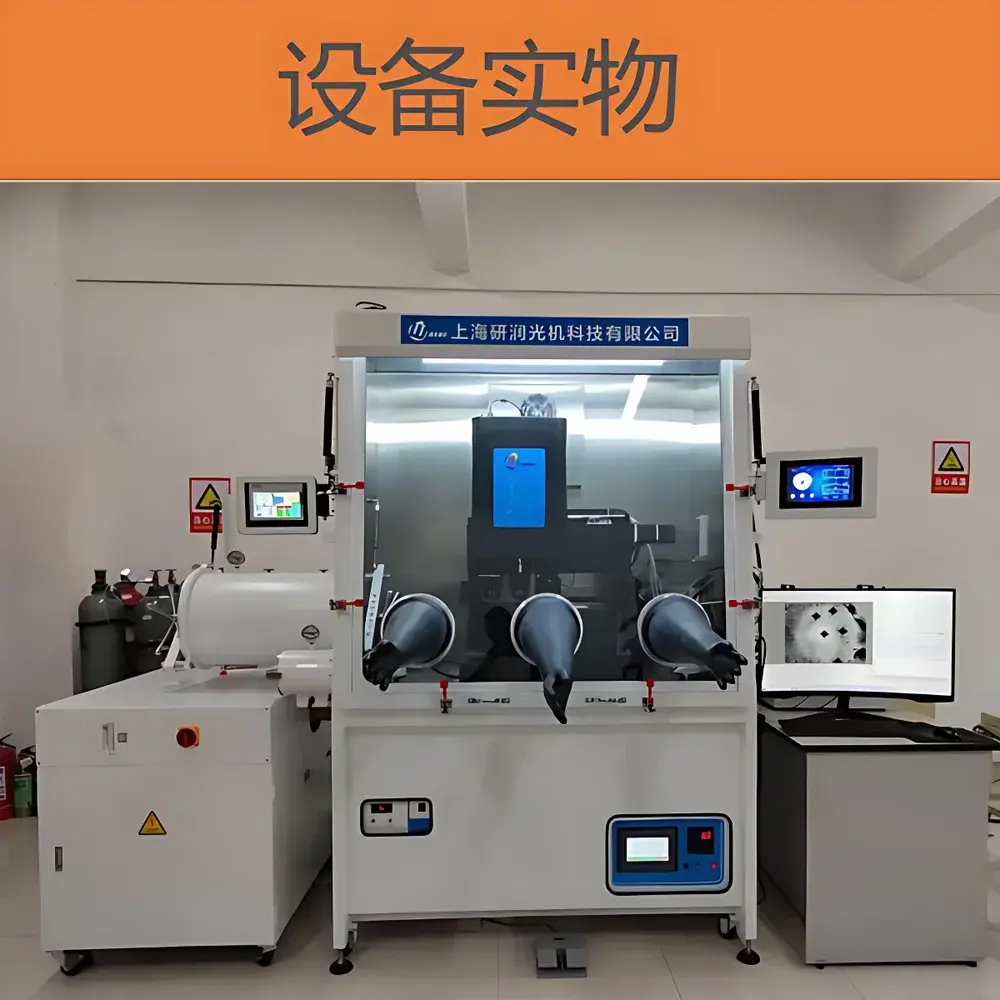
YANRUN HMAS-H1700 High-Temperature Scratch & Indentation Testing System
| Brand | YANRUN |
|---|---|
| Origin | Shanghai, China |
| Manufacturer Type | Direct Manufacturer |
| Instrument Type | Vickers Hardness Tester |
| Measurement Range | 0–3000 HV |
| Operating Temperature Range | 400–1600 °C (furnace), up to 1700 °C (indenter module) |
| Maximum Load Capacity | ≤50 kg (continuous variable loading, ≥50 g minimum) |
| Optical Magnification | 880× / 1760× (standard), up to 11,000× (optional) |
| Positioning Resolution | 0.01 µm |
| Thermal Stability | ±1 °C (furnace cavity), ±0.3 °C (chamber ambient) |
| Sample Exchange Time at 1600 °C | ≤100 s |
| Indenter Service Life | Multiple in-situ repairs possible up to 1700 °C |
| Environmental Control | Inert atmosphere glovebox (H₂O/O₂ ≤1 ppm), dual-stage gas-cooling & forced-air thermal management |
Overview
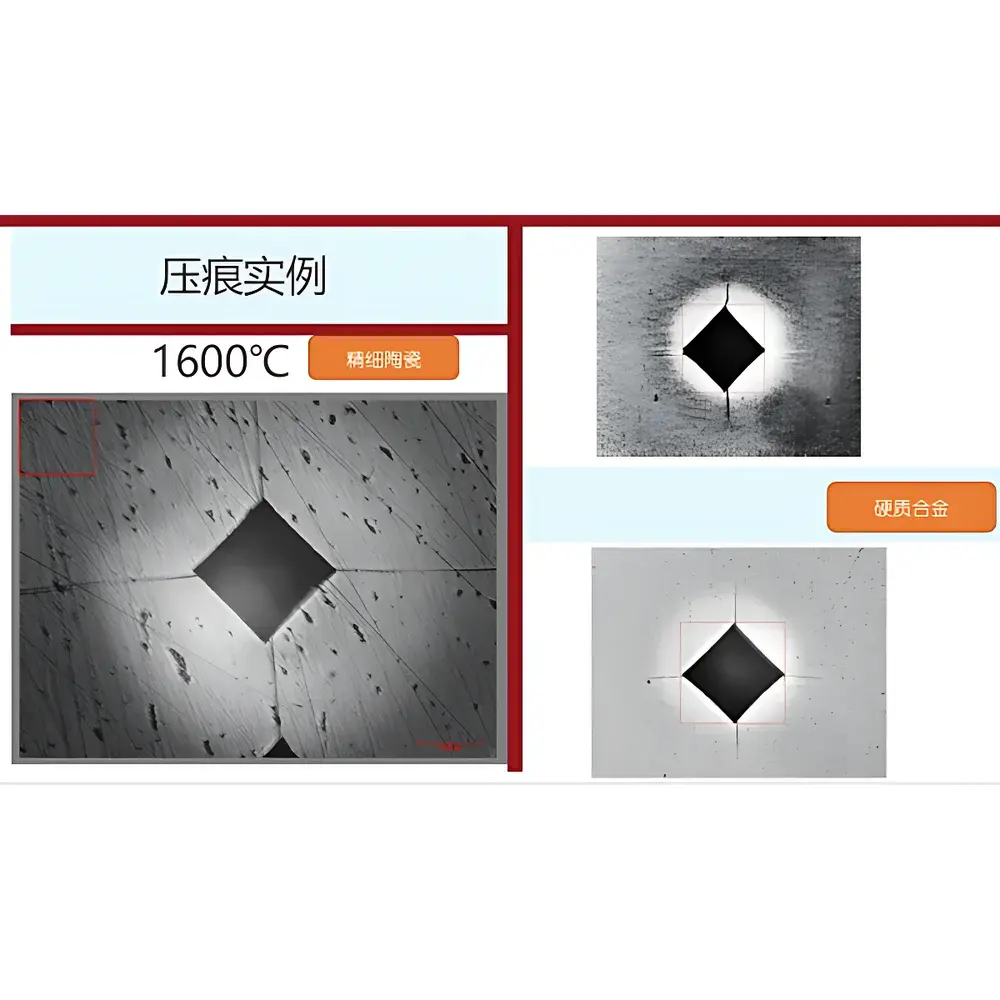
The YANRUN HMAS-H1700 High-Temperature Scratch & Indentation Testing System is an integrated thermomechanical characterization platform engineered for quantitative mechanical property evaluation of advanced materials under extreme thermal conditions—up to 1600 °C in situ and 1700 °C at the indenter tip. Unlike conventional hardness testers limited to ambient or moderate-temperature operation, the HMAS-H1700 employs a fully synchronized multi-axis control architecture that maintains real-time force–displacement–temperature–imaging correlation during dynamic loading. Its core measurement methodology combines calibrated quasi-static indentation (Vickers-based geometry), continuous-load scratch testing, and high-resolution optical microscopy within a thermally stabilized inert environment. This enables simultaneous acquisition of hardness, fracture toughness (KIC), elastic modulus (A- and B-type evaluation per ISO 14577), residual stress distribution, creep deformation kinetics, and surface topographic evolution—including crack initiation/propagation, phase boundary shifts, pore coalescence, and interfacial delamination. The system is explicitly designed for R&D laboratories engaged in ceramic matrix composites (CMCs), ultra-high-temperature ceramics (UHTCs), refractory alloys, nuclear fuel cladding, and aerospace thermal barrier coatings.
Key Features
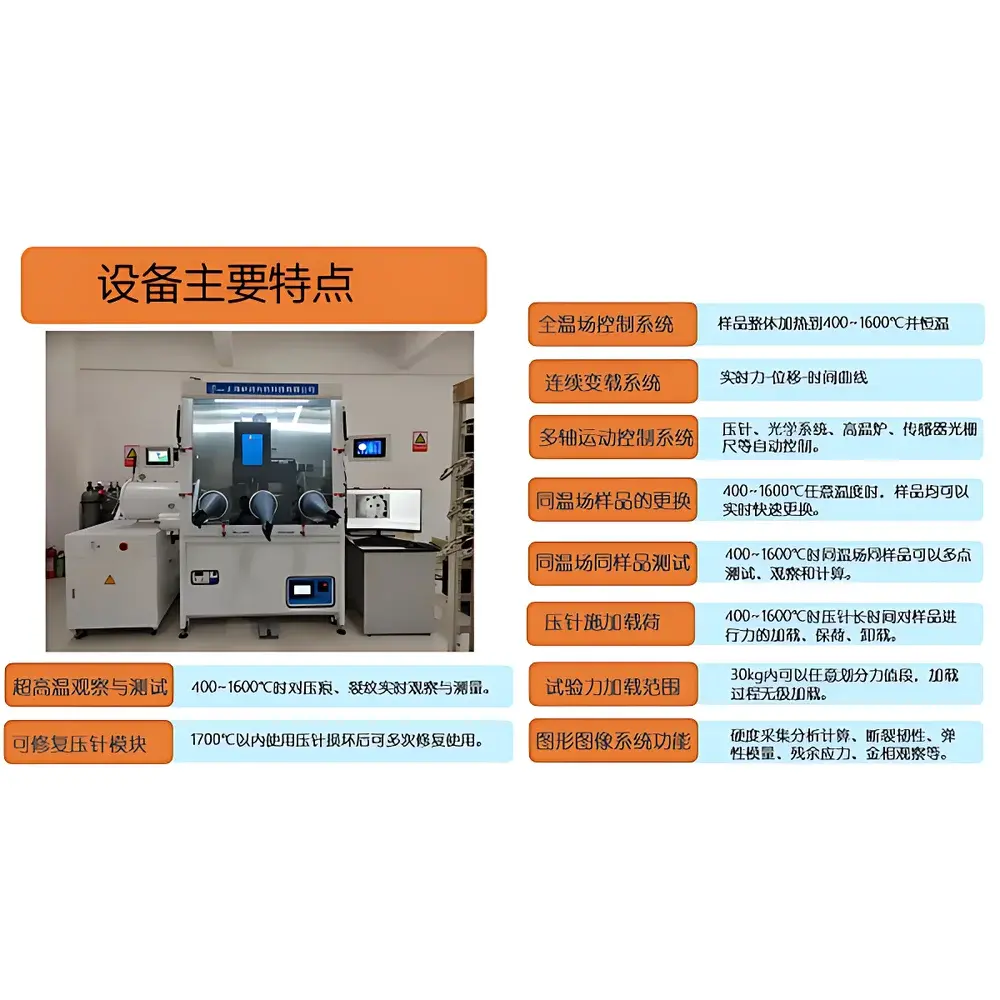
- Ultra-high-temperature capability: Dual-zone thermal control with furnace stability ≤±1 °C from 400–1600 °C and indenter module rated to 1700 °C; full thermal field homogeneity verified across sample volume.
- Repairable 1700 °C indenter module: Fully sintered tungsten carbide–rhenium alloy indenter (110 mm length, ≤2300 °C sintering temperature) supports multiple on-site refurbishments without replacement.
- Real-time in situ imaging: Motorized 10×/20× objective lenses (1600 °C operational limit), optional high-magnification configurations (5700×/11,000×), integrated with auto-focus and drift-compensated image stitching.
- Five-axis coordinated motion system: Sub-micron positioning resolution (0.01 µm), velocity range 1–50,000 µm/s, synchronized with load actuation and thermal ramping.
- Multi-modal environmental control: Integrated argon-purged glovebox (H₂O/O₂ ≤1 ppm), four-phase inert gas convection cooling, and dual-loop water cooling (±0.3 °C stability).
- Continuous variable load module: Programmable force ramping from 50 g to 50 kg with ≤3-hour dwell capability at any temperature between 400–1600 °C; force–displacement–time data sampled at ≥1 kHz.
- Hot-sample rapid exchange: Dedicated modular stage enables ≤100-second specimen replacement at 1600 °C without thermal quench or system cooldown.
Sample Compatibility & Compliance
The HMAS-H1700 accommodates disk-shaped specimens up to φ30 × 30 mm (customizable viewport options available). Compatible material classes include monolithic oxides (Al₂O₃, ZrO₂), non-oxides (SiC, Si₃N₄, TaC), metallic refractories (Mo, W, Nb alloys), and multiphase systems (e.g., YSZ–NiCr cermets). All mechanical test protocols align with ASTM E384 (microhardness), ASTM C1327 (scratch resistance), ISO 14577 (instrumented indentation), and ISO 20502 (high-temperature hardness). Data acquisition and audit trails comply with GLP/GMP requirements, supporting 21 CFR Part 11–ready electronic signatures when configured with optional software modules. Thermal calibration follows NIST-traceable reference standards (e.g., Pt–Rh thermocouples, certified high-temp reference blocks).
Software & Data Management
Control and analysis are executed via a dedicated Windows-based platform with deterministic real-time kernel extensions. The software provides synchronized acquisition of force, displacement, temperature, and video streams with timestamp alignment to <10 ms uncertainty. Built-in algorithms compute hardness depth profiles, crack-length–load relationships (for KIC), unloading slope-derived elastic modulus, and scratch groove morphology metrics (e.g., pile-up ratio, coefficient of friction estimation). Raw datasets export in HDF5 and ASCII formats; metadata conforms to ISA-Tab schema for interoperability with LIMS and ELN systems. Optional modules include automated grain-boundary mapping, phase contrast enhancement for oxide layers, and time-lapsed strain-field reconstruction using digital image correlation (DIC) principles.
Applications
- Development and qualification of thermal barrier coatings (TBCs) for gas turbine blades under simulated service temperatures.
- Mechanical degradation assessment of nuclear fuel pellet cladding materials (e.g., SiC/SiC composites) under accident-tolerant conditions.
- Fracture mechanics benchmarking of additively manufactured refractory components subjected to thermal cycling.
- Interfacial adhesion quantification in multilayer ceramic capacitors (MLCCs) and solid-state battery electrolyte–electrode interfaces.
- Creep–fatigue interaction studies in Ni-based superalloys used in afterburner nozzles and combustor liners.
- In situ monitoring of phase transformation kinetics (e.g., tetragonal-to-monoclinic ZrO₂) during thermal loading.
FAQ
What is the maximum sustained temperature for simultaneous indentation and optical observation?
The system supports concurrent indentation, scratch testing, and high-magnification imaging at up to 1600 °C within the furnace chamber, with optical components rated for continuous operation at this temperature.
Can the system perform ASTM E384-compliant microhardness measurements at elevated temperatures?
Yes—calibrated Vickers indentation with automatic diagonal measurement, dwell time control, and temperature-compensated load application meets ASTM E384 Annex A4 requirements for high-temperature hardness testing.
Is the indenter truly repairable onsite, and how many cycles are typical before replacement?
The 1700 °C-rated indenter is designed for multiple refurbishments via precision regrinding and surface passivation; typical service life exceeds 200 indentation cycles at 1600 °C with proper maintenance.
Does the system support automated multi-point grid testing across a single sample at constant temperature?
Yes—the five-axis motion controller executes programmable XY raster patterns with thermal drift compensation, enabling statistically robust hardness mapping at fixed temperature.
Are calibration certificates traceable to national metrology institutes?
All load cells, displacement transducers, and thermocouples are supplied with factory calibration reports referencing NIST or CNAS-accredited standards; on-site recalibration services are available.
Related Products



