
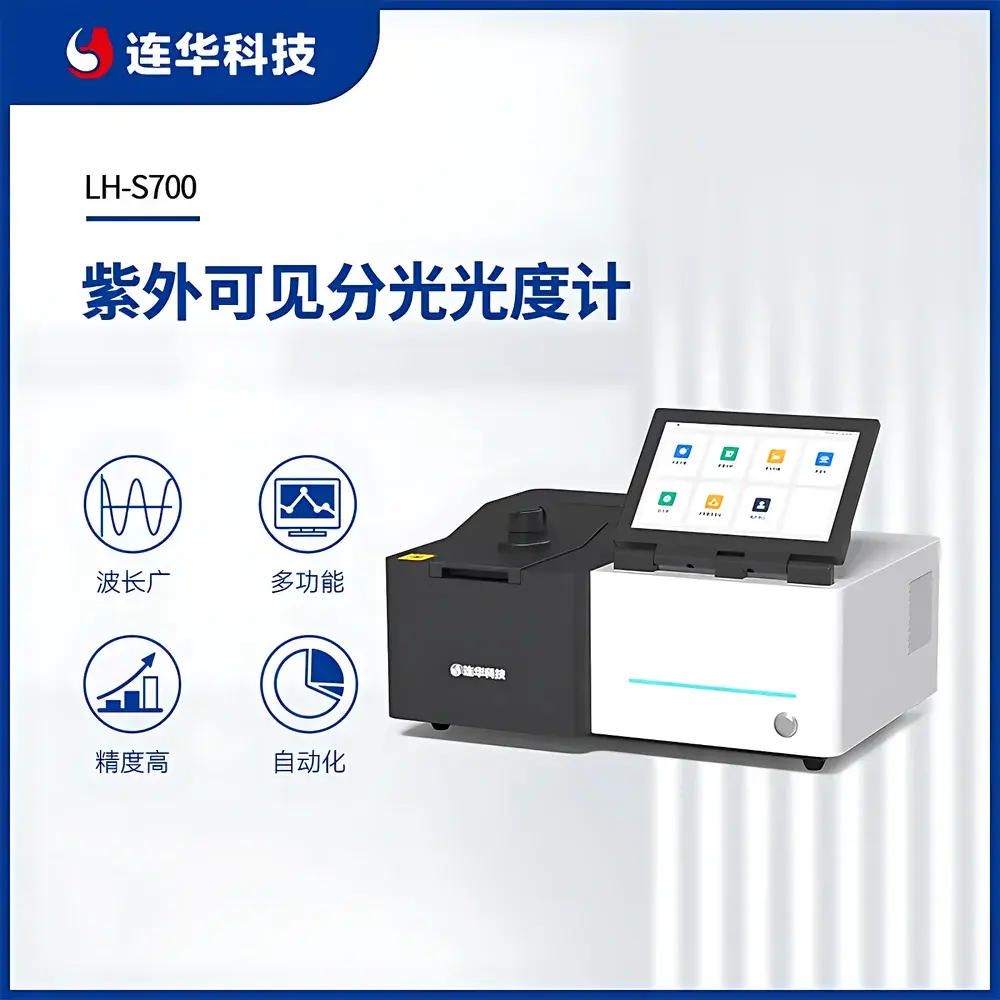
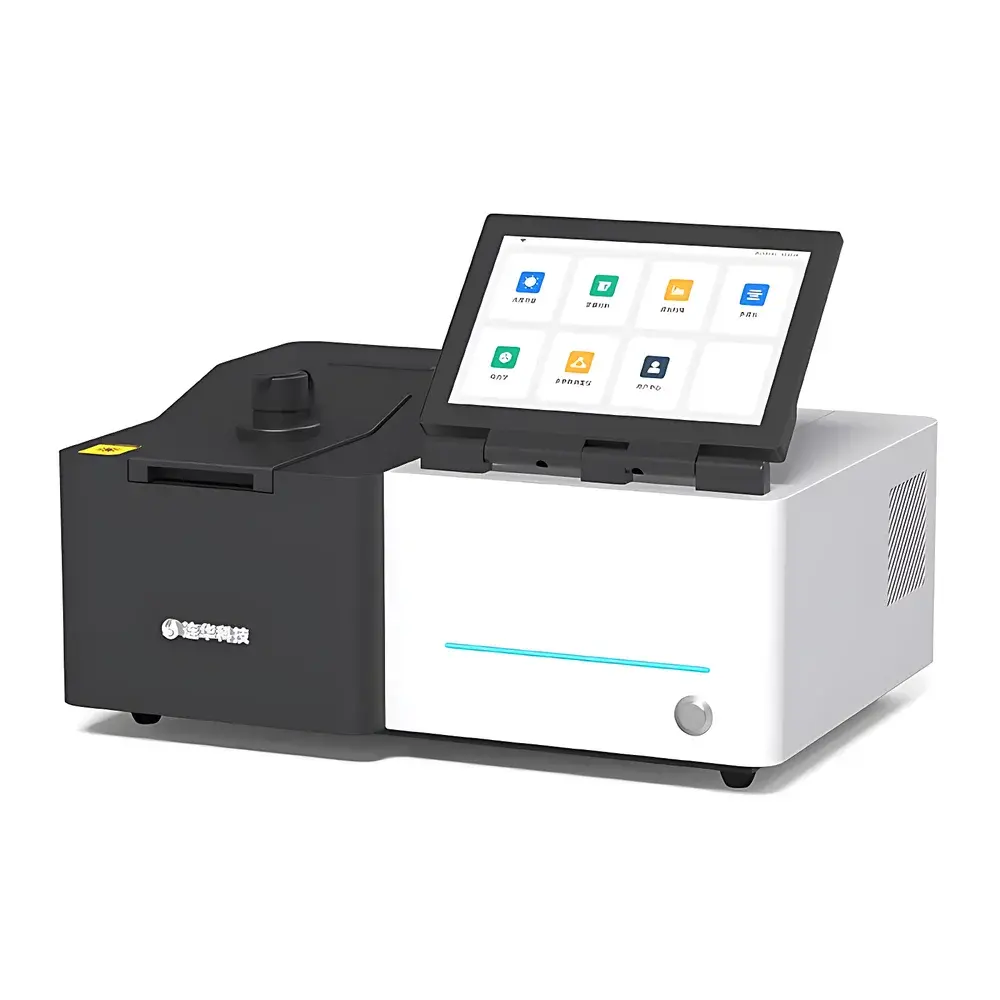
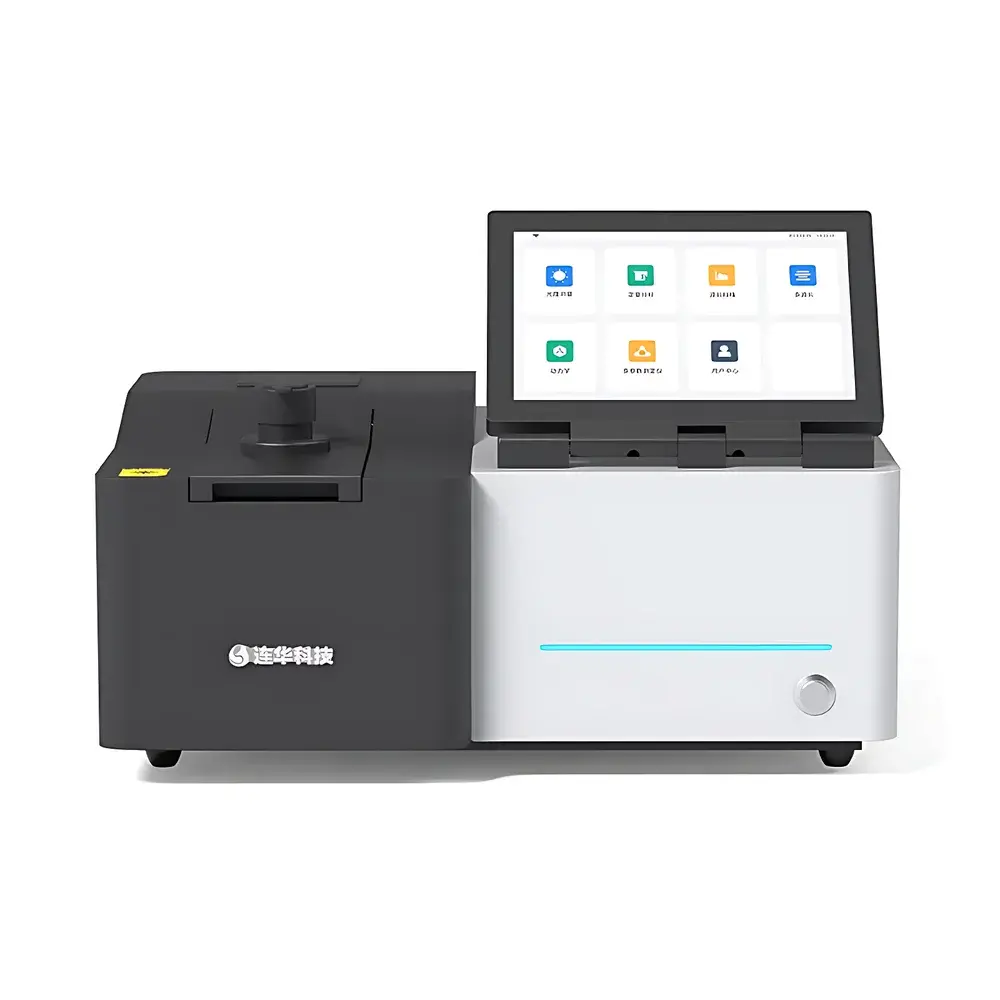
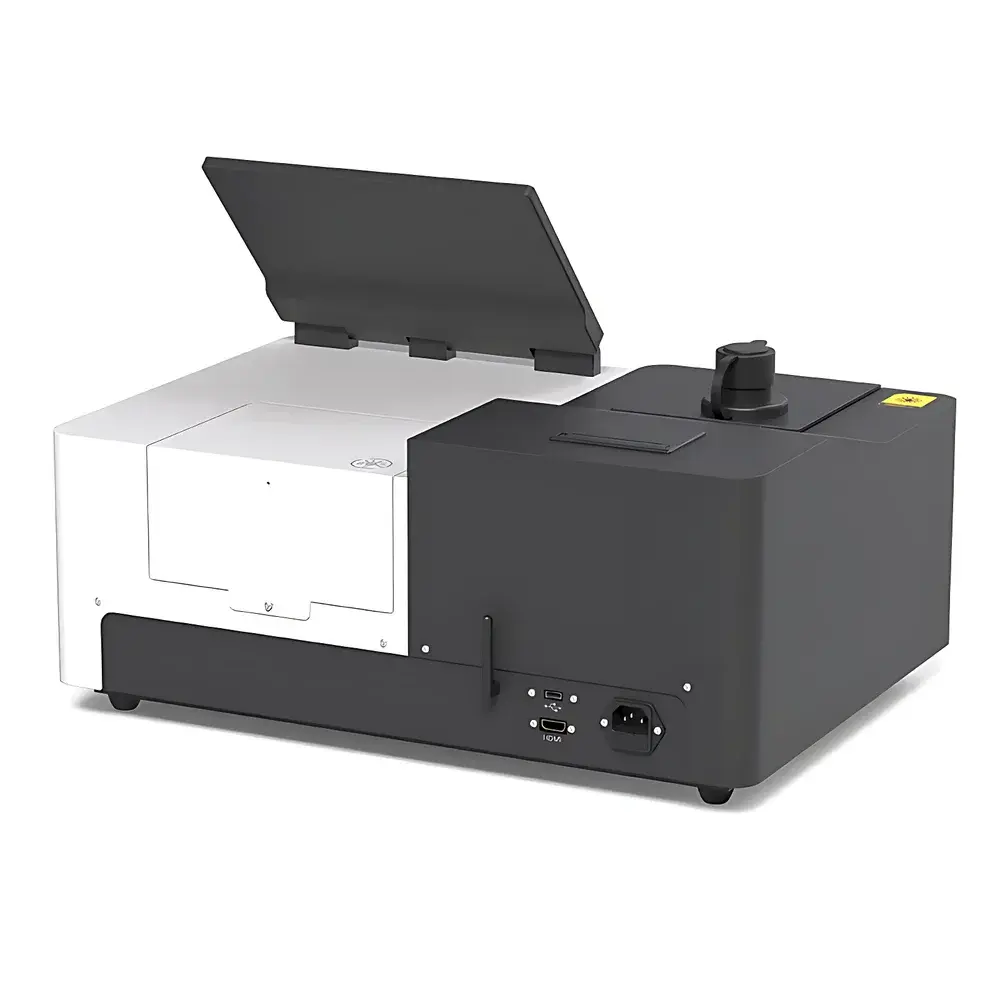
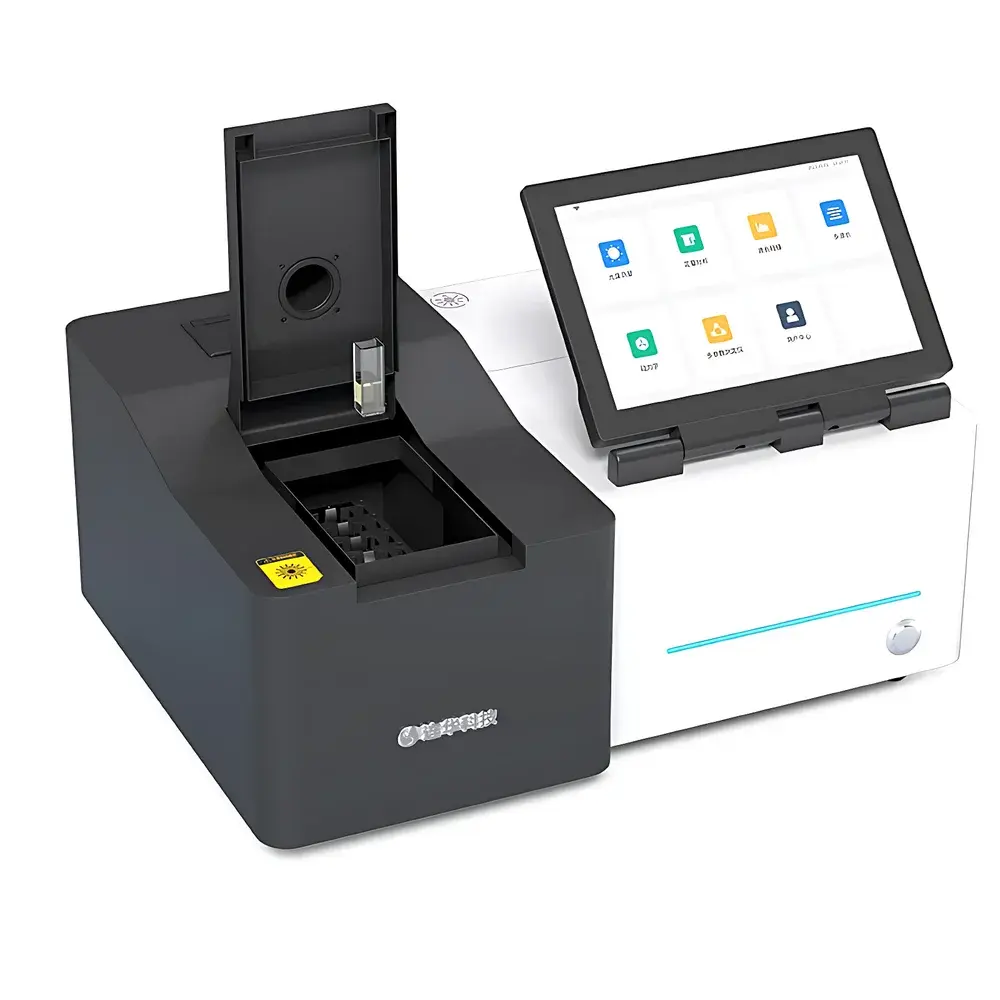
Lohand LH-S700 UV-Vis Spectrophotometer
| Brand | Lohand |
|---|---|
| Origin | Beijing, China |
| Manufacturer Type | Original Equipment Manufacturer (OEM) |
| Regional Classification | Domestic (China) |
| Model | LH-S700 |
| Detector Type | Silicon Photocell |
| Wavelength Range | 190–1100 nm |
| Automation Level | Automatic Wavelength Scanning |
| Spectral Bandwidth | 2.0 nm |
| Wavelength Accuracy | ±0.5 nm (190–340 nm) |
| Wavelength Repeatability | ≤±0.2 nm (190–340 nm) |
| Stray Light | ≤0.2% at 220 nm and 360 nm |
Overview
The Lohand LH-S700 UV-Vis Spectrophotometer is a dual-beam, microprocessor-controlled optical instrument engineered for precision quantitative and qualitative analysis across research laboratories, environmental monitoring centers, pharmaceutical QC units, and municipal water treatment facilities. Based on the principle of Beer-Lambert law absorption spectroscopy, it measures absorbance, transmittance, and radiant energy of liquid, solid, or turbid samples within the ultraviolet, visible, and near-infrared spectral region (190–1100 nm). Its double-beam architecture—featuring independently switchable tungsten and deuterium lamps—ensures stable baseline performance and compensates for source drift during extended measurements. Designed to comply with JJG 178–2007 (Chinese National Verification Regulation for UV-Vis-NIR Spectrophotometers) Class II specifications, the LH-S700 meets foundational metrological requirements for routine analytical work in regulated environments where traceability and repeatability are essential.
Key Features
- Dual-lamp optical system with hot-swappable plug-in tungsten and deuterium sources—no realignment required after lamp replacement
- Android-based LHOS operating system supporting multi-tasking, on-device help modules (including embedded video tutorials and context-sensitive manuals), and adjustable display angle (0–90°) with brightness control and screen-saver functionality
- Full-spectrum scanning mode with user-defined scan speed, step interval, number of scans, and peak/valley annotation; supports spectral area integration and derivative calculation
- Multi-wavelength quantification: up to eight wavelengths configurable per method, each with editable calibration factor (K-value), absorbance calculation logic, and custom curve formula definition
- Flexible photometric measurement: instant switching between absorbance (A), transmittance (%T), and energy (E) modes at any wavelength
- Advanced quantitative analysis engine supporting linear, polynomial (2nd- and 3rd-order), exponential, and logarithmic regression models—calibration curves saved in non-volatile memory for recall without reprocessing
- Kinetic time-scan capability: continuous monitoring of absorbance vs. time at a fixed wavelength to characterize reaction kinetics or stability profiles
- Hardware-level system health monitoring with automatic error logging, self-recovery protocols, factory reset, and over-the-air firmware updates via Wi-Fi
Sample Compatibility & Compliance
The LH-S700 accommodates standard 10 mm pathlength cuvettes (glass, quartz, or plastic), as well as optional accessories for micro-volume, flow-cell, or solid-sample reflectance measurements. Its optical design minimizes stray light interference (<0.2% at 220 nm and 360 nm), ensuring reliable detection of low-concentration analytes in complex matrices such as wastewater, soil extracts, or biological fluids. While not certified to ISO/IEC 17025 or FDA 21 CFR Part 11 out-of-the-box, the instrument’s audit-trail-capable data management architecture—including timestamped metadata, operator ID tagging, and immutable file export (Excel/PDF)—supports alignment with GLP and GMP documentation practices when deployed within validated laboratory workflows. The built-in 122-parameter water quality test library enables rapid compliance screening against Chinese national standards (e.g., HJ/T 399–2007, GB/T 5750.5–2006) without external software dependencies.
Software & Data Management
Data handling is performed natively through the LHOS platform, eliminating reliance on PC-based legacy software. All measurement results—including spectra, kinetic traces, calibration curves, and multi-point quantitation reports—are stored in a centralized database capable of retaining up to 50 million records. Each dataset retains full contextual metadata: date/time stamp, operator ID (if configured), instrument serial number, lamp status, wavelength calibration history, and environmental sensor readings (where applicable). Filtering, sorting, comparative overlay, and statistical summary functions are available on-device. Export options include CSV (for spreadsheet integration), Excel (.xlsx), and PDF (with embedded graphs and report headers). Remote connectivity via Wi-Fi enables secure synchronization with private institutional databases or the Lohand Cloud platform for centralized fleet monitoring, predictive maintenance alerts, and cross-site data aggregation—facilitating trend analysis and regulatory reporting at scale.
Applications
- Environmental testing: COD, ammonia nitrogen, total phosphorus, nitrate, fluoride, heavy metals (via colorimetric derivatization)
- Pharmaceutical QC: assay of active ingredients, dissolution profiling, excipient compatibility studies
- Food & beverage analysis: pigment concentration (e.g., anthocyanins, carotenoids), preservative quantification (e.g., sulfites, nitrites)
- Academic research: enzyme kinetics, ligand-binding studies, nanoparticle size estimation via surface plasmon resonance
- Industrial process control: dye bath concentration, catalyst activity monitoring, polymer degradation assessment
FAQ
Does the LH-S700 support GLP-compliant data integrity requirements?
Yes—when operated within a documented validation framework, its timestamped, operator-tagged, and tamper-evident data export capabilities align with core GLP principles. Full 21 CFR Part 11 compliance requires supplementary IT controls (e.g., electronic signatures, access logs) implemented at the institutional level.
Can the instrument be integrated into a LIMS environment?
Direct LIMS integration is supported via standardized CSV/Excel exports and RESTful API access through the Lohand Cloud interface. Custom middleware development may be required for proprietary LIMS platforms.
What is the recommended recalibration frequency for wavelength accuracy?
Per JJG 178–2007, wavelength verification should be performed before each analytical session using certified holmium oxide or didymium filters. The built-in one-touch wavelength calibration function streamlines this procedure.
Is quartz cuvette compatibility confirmed across the full 190–1100 nm range?
Yes—standard fused silica cuvettes are required for measurements below 340 nm. Optical pathlength tolerance is ±0.05 mm for 10 mm cells, consistent with ISO 10110-7 specifications.
How does the dual-beam design improve measurement stability?
By splitting the light beam into sample and reference paths simultaneously, the system continuously corrects for fluctuations in lamp intensity, detector sensitivity, and ambient temperature—reducing baseline drift and enhancing reproducibility over long-duration scans.






