
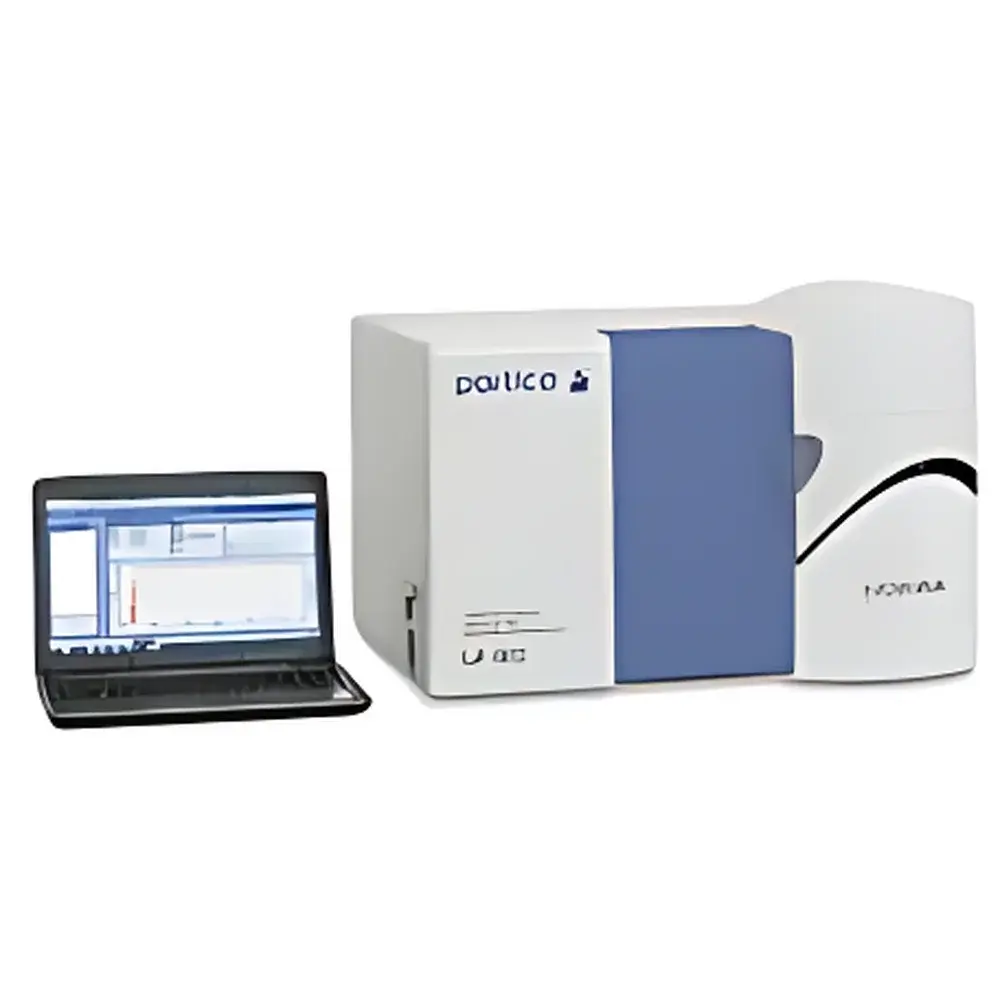
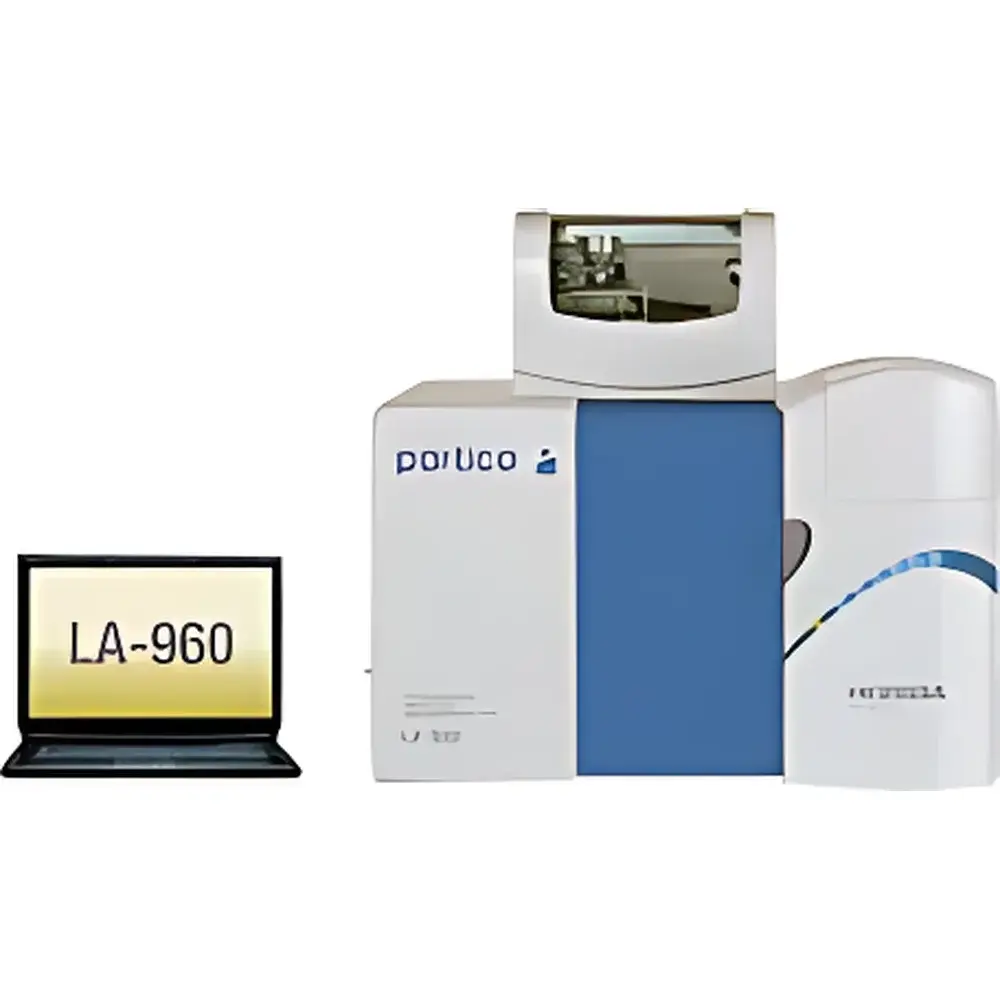
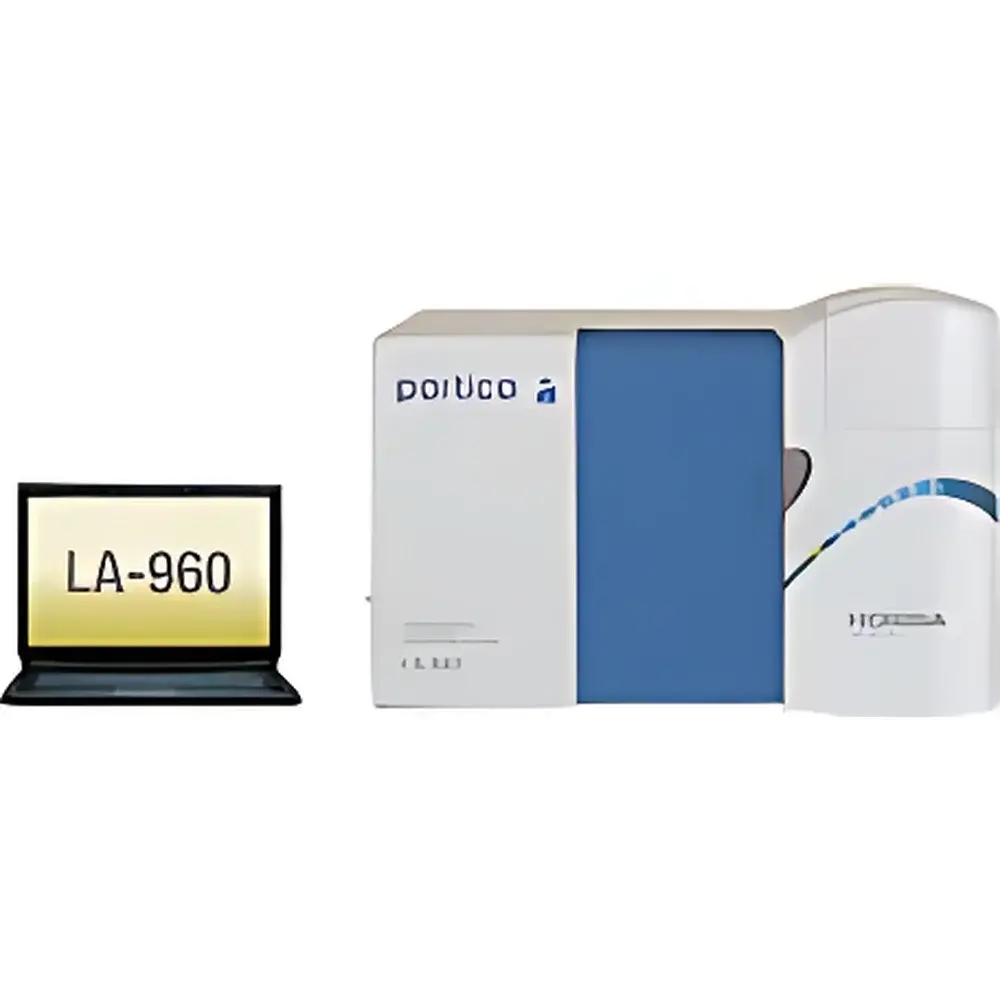
HORIBA LA-960 Laser Particle Size Analyzer
| Brand | HORIBA |
|---|---|
| Origin | Japan |
| Model | LA-960 |
| Dispersion Method | Dry & Wet |
| Measurement Range | 0.01–5000 µm |
| Repeatability | < 0.1% |
| Measurement Time | < 10 s |
| Compliance | ISO 13320 |
| Accuracy | ±0.6% |
Overview
The HORIBA LA-960 Laser Particle Size Analyzer is a high-performance, research-grade instrument engineered for precision particle size distribution (PSD) analysis across an exceptionally broad dynamic range—from 10 nanometers to 5 millimeters. It operates on the principle of Mie scattering theory, supported by rigorous angular light-scattering detection and advanced inverse algorithm processing. Unlike conventional laser diffraction systems constrained by optical design limitations, the LA-960 employs a proprietary three-dimensional optical layout that captures full-scatter pattern data with high fidelity. This architecture enables accurate modeling of scattering intensity versus scattering angle, incorporating real-world optical component parameters—including lens aberrations, detector quantum efficiency, and laser coherence effects—into its theoretical fitting engine. As a result, the system achieves traceable, metrologically robust measurements even at the sub-20 nm threshold, validated using NIST-traceable reference materials. Designed for laboratories requiring regulatory-compliant, repeatable, and auditable PSD data, the LA-960 serves as a primary measurement tool in R&D, QC/QA, and process development environments where particle morphology, agglomeration state, and batch-to-batch consistency are critical.
Key Features
- Ultra-wide measurement range: 0.01 µm (10 nm) to 5000 µm (5 mm), covering colloidal nanoparticles through coarse granules in a single run
- High repeatability: < 0.1% relative standard deviation (RSD) for D50 under standardized operating conditions
- Measurement speed: Full PSD acquisition and analysis completed in under 10 seconds per sample
- Dual dispersion capability: Integrated dry powder dispersion module and fully automated wet dispersion unit with programmable sonication, stirring, and flow control
- Optical calibration traceability: Factory-calibrated laser source and photodetector array with documented uncertainty budgets aligned to ISO/IEC 17025 practices
- Robust optical architecture: Sealed, vibration-damped optical bench with temperature-stabilized components to minimize thermal drift during extended operation
Sample Compatibility & Compliance
The LA-960 accommodates diverse sample types—including aqueous suspensions, organic solvents, dry powders, emulsions, and slurries—without hardware modification. Its wet dispersion system supports refractive index matching for high-contrast samples, while the dry module features adjustable air pressure and dispersion energy to prevent particle fracture or electrostatic aggregation. The instrument complies fully with ISO 13320:2020 (“Particle size analysis — Laser diffraction methods”), and its software architecture supports 21 CFR Part 11 compliance when configured with electronic signatures, audit trails, and role-based access control. Routine verification protocols include built-in optical alignment checks, background noise monitoring, and automated validation using certified reference standards (e.g., NIST SRM 1963, 8012). All measurement reports include metadata on instrument configuration, calibration status, and environmental conditions—essential for GLP and GMP-regulated workflows.
Software & Data Management
HORIBA’s LaVision™ software provides a modular, Windows-based interface for method development, real-time visualization, statistical comparison, and report generation. It includes embedded SOP templates compliant with ASTM E2915 and USP <429>, and supports batch processing of up to 99 samples with automatic outlier detection and trend analysis. Raw scatter data is stored in HDF5 format, ensuring long-term readability and interoperability with third-party analytics platforms (e.g., MATLAB, Python pandas). Audit trail functionality records all user actions—including parameter changes, data exports, and report approvals—with timestamps and operator IDs. Data integrity is reinforced via encrypted local storage and optional network backup integration with enterprise LIMS systems.
Applications
- Pharmaceutical formulation: Quantifying API crystallinity, excipient particle size, and suspension stability in oral solids and injectables
- Advanced materials R&D: Characterizing carbon black, metal oxides, battery cathode precursors, and ceramic nanopowders
- Environmental monitoring: Analyzing airborne particulate matter (PM2.5/PM10), soil sediment fractions, and wastewater floc size
- Food & beverage quality control: Monitoring starch granule swelling, dairy protein aggregates, and emulsion droplet coalescence
- Paints & coatings: Validating pigment dispersion homogeneity, rheology modifiers, and anti-settling performance
FAQ
Does the LA-960 require annual recalibration?
No mandatory annual recalibration is specified; however, HORIBA recommends quarterly optical verification using certified reference standards and biannual full-system calibration for regulated environments.
Can the LA-960 measure particles in viscous media?
Yes—the wet dispersion unit supports viscosities up to 1000 mPa·s when paired with appropriate pump settings and flow-cell selection.
Is ISO 13320 compliance verified independently?
Yes—type testing and conformance verification were performed by an ILAC-accredited third-party laboratory, with documentation available upon request.
What sample volume is required for wet measurement?
Typical minimum volume is 20 mL for standard cuvette mode; micro-volume accessories support down to 2 mL with reduced sensitivity below 100 nm.
How does the LA-960 handle highly absorbing or fluorescent samples?
The system uses dual-wavelength (650 nm red + 405 nm violet) illumination and multi-angle detection to mitigate absorption artifacts and enhance resolution for dark or luminescent particles.



