
Young Instruments HWP13-10S 75°C Thermal Stability Tester
| Brand | Young Instruments |
|---|---|
| Origin | Zhejiang, China |
| Manufacturer Type | Manufacturer |
| Country of Origin | China |
| Model | HWP13-10S |
| Temperature Control Range | Ambient to 200°C |
| Temperature Accuracy | ±1°C |
| Uniformity | ±1.0°C (≤140°C), ±1.5°C (140–180°C), ±2.0°C (180–200°C) |
| Thermocouple Range | −40 to 1000°C |
| Temp. Resolution | 0.1°C |
| Temp. Measurement Accuracy | ±1.5°C or ≤±0.004 |
| Response Time | 0.5 s |
| Standard Timing Range | 0–240 h |
| Custom Timing Range | 0–480 h |
| Timing Accuracy | ±0.01 s |
| Timing Resolution | 1 s |
| Chamber Volume | ≥27 L |
| Sample Cage Dimensions | 25 mm and 100 mm cubes |
| Test Tube Dimensions (Φ×H) | (50.5±0.5) mm × 150 mm |
| Interior Chamber Dimensions | 350 mm × 350 mm × 400 mm |
| Safety Valve Activation Pressure | 60 kPa |
Overview
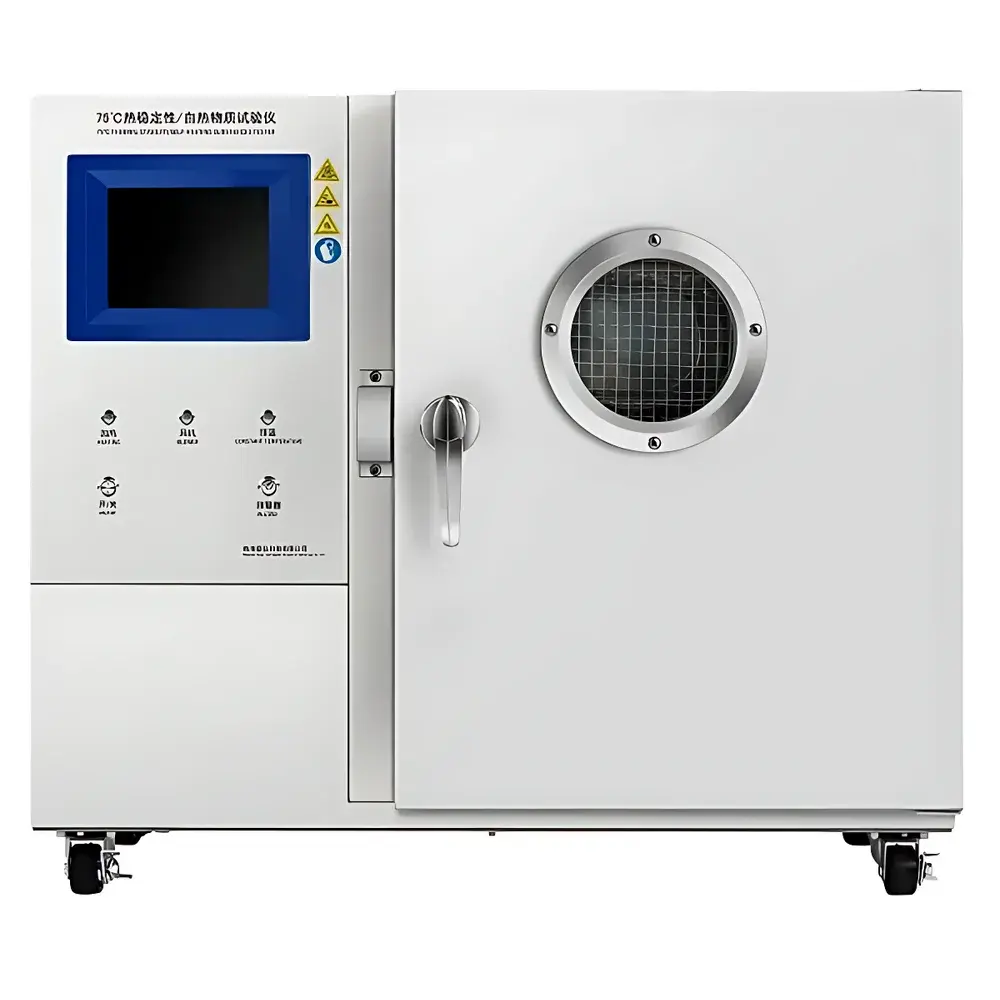
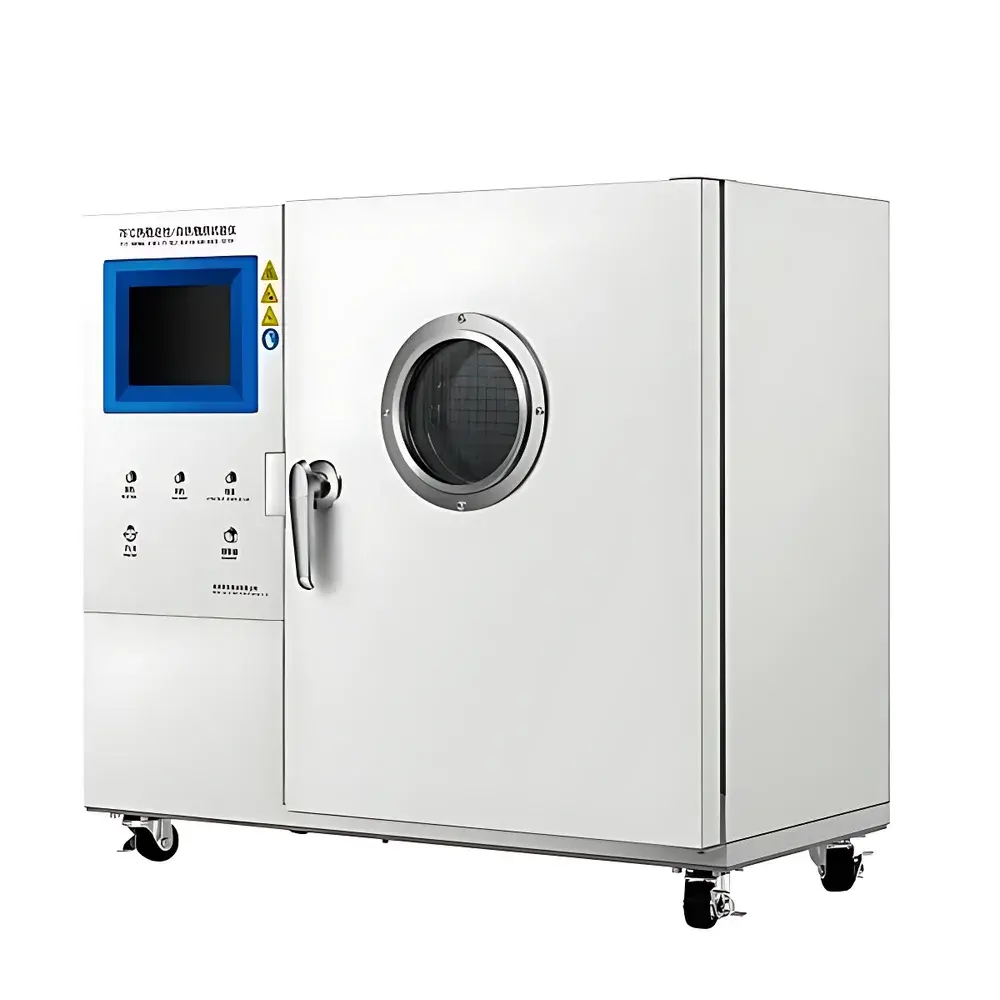
The Young Instruments HWP13-10S 75°C Thermal Stability Tester is a purpose-built, regulatory-compliant thermal assessment system engineered for the classification and transport safety evaluation of hazardous substances under UN Recommendations on the Transport of Dangerous Goods (UN RTDG), specifically Test 3(c) in Section 13.6.1 of the Manual of Tests and Criteria. It quantifies thermal stability by subjecting samples to sustained isothermal exposure at 75°C — a critical threshold used to determine whether explosive substances, desensitized explosives, self-reactive substances, or organic peroxides exhibit exothermic decomposition sufficient to preclude safe transport. The instrument operates on a dual-function platform integrating both the 75°C thermal stability test and the UN Test H.1 “Self-Heating Substances” assessment, enabling laboratories to conduct two essential UN classification tests within a single, validated hardware architecture. Its design adheres to fundamental principles of controlled thermal exposure: precise temperature regulation via digital PID control, spatial uniformity verification through a three-point thermocouple array embedded in the chamber wall, and passive pressure management via calibrated safety relief mechanisms.
Key Features
- Dual-test capability: Simultaneous support for UN Test 3(c) (75°C thermal stability) and UN Test H.1 (self-heating substances), reducing equipment footprint and cross-validation overhead.
- Embedded Windows CE operating system with 8-inch resistive touchscreen interface for intuitive parameter configuration, real-time monitoring, and graphical data visualization.
- Triple-point thermocouple measurement system integrated into the chamber inner wall, ensuring traceable, spatially representative temperature validation across the test zone.
- Forced-air convection heating with optimized airflow distribution, delivering verified temperature uniformity per ISO 17025-relevant criteria: ±1.0°C at ≤140°C, ±1.5°C at 140–180°C, and ±2.0°C at 180–200°C.
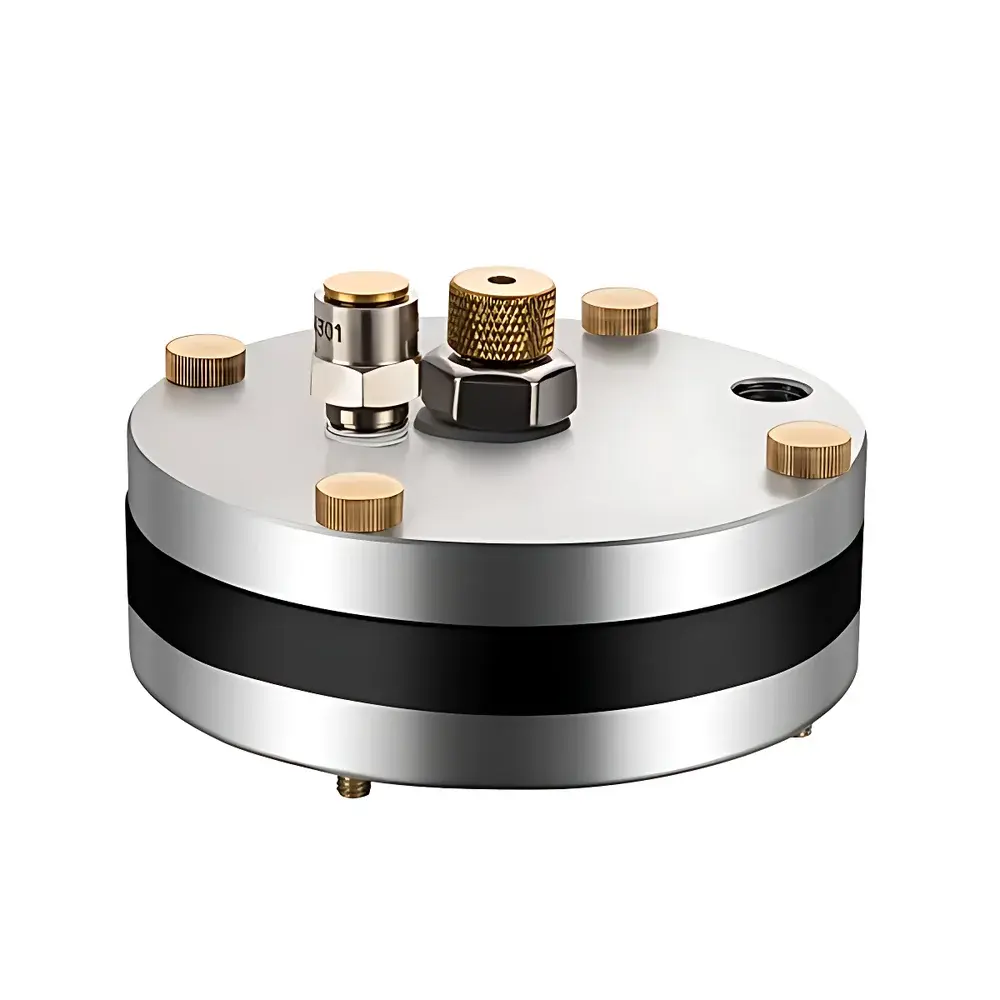
- Integrated safety engineering: front-mounted explosion-resistant borosilicate observation window; rear-mounted pressure-relief door activated at ≥2.5 kgf internal force; proprietary vented cap assembly for controlled pressure release from test tubes.
- Automated test execution with full audit trail: unattended operation up to 480 hours, timestamped temperature logging, real-time curve plotting, and automatic report generation including packaging classification guidance per UN TDG Chapter 2.1.
- Comprehensive fault detection with audible/visual alarms for overtemperature, sensor failure, door interlock breach, or pressure excursion beyond 60 kPa setpoint.
Sample Compatibility & Compliance
The HWP13-10S accommodates standard UN-compliant sample formats: cylindrical test tubes (50.5 ± 0.5 mm Ø × 150 mm H) for thermal stability assessment and wire-mesh cages (25 mm and 100 mm cubes) for self-heating substance screening. All chamber materials comply with ASTM E1529-20 requirements for fire resistance in hazardous material testing enclosures. The instrument’s temperature calibration protocol aligns with ISO/IEC 17025:2017 Clause 6.4.10, supporting laboratory accreditation. Data integrity meets GLP principles through immutable timestamping, electronic signature-capable reporting, and non-editable raw data export (CSV). While not FDA 21 CFR Part 11 certified out-of-the-box, its architecture supports integration into validated LIMS environments where electronic records and audit trails are enforced.
Software & Data Management
The embedded software provides role-based access control (administrator/user modes), configurable test templates, and parameter locking for SOP compliance. All temperature and timing data are logged at user-defined intervals (default: 10 s) with metadata including operator ID, test ID, ambient conditions, and calibration certificate IDs. Reports are generated in PDF format with embedded test curves, pass/fail determinations based on UN criteria, and automated classification statements (e.g., “Not classified as unstable explosive under UN Test 3(c)”). Raw data exports include ASCII-encoded CSV files compatible with statistical analysis packages (e.g., JMP, Minitab) and chromatography/data systems (e.g., Empower, OpenLab). System logs retain 30 days of operational history, including startup/shutdown events, alarm triggers, and calibration actions.
Applications
- Classification testing of organic peroxides per UN Manual of Tests and Criteria, Part II, Section 21.
- Stability screening of nitrocellulose-based propellants and pyrotechnic compositions prior to transport packaging approval.
- Regulatory submission support for REACH Annex VII/VIII and CLP Regulation (EC) No 1272/2008 hazard classification dossiers.
- QC release testing of batch-manufactured self-reactive monomers (e.g., acrylates, styrenics) in chemical production facilities.
- Research into decomposition kinetics of energetic materials under iso-thermal conditions for predictive modeling (e.g., AKTS Thermokinetics compatibility).
- Validation of thermal stabilization additives in polymer formulations containing peroxide initiators.
FAQ
What UN test standards does the HWP13-10S directly support?
It is designed and verified for UN Test 3(c) (75°C thermal stability) and UN Test H.1 (self-heating substances) as defined in the UN Manual of Tests and Criteria, Rev. 7, Section 13.6.1 and Section 24.3.1.
Is calibration documentation provided with the instrument?
Yes — each unit ships with a factory calibration certificate traceable to NIM (National Institute of Metrology, China) standards, covering temperature uniformity, thermocouple accuracy, and timer functionality.
Can test parameters be modified post-initiation?
No — once a test sequence begins, critical parameters (target temperature, duration, safety thresholds) are locked to prevent accidental deviation from approved protocols.
What maintenance is required for long-term reliability?
Quarterly verification of thermocouple offsets and annual recalibration of the main controller against reference standards are recommended; the forced-air fan filter should be cleaned every 200 operational hours.
Does the system support remote monitoring or network integration?
The current firmware supports USB data export only; Ethernet or RS-485 interfaces are available as optional hardware modules for integration into centralized lab monitoring networks.





