
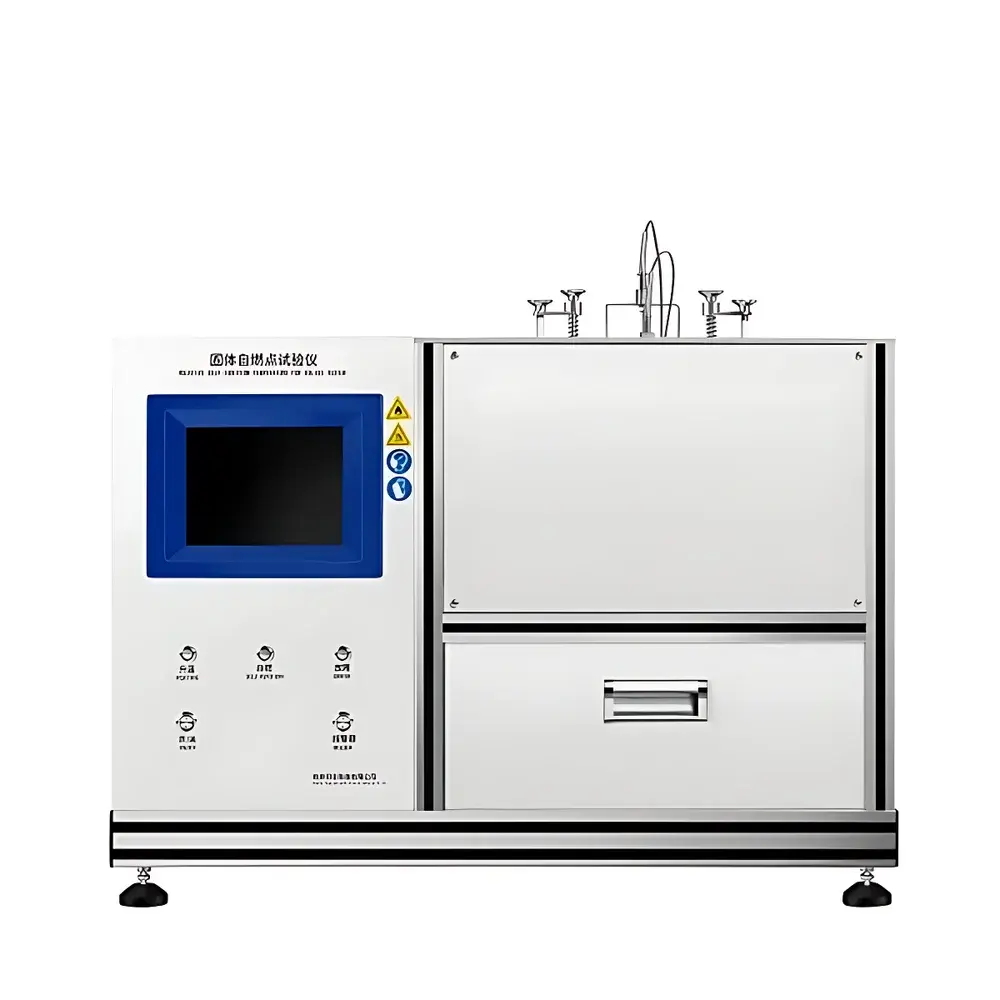
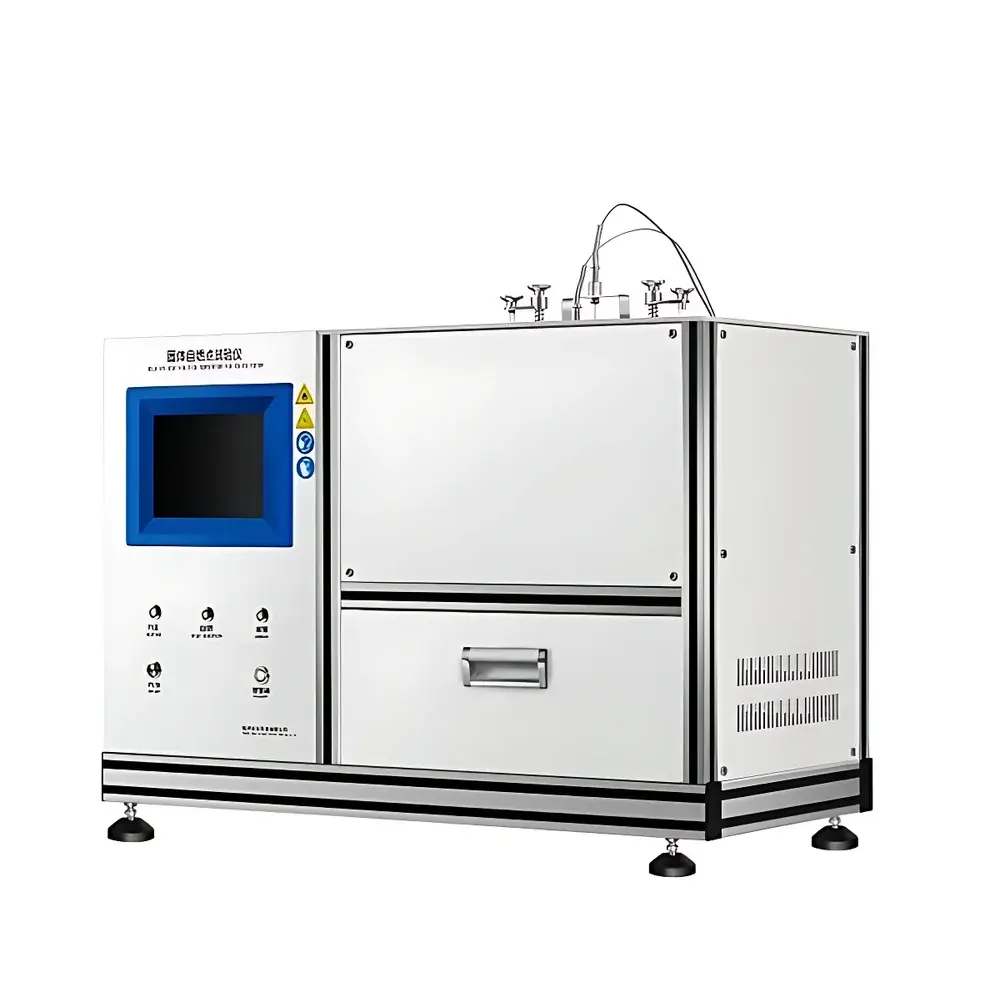
Young Instruments HWP22-10S Solid Autoignition Temperature Tester
| Brand | Young Instruments |
|---|---|
| Origin | Zhejiang, China |
| Manufacturer | Yes |
| Country of Origin | China |
| Model | HWP22-10S |
| Price | Upon Request |
| Operating Environment | (-5 to 45)°C, <95% RH |
| Sample Type | Solids |
| Temperature Control Range | Ambient to 650°C |
| Furnace Volume | ≥2 L |
| Furnace Material | Stainless Steel + Ceramic Fiber Insulation |
| Standard Heating Rate | 0.5°C/min |
| Customizable Heating Rate | 0.1–3.0°C/min |
| Temperature Accuracy | ±0.004 |
| Temperature Measurement Range | (-40 to 1000)°C |
| Temperature Resolution | 0.1°C |
| Timer Range | 0–96 h, Timing Accuracy: ±0.01 s |
| Wire Mesh Cage Dimensions | 20 mm cube, Aperture: 0.045 mm |
Overview
The Young Instruments HWP22-10S Solid Autoignition Temperature Tester is a fully automated, standards-compliant benchtop instrument engineered for the precise determination of the relative autoignition temperature (AIT) of solid chemical substances under controlled thermal conditions. Based on the principle of static oven heating—where a defined mass of sample is suspended in a standardized stainless-steel wire mesh cage inside a thermally insulated furnace—the system monitors spontaneous ignition onset via real-time temperature and exothermic event detection. The device operates according to the fundamental thermal stability assessment methodology specified in internationally recognized test protocols, including GB/T 21756–2008, French standard NFT 20-036–1985, and NY/T 1860.24 (Pesticide Physicochemical Property Testing Guidelines). Its design prioritizes thermal uniformity, measurement traceability, and operational safety—critical requirements for regulatory submissions, quality control laboratories, and R&D facilities handling flammable solids.
Key Features
- Embedded Windows CE operating system with 8-inch capacitive touch interface for intuitive real-time monitoring of temperature profiles, timer status, and combustion event detection.
- Dual-mode operation: preconfigured “Standard Mode” compliant with GB/T 21756 and NFT 20-036, plus flexible “Custom Mode” supporting user-defined heating rates (0.1–3.0°C/min), peak exotherm logging, and multi-point data capture.
- High-stability PID temperature controller minimizing thermal overshoot and ensuring consistent ramp fidelity—even during extended 96-hour tests—enabled by high-resolution thermocouple feedback (0.1°C resolution, ±0.004|t|°C accuracy over -40–1000°C range).
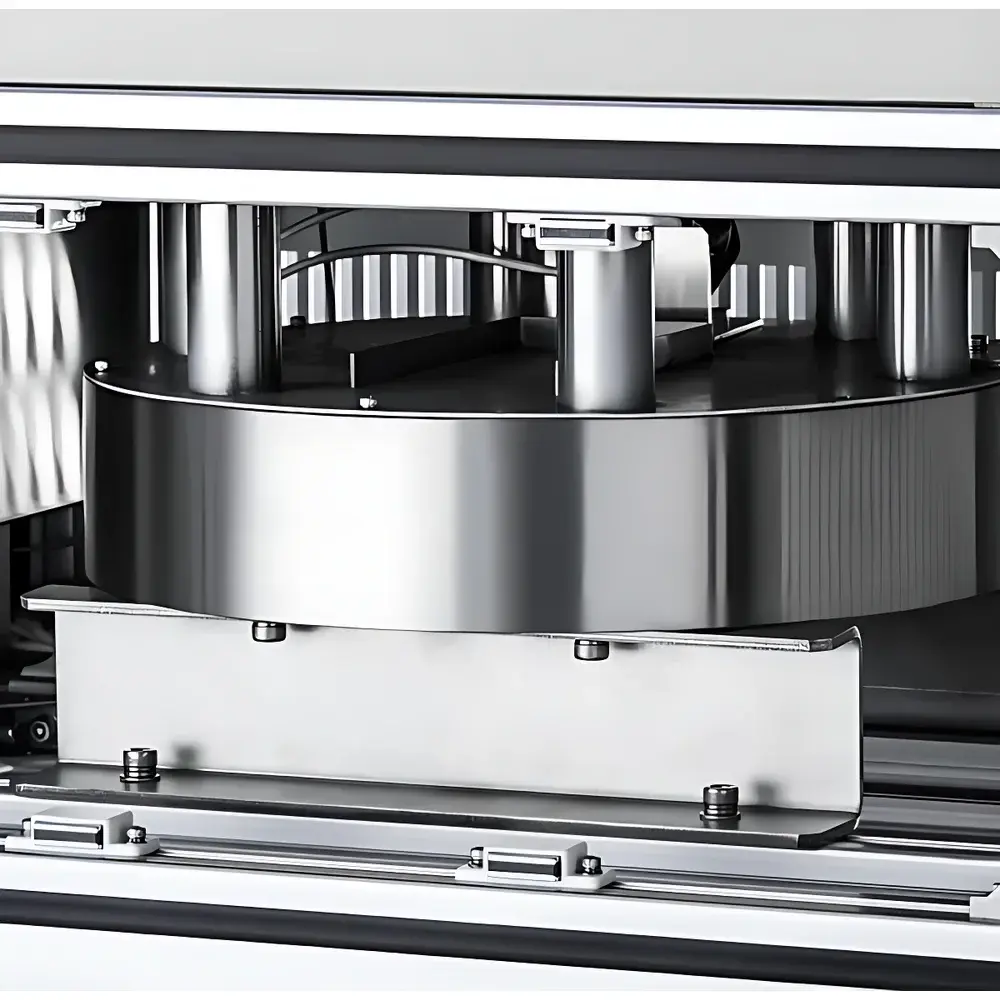
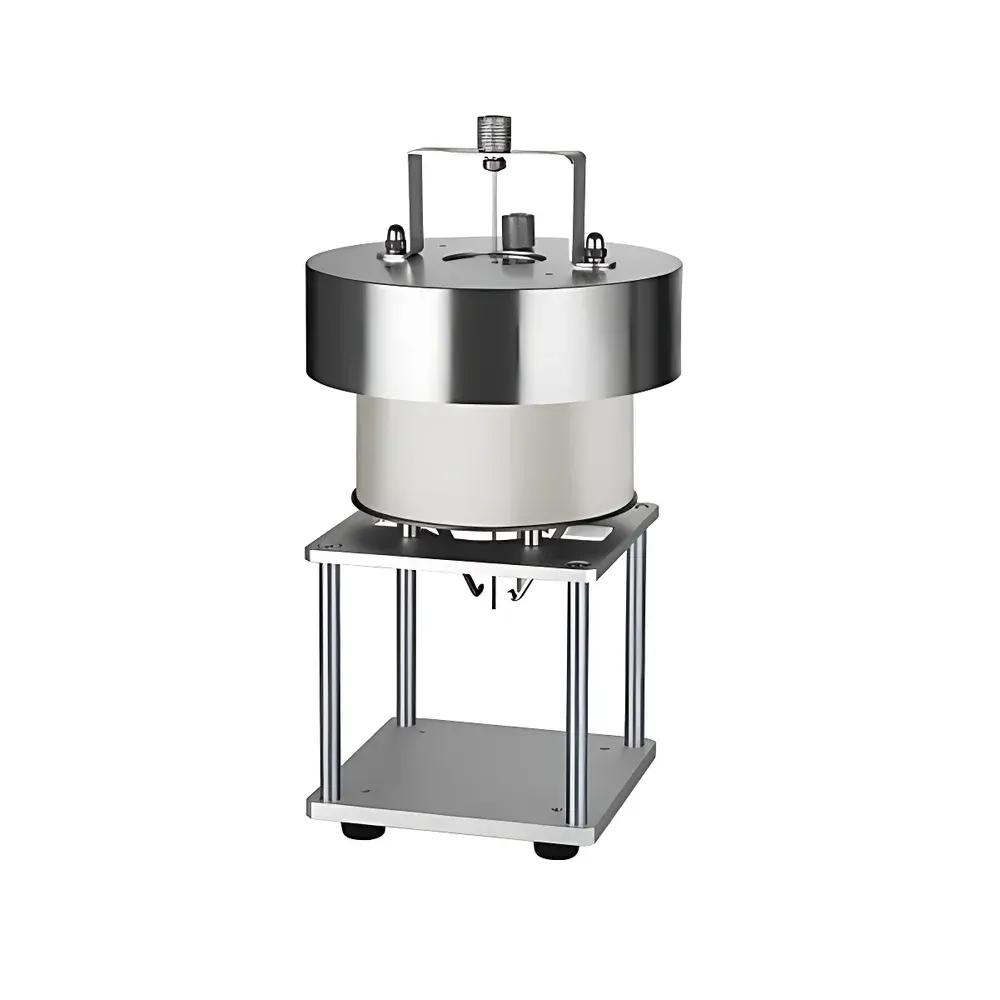
- Robust dual-layer furnace architecture: outer stainless-steel crucible (corrosion-resistant, deep-dimension geometry) combined with vacuum-formed ceramic fiber insulation, achieving low thermal mass and superior cavity uniformity via natural convection air circulation.
- Integrated safety and maintenance subsystems: removable cooling stand for post-test furnace lid handling; dedicated ash collection tray; calibrated stainless-steel poking rod for central orifice cleaning; and suspended 20 mm³ wire mesh cage (0.045 mm aperture) enabling safe, repeatable sample loading without direct contact with hot zones.
- Full automation workflow—from parameter initialization and ramp execution to auto-detection of ignition onset, time-stamped data logging, and report generation—eliminating manual observation bias and ensuring GLP-aligned repeatability.
Sample Compatibility & Compliance
The HWP22-10S is validated exclusively for solid-phase materials—including powders, granules, pellets, and pressed tablets—within defined mass and geometric constraints per ISO/IEC 17025 and national regulatory frameworks. It meets the physical and procedural requirements of GB/T 21756–2008 (equivalent to ASTM E659–17 Annex A1 for comparative autoignition testing), NFT 20-036–1985, and NY/T 1860.24. All thermal sensors are calibrated against NIST-traceable reference standards, and temperature uniformity across the 2 L chamber is verified per IEC 60068-3-5. The system supports audit-ready documentation: time-stamped raw data files (.csv), graphical curve exports (.png/.pdf), and configurable test reports compatible with internal QA review and external regulatory submission (e.g., REACH dossier annexes, EPA SARA Title III reporting).
Software & Data Management
The embedded software provides full lifecycle data governance: parameter configuration (heating rate, hold time, alarm thresholds), real-time visualization of dual-channel temperature curves (furnace ambient vs. sample-exposed thermocouple), and automatic identification of ignition onset based on first-derivative threshold crossing. All measurements are timestamped with ±0.01 s precision and stored locally with immutable file naming (YYYYMMDD_HHMMSS_ModelID). Export options include CSV for statistical analysis in MATLAB or JMP, and PDF reports containing metadata (operator ID, calibration certificate IDs, environmental logs). Audit trail functionality complies with FDA 21 CFR Part 11 requirements when deployed in GMP environments—supporting electronic signatures, user-level access control, and change history tracking for all critical parameters.
Applications
- Regulatory testing for UN GHS Classification (H251: “May self-heat and then ignite”) and transport hazard assessment (UN Manual of Tests and Criteria, Part III, Subsection 33.2.1).
- Formulation safety screening in pharmaceutical, agrochemical, and polymer manufacturing—particularly for active pharmaceutical ingredients (APIs), catalysts, and metal hydride powders.
- Thermal stability benchmarking during process safety evaluation (e.g., RC1 calorimetry correlation, MTSR estimation).
- Quality assurance of incoming raw materials where autoignition behavior impacts storage protocol design (e.g., warehouse segregation, inerting requirements).
- Research into decomposition kinetics and oxidative initiation mechanisms of energetic materials and nanomaterials.
FAQ
What standards does the HWP22-10S directly support?
It is fully aligned with GB/T 21756–2008, NFT 20-036–1985, and NY/T 1860.24. While not identical to ASTM E659, its test geometry and thermal protocol are functionally equivalent for relative AIT ranking.
Can the instrument detect ignition without visual confirmation?
Yes—via real-time differential thermocouple analysis: a sustained >2°C/min rise in sample temperature exceeding furnace ambient slope triggers automated ignition flagging, independent of operator observation.
Is calibration traceable to international standards?
All thermocouples are factory-calibrated against NIST SRM 1750a reference junctions; full calibration certificates—including uncertainty budgets—are supplied with each unit.
How is thermal uniformity verified across the 2 L chamber?
Per IEC 60068-3-5, nine-point mapping is performed at 100°C, 300°C, and 600°C using certified portable thermocouples; uniformity is maintained within ±2°C at target setpoints.
Does the system support remote monitoring or network integration?
The current firmware supports USB export only; Ethernet or Modbus TCP integration requires optional OEM firmware upgrade and IT infrastructure validation per site-specific cybersecurity policies.




