
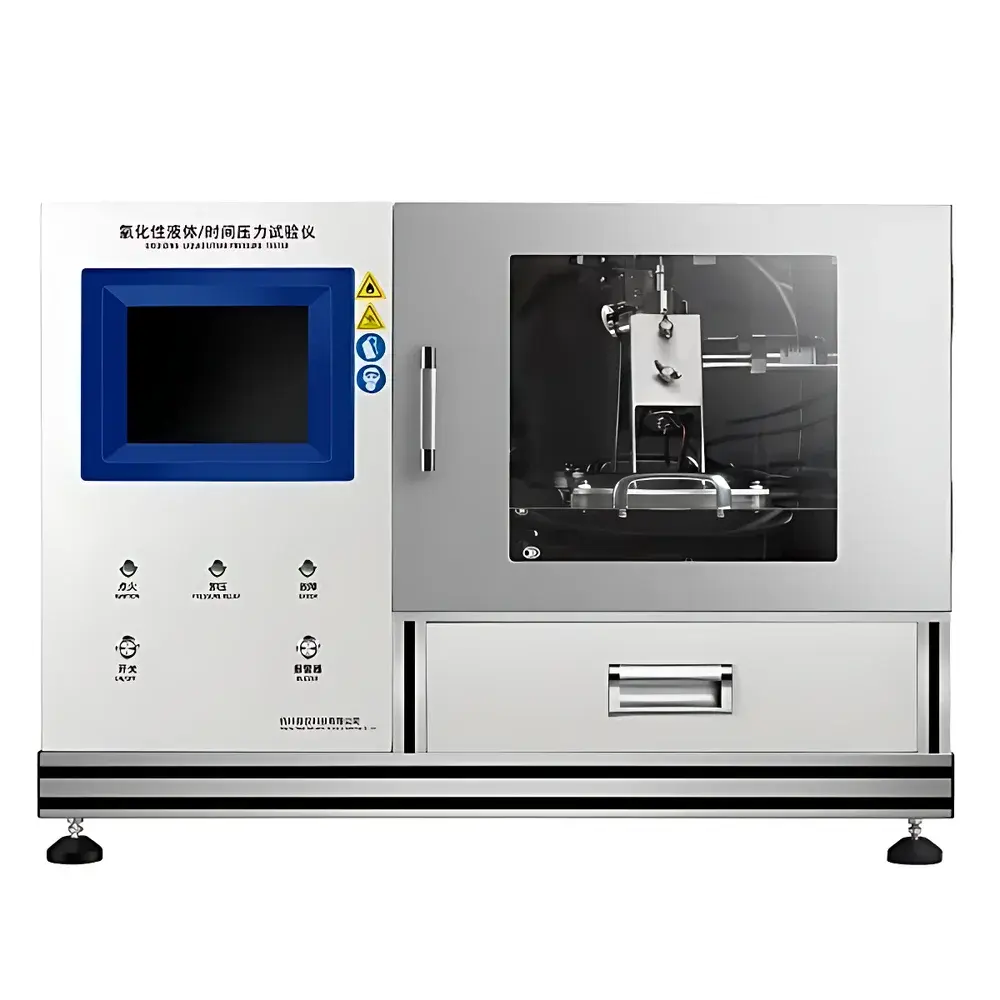
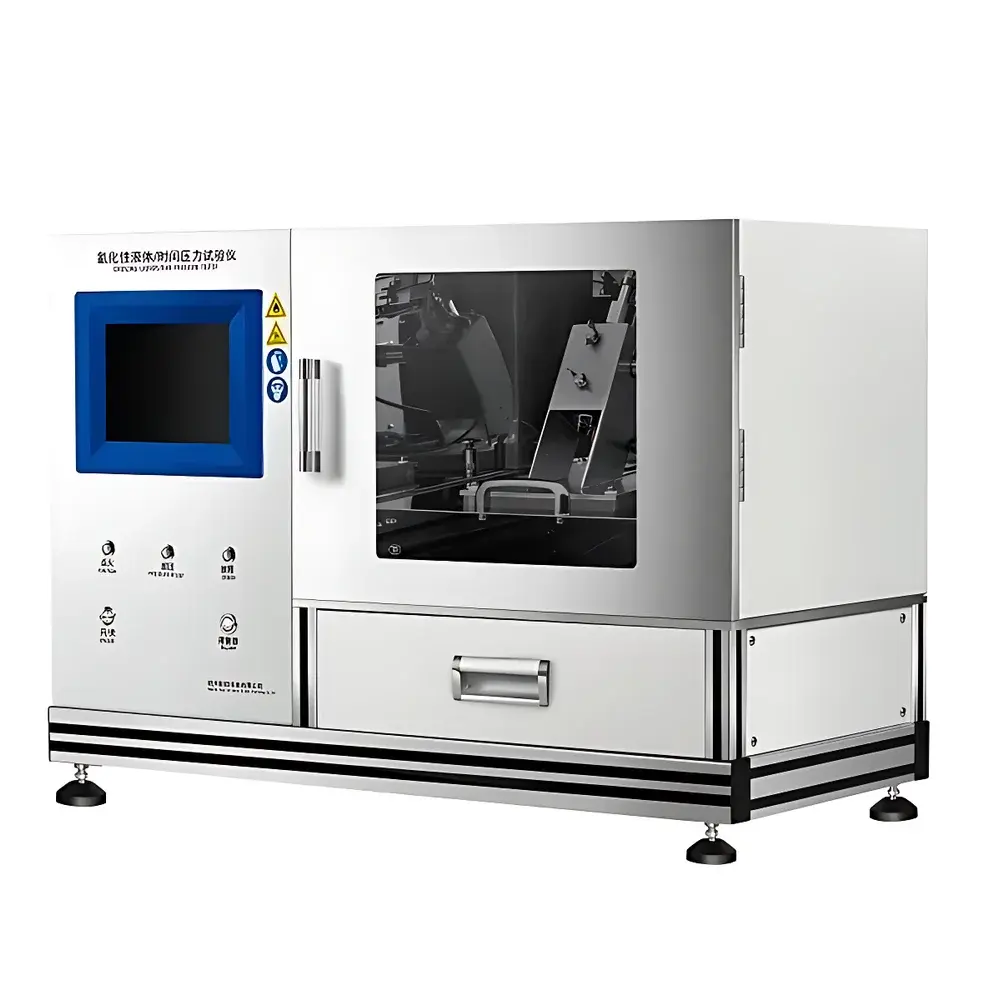
Young Instruments HWP06-20S Oxidizing Liquids and Time-Pressure Test Apparatus
| Brand | Young Instruments |
|---|---|
| Origin | Zhejiang, China |
| Manufacturer | Yes |
| Country of Origin | China |
| Model | HWP06-20S |
| Price | Upon Request |
| Operating Environment | (-5 to 45) °C, <95% RH |
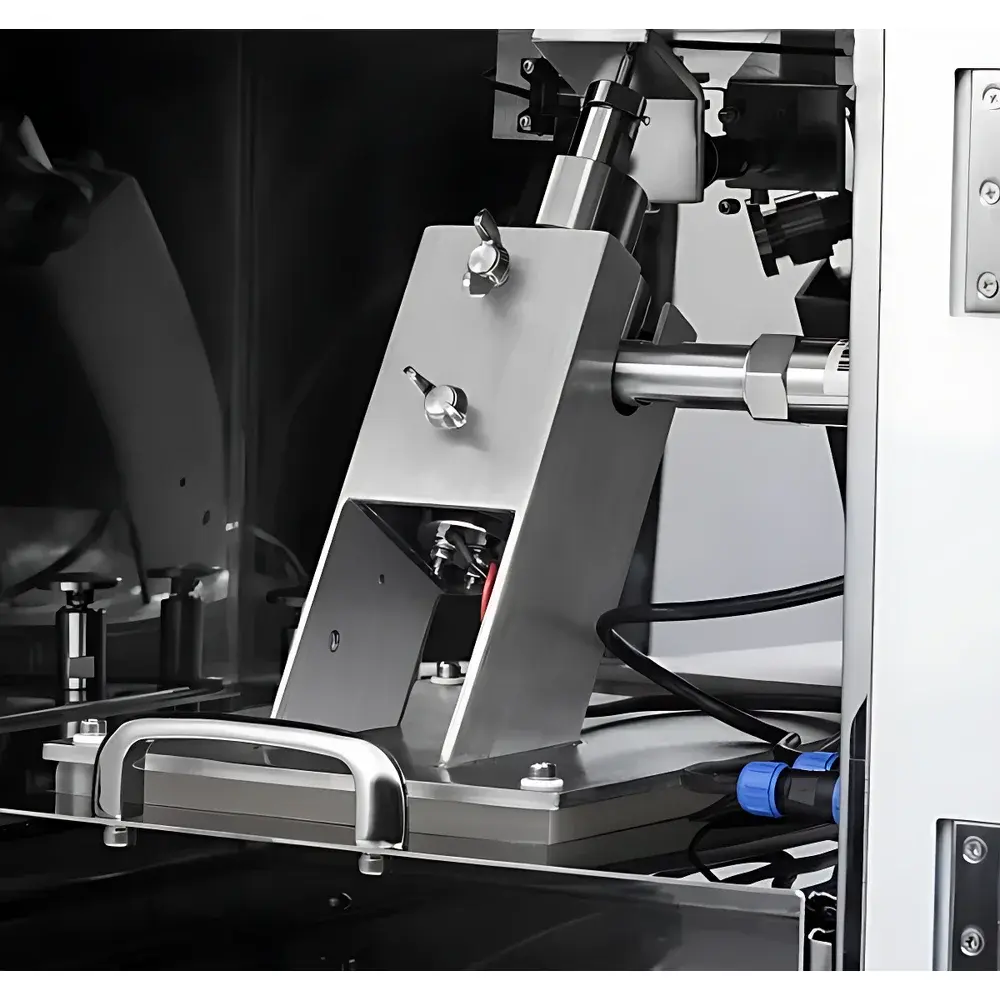
| Pressure Vessel Dimensions | Ø60 mm × 89 mm (cylindrical stainless steel, side-mounted pressure sensor) |
| Pressure Sensor Response Time | ≤5 ms (0–3 MPa step change) |
| Pressure Measurement Range | 0–5 MPa |
| Pressure Accuracy | ±0.1% FS |
| Ignition Method | Electronic spark ignition |
| Burst Disc Rated Pressure | 2.5 MPa ±5% |
| Timing Range | 0–60 s |
| Timing Accuracy | ±0.001 ms |
| Timing Resolution | 0.01 ms |
Overview
The Young Instruments HWP06-20S Oxidizing Liquids and Time-Pressure Test Apparatus is a fully automated, safety-engineered instrument designed for regulatory-compliant assessment of reactive hazard potential in liquid chemical substances. It operates on the principle of confined combustion dynamics: a precisely metered test sample is mixed with a standardized combustible reference material (e.g., cellulose or charcoal), sealed within a robust stainless-steel pressure vessel, and subjected to electronic spark ignition under controlled thermal conditions. The apparatus continuously records the transient pressure rise versus time profile—capturing critical parameters including time-to-peak-pressure, maximum pressure (Pmax), rate of pressure rise (dP/dt), and pressure-time integral—enabling quantitative classification per internationally recognized transport and waste reactivity criteria.
Key Features
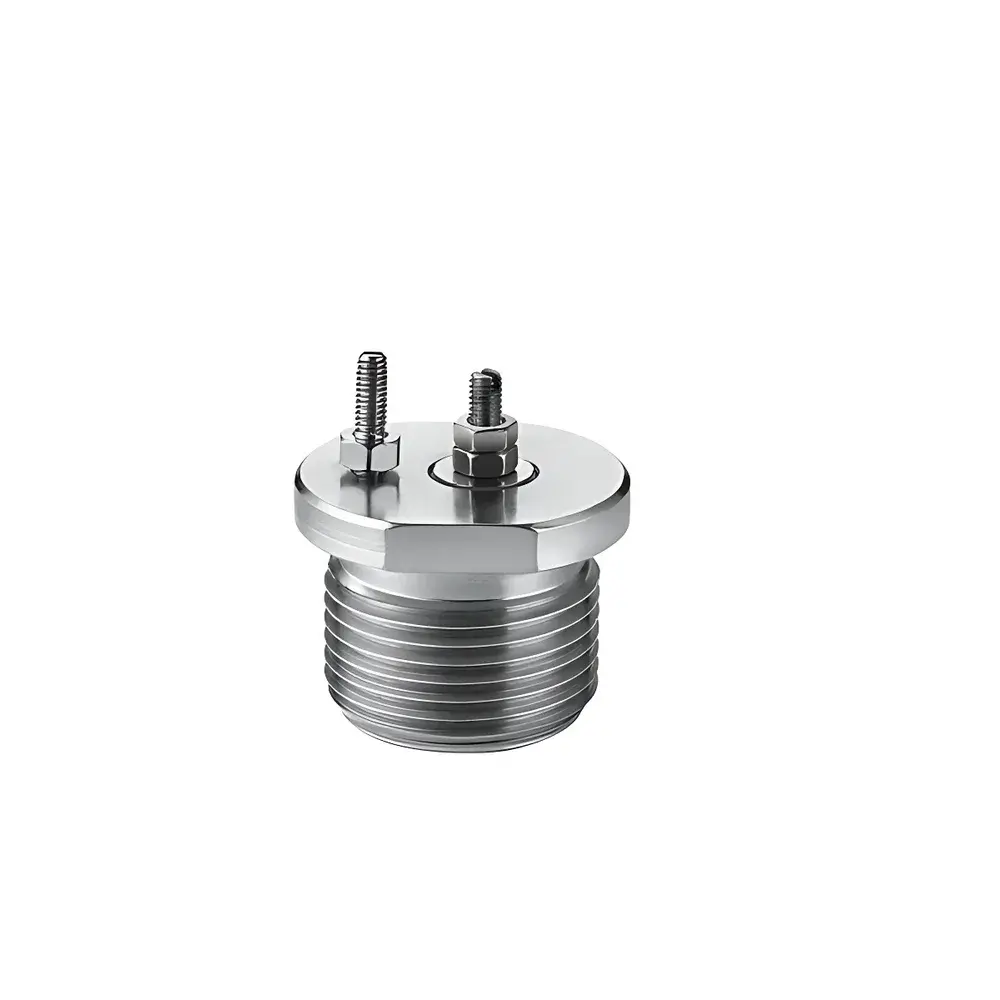
- Integrated high-fidelity pressure acquisition system featuring a side-mounted piezoresistive sensor with ≤5 ms dynamic response and ±0.1% full-scale accuracy across 0–5 MPa range
- Automated pressure vessel integrity verification prior to each test via real-time leak-rate monitoring during initial pressurization
- 8-inch industrial-grade capacitive touchscreen running Windows CE OS, supporting intuitive parameter configuration, live waveform visualization, and context-sensitive status feedback
- Fail-safe dual-redundant ignition control: remote-triggered electronic spark ignition with simultaneous audible/visual alarm activation
- Stainless-steel seamless-welded reaction chamber and pressure vessel rated for sustained operation at elevated temperatures and corrosive environments
- Programmable burst disc release mechanism with automatic post-test puncture at end-of-cycle to ensure rapid, controlled depressurization
- Onboard curve generation engine that produces calibrated pressure-vs.-time plots compliant with UN Manual of Tests and Criteria graphical reporting requirements
- Dedicated residual containment system with splash guard and condensate trap to prevent cross-contamination and facilitate safe residue recovery
- Full test automation—including ignition initiation, data logging, curve export, and report generation—requiring zero manual intervention after setup
Sample Compatibility & Compliance
The HWP06-20S accommodates liquid samples up to 10 mL volume, including aqueous solutions, organic solvents, formulated pesticides, battery electrolytes, and industrial process intermediates. Its design strictly adheres to the physical and procedural constraints defined in multiple harmonized regulatory frameworks: UN Recommendations on the Transport of Dangerous Goods, Manual of Tests and Criteria, Section 34.4.2 (Test O.2 for oxidizing liquids) and Sections 11.6.1, 12.6.1, and 23.4.1 (Time-Pressure Tests); GB/T 21620–2008 and GB/T 21579–2008; GAT 536–2015; NY/T 1860.28; and GB 5085.5–2007. All mechanical, thermal, and timing specifications—including burst disc tolerance (2.5 MPa ±5%), timing resolution (0.01 ms), and environmental operating envelope (–5 to 45 °C, <95% RH)—are validated against these standards’ metrological requirements. The system supports audit-ready documentation aligned with GLP principles, including electronic signature-capable test logs and immutable timestamped data files.
Software & Data Management
The embedded Windows CE application provides ISO/IEC 17025-aligned data handling: all raw pressure and time values are acquired at ≥10 kHz sampling rate and stored in binary format with metadata (operator ID, test ID, ambient conditions, calibration stamps). Export options include CSV (for third-party statistical analysis), PDF test reports with embedded pressure curves and pass/fail determinations per UN threshold criteria, and XML files compatible with LIMS integration. Audit trails record every parameter modification, ignition event, and data export action with user attribution and UTC timestamps. While not FDA 21 CFR Part 11 certified out-of-the-box, the architecture supports configurable electronic signature modules and role-based access control when deployed in regulated QA/QC environments.
Applications
This apparatus serves as a primary screening tool in chemical safety evaluation workflows across regulatory submission, industrial hygiene, and emergency response laboratories. Typical use cases include: classification of new chemical entities for UN transport hazard class 5.1 (oxidizing substances); determination of reactivity thresholds for hazardous waste characterization under RCRA-equivalent frameworks; verification of stability claims for lithium-ion battery electrolyte formulations; assessment of oxidation potential in agrochemical concentrates per OECD 144 guidance; and forensic analysis of combustion-driven overpressure events in packaging failure investigations. Its reproducible confinement geometry and traceable pressure metrology make it suitable for inter-laboratory round-robin studies requiring high inter-operator consistency.
FAQ
What safety certifications does the HWP06-20S hold?
The instrument complies with IEC 61010-1 for electrical safety in laboratory equipment and incorporates Class II explosion protection features—including intrinsically safe ignition circuitry, reinforced pressure boundary design, and automatic pressure relief—though formal ATEX or IECEx certification requires site-specific installation validation.
Can the system be integrated into an existing LIMS or ELN?
Yes—via standard serial (RS-232) and USB CDC virtual COM port interfaces, enabling bidirectional command/control and structured data export (CSV/XML) compatible with common laboratory informatics platforms.
Is calibration traceable to national standards?
Pressure sensor calibration is performed using deadweight testers traceable to NIM (China National Institute of Metrology); certificate of calibration includes uncertainty budget and is issued with each unit shipment.
What maintenance is required between tests?
After each run, users must inspect the burst disc integrity, clean the inner chamber with compatible solvents, verify seal condition, and perform the automated leak-check routine—no recalibration or consumable replacement is needed under normal operating conditions.
Does the apparatus support custom test protocols beyond published standards?
The firmware allows user-defined ignition delay windows, variable temperature ramp profiles (when paired with optional external thermal jacket), and extended timing capture up to 120 seconds—subject to internal validation and documented SOP approval.




