
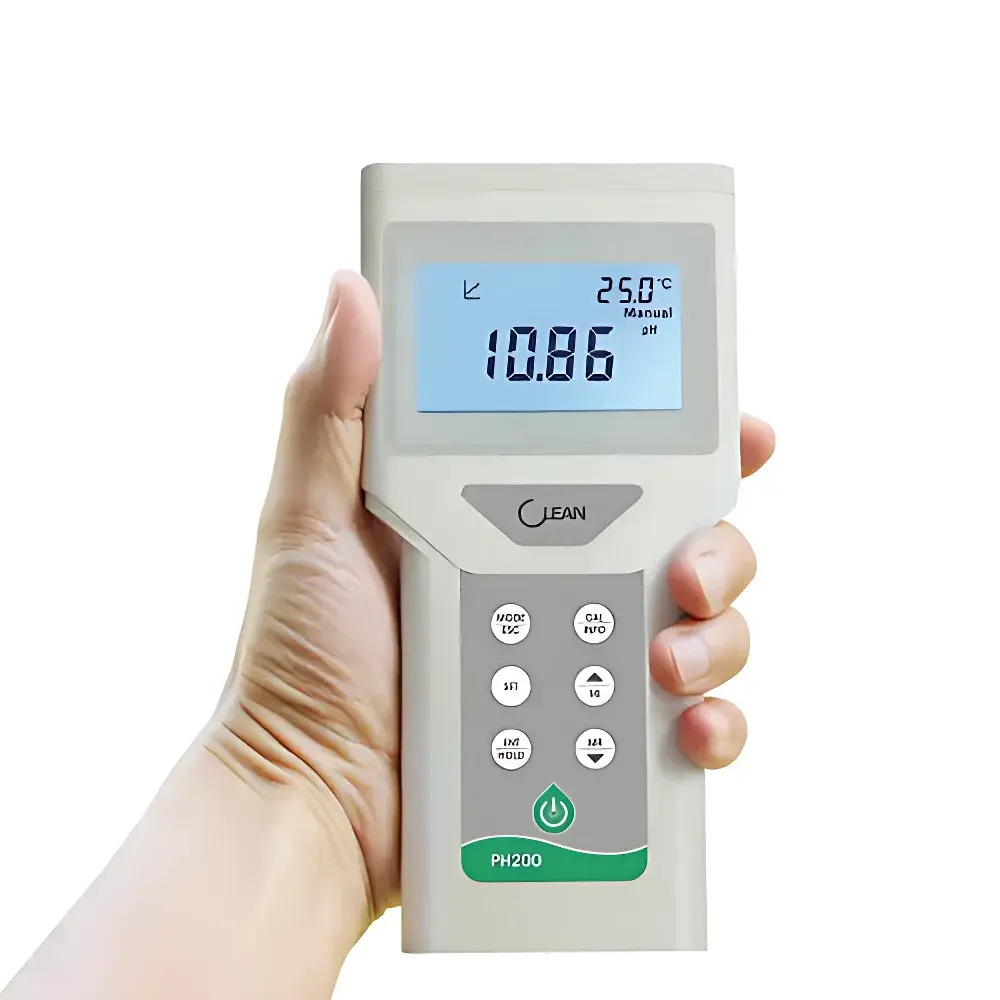
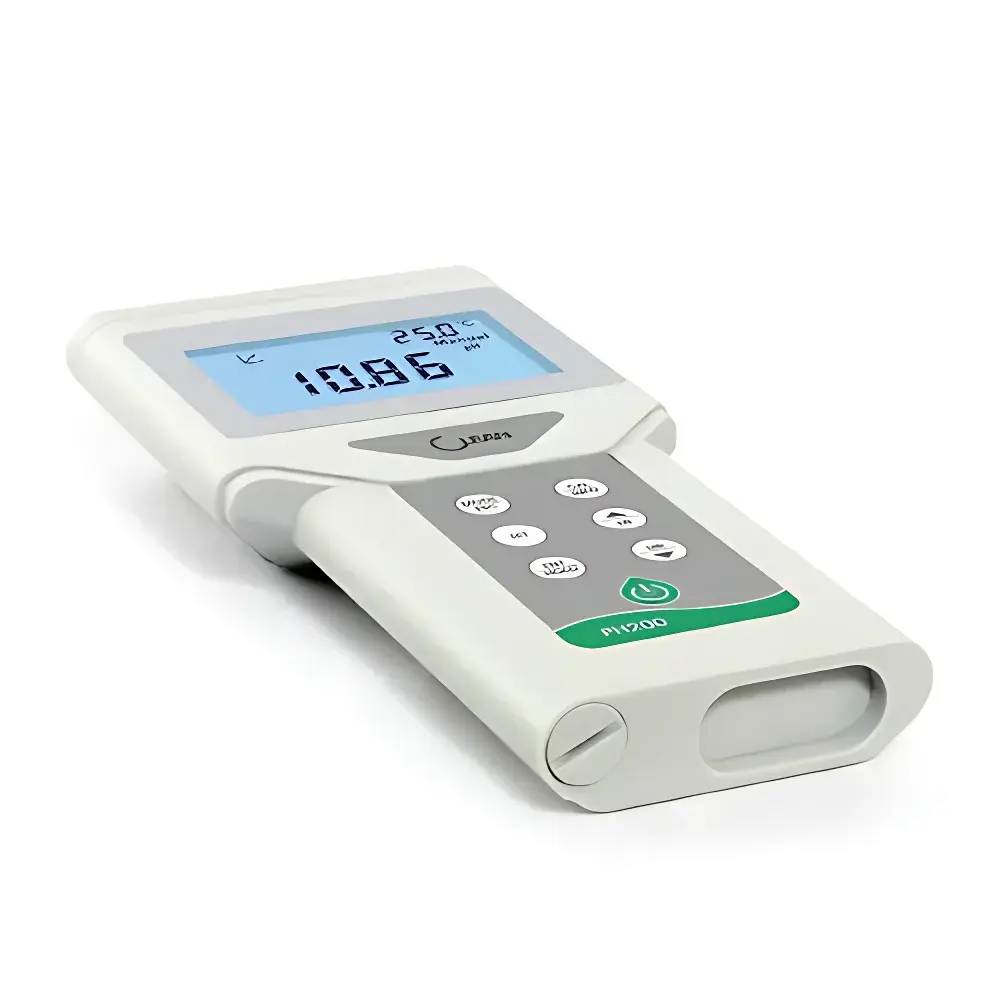
CLEAN CON200 Portable Conductivity Meter
| Brand | CLEAN |
|---|---|
| Origin | USA |
| Model | CON200 |
| Portability | Portable |
| Conductivity Range | 0.000 µS/cm to 400.0 mS/cm |
| TDS Range | 0.000 mg/L to 400.0 g/L |
| Resistivity Range | 0 to 100.0 MΩ·cm |
| Salinity Range | 0.0 to 260.0 g/L |
| Temperature Range | −10.0 °C to 110.0 °C |
| Accuracy | ±0.5% of Full Scale |
| Resolution | 0.001 µS/cm to 0.1 mS/cm |
| Display | 65 × 40 mm backlit LCD |
| Protection Rating | IP67 |
| Data Storage | 50 readings |
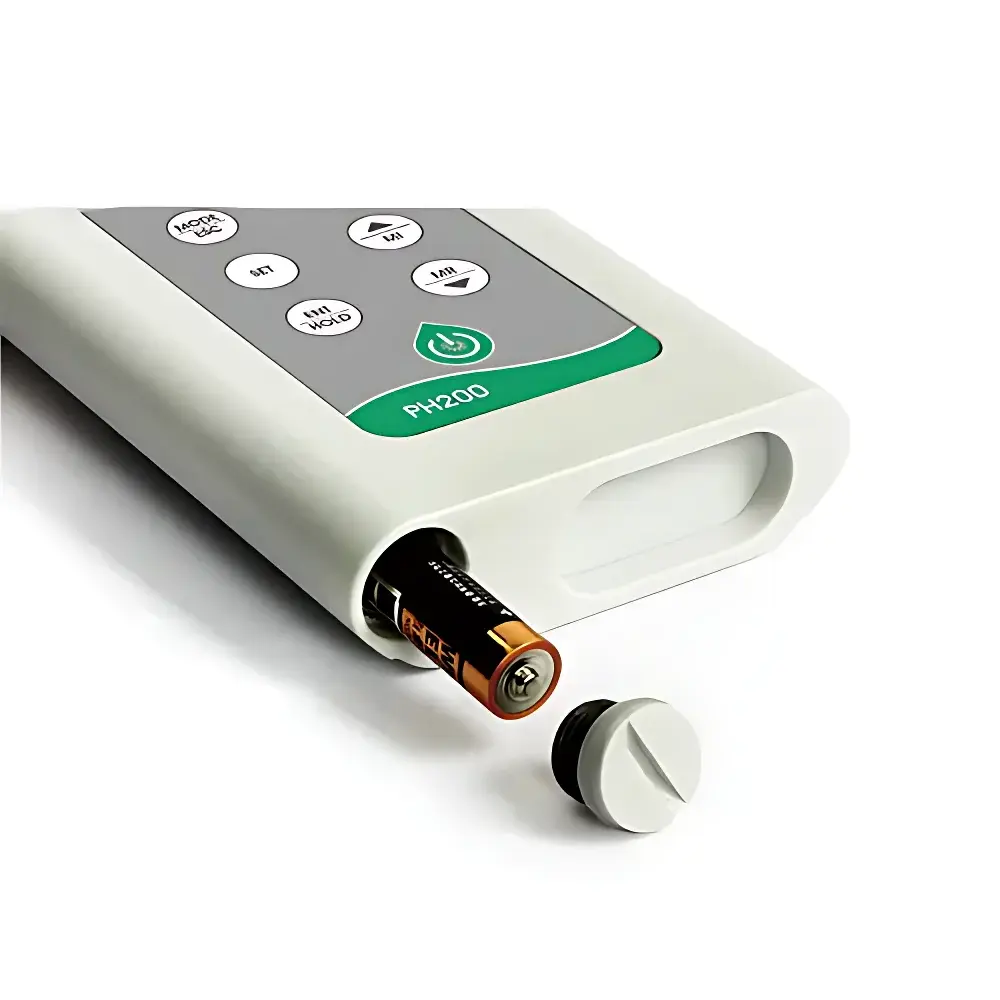
| Power | Two AAA batteries (≥500 h lifetime) |
| Operating Environment | −5 °C to 60 °C, <90% RH |
| Dimensions | 94 × 190 × 35 mm (W × L × H) |
Overview
The CLEAN CON200 Portable Conductivity Meter is a field-deployable, multi-parameter electrochemical instrument engineered for precise, real-time measurement of conductivity, total dissolved solids (TDS), resistivity, salinity, and temperature in aqueous solutions. Based on four-electrode (or dual-cell) conductivity measurement principles—minimizing polarization effects and electrode fouling—the CON200 delivers high reproducibility across an exceptionally wide dynamic range (0.000 µS/cm to 400.0 mS/cm). Its design adheres to fundamental electrochemical standards including ASTM D1125 (Standard Test Methods for Electrical Conductivity and Resistivity of Water) and ISO 7888 (Water quality — Determination of electrical conductivity), supporting routine compliance in environmental monitoring, industrial process control, and laboratory verification workflows.
Key Features
- IP67-rated rugged housing with buoyant body design—fully submersible and dust-tight for use in harsh field conditions including wastewater channels, cooling towers, and outdoor sampling sites.
- Backlit 65 × 40 mm LCD display with 120° viewing angle and auto-contrast optimization—ensures legibility under direct sunlight or low-light environments.
- One-touch diagnostics mode: instant review of electrode zero offset, calibration slope, temperature compensation status, and system configuration parameters without menu navigation.
- HOLD function for stable reading capture during turbulent or flowing sample conditions; ideal for grab sampling in streams or effluent pipes.
- Configurable auto-power-off (10-minute default) and low-battery indicator—optimized for extended field operation with two standard AAA alkaline cells (typical service life >500 hours).
- Ergonomic, non-slip grip with balanced weight distribution—designed for single-hand operation during prolonged survey work or confined-space access.
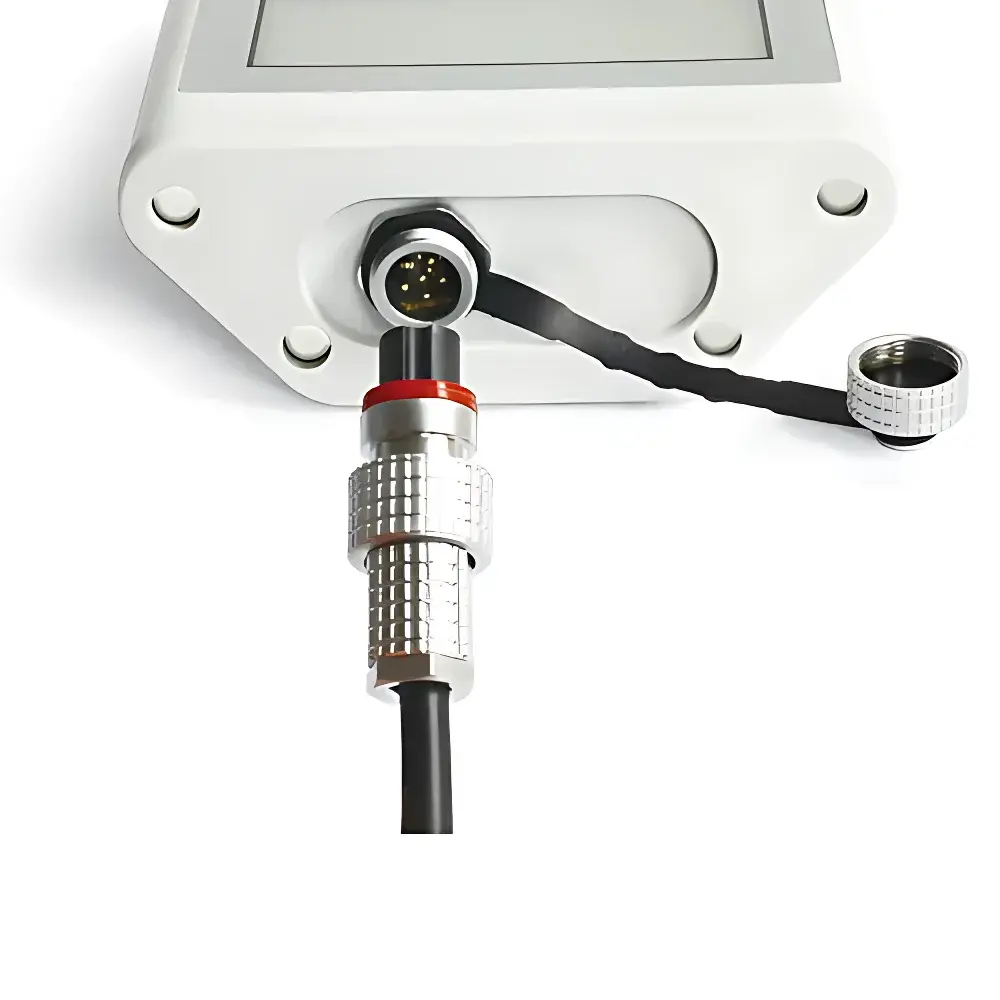
- Integrated electrode holder and universal probe interface compatible with standard K=0.1, K=1.0, and K=10.0 conductivity cells (not included), enabling application-specific range selection.
Sample Compatibility & Compliance
The CON200 supports measurements in deionized water, potable water, boiler feedwater, seawater dilutions, electroplating baths, and municipal wastewater—covering applications from ultrapure water validation (≤1 µS/cm) to high-salinity brines (>200 mS/cm). All measurements apply automatic temperature compensation (ATC) using a built-in NTC thermistor (±0.2 °C accuracy), referenced to 25 °C per ISO 7888. The instrument’s firmware implements linear and non-linear (NaCl-based) TDS conversion algorithms compliant with USP and EPA Method 120.1. Data integrity meets GLP requirements through timestamped storage (50 readings), non-volatile memory retention, and absence of user-modifiable calibration coefficients post-verification.
Software & Data Management
No proprietary software or driver installation is required. Raw measurement data—including conductivity, TDS, salinity, resistivity, temperature, date/time stamp, and calibration metadata—is stored locally in non-volatile memory. Each record includes full traceability: operator ID field (manually entered), measurement mode, electrode identification (if encoded), and ATC activation status. Export is supported via manual transcription or optional IR/Bluetooth adapter (sold separately) for integration into LIMS or QA/QC databases. Audit trails are maintained per FDA 21 CFR Part 11 guidelines when used with validated external data transfer protocols and controlled access procedures.
Applications
- Power generation: Continuous monitoring of condensate purity and boiler blowdown conductivity to prevent scaling and corrosion.
- Pharmaceutical manufacturing: Verification of purified water (PW) and water-for-injection (WFI) conductivity against pharmacopeial limits (e.g., USP , EP 2.2.38).
- Food & beverage processing: In-line verification of rinse water quality, CIP solution concentration, and brine strength in canning operations.
- Environmental field surveys: Rapid assessment of surface water salinization, groundwater contamination plumes, and estuarine mixing zones.
- Electroplating and anodizing facilities: Real-time bath conductivity control to ensure consistent current density and deposit uniformity.
- Academic teaching labs: Hands-on instruction in solution electrolyte theory, Kohlrausch’s law, and temperature-dependent ion mobility phenomena.
FAQ
What calibration standards are recommended for the CON200?
Standard KCl solutions traceable to NIST SRM 3600 series are recommended: 84 µS/cm (for low-range ultrapure water), 1413 µS/cm (for general lab use), and 12.88 mS/cm (for high-conductivity applications). Calibration should be performed at ambient temperature or with ATC enabled.
Does the CON200 support GLP-compliant data export?
Yes—when paired with validated Bluetooth or IR modules and configured within a documented data handling SOP, the device supports electronic records meeting ALCOA+ principles (Attributable, Legible, Contemporaneous, Original, Accurate) and FDA 21 CFR Part 11 requirements.
Can the CON200 measure resistivity directly, or is it calculated?
Resistivity is calculated in real time from measured conductivity and temperature using the inverse relationship ρ = 1/σ, with automatic correction for thermal expansion and ion mobility changes.
Is the IP67 rating maintained when the battery compartment is open?
No—the IP67 seal integrity applies only when the battery cover is fully latched and gasket seated. Battery replacement requires temporary suspension of ingress protection.
How often should the conductivity cell be cleaned and recalibrated?
Cleaning frequency depends on sample matrix: weekly for clean water, after each use in wastewater or high-TDS samples. Recalibration is required before critical measurements, after cell cleaning, or if diagnostic mode indicates slope deviation >±5% from nominal value.
Related Products





